Tag: mental

  • Clearing A Way

    Clearing A Way

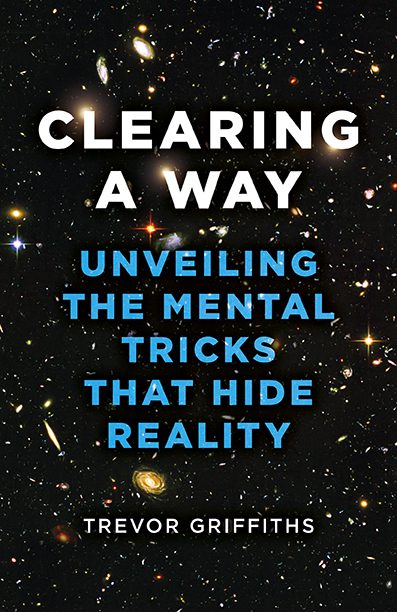
    Unveiling the mental tricks that hide reality

    The title Clearing A Way; Unveiling the mental tricks that hide reality is intriguing, as in todays world we, the seekers, are all wondering what is considered as reality.

    So much information is available on what so many consider as reality, it is somewhat difficult, if not completely confusing, to discover a pathway through the myriad of words, to form any considered opinion about reality.

    In Clearing A Way, Trevor Griffith takes a detailed look at how the mind works, why it creates an ‘alternate universe’ and what can be done to discover, if that is what you so desire, the real reality.

    Comprehensive and detailed this is no easy work to read, more of a detailed course to begin with in Neuroanatomy, followed by Mind Consciousness, then what he considers ‘Informenery’, eventually moving onto consideration of a Quantum Gravity which in itself is seriously alternate thinking.

    Griffith considers the old framework of thinking, the structure of societies and so much more that is almost obligatory, and has been for centuries, is beginning to crumble. The way forward is to change thinking, change thought patterns and allow fresh consciousness to renew and restore life.

    Philosophers have over the century’s posited theories of something similar, but in Clearing A Way, Griffith takes this one step further, by establishing a framework which journeymen can use to disperse emotions that are damaging, leaving the mind open to receive Divine Love, from ‘The One Who Cares’ which will commence the healing the World so desperately requires.

    Alternate, controversial and very detailed, perhaps written more for Academia than the everyday man, Clearing A Way is well worth taking the time to read as when you consider what is on offer for the future, a differing thought pattern on living life in today’s world is long overdue. 
  • It’s in Your Hands

    It’s in Your Hands

    Your Steering Wheel Your Choice

    When Jane Foster was a young university student her desire, her passion, was to save the world, to make a difference. Over the years so many of the ideas she delivered via her Doctoral research program have now come to fruition within the field of Mental health, changing and in some cases saving lives.

    Her book It’s in Your Hands presents what could very easily be considered as a break through approach to managing depression, anxiety and a raft of other mental health issues that come with modern day lifestyles.

    Beginning her presentations with the simple but telling phrase of ‘How many of you pretend to be happy’, she then sets out to explain what drives us to say the opposite to what we feel, going on to discuss the seemingly simple little thing called Emotional Resilience, which she believes gives everyone the skills and tools to drive safely and securely down life’s many divergent roadways.

    Aimed at a wide age range, the language used is easy to understand, the layout of the chapters presents a fresh, open, non-judgemental flow which is comfortable, while offering the new, modern roadmap you have been waiting to discover for some considerable time.

    Relating life to a road trip, with you as the driver of your vehicle simplifies the journey, but does not detract from the important messages contained within the pages.  Part one is learning the rules, or the Drivers Manual, Part two considers you now have your Driver’s Licence but still need a little support along the way.

    Random messages are there for you to dip into when in need of a little extra help or reassurance, which all come with very clear drawings. If you are so inclined these could be coloured in as you travel along your road.

    Part Three is the Resources and Research department where you can gain further insight into some of the tricky little bits, as well as simple diagrammatic tools to help you look at the emotions that cause issues, and how to overcome them.

    It’s in Your Hands is a long overdue, easy to read, comprehensive manual on how to learn to address mental health issues, remain in control of your feelings and is the perfect tool to get you back on the road to living a happy, fulfilling lifestyle while coping with the sometimes rough patches along the way.

    It’s in Your Hands is an excellent book which I highly recommended.

  • The Terrible Event

    The Terrible Event

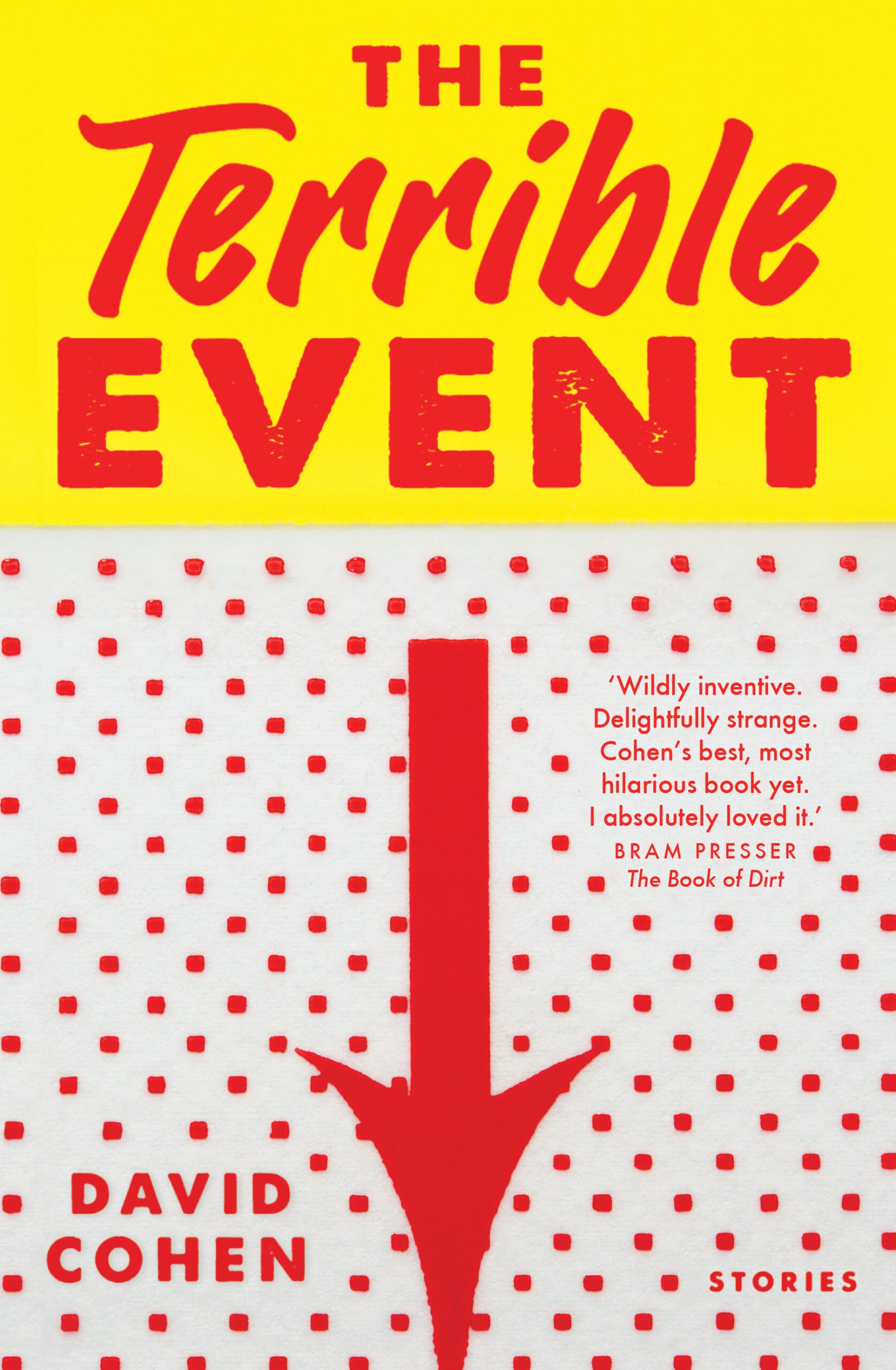
    David Cohen has returned for 2023 with a series of his fascinating essays based this time on Terrible Events; those events that somehow happen in life for one reason or another, many reasons often never, ever come to light.

    His clear and concise style of writing moves the story along without sacrificing the clarity of the scenario he is creating. Each of the stories has a wry sense of humour, or maybe acceptance of the frailty of humanity, entwined; each one gently bringing into focus many elements of mental health.

    Everyday issues small and insignificant make up the body of the work, each one detailed in a careful, precise style. A typing mistake leads to an unexpected conclusion in The Terrible Event; A Memorial.

    Mr Cheerio is sad and dramatic, highlighting the conflict of the emotions, the inability to accept the results of a terrible event perpetrated, the focus on self.

    Each hole punched in a piece of paper represents a careless workplace, a pointless exercise in filling in a day, never really understanding who he works for or what he is supposed to be doing, is significantly detailed in The Holes.

    Eight stories make up a canvas of dark, intriguing, fascinating and detailed humanity concluding with The Enigma of Keith; Another Memorial beginning with a ‘what if’ moment, resulting in some very unexpected consequences.

    Cohen’s words shine a clear light on the issues of mental health which effect so many through the rich, dramatic, sad, powerful and tragic words of The Terrible Event.

  • Borderline

    Borderline

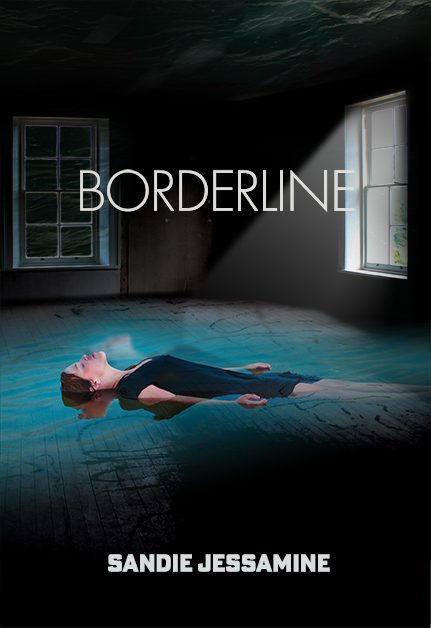
    Compelling, horrifying and deeply personal, Sandie Jessamine revisits a youth full of challenge, change, mental illness, abuse and sadness to share the very real lack of understating that faces so many people with serious mental health issues in Borderline.

    Finding herself classed as destructive, unmanageable, wild, sad, wicked and peculiar at the age of fifteen, she spent a number of her formative years in, escaping from or being returned to the Kamballa Institution, formerly the infamous Parramatta Girls Home.

    She eventually managed to make something out of her troubled life, working and teaching in the prisons of New South Wales, work she enjoyed. Being diagnosed with Complex PTSD helped her better understand her issues and learn to cope by understand her limitations; to being able to accept the ‘white noise’ of  severe mental health issues and understand what to do when the ‘white noise’ threatened her way of life.

    After a series of traumatic family events, in a life filled with deep trauma, with her daughters relapse into drugs closely followed by her father’s death due to Cancer, she had a complete breakdown at work, which would see her diagnosed with Borderline Personality Disorder, one of the most stigmatised psychiatric conditions and one that is noted by its manipulative, attention-seeking, emotional and mental instability issues.

    Facing these life changing series of diagnoses’, Sandie Jessamine realised the only way forward away from the darkness was to face her past, and by doing so to find some form of healing, understanding and acceptance of a life that was far from ‘normal’.

    Borderline is her story of survival, immense bravery and strength as she returns willingly to a world of trauma through the many voices of witch, rebel, teacher, fighter and distressed child, to reclaim both her life and her sanity.

    Borderline is raw, deeply emotional and comes with a Forward and a warning that the contents of the book could be deeply disturbing to anyone facing mental health issues. Borderline is also full of hope, understanding and stubborn determination not to let the stamp of mental illness destroy everything she had worked for and overcome.

    Sandie Jessamine believes personal stories make up a huge component of the history of the modern day and Borderline, a story of so many young women’s lives, lay hidden, away from the light of understanding mental health, until in Sandie Jessamine words, she had to go mad to begin to live.

    If you have found anything in her story disturbing please contact Lifeline on 13 11 14.

  • We See the Stars

    We See the Stars

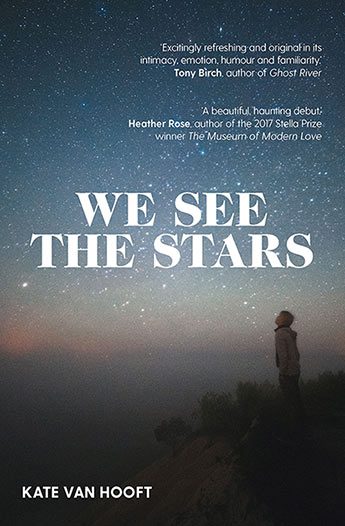
    Simon is an eleven-year-old boy who lives in country Victoria in the 1970s. He is a severe asthmatic, who rarely speaks and lives in an internal world of lists and colours. His escapism takes the form of superman, his imaginary friend, and stray ghosts, who chat with him.

    His family consist of Mum, who stays in her room all the time. Dad, who works as many shifts as he can, and Grandma who runs the house in between going to visit Grandpa in hospital. Davey is his younger brother who lives very much in the real world. Life for Simon is very much focused on his inner being and the author writes his images graphically. There are birds in Simon’s chest and bees which behave according to his mood, or the threat he faces. There are also storm clouds which can threaten to overwhelm him.

    Life at school is fraught with danger for Simon. The kids tease him and seek him out in his solitary place in the yard. Then in year six, a new teacher comes to the school that is interested and kind. A girl, who sits behind him and has a deformity, also befriends him. Together they form a friendship and face the bullies.

    We See The Stars begins with an excerpt from the end of the book. It then starts with Simon going to swim in the dam with his Grandma and brother. It is here we first come upon Simon’s imaginary world, as standing in the muddy waters of the dam he thinks, if the muddy water is swallowed,  “You’d take all the dirt into your guts and then into your blood so that if you got cut open it would come out thick and brown and full of worms.”

    We See The Stars is a poignant, insightful tale within a magical world of escape. Simon’s thoughts penetrate the reader’s heart.


  • Rubik’s 3×3 Cube

    Rubik’s 3×3 Cube

    More than forty years after the Rubik’s Cube, a simple, or what appeared to be simple, puzzle cube took the world by storm, back in the days before computers were a part of everyday life, the Cube  is making a come-back; once again pitting the skills of the mind against the dexterity of the fingers to scramble a six-sided cube, consisting of nine squares of six colours and then put them back as single panel colours.

    Ah, simple you say; well, one would beg to differ. Invented in 1974 by Hungarian Sculptor Erno Rubik as a teaching aid to help his students understand 3D objects, he did not realise he had deigned a puzzle, until he dismantled the coloured cube and tried to restore it; inadvertently he had created a very hands-on version of a mathematical Algorithm.

    During the 1980’s at the Cube’s zenith, competitions and challenges were held to see who could reassemble the Cube in the shortest possible time, with some phenomenal results being achieved. Many of these competitions have being reinstated today.

    A complete side industry developed in an attempt to solve the puzzle in entirety, as it was discovered most people could only get one or two sides back in the correct order, therefor, masses of books were written on the subject of how to solve the puzzle.  During the period of 1980-1983 more than 200million Rubik’s Cube were sold worldwide.

    Popularity waned and it was not until the 2000’s that it began to become popular once again, when it was ‘re-discovered’ and it became ‘cool to own a Cube’ once again. It is only 3 x 3 x 3inches or for the younger generation, 55mm x 55mm x 55mm, can create immense satisfaction and frustration, it is really, really difficult to cheat at, as the sections are now plastic not a series of stickers as in the original design and immense fun.

    If you are brave enough to want to take on a serious, non-electronic challenge, go grab a Cube, or rather in these changing times, buy one on-line and have a go: it is the perfect challenge for pitting your wits against the almost impossible!

    Bet you can’t do it!

  • Together Things

    Together Things

    In today’s world of high stress and pressure, depression is something that sadly is all too common, but how do children learn to understand and live with the days when their beloved parent is suffering.

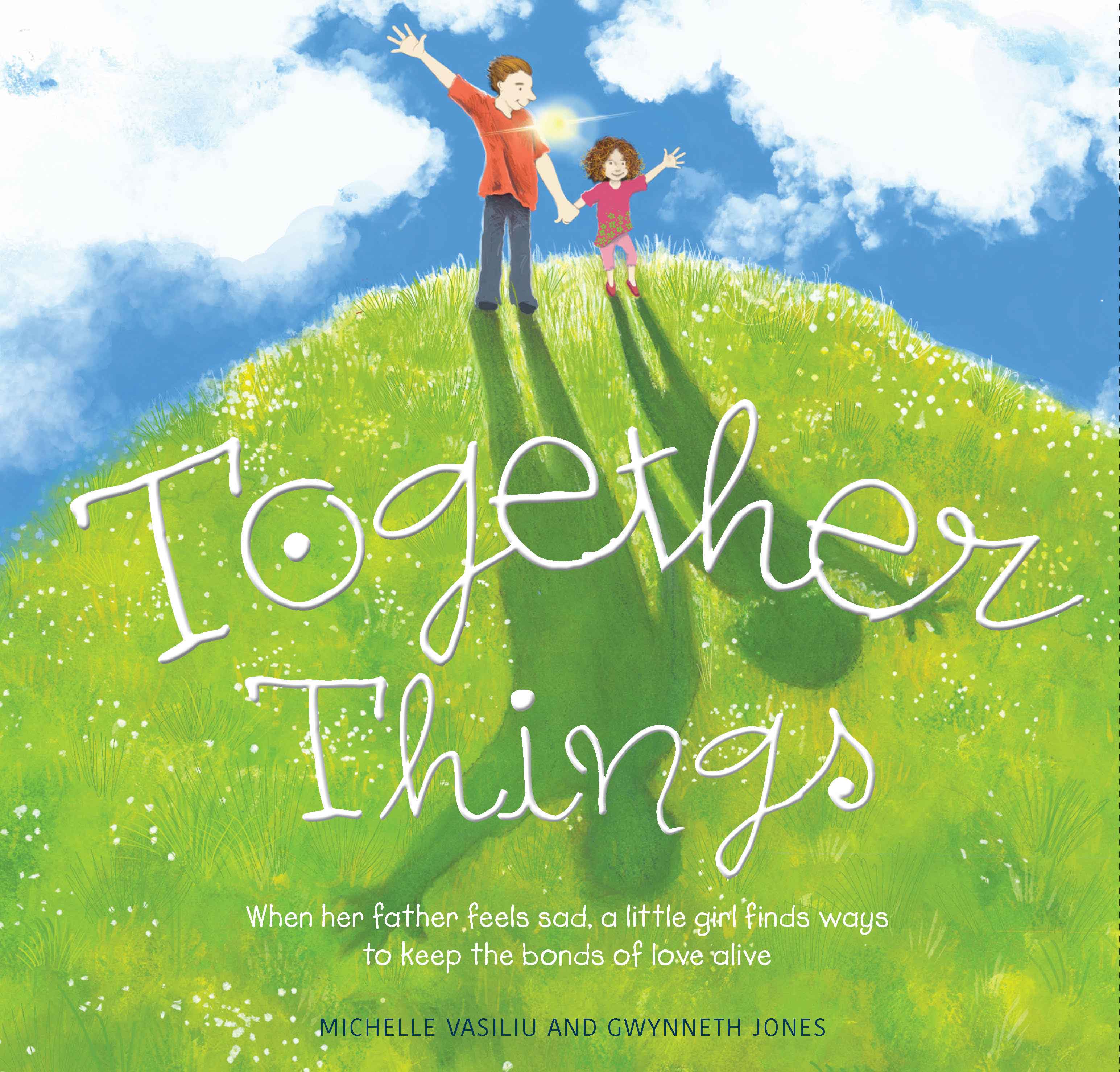
    Michelle Vasiliu and Gwynneth Jones in Together Things have crafted a lovely story especially for young children, as a little girl shows us how she copes when her dad can’t do things the way he used to and the new way they have found to show each other they still love each other, heaps.

    Her dad used to climb mountains with her, push her on the swings, sail stormy seas and tame wild animals, in the garden of course.

    But now her dad sometimes can’t do these things because his head hurts inside, he gets muddled in his head, and feels very sad. Perhaps the new Doctor may even say daddy needs to go to hospital for a while. So how can she still do together things with her dad, even though things have changed.

    Perhaps, thinks the little girl, I can cuddle under the blankets with dad, draw lovely pictures for him; maybe they can listen to music or watch TV together and while daddy is getting better, there are heaps of different things they can do together.

    Children struggling to accept change in their family caused by mental illness, will benefit from this warm hearted story helping them understand the reality of depression, suffered by one in five adults; that it is OK to feel, sad, upset and angry, and how to discover finding different things to do with their beloved parent, when there is a massive change in the family structure.


  • The Wisdom Years

    The Wisdom Years

    As life expectancy continues to grow, more and more people will experience the wisdom years and the awareness they bring. Retirement could be the beginning of a new more rewarding life!

    Zvi Lanir has written the perfect book, ‘The Wisdom Years’ which allows retired people to understand, explore and value those years post retirement. He offers readers the knowledge, the encouragement and ability to make the most of these valuable years. In his book he explains, using brain theory, why it is important for retirees not to allow their brains to retire, but to simulate them to achieve a new level of awareness in order to reap the benefits of the new life stage which lies ahead of them. By ditching some of the old habits and forming new one’s life could be fuller than before!

    The author identifies four personal dimensions; the cognitive, the emotional, the physical and the social, which he explores in detail. He believes that the over 65s’ functional age, quality of life and life expectancy are determined to a large extent by the interrelationship which exists between these personal dimensions. In his book he explains how people can actively influence their functional age and create a ‘personal reserve’ that will empower them to enjoy the wisdom years and delay the infirmities of old age.

    For anyone approaching retirement this is a must read, not as a manual for being a happy, successful retiree, but as a well-documented thought-provoking volume on the post retirement years. This easy to read book will resonate with seniors. It will trigger thoughts and ideas which are very familiar.

  • A New Map of Wonders A Journey in Search of Modern Marvels

    A New Map of Wonders A Journey in Search of Modern Marvels

    A Map of New Wonders: a Journey in to the Search of Modern Marvels to quote the author, ‘this book is an attempt to inspire and share curiosity and wonder, …’ (Henderson 2017: 21).

    The book begins with Henderson recalling a moment of wonder he experienced one morning in his kitchen, which he writes inspired him to think about wonder itself. This prompted him to explore and investigate many of the questions and elements surrounding wonder and thus inspired the book.

    The book is divided into seven chapters with titles including ‘The Rainbow and the Star: Light’ that focusses on all aspects regarding the phenomena we know as light as well as rainbows; ‘Edge of the Orison: Self’ which explores the three stages of life as told in the riddle of the Sphinx; and ‘A Hyperobject in the Head: Brain’ which discusses the incredible and complex piece of engineering that is the human brain.

    Each of the chapters delves into religion, science, philosophy, art, history and technology to explore and interpret the various wonders. Throughout the reader is shown where wonder can be found and takes every day phenomena and reveals how extraordinary and unfamiliar they really are. This makes for an informative and interesting read.

    While this is definitely the book for those of a scientific background or who possess a scientific curiosity, it is also a good read in general. For a non-fiction book, it is an easy read that is factual in its detail but personal in writing style as it is filled with the author’s personal anecdotes that detract from the tedium of facts and figures.

    Filled with interesting and fascinating diagrams that inform and provide greater detail within the chapters.

    Overall this an intriguing read that inspires the audience to look for the wonder in our everyday lives. Well deserving of its glowing reviews.

  • Disappearing off the Face of the Earth

    Disappearing off the Face of the Earth

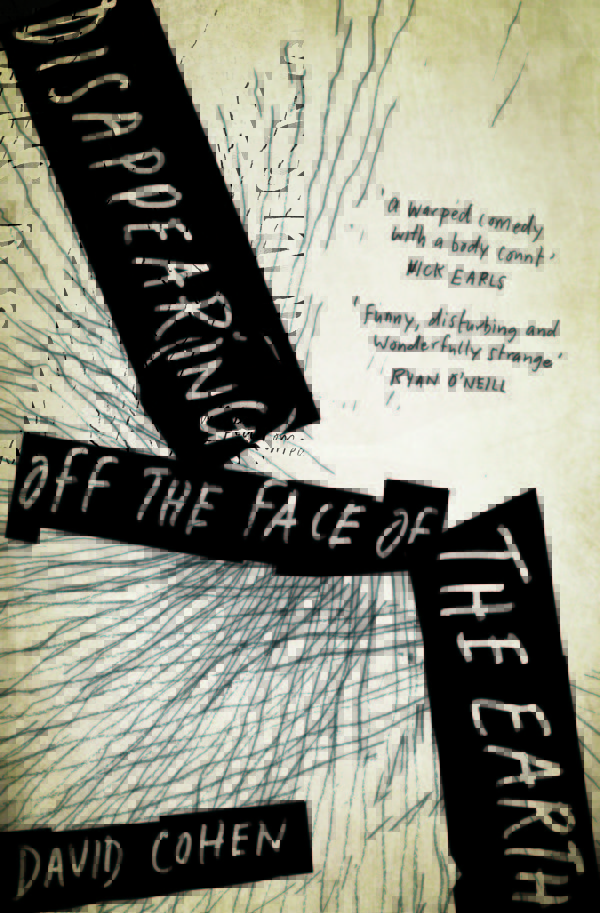
    Before we begin it is best you know this really is a totally warped novel, in the nicest possible manner, which will keep you turning the pages simply to find out what happens next: who has disappeared now and what happened; or, at least what you think may have happened.  Your brain and your intellect is exercised until the final word is read.

    In taking a journey into the other side of mental health, David Cohen has managed to keep the reader completely off balance, which in this instance is a good thing, as all is not what it may seem, or is it?

    We meet Ken Guy, owner of the Hideaway self-storage units, Bruce, who works for him but has issues, Kelvin, the guy who knows everything there is to know about selling on e-bay, Ken’s girlfriend, Ellen, client of Hideaway and owner of a small mobility scooter business.

    The self-storage units are folding up fast, with clients leaving or simply ‘disappearing off the face of the earth’. Ken is getting even more concerned as the sale of the goods from the units whose owners have simply vanished, just about pays the bills. Then there is the issue of the flashing, clicking fluorescent lights that never seem to be fixed, even though he repeatedly asks Bruce to fix them.

    Rival storage firm Pharaoh’s Tomb, and former employers of Ken, have purchased vacant land close to Ken’s business, causing him great concern. He often stops there to check out what is a happening, but even after several months the site remains untouched, other than for a security fence and a gate padlocked with the ultimate in padlocks, the Sargent and Greenleaf.

    Meanwhile, Bruce keeps appearing and mysteriously disappearing, much to Ken’s annoyance, seemingly turning up just when yet another client ‘disappears off the face of the earth’ and their storage unit needs to be emptied.

    As we move further and further into the daily  life of Ken, his everyday world seems a little bizarre, although functional, but it is not until Ken realises that yet again Bruce has disappeared, leaving him to cope with a rather extraordinary set circumstance, that  life, according to Ken, begins to come unravelled.

    Wonderfully unique, entertaining and captivating, Cohen has managed to capture a slice of life which, while darkly comical, cameos the issues that face so many of society’s members, with a rare and gentle understanding.