Tag: matter

  • Ordinary Matter

    Ordinary Matter

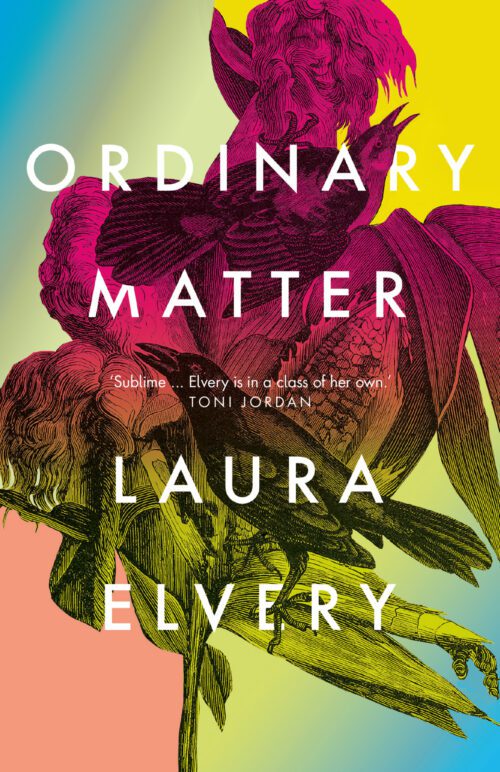
    Since Marie Curie won the first of her Nobel Prizes in 1903, nineteen other such prizes have been awarded to women. Australian author Laura Elvery has research each of these remarkable women and she has written an anthology of short stories, tightly or more loosely, linked to each one of these women.

    The collection of twenty short stories in ‘Ordinary Matter’ are set in such diverse places as the Grand Canyon, Stockholm, Queensland, and Paris and vary in genre; historical, futuristic, scientific, but they hang together with the common bond that each features a female winner of the Nobel Prize for Science.

    Every story is prefaced with the year, name of the woman who won and the achievement which was acknowledged with the Nobel Prize, giving the reader an opportunity to make the connection between the prize winner and the story. This link at times is quite obscure or abstract; however, by using the Author’s Notes at the end of the book, this link usually becomes much clearer.

    Readers who are fans of short stories will doubtlessly enjoy this collection and appreciate the way in which the author has cleverly intertwined fact with fiction. Others after consulting the Author’s Notes will find themselves wanting to learn more about these exceptional women; the obstacles they had to overcome, and the sacrifices they made.

  • When They Call You a Terrorist

    When They Call You a Terrorist

    This is a story you feel should be circulated among secondary school students as part of the curriculum. It is Patrisse’s life story. Firstly told through the eyes of the child she was, then, told as the adult who knew there had to be a change, and that everyone needed to be active in driving that change.

    The poverty cycle has such a strong effect on people, especially if there are no supports in place at all. The author’s father had a job, her mother had a job, and they managed to feed and clothe the family. Then, father lost his job. Mother had to work at three jobs just to pay the rent, and there was little money left over for food and other essentials. Father left home to look for other work, and so there was no supervision for the children.

    At that time in Van Nuys, California, there were ten section 8 apartments, and Patrisse’s family lived in one of the two storey dilapidated buildings. With no green space, no yards, no playgrounds, the children spent time together with their neighbour’s children in the alleyways. They congregated to talk, as young adults do. It was here that the young girl first saw the police attend to her brother, shoving him against a wall, shouting in his ear, and pushing him to the ground. They called him vile names and threatened him. One of the older boys said that drugs gave you moments when you forgot who you were, but also made you feel that you were away from the torment and in control. It was an easy choice.

    Unfortunately Monte, Patrisse’s brother, developed a severe reaction to the drugs, and had schizoaffective disorder. He is never treated for a mental disorder, but sedated, and restrained in jail. He is also beaten and disgraced. The author was found to be a gifted student, and was able to continue schooling. She made friends with a girl, whose father owned the building they lived in, and she wondered if he knew that their fridge hadn’t worked for three years.

    As the author grew, she saw so many examples of her people being shamed and beaten by white power hungry men. The President’s National Domestic Policy Chief, indicated that by associating blacks with heroin, and then criminalizing them he could disrupt their communities. And so a movement was born to fight this oppression. BLACK LIVES MATTER, was founded by Patrisse, and others to work for equality for their people.

    As a direct result of this movement, in 2016 a Civilian oversight board was set up to monitor the L.A. County Sheriff’s Office. As you read this story you could be forgiven for thinking it took place many years ago. It did not.