Tag: machines

  • The Big Book of Exhibits

    The Big Book of Exhibits

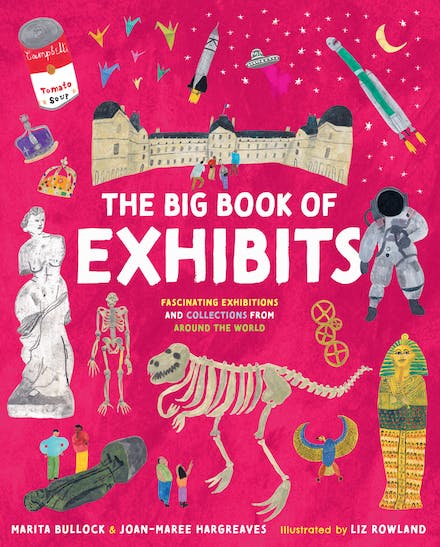
    If you enjoy learning about the world’s great curiosity cabinets, which are filled with mind-boggling objects that make your jaws drop in wonderment and astonishment, The Big Book of Exhibits is the book for you. Showcased in this book are some of the world’s most unbelievable and surprising exhibits, which come from both the ancient and modern eras. 

    Included are the largest rare colossal squid, the poo machine, the pebble palace, sculptures which are so tiny that they fit inside the eye of a needle and even tiny diamond relics of star dust older than the planet Earth.

    The authors have included museums which allow visitors to interact with the exhibits; the Swedish ‘Museum of Taste’ where visitors can taste prairie oysters (bull’s testicles), and the Tasmanian ‘Museum of Old and new Art’ where viewers can follow food as it makes its way through what has become known as the ‘Poo Machine’.

    Although readers aged 9+ can read this amazing book independently, this is a book for all those (adults included) who are curious about the big and small things in our incredible world. Readers who enjoyed the authors’ earlier book ‘The Big Book of Festivals’, will definitely adore this book.

  • How Was That Built?

    How Was That Built?

    The Stories Behind Awesome Structures

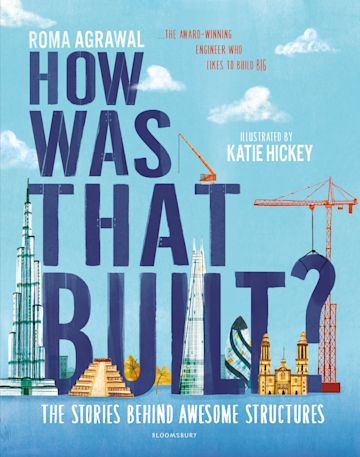
    This large hard back picture book, How Was That Built is written for children (and some adults I know) who are curious about structures, their purpose, and how they were built. The chapters are interesting in that they describe “How to build flat, How to build tall, and finally Building into the future.” Along with many other interesting chapters. Roma Agrawal is a structural engineer and relates how she always had a curiosity about the large buildings she saw as a child. She tells us about forces that act upon structures, what materials they are made of and how to keep them strong and stable.

    The first building to be looked at is the Metropolitan Cathedral in Mexico City. The history behind this tells us that Spanish invaders captured the city, destroyed it and built another city there. Unfortunately, it was on a lakebed, and began to sink. The cathedral has been saved by drilling holes and removing soil. Water was pumped out from the downward slope, and the building levelled.

    There is a chapter on London’s sewers which describes what happened to the waste produced by Londoners. The waste was all collected before it reached the River Thames and pumped east where it was held in tanks. In early days the untreated waste was pumped into the river to flow into the sea. Nowadays a huge tunnel has been built. It travels under 1300 buildings which will stop large amounts of waste from going into the River and the sea.

    The pages on, “How to build on ice, and How to build in the sea, have large illustrations which help to clarify the processes used. The print is very small on these pages and so the pictures are useful.

    Like Roma Agrawal, many interested children will experiment with Lego blocks or toys to understand how buildings work and stay stable. How Was That Built is a great introduction for interested people.

  • Machines in Motion: The Amazing History of Transportation

    Machines in Motion: The Amazing History of Transportation

    Machines in Motion presents immense detail in the illustrations and text used throughout this non-fiction book, detailing much of the History of Transportation from the team of Tom Jackson and Chris Mould.

    Tom Jackson is a science writer for both children and adults of more than 20 years. Chris Mould an illustrator, is known for his quirky black and white line illustrations which are used extensively throughout. Colour is introduced with the page boarders and occasional passages of text.

    From earliest times technology has been used to create and invent what even then, 7,000 years ago were considered as new inventions: of course, they were, just like now, or alternatively, is now simply just a refined version of what was invented then?

    This and many more questions will be answered over the pages, as each of the sections sets out in a rather intriguing style facts, figures and timelines; all illustrated with intricately detailed illustrations, designed to intrigue even the most hardened of non-scientific children into wanting to turn the next page to see what is on the other side.

    Trains set out the style of the book with a wonderful kaleidoscope of drawings and text to intrigue and encourage readers of whatever age and reading level to investigate further. Underground comes next, beginning at 600BC moving through to the creation of the Channel Tunnel (Chunnel) joining France and Britain via train, which was commenced in 1988 and completed in 1994.

    1852 saw the Dirigible take to the skies, with the Supersonic Skydiver taking pride of place in the skies in 2012. Working Vehicles announces the first fire engine, the Newsham fire engine, which was built in 1721.

    Ending this journey of fascinating scientific facts is Spacecraft which only presents until 2000 when the International Space Station was launched into space, weighing an impressive 450 tons, giving Astronauts their first permanent home in space.

    It is fair to say some of the facts are not correct, which is a bit of an issue, as scientific books, regardless of the age range need to be correct. Fact checking is absolutely important particularly for young readers. 1944 D-Day is one such instance, as these DD water craft were a type of tank that was propelled thought the water with propellers, not sails!

    Notwithstanding the above comment, overall Machines In Motion is a comprehensive history of mechanical movement in one form or another over hundreds of years, which will intrigue and delight the hearts of children with or without a scientific interest.