Tag: love

  • The Woman from Uruguay

    The Woman from Uruguay

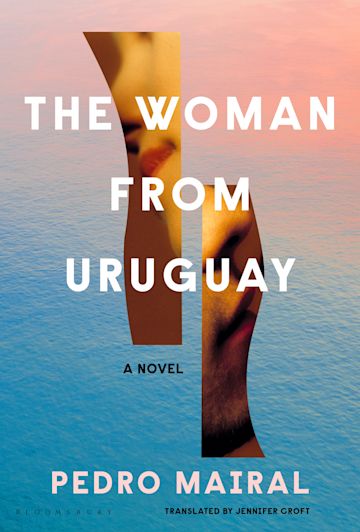
    The longing and yearning and desire that seep out of The Woman from Uruguay are almost palpable.

    Pedro Mairal describes a day in the life of a man who has become obsessed with a woman he met at a dance. Lucas was drinking at a nightclub when he met Guerra. They talked, they laughed they danced, and they drank. Each moment becoming more special than the last. The man suggested they meet the following day and go for a walk, which served to outline their compatibility.

    Later that day, Lucas had to return home by ferry to his wife and son. He plans and plots and fantasizes about meeting this dream woman, so much so that his wife remarks that he is talking in his sleep. Eventually the day comes when he can yet again catch the ferry to Uruguay, he emails Guerra, who lives there, and asks her to meet him.

    He has one day to be as intimate with her as his dreams have unveiled. However, even though her dreaded boyfriend has gone, there are many reasons why their intimacy is not easily fulfilled. Time is passing and although Lucas has many plans, they all seem to go astray.

    The Woman from Uruguay is a short story of 152 pages. Lucas is the narrator and through his eyes we experience the longing and the single mindedness of his actions. It is hard not to become involved and judgemental while riding on the wave of suspense that is created.

  • Toy Mountain

    Toy Mountain

    Toy Mountain is a beautifully coloured Picture Book from Stef Gemmill  that should hold the answer to all children’s dreams. At the end of the rainbow there is a toy factory where little hands make toys all day. Toys that “Rumbled, grumbled and plinked.”  For Sam, the toys he played with were all hand me downs from his grandmother; they were worn and faulty. He shared those toys with a younger brother.

    When his mother came home and asked Sam if he would like to be a tester for the toy factory it seems as though all his wishes had come true. However, there were to be consequences which no one could have foreseen. The motto, “Be careful what you wish for,” certainly applies here. The problems that arise are unforeseen and test Sam ‘s resolve.

    The illustrations from Katherine Hall are vibrant and add to the text in a humorous way. There are large and colourful pictures as well as small, detailed drawings which need close examination. The text is a good size for young readers, and the font is designed for easy reading. Many words such as “PLONK,” are written in a larger size for emphasis.

    While Sam is discovering his newfound toys, his younger brother is left out of the fun. His expressions show his feelings, creating a solid base for a discussion about sharing.  Toy Mountain is good book for all younger children.

  • COOKIE

    COOKIE

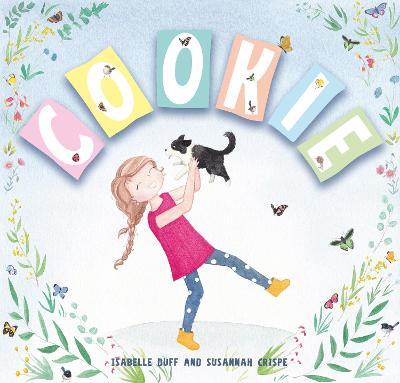
    Cookie is a small dog who is the narrator of this story. His simple dialogue and understated discourse are humorous and insightful. What he leaves unsaid fills in the picture for us. His early memories are of being in a “Shaky box for a long time.” This begins the story and reveals the part he plays in helping a young girl with depression.

    When Cookie came out of the box, he was greeted by Girl…. Who had a ball! The girl took Cookie for many long walks where he found many great smells. At night, she would tuck Cookie into his bed and sleep by him in hers. Then one day, Girl was sad, she didn’t want to play. Cookie took her a present which she loved, but she was still sad.

    As the story progresses, we see that the sadness which affects the girl also affects the family. Cookie’s relationship with the girl continues to be solid and loving and never changing. As they grow together, their understanding of each other deepens. Nothing can change the way the girl is, but Cookie certainly helps with his nurturing nature.

    The large illustrations and interesting artwork in this book make it a pleasure to read. The humour of hearing the story told by the dog is gentle and caring. There is also humour in the text, such as the boy called “Stopit.”  It is important for younger readers to acknowledge that feeling sad is normal, and there are ways we can help our feelings to improve. This is an important concept for us to learn.

  • Silent Smile

    Silent Smile

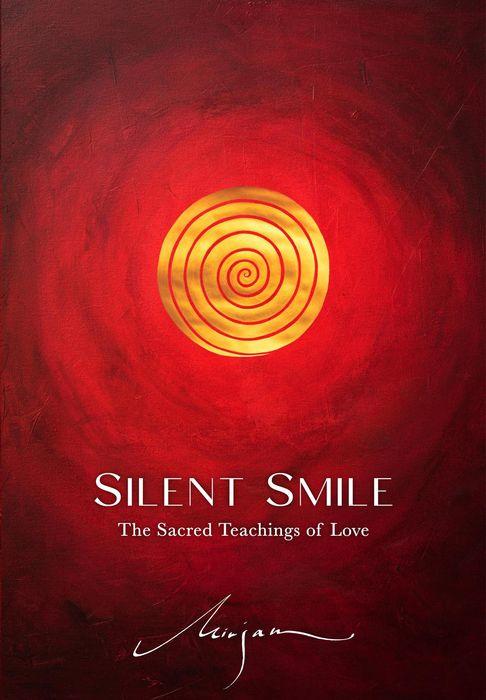
    To hold Silent Smile in your hand gives one a sensual pleasure: The colour, the weight, the illustrations, and the topics are rich and stimulating. Relevant and written for these troubled times, Mirjan believes the words and concepts contained within the book have been channelled to her from The Divine.

    While this may to many seem a little far-fetched, as the pages unfold and the words of wisdom, love and guidance become all encompassing, answering so many of the questions relevant in today’s society, the understanding is born that perhaps the words are directly from the Divine.

    It has long been forecast, in all religions, that there will come a time when “God’ will once again return to earth, bringing with him pure love; or in modern parlance, a way forward that is free of all of the many ills which plague society and have done since words where written and history recorded.

    As the topics unfold it rapidly becomes apparent that this time is, believe it or not, now; that the Divine already walk amongst us, offering a way forward filled with love, inner peace and happiness. The issue seems to be that we, as a complex society, are having trouble coming to terms with this concept, which in the words of John Lennon sum up the message nicely: ‘All we need is love!’ words which were and still are prophetic.

    How to find this love within is the message delivered; essentially how to find or rather rediscover the well of wisdom within us all, the wisdom that we carried at birth and will carry until death.

    Topics discussed include Love, Self Love, Worry, Fear, Soul Purpose, Light Verses Darkness and just about every other aspect of curiosity relating to the human form, frequently discussed at great length on talk back, self-improvement, consciousness websites and many more platforms beloved of the modern audience. Silent Smile holds all the answers, presenting often hard truth with compassion, understanding and importantly non-judgemental dialog.

    That love will conquer all of the issues ahead of us is the main message offered. To be able to do this we need to still our hearts, and with the help of nature, listening to the still, small voice we all carry within, and the help of the Divine Ones, find true inner peace and happiness.

     Mirjam relays to us many ways that we can commence this process, beginning with ourselves. To realise our full potential, we must be physically strong, pure, and develop our spirituality. Each chapter has advice on how to achieve this and to address one’s connectedness.

    Silent Smile has been referred by Cred Mutwa, Indigenous Elder of South Africa, to a ‘Holy book which will resurrect the human spirit in times when uncertainty and chaos, war, hunger and cataclysm are threatening the world.’

    He is totally correct.

    reviewed: Trish Palmer.
  • Love People, Use Things: Because the Opposite Never Works

    Love People, Use Things: Because the Opposite Never Works

    Love People Use Things is a follow-on book from The Minimalists, Joshua Fields Millburn and Ryan Nicodemus, which takes their original concept of clearing out the surplus ‘junk’ that is slowly but surely sabotaging your way of life, to be able to make way for the things that really matter; things that are not things, but people, love, harmony and happiness.

    Millburn has used his recent journey into ill health upon which to base the premises which begins with a recap of their previous and very, very successful Minimalism: live a meaningful life which is excellent, but then he expands out into a wider concept of clearing out the emotional baggage that can be the drivers up the hoarding, buying, success driven pathway into debt, distress and eventual destruction (almost inevitable) at all cost, ‘successful’ life.

    Nicodemus taps in at the end of each chapter with Coda’s designed to encourage a good deal of self-exploration, deep honesty with self and dare it be said, the requirement for either a large box of tissues to mop up the tears or a big bottle of something alcoholic to help deaden the pain of facing honest truths.

    Cathartic, deeply emotional and in many ways helpful with understanding the drivers so easily discovered on the pathway to so called success, Love People Use Things is also deeply disturbing, as it ventures into a very grey area of psychology that could very easily have a seriously adverse effects on the person reading the book and trying to follow a new pathway of minimalism. 

    The concept is as always excellent; downsizing and understanding why and what you need to achieve to live a simpler, less cluttered, physical and mental, lifestyle which is becoming more and more important as the months drag by with the COVID pandemic now an everyday, but still extremely concerning, aspect of life.

    Many are facing severe hardship, lifestyle change and job loss while still attempting to lead the same lifestyle as before life changed dramatically and in many cases irrevocably. From that perspective this book may help understand why there is the need to basically live within your means, emotionally and financially and the relaxation and happiness that can be achieved on a personal level when you choose wisely to Love People, Use Things in your everyday life.

    A word of caution is to read carefully and wisely then take only from the pages the help needed. If it gets overwhelming seek the help of a professional to help you along the way.

  • Two Women in Rome

    Two Women in Rome

    Two Women in Rome from Elizabeth Buchan immediately transports into another world as the stories of two women, Nina and Lottie, destined never to meet, come together in the most intriguing manner, which has the capability to change the life of Lottie, if only she is brave enough.

    Known for her beautify crafted stories Two Women in Rome is an exceptional work that lays bare the emotionally challenging choices that were often made during and after the years of World War II.

    Lottie comes to Rome; a new bride whose husband Tom, has lived and worked in Rome for a very long time and knows what is what and how things work. Lottie is an historical archivist who has found work at the Archivio Espatriati. She discovers a 15th century painting she is drawn to and as she begins to try and trace the history of the painting, she discovers there is very little known about the woman, Nina Lawrence who gave the painting, along with several boxes of other materials, to the Museum.

    She decides to investigate Nina Lawrence further and in doing so discovers a tragedy of love and passion set again the turmoil of Italy during the second world war, at a time when various political factions were pitted against each other, adding to the horror of war already well entrenched. As more comes to light on Nina’s career in espionage, the more Lottie learns about her husband Tom, his real life and previous marriage. Nobody and nothing is as it seems. How very Italian!

    There are times when Lottie truly believes Nina is speaking directly with her, wanting her story to be told which causes her to begin to doubt everything is being told and when she gets a little too close to the truth, Tom has to ‘fix’ things to keep her out of danger.

    While it is unusual to find historic fiction set in the 1970’s during a period most would consider as the recent past, it works, as Italy, especially Rome, is timeless; history rubbing shoulders with the world of today with true aplomb.

    Told on many levels with more than one story intertwining, the tale of Two Women in Rome is a captivating look into a world that is and once was very, very real.

  • The Boy and the Moonimal

    The Boy and the Moonimal

    The delicate shades of colour that enhance The Boy and the Moonimal hard back picture book ensure that the story will be mellow as well. This is a story about a small Moonimal who is discovered in a shop by a young boy. His mother buys the soft toy for the lad who instantly gives him his name. The two are inseparable and very happy together as both believe in lots of hugging. However, one-day disaster falls. The boy tumbles over in the forest and breaks his glasses. His mother carries him home to comfort him, leaving Moonimal behind. Some kindly rabbits discover him and carry him down to their burrow.

    From that time on things are never the same. Many adventures befall the toy, but he never forgets his boy. Though many years have passed the boy has never forgotten Moonimal and through a strange coincident they meet again.

    The colours in the illustrated pages are quite beautiful with the characters depicted as being gentle. Although sadness is portrayed, there is never a sense of danger. The text is well broken up by the large and small illustrations, and the character’s emotions are portrayed clearly. The Boy and the Moonimal is a happy story with just enough mystery to engage a young listener.

  • Do You Love Dinosaurs?

    Do You Love Dinosaurs?

    Do You Love Dinosaurs is a brightly coloured picture book begins with rules for dinosaur enthusiasts. Rule number one says, “Never turn your back on a hungry hunter.” The following pages show descriptions and illustrations of some meat-eating dinosaurs, and just how fast they can move. Next, we learn about some tiny, but fierce creatures who live on land, and some who can hunt on land and in the water.

    There are large illustrations of some gentle giants and also the terrifying T Rex to pore over. The vegetarian dinosaur group is drawn along with the raptors. In fact, every dinosaur that you can think of is depicted here, with information about each one given. The raptor could run as fast as a whippet, and the stegosaurus had a very tiny brain.

    Each page of the book shows different creatures and gives interesting facts about them. The illustrations are lively, varied, and colourful. Amusingly, the dinosaurs are shown in some humorous poses which alleviates any misgivings a young reader may have.

    Many children become fascinated with dinosaurs and as Do Your Love Dinosaurs is a very enjoyable book it will answer many questions as well as give added explanations for the experts.

  • Care

    Care

    The radical art of taking time

    In the introduction to Care, Brooke McAlary describes what she means by “Care.” Love, compassion, empathy, tenderness, and attention are a few of the sub heading she uses to describe care. Brooke acknowledges the year 2020 as being a tough one for most. Many of us gave our attention to Covid, Social Injustice, and the Climate, the “Big Care,” without paying attention to the Self Care, which covers our physical and mental health. Both are important but there needs to be a balance in how we care.

    To help us find this balance we are introduced to tools. The Time tool, which shows how time changes for us as we age, can be manipulated. A neuroscientist has shown that the best way to slow down time when aging is to try something new. “The more detailed the memory, the longer the moment seems to last.”  Even minor shifts in your routine can make a difference. Paying attention to the smallest details jolts our brain into paying attention, as does recording new experiences, and comparing them with stored memories.

    Some of the other “Tools” that the author explains are: Asking questions and being curious, unplugging from electronic devices, and listening to your inner rebel. The following chapters explore the idea that if we all cared a little bit more for each other and ourselves the bigger issues would be easier to manage. The nine core ideas in this book will help you to do this. The Core ideas are Connection, Kindness, Awe, Nature, Making, Movement and Healing.

    In a very readable and straight forward style, Brooke McAlary addresses these issues and gives personal examples of how we can explore and use these to benefit our lives. Ideas that are so simple, yet can have a dramatic impact on our well-being, are shown to work. This is a “keeper”, a book to reflect on often, a comfort read, and a path to follow.

  • A Home Like Ours

    A Home Like Ours

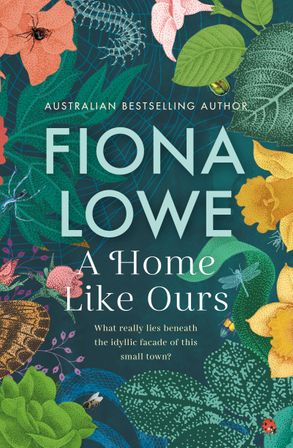
    Set in a small town along the Murray River, A Home Like Ours from Fiona Lowe is captivating from the first page. The drama of homelessness, the fear of bullying, the tragedy of a life once considered as normal, now reduced to a few belongings: a car that is home and the endless fear of never finding anywhere to finally be able to call home, sets the scene for a compelling read that has captured to perfection, life in a small town that like many small towns is full of prejudice, thinly disguised.

    Life for Helen Demetriou is terrifying, unstable and balancing on the knife edge of hope and acceptance in the small town of Boolanga. After a more than terrifying experience sleeping rough, her luck seemed to change as she had not only found a small part time job but also accommodation in the town; two things for which she was truly thankful .

    Tara Hooper, young attractive, married to the love of her life, Jon, mother of two beautiful children, was watching her marriage slowly dissolve in front of her eyes. She had tried every trick in the book to get Jon to desire her once again, but everything failed. He seemed so tired, pre-occupied but still so damn sexy.  Their new neighbours just simply topped off the whole sorry mess. They were unwanted and certainly, Tara did not want them living next door.

    Single, well almost single teenaged mother Jade is barely coping to bring up her little boy Milo. His father is hardly ever there, away for weeks on end. Her life has been nothing but struggle-street since she was a small child. She is intelligent, has a massive chip on her shoulder and an overwhelming love of Milo, who she is determined to bring up well. The town library is her salvation.

    The Community garden is the place that brings the three women of vastly different walks of life together, along with the other marginalised sector in town, that of the refugee women who are looking to find a small plot of land to grow their vegetables. It is the one place the women can all gather together, to learn, to heal, to share, to grow flowers and traditional vegetables.

    Helen, the caretaker of the Community garden which is overseen by local residents who have lived in the town for many long years; women who find change confrontational, have no time for refugees, fear the unknown of different cultures and have an outdated understanding of what is community. Small town prejudice is alive and well in Boolanga.

    When Helen uncovers what appears to be underhand dealings within the Council in regard to the garden, can their many issues be put to one side to unite for a common cause; to save the Community gardens and the historic cottage Helen once called home.

    Starkly portraying prejudice, small town politics and corruption, A Home Like Ours draws beautiful portraits of each of the women that portray a real understating of the value of friendship, acceptance and when the going gets tough, just what does make up true friendship.

    As with all Fiona Lowe novels, the characters come alive on the pages, becoming beloved friends and as the pages turn capture the emotions which enriches the moment with the raw honesty of the characters.