Tag: life

  • The Museum of Modern Love

    The Museum of Modern Love

    Heather Rose has produced a paean of praise to the power of modern art in The Museum of Modern Love. It follows the artistic meandering of Arky Levin as he wanders (of his own volition or at the behest of something more mysterious?) into the Museum of Modern Art and witnesses Marina Abramović’s The Artist is Present.

    Levin connects the cast of characters, his friends, family and other spectators of the performance art as they are all observed by an other-worldly narrator, changed and challenged. Conversations with PhD students and strangers turn into amiable explorations of the nature of art and what Abramović is trying to achieve with her performance.

    Ultimately the characters that pass through the atrium of MOMA are all searching for some kind of connection, but whether The Artist is Present is about that connection, or about performance, perseverance, exposure or transformative acts, is left delightfully up for debate.

    Marina Abramović has ascended to the pantheon of deified modern artists, and this exploration of the effect of her performance piece at New York City’s MOMA is illustration of her omnipotence.

    Rose’s book is a respectful and engaging recreation of a fictional Abramović, whose decades of work have left her a rare enigmatic figure of the art world, an eccentric and moving artist. The intimacy of her performance is not hard to grasp, as the atmosphere Rose creates around it effectively communicates the unique experience that sitting with the artist became.

    Chapters delving into Abramović’s mind are sensitive and revealing, contextualising the life that culminated in almost three months of sitting still in the museum atrium. The weight of her personality is reflected wonderfully in the omnipotent narrative voice, succeeding in being charming in its mysterious nature where it could easily be isolating.

    Marina’s feats of artistic endurance obviously illustrate a formidable strength of character, and the novel is at its heart an exploration of different kinds of endurance. All Rose’s characters are working through their own struggles, be they artistic, familial or more personal. Love also sits as a central theme, its different manifestations prevalent enough that this cavalcade of characters could furnish the titular museum of modern love.

    Rose has created a loving meditation on art and music; her delicate observations on life are beautiful and charming. The text is an unselfconscious celebration of art and the power it holds, sometimes inexplicable and often disarming. She describes artists as “waterfalls shot with sunshine,” in characteristically lyrical prose.

    This novel is like a breath of calm despite being set in the frenetic New York City, with its quirks and characters that grow with the progress of the central performance. It is a rumination on the nature of art that rings with Abramović’s strength; that formidable figure in pursuit of sublime connection.
  • Happy People Read and Drink Coffee

    Happy People Read and Drink Coffee

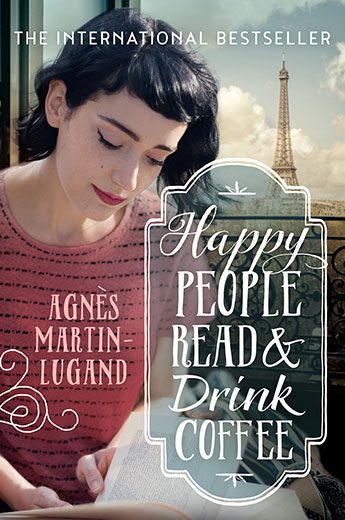
    The title of the book is actually the name of a book café, run by the main character in this story, Diane. She comes from a wealthy Parisian family, who gave her the store to run. Diane is very happily married with a loving husband, and daughter Clara. In fact, life couldn’t be better for this French family. Felix is a family friend who helps Diane run the book café.

     This idyllic life is soon shattered by an enormous tragedy. Diane has never had to manage, or overcome any hurdles, to achieve what she wanted. She is paralysed with fear and despair.  In fact, she barely leaves her apartment for a year, visited only by Felix, who regales her with stories of his nightly escapades.

     Grief manifests itself in many ways, but for most people, time lessens pain, and the mind prepares to take the next step.  Diane’s next step leads her to Ireland, to a place she finds by sticking her finger blindly on a point on the map. She discovers that distance is no cure or aid to forgetting, and that nothing has changed apart from the scenery. She is renting a cottage by the sea, and next door lives a very grumpy man. He is surly and bad mannered and makes it plain he wants nothing to do with her. They fight often as they are neighbours and can’t help bumping into each other on the beach or at the pub. If Edward is rude, then she is equally arrogant and stubborn. Not the makings of a friendship you would think.

     Gradually, Edward and Diane begin to form a relationship bred of recognition by both of them, that each is a much wounded person. However, this is not an easy romantic solution for either of them. There are lives to be lived and paths to be followed for each of these people to find happiness and contentment, running away won’t help and hiding from society is not a solution.

     It is refreshing to read a book that has a romantic/tragic element, but is realistic in some of the ways people sort out their lives. To move forward and achieve is a measure of healing, but it comes with sadness and pain. Life will never be the same but there are times to enjoy, satisfaction to be gained, and pleasures to be had.

  • Poems That Make Grown Women Cry

    Poems That Make Grown Women Cry

    The title is a misnomer in that the poems in this anthology will make both men and women cry, should they be read at a time in their lives when they need a comforting word, a reflection on life or simply are emotionally vulnerable and open to having a good cry.

    The purpose behind the book, by this interesting father and son team, in conjunction with Amnesty International is to make us open our hearts, to have a good cry, to let it all go and to spend a little time in reflection.

    Of the 100 poems selected by the 100 women asked to contribute to this work, each piece chosen has meant so much to the particular women at a specific time of point in their lives.

    A time when they too have needed to take a minute out to simply be, the words they have selected are all powerful, created as an art form, each an exquisite collection of words wound together to express emotion in the only way the poet could, through his works, her words.

    From the simple stanza, To A…, written to Antonia Fraser, by her husband Harold Pinter about eighteen months before his death, to John Keats Ode to a Nightingale which he wrote in 1819, selected by Marina Lewycka. His words have meant so much to her over the years and touch her deeply each time she revisits the poetry. Each piece is laced with poignancy.

    Judi Dench and Emily Mortimer selected Lord Byron’s , So, we’ll go no more a roving, a piece that means so very much to them – Judi Dench in memory of her late husband and Emily Mortimer, her father.

    Germaine Greer has selected the words of Clive James as he reflects on his past and his own approaching death from leukaemia.

    Each piece chosen is essentially a commentary on life and death encapsulated into a few words; because the basic fundamentals of life are stripped down to a few words in most instances they tend to be peaceful, yet reflective, even while being confrontational.

    But all this brings us to the point of why put together such a collection; as with most things it has been a series of idle chatter, vague thoughts and a challenge to see what may happen, coupled with a desire to reintroduce poetry to the people in a time when to read poetry, to create poetry, to cry over anything is not considered the ‘done thing’.

    The title of this book is, if you have not discovered the previous book, titled Poems that make Grown Men Cry, could be considered as many things, provocative being only one of them, but definitely of an interest. The contents are as sound and lovely as they have always been and interestingly, as a good number of them were written many, many years ago, still as reflective of society and all its woes as they were when written.

  • How to be Single

    How to be Single

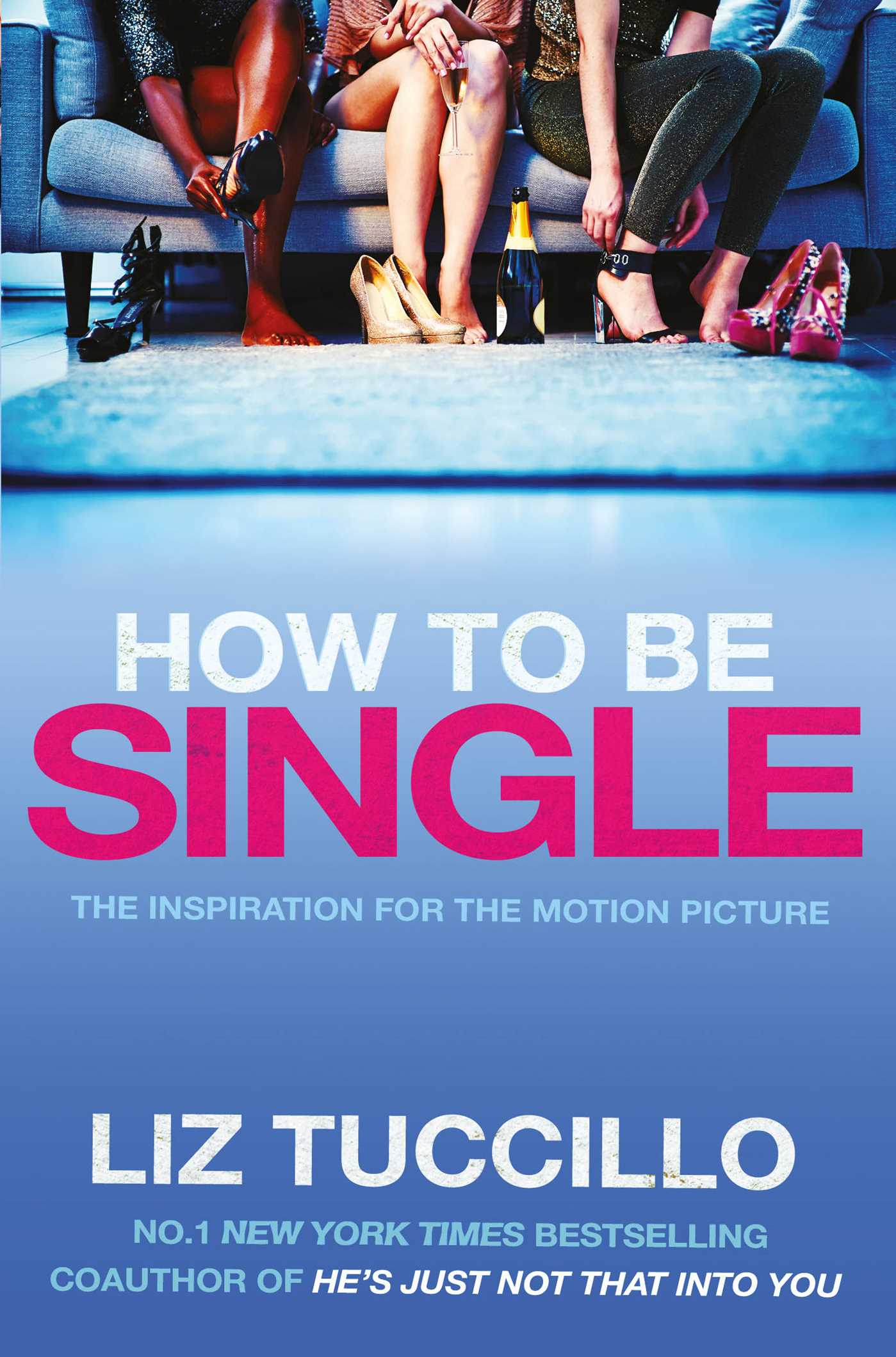
    Many little girls grow up with the modelling of a couple of adults in their own home. It is reasonable then to expect that, after having grown up, chosen a job, developed friendships and done a great amount of exploring and travelling, they look toward marriage and a family. But times have changed and, in New York and other parts of the world, there are not enough men to allow this to happen. The author decides to explore this idea, and does so in a humorous and authentic way.

     Liz tells a story about Julie and four of her friends. As we become acquainted with the women, we realise that each of them is an individual who has particular issues. All of them wish to meet a man and settle down and prepare for motherhood. Julie works for a Publishing house as a publicist, and is the one the women look to for help.

     Georgia is recently separated and has two young children. She is enraged that her husband has left them, and wants Julie to organise an evening for her to have a night on the town. Ruby suffers from depression, and volunteers at a dog shelter, where she makes sure the dogs being put down, get a last hug from her. Alice is a beautiful and intelligent woman who is a lawyer, and Serena joins a meditation centre.

     All the women are seeking to come to terms with their singleness. The chapters are called Rules, and the first chapter is “RULE 1, Make sure you have friends.”  The friends all go to some bars (with Georgia dancing on the bar waving her bra around), but in the end, it is the same as every other night out, when they come home together.

     As their lives progress, and they each feel a degree of helplessness, Julie decides to do some research. She asks her boss if she can write a book about single women all around the world. When she is given permission, she travels around, meeting women and talking to them. It is fascinating, and believable information that she gathers.

     The first women Julie speaks to are French. When she asks them what they do on a date, they reply “We don’t date.” They explain that they go out for drinks, but would NEVER call a man. Pride is taught to these women from an early age, and is taken for granted.

      The Italian women interviewed slap a lot. They were quite shocked when they discovered that Julie had never slapped a man! It is in Rome that Julie meets a French man who has an “open marriage.”  The only rule is, he and his wife may only be a way for two weeks, and then they must return home.

     As Julie travels around the world, sometimes with her friends and sometimes alone, she discovers more customs and fascinating insights into the life of single women.

     The humour and reality that the author brings to this book, will keep you reading and smiling. There is no manufactured ending to this work, but each of the characters moves forward, discovering the amazing importance of friendships, each becoming a little less precious about their own personal situation.

     If the film is true to the book, it should be a cracker, and I can’t wait to see it.


  • The Revolving Door of Life – A 44 Scotland Street novel

    The Revolving Door of Life – A 44 Scotland Street novel

    Once again we meet up with young Bertie Pollock and his family as they begin to come to terms with the poignant fact their mother and wife has been detained in a Bedouin harem, as she was mistaken for the wife of a Bedouin Sheik. Her return to Scotland is sometime in the future, but as with anything relating to Irene it can get complicated.

    We also renew our acquaintanceship with Matthew, Elspeth and their three boys as they are looking to relocate to a larger property; a place, where the boys have room to run and play. Matthew is consumed with anxiety about the move and Elspeth is her usual calm self, even after they do move and discover hidden room in their new place near Nine Mile Burn. It is what this room holds that bring a dilemma to Matthew as it could make him a very rich man; his question is; is the property his or someone else’s, and if so which someone else might be the lawful owner.

    Bertie’s grandmother arrives from Portugal to take charge while Irene is detained. As the days roll bye and Bertie discovers there is no more psychotherapy, Italian lessons or yoga classes, he begins to discover life as a normal little boy is pretty special. In fact it is downright fantastic.

    When his grandmother takes him to have his first kilt made he is in total bliss, even Ulysses has stopped being sick all the time and is enjoying his evening bubble bath with his brother. Life in general, is pretty good for the Pollock household.

    Pat becomes seriously concerned her father has managed to get himself into a romantic situation that will leave him considerably poorer for the experience and the Duke of Johannesburg  turns out to be something else altogether.

    Big Lou faces a business dilemma when her cousin Wee Hettie comes to Edinburg to study and needs both a job and accommodation.

    As with life, the people of 44 Scotland Street have a range of interests, issues and like all people everywhere, a range of opinions about everything under the sun, particularly when it relates to them or theirs. As they let you into their lives in a gentle and charming manner, you find your friendship for these loveable, caring people you met in their last novel, deepening.

    Add the Association of Scottish Nudist to the mix, along with all the other colourful characters who are the fabric of society on Scotland Street, or indeed any neighbourhood anywhere, and you have once again a wonderful, entertaining, sharp and keenly observant look at people and life, as only McCall Smith can deliver.