Tag: library

  • A Christmas Gift for the East End Library Girls

    A Christmas Gift for the East End Library Girls

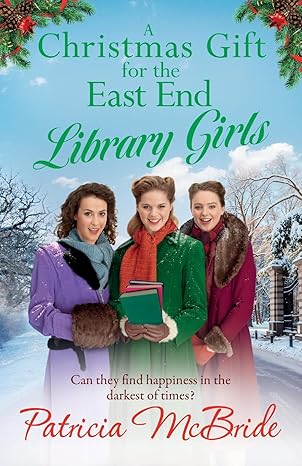
    A Christmas Gift for the East End Library Girls continues the World War II saga Library Girls Book 3, created by Patricia McBride, set during the Blitz in the East End of London, an area hit hardest in the Bombing.

    It’s October 1941 with London still reeling from the German Bombardments when Mavis, Cordelia and Jane are left stunned by a call from Buckingham Palace saying the King and Queen want to visit their Library. They are all seriously flustered at this unexpected honour and wonder how they are going to clean up the tired looking building with nothing much to work with to make presentable.

    True to their very roots the people of the East End and Library users rally to the cause with even the crustiest, most difficult people offering their skills, help and treasures, to get the library ship shape over the next few weeks. Christmas is fast approaching as well just to add another layer of challenge to life in Silvertown.

    A slow burn to begin with it takes a little while to understand the protagonists: Mavis who desperately wants to adopt a little girl orphaned in the Bombings. Jane whose husband is away fighting on the front, their daughter having been sent to a family in the country, is in despair as she misses her beautiful girl and wonders how she is faring.

    Cordelia, whose beloved Robert is a Doctor serving on the front, runs the library and to her, the ladies along with Tom their young volunteer are like family, banding together to get through the hardship of daily life.

    Within the structure of the story Patricia McBride looks at the issues of domestic abuse, post-traumatic stress and the heart breaking devastation war causes, through the eyes of the men and women of the East End, out to make their Library a showcase for visiting Royalty.

    Heart breaking at times, but written as a tribute to all the women who struggled to survive physically and emotionally through indescribable hardship on a daily basis, A Christmas Gift For The East End Library Girls is a most enjoyable, if slightly old fashioned, read.
  • Write Cut Rewrite

    Write Cut Rewrite

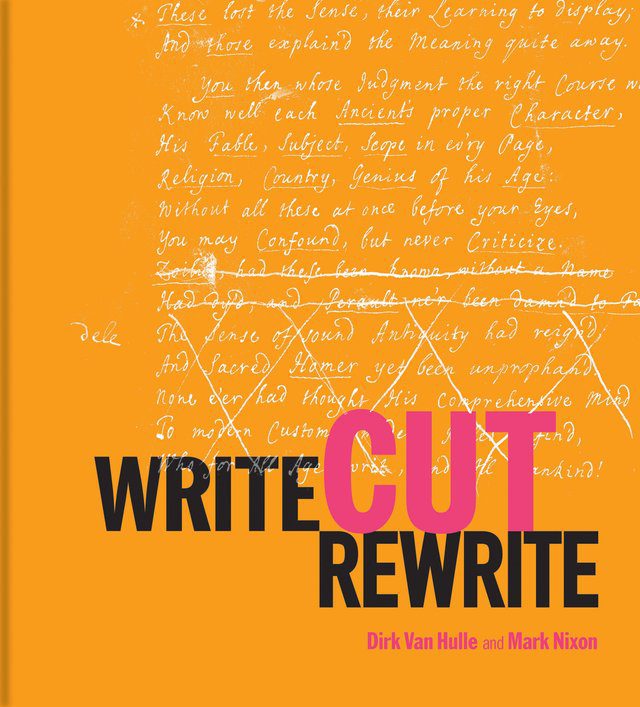
    The Bodleian Library is famous for its collection of manuscripts. It also contains drafts that have been discarded by authors or publishers.  The fact that the discarded pieces have not been expurgated shows that the authors have recognised that their final presentation would not have been achieved without these cuttings.  The author has explored many of the cuts with enticing titbits such as “Would we view the “Wind in the Willows” differently if its title remained as The Mole and the Water Rat? Some authors’ cuts were made against their will.

    Various chapters tell us about Authors’ Cuts, Revising Censorship, Difficult Beginnings and Editor’s Cuts. Write Cut Rewrite mainly focusses on modern manuscripts although there are some references to ancient texts. The first deletions we see are those done on Pope’s, Essays on Criticism. The editor has outlined a paragraph in pencil and written “Nonsense” above it. Christina Rosetti’s poem “Portraits” had two verses, but between the first and second verse, a page was torn from her notebook.

    Many examples of cuttings are shown in the poetry of W.H. Auden. He used a notebook to write his drafts and pages have been torn from this book. Examples of poetry, novels and Vestigial notes are shown here to have been reduced. James Joyce wrote down phrases or ideas in a notebook to be used for future writings. He then crossed out the ideas as he used them.

    The conclusion of this beautifully illustrated and book shows us the necessity of cutting text, “As an essential part of a story.” The example is given of Alice Oswald who began all her writing with a drawing which gradually gave way to words. This is a scholarly, fascinating book to be studied, read, and browsed with intent and enjoyment.

  • Nour’s Secret Library

    Nour’s Secret Library

    War was coming to Damascus, it is somehow undefined, but none the less there. Nour and her cousin Amir played happily in the street outside their homes, went to school and like all girls and boys, went on amazing secret adventures to find hidden treasures.

    One day they decided to form a secret society, a special Club just for their friends, just like the one in the story book. They would have a secret location, password and even a secret handshake. Until, one morning planes started flying over their once peaceful City and war had come to Daraya.

    Nour and her family, her neighbours and friends spent the night sheltering in the cellars of the houses, reading books by torch light, huddled together for comfort and warmth. Bombs dropped on the City during the day and night, destroying their houses, their business and their City.

    During the day when it was a safe to go outside, Amir would go out to get some bread, and on the way he began to collect books he found lying on the streets. He told his friends about this and they began collecting them as well. Soon the piles and piles pf books became so large they had to be taken to somewhere else to be stored.

    The friends decided that they should form a Secret Library which they called ‘Al-Fajr’, which in Arabic, the language they spoke, means ‘dawn’ and so began a library filled with books, big ones, small one and all sorts in between.

    Over time the library grew to be very large and people from everywhere came to Nour’s Secret Library where they felt safe and happy way from the terrible war raging above them.

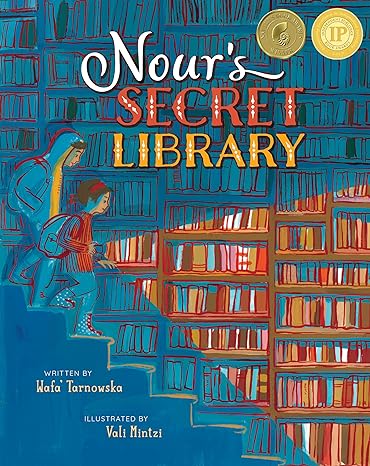
    Nour’s Secret Library is a beautiful story based on fact from Wafa’ Townaska and illustrated in bold, bright and happy colours by Vali Mintz which perfectly captures the resilience of the human spirit and that no matter how young you are, you can make a very real difference to so many people.

    The final pages of the book contain a little History about the war still raging in Syria, the real Underground Library created from books hurled into the streets as houses and building were bombed and an excellent Glossary of Terms used in the book.

    Nour’s Secret Library is highly recommended for children between the ages of 6-10 years old but in reality, any age will enjoy the story filled with hope for a better future.

  • Nour’s Secret Library

    Nour’s Secret Library

    War was coming to Damascus, it is somehow undefined, but none the less there. Nour and her cousin Amir played happily in the street outside their homes, went to school and like all girls and boys, went on amazing secret adventures to find hidden treasures.

    One day they decided to form a secret society, a special Club just for their friends, just like the one in the story book. They would have a secret location, password and even a secret handshake. Until, one morning planes started flying over their once peaceful City and war had come to Daraya.

    Nour and her family, her neighbours and friends spent the night sheltering in the cellars of the houses, reading books by torch light, huddled together for comfort and warmth. Bombs dropped on the City during the day and night, destroying their houses, their business and their City.

    During the day when it was a safe to go outside, Amir would go out to get some bread, and on the way he began to collect books he found lying on the streets. He told his friends about this and they began collecting them as well. Soon the piles and piles pf books became so large they had to be taken to somewhere else to be stored.

    The friends decided that they should form a Secret Library which they called ‘Al-Fajr’, which in Arabic, the language they spoke, means ‘dawn’ and so began a library filled with books, big ones, small one and all sorts in between.

    Over time the library grew to be very large and people from everywhere came to Nour’s Secret Library where they felt safe and happy way from the terrible war raging above them.

    Nour’s Secret Library is a beautiful story based on fact from Wafa’ Townaska and illustrated in bold, bright and happy colours by Vali Mintz which perfectly captures the resilience of the human spirit and that no matter how young you are, you can make a very real difference to so many people.

    The final pages of the book contain a little History about the war still raging in Syria, the real Underground Library created from books hurled into the streets as houses and building were bombed and an excellent Glossary of Terms used in the book.

    Nour’s Secret Library is highly recommended for children between the ages of 6-10 years old but in reality, any age will enjoy the story filled with hope for a better future.

  • The Air Raid Book Club

    The Air Raid Book Club

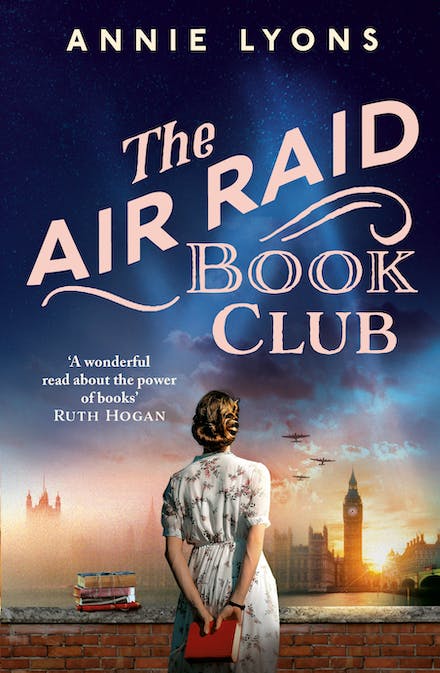
    Books have the ability to bring people together and to help bolster their spirits through the most challenging and demanding times. Best-selling author Annie Lyons’ female-centric historical novel ‘The Air Raid Book Club’ highlights the importance of book clubs, which were the very thing to fight boredom and fill blacked-out evenings at home or in shelters with pleasure and temporary escape from the horrors of falling bombs over London.

    In 1938, with war looming, widowed bookshop owner, Gertie Bigham had lost a little of her zest for life. However, with the rise of Hitler in Germany and the resultant threat to its Jewish population, she reluctantly takes in a traumatised evacuee, Jewish teenager Hedy Fischer as part of the Kindertransport programme.

    Despite feeling out of her depth, over time the two form an unbreakable bond and when the Blitz begins, they decide to create the enormously successful Air Raid Book Club. Its huge success leads them to expand their programme to cater for children and then, as the war continues, Gertie and Hedy resolve to send books overseas in care packages to prisoners of war. 

    Despite war being the backdrop to this narrative, it is more a heartwarming tale of resilience, friendship, hope, love and the unity that books can bring, however readers are given some insight into hardships experienced by those on the home front.

    The author has included the list of “Bingham’s Book Club recommended books” at the end of this captivating novel.

  • Wayside School: Beneath the Cloud of Doom

    Wayside School: Beneath the Cloud of Doom

    Louis Sachar writes a most delightful School Story. He has the ability to make the most outrageous statements seem quite commonplace. Todd was in Mrs Jewl’s class on the 30th floor…..It was important not to be late for class. The author also introduces humor through language…the Principal’s name was Mr Kidswatter, through speech,” I’m going to be a paper clip bender when I grow up,” and through actions, such as when the Councillor hypnotises himself. The story is written in such a matter of fact way that the reader smiles and accepts the unusual.

    Each chapter in the book is almost a complete short story but the common thread that links them together are the characters in the classroom and their reactions to school issues. Things are running relatively smoothly until “The Cloud of Doom,” moves to hover over Wayside School. It turns the sweetest child into a brooding, disobedient pupil, and everyone is on edge. Something drastic will need to be done to shift this cloud.

    Many aspects of school life are written about. The Librarian has a large stuffed walrus in her Library. Her name is Mrs Surlaw…She did not believe in books being separated into Fiction and Nonfiction, “Who was she to decide what was true and what wasn’t?” Her books were organised by the number of pages. Skinny books at one end and fatter books at the other. The children knew where to look for an enjoyable story.

    In the author’s note we learn that this is the fourth book about the Wayside School. The first book being written more than forty years ago. Louis has included himself in a small cameo in the book as the yard teacher, who blows up the balls and plays with the kids at recess time. The style and creative stories will make this as popular as the previous books in this series.


  • I Don’t Want to Be Quiet!

    I Don’t Want to Be Quiet!

    I Don’t Want to be Quiet! is the perfect book to totally enjoy with small people who love, love, love to make HUGE amounts of noise whenever possible, whether it be stomping up the stairs, clapping and cheering and laughing out loud whenever possible in the classroom and generally making the most noise possible to become the centre of attention; the little girl in the story just simply enjoys being LOUD!

    There are times when we are all guilty of making far too much noise, but it is not a until the whole library full of people say, ‘No Talking, please’ the culprit gets so embarrassed she goes to the shelf and takes down a book, sitting quietly until her red cheeks fade.

    That is when magic happens, as she discovers that you can sit quietly reading a book yet be in the middle of a big, very noisy world of pirates and lost children. The next morning, while she is still discovering this magical thing called being quiet, she hears the birds tweeting and singing, greeting the day. Then she begins to learn about numbers, and poems and so much at school, simply by being quiet and listening.

    As with all Laura Ellen Anderson’s stories for small people, they are filled with bold, colourful illustrations, with text suitable for beginner readers. The enjoyable rhyming text, can make this a very LOUD reading experience.

    Grandparents and parents of little ones who are having issues with turning down the volume and learning that there are places you need to be quiet and places you can be as noisy as you like, but sometimes that is not the same place, will enjoy every word on the pages along with the bright, cheerful, very LOUD illustrations, that is until quiet arrives, just in time.


  • All of the Factors of Why I Love Tractors

    All of the Factors of Why I Love Tractors

    In this bright, fun filled book written in rhyming text, which adds so much more fun to the story, Frankie McGee and his Mum are off to the library, one of Frankie’s favourite place to go, as there he can find so many books on his very, very favourite thing, Tractors.

    Frankie arrives at the library and goes straight to the books on tractors, selecting one to take home, once again. His Mum sees what he has selected and asks in very upset voice ‘WHY’; so Frankie decides he need to explain to his Mum, ‘All of the factors of why I love tractors’, so that his Mum understands his mad, obsessive, passion for tractors.

    He gets so excited he is asked to ‘use his library voice’ by Miss Squibb the librarian, but Mum is still not convinced that a book on trains, or plane or something else would not be better.

    Eventually Mum decides that reason is not helping, and when Frankie checks out his book with Miss Squibb, she is not at all surprised that he has chosen a book about tractors! Frankie offers to read the story to his Mum, because as he says he knows all the words and after all, it really is all about liking books!

    All of the Factors of Why I Love Tractors is based around very real events at any children’s library, creating a very entertaining tale around the wonderful power known as pester power, something of which all small children appear to excel, particularly when it comes to achieving something they really, really want, such as a book about Tractors.

    Jenny Lovlie has created a perfect correlation of pictures to compliment the rhyming text, which as this will be a book that is read over and over again, offers so many other things to be discovered on every page, other than tractors!

    All of the Factors oft Why I Love Tractors is perfect for a wide range of readers.