Tag: learning

  • Are You Bored, Minimoni?

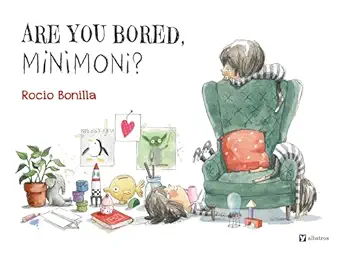
    Are You Bored, Minimoni?

    Monica, otherwise known as Minimoni, has grown. She has become taller and has stopped using her dummy. In fact, she goes to school now. Minimoni has a diary. She records her activities for each day of the week. She meets up with friends, has hockey practice, visits the library, goes to painting class and goes on hikes. But that leaves Sundays. What can she do on Sunday to escape from boredom?

    Minimoni decides she should ask for advice. She visits the mouse, the rabbit, the bat, the spider and the snake. None of them can help her with any ideas. After travelling far and wide to ask various animals, the girl asks her Mum. Mum’s reply is, “Look around Minimoni,” And the double page spread shows us the young girl’s room. It is filled with books, paints, cards, toys, a cubby house, building blocks and cupcakes.  There is no more room for any other activity. Her mum asks, “Do you really get bored?” The girl smiles and acknowledges her imaginary friends as well as her concrete toys. “No, not really”, she replies.

    This attractive picture book, Are Your Bored, Minimoni has delightful illustrations; they are simple but stylish and cleverly depict Minimoni’s feelings and movement. The pages with white background help to bring the character to the foreground. Thes pictures are detailed and show a sense of movement and expression. The text is varied and interesting. This story covers a topic with which most children would be familiar.


  • Tree

    Tree

    Using marvellous illustrations and descriptive, lyrical language, the Clare Saxby has used this tree as the main character in this picture book, naturally titled Tree.

    The story begins with a view of the forest from above. It is a misty morning, but one tree stands taller than the rest. “The tree is older than those who find it, and younger than the land it grows from.” As the mist melts away, we see the tree in all its splendour.

    It breathes out oxygen and takes in carbon dioxide. The illustrations move to underneath the ground to show how the roots share the soil with other creatures. They send stories through the soil. At the base of the tree, we find lyrebirds, slaters and beetles.

    Now the pictures take us to the tree during a rainstorm. “Rain feeds the tree, feeds the forest.” We see the many creatures which inhabit the tree including possums, beetles, birds and insects. Once the daylight passes, “Close your eyes. Listen to the sounds of the night.” See the different animals which come to the tree. Gliders come to suck the sap, and possums’ flit and chew leaves. Wombats and rats scuffle on the ground below, and steadily the tree grows.

    The author’s note at the end of this story explains that this is a Mountain Ash tree, which has miraculously survived bushfires and clearing. “To protect this tree and others like it – is an investment in the health of our world. There is a fold out page in the book showing the tree in greater perspective. Altogether this is an informative and complete work not to be missed.

  • My Very Own Special Particular Private and Personal Cat

    My Very Own Special Particular Private and Personal Cat

    What a grand way to get a message across to children. Warning bells begin to ring with the text on the first page. “This is my cat my very own cat….MINE.”  Then begins the story of what happened between the boy and his cat. What the boy wants and what the cat wants are very different things, and it takes a while and a few scrapes before the cat makes his feelings known.

    Gradually the boy begins to realise that the cat is not his toy to command. He wants the cat on his lap, he wants the cat to play dress up’s, he wants the cat to ride in his wagon. Most of all he wants the cat to do as he says.

    Boy tries to explain to cat that “You belong to me. You’re mine you see?”  Cat has vastly different ideas and says, “I am the my of mine.” Cat explains what his life is for and that it is his own. Gradually the boy understands that the cat has the right to be a cat and therefore he has the right to be a boy.

    The author says that this story talks about our personal space needs and respecting each other’s boundaries. Her message comes across so clearly that everyone should read this. What a fantastic vehicle for discussions in classrooms. So many people take for granted that behaviour at home is common to all, but boundaries do need to be set.

    The combination of text and illustrations work perfectly. The skilful line drawings explain exactly how the cat feels and this allows the author to use a simple but powerful text. This is a book to treasure. Just marvellous.

  • GRUB

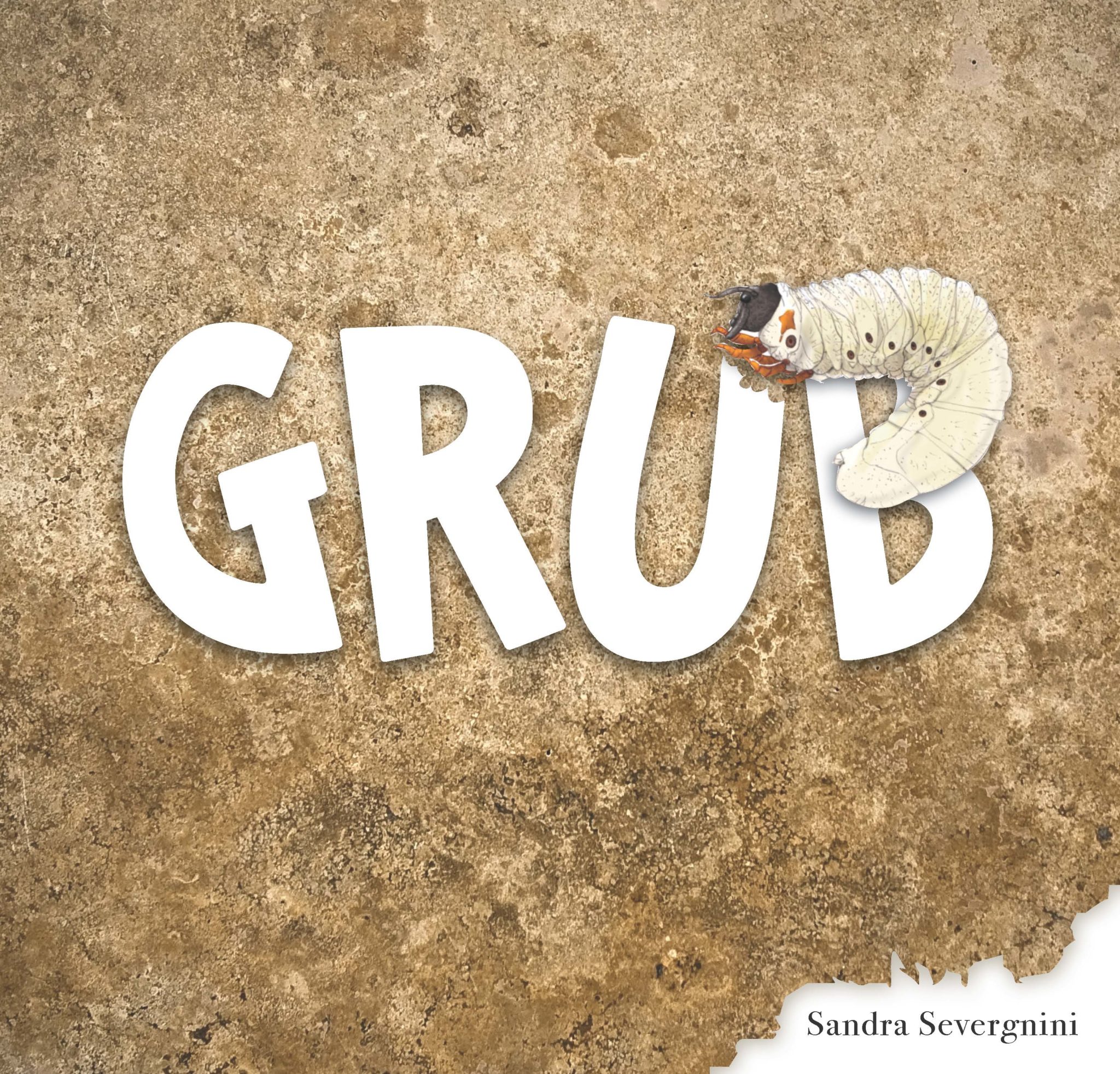
    GRUB

    Whatever you do, read this book! Read it, then read it to your friends, then read it to any child nearby. GRUB is a brilliant picture book, and an excellent work in literature. The illustrations and the text meld beautifully to absorb the reader both visually and aurally.

    The end pages, as with most of the double page spreads, lure your eyes to the wonderfully detailed drawings. When Grub is young, you will have to search for him beneath the tree canopy and in the old rotten log. As he grows, he is more recognisable. He is aware that his body will change, but what will he become? Will he be like his friend the ladybird, or a butterfly, or the singing cicadas? How will growth and age change him? What will maturity mean for him?

    With these questions in mind, we eagerly wait for the revelation. It doesn’t disappoint! The author completes the story by giving the reader some facts about the mature creature. These are fascinating and very relevant for the reader.

    The artwork is immaculate, detailed, and enticing. It enhances the text. The text is a large size for younger readers and is never compromised by the pictures. I am sure we will see this book nominated and short listed for awards. Congratulations Sandra on a fabulous book.

  • One Book Was All it Took

    One Book Was All it Took

    There is movement, colour and drama in this picture book, One Book Was All It Took. Each page is designed to grab the reader and propel them into the story. What could be more disastrous for a young book worm on a rainy day, than to be out of new books. This is the situation Violet finds herself in and with slapstick humour, the author seeks to find a solution for her problem.

    Violet’s greatest wish is for her town to have a Library. She writes to the mayor to request this. Meanwhile, Violet finds a book that she thinks no one will miss. This triggers a series of unfortunate events which ultimately lead to Violet having her wish come true.

    Because the illustrations are larger than life this story exudes excitement and an eagerness to turn to the next page. It is all very slick and fantastic and wildly improbable, but that’s the fun and satisfaction of the story. The text font is a good size for young readers, and the colour a good contrast on the illustrated pages.

    Young readers will enjoy the slapstick humour and comedy in this bright and breezy tale.

  • Goal

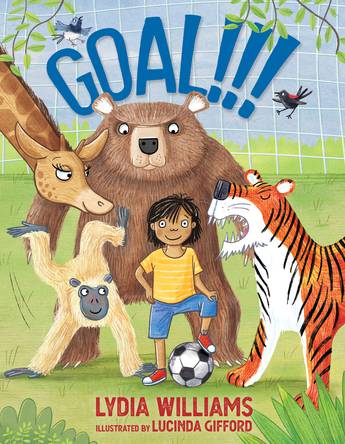
    Goal

    Lydia Williams is the goal keeper for the Australian Matilda’s and Arsenal women’s Soccer teams. She loves writing stories about her sport and the wonderful people, or in this case animals, she has met on her journey to become one of the best goal keepers in the world of women’s soccer.

    Lydia grew up in the outback of Australia making friend’s with many of the bush animals. When her family made the move to the big City, she had to leave all her friends behind, including the beloved animals she had spent so much time getting to know.


     For a long time she was very lonely until she went to the city zoo and discovered so many more animals that eventually would all have something to teach her about her life as a sports person. As she loved soccer she wondered how, in this new life she had, she was ever going to learn new skills. Her big dream was to play goalkeeper at the Olympics, but if she could not learn anything new, this would maybe only remain a dream.

    But she had a lot to learn from Tiger, Bear, Giraffe and Gibbon about learning from her friends, the animals, but it took Penguin, the most unlikely of soccer players, with his fearless dive to help her understand about teamwork.

    She also learned that the more she practiced the better she became and the most important thing she learned was that all of her animal friends had something very precious to teach her: Giraffe watched everything (sharing) and directed play from her lofty height, Bear was solid in defence (standing your ground), Tiger used her voice to speak to the rest of the team (leading), Gibbon’s agility was something wonderful to see along with her happy energy (laughing).

    Lydia Williams shares her life learning and training to be a top athlete in Goal with a massive amount of fun, thanks to her wonderful friends, who also teach her that no matter how good she becomes, she can’t always save every Goal.

    Lucinda Gifford captures all the fun of the game full of wonderful life lessons with a team of larger than life animals who simply enjoy what they are doing, helping Lydia to learn about what it takes to become the best you can possibly be by learning from others and having fun along the way.

    Goal is perfect for young children who are beginning to play sport and are learning about being a member of a team, being happy, making friends and most importantly enjoying playing the game.

    Lydia’s dream may well come true as she has been selected in the Australian Olympic Women’s Soccer team to compete at the Olympics to be held in Japan in July 2021.

  • The Commando Way A Special Forces commander’s lessons for life, leadership and success

    The Commando Way A Special Forces commander’s lessons for life, leadership and success


    Truth, honesty, resilience and values are just some of the things that have helped shape Bram Connolly and his life to date; a life that has been challenged on a daily basis, filled with exceptional circumstance, confrontation and many, many life lessons.

    Interestingly when he set out to write The Commando Way, he considered himself and the many men he worked with as ‘ordinary blokes dealing with extraordinary circumstances’, but it was not until he had almost completed the first draft of the new work, he realised how wrong he had been; his life had been filled with anything but ordinary people and so he began again, creating an engaging, brutally honest and very personal story of lessons learned, the skill of adaptability and the skills required to become an excellent leader.

    Each story, or chapter if you like, is based on personal experience, which is a gift from Bram, as many of the experiences that taught him so many valuable skills and life lessons, are those that left him smarting, doubting: often feeling terribly foolish and vulnerable.

    In a modest and often humorous manner, Connelly, shares his journey from joining the Army as a raw recruit to becoming a highly trained and skilled soldier in Afghanistan, where he earned the Distinguished Service Medal for leadership in combat in 2010. As full time career soldier, his pathway to Afghanistan was not easy; it was filled with challenges, mistakes, silly errors of judgement, much hard work, long hours of study, learning to accept that life does not always go where you choose it to take you. Most importantly, he learned to understand was that each lesson learned was one more component of his skill base.

    After twenty years in the Australian Defence Force he moved into the corporate world where he once again had to revisit change, learning to be a civilian, a person in his own right, not a member of a team, with the mateship and support that goes with it.  He also discovered that one thing in life, regardless of where you are or what you are doing that never changes is the fact at you always on the pathway to self-development and self-awareness.

    Motivation and leadership are the underlying emphasis of the book, sharing some of life’s hard learned lessons help to draw up the plan and paint the picture. Learning the art of resilience, optimism, the danger inherent in laziness, embracing change, fear and presenting the eleven principles of leadership, surrounded by so much more, has crafted a book which is one everyone should read a least once.

    Billed as book on leadership, it is far more in-depth, all-encompassing than just that: The Commando Way could be considered as a book on life, acceptance and survival, perfect for the changing, challenging and complex times in which we all live.

  • In the City

    In the City

    The end pages of In The City a paperback picture book for very small children, have been clearly designed to show what we might find in the city. Without text, we see a variety of buildings, transport, people, and animals that immediately reinforces the idea of “City.”

    Two children with a map are off to explore. The illustrations are mostly clear, and some objects are labelled. The double page spreads make it easy to incorporate a panoramic scene. The children catch a train, then visit a museum, where they are invited to name an artefact. After that the children walk through the busy streets where there are many things to be seen. Some lunch is enjoyed in the park and they feed the ducks before they make their way home and revise many of the things they saw.

    With help, young children will be able to recognise, point to and discuss the illustrations and objects that have been shown and written about In The City.

  • All Are Welcome

    All Are Welcome

    In todays multicultural world, traditional rules are changing bringing with it a rich diversity in schools and communities.  All Are Welcome couches perfectly the vital message that regardless of who you are or where you come from, You are welcome here.

    All Are Welcome was born out of Suzanne Kaufman’s daughters’ elementary school in Kimball, Seattle, USA where the multicultural community is protected and celebrated as the basis for diversity, acceptance and celebration of diversity.

    A poster created by Kaufman to welcome new students into the Kimball school community was seen by Alexandra Penfold, reminding her of the schools in her community of Brooklyn. Each of the characters created for the poster remained with Penfold.

    Late one night she sat and wrote this bright, cheerful and celebratory story about the many different cultures and aspects that make up make up our world; make up so many school communities. At lunchtimes ‘what a spread, A dozen different kinds of bread’. The rhyming text is the perfect medium to present talking points such as correlation of diversity and strength and the learning that can be discovered from all the ‘special talents we’ll discover’.

    Each of the illustration’s present children of all shapes, sizes and cultures, wearing everything from a baseball cap to a hijab, glasses or in wheelchairs, caring, sharing, learning and understanding that there really is ‘a big world to discover’ in your own neighbourhood.

    As the new school year begins, or returns from the Christmas winter break, All Are Welcome is, or should be, a must read, classroom discussion topic and vehicle for understanding for all elementary and primary school aged children.

    Sensitively presented the text and illustrations highlight the issue that diversity is reality and people, regardless of their culture, have so very much to share, offer and enjoy to create a strength which forms the basis for true celebration and understanding of cultural diversity.


  • Scaredy Book: It’s not always easy to be brave!

    Scaredy Book: It’s not always easy to be brave!

    Scaredy Book is not very brave and finds simply living in his nook in the library is really pretty good. He would love to be a lot braver and go on adventures but well…. perhaps something might happen. Perhaps something might get spilt on his pages, or maybe a corner might get damaged, or so many things might happen that is just much safer to stay where he is, happily on the shelf.

    That is until he meets Emma who loves adventure and loves books and decides to take Scaredy Book out to her home.  Scaredy Book thought that perhaps as Emma seemed to love books so much he might be safe with her and somehow found a little bit of courage. Emma thought Book looked a little lonely and that perhaps he need a little bit of happiness in his life.

    The two of them set off on some lovely adventures together having a huge amount of fun and strangely enough, Book found out that his few creases and smudges from climbing trees, and walking in the rain and lots of other things, made him feel happy and proud.

    He still loved his nook on the shelf in the library but he was no longer afraid to go out and have another small adventure from time to time.

    This is an excellent story for those children who are fearful of new and different things and events in their lives; children who love their comfort zones. It is also a gentle reminder to parents that children need to be able to be brave, take some small risks, learn about the world they live in and yes, live to tell the tale.

    Well-crafted and beautifully illustrated Scaredy Book will raise a great many discussion points with children and their parents. As it is set in a library, which in many ways is a great jumping off point for many adventures, it may also encourage young readers to discover the shelves of their libraries and the amazing amount of very safe adventures to be discovered in the pages of a book.