Tag: law

  • The Law of Innocence

    The Law of Innocence

    Mickey Haller has been a feature of previous Bosch thrillers as the go to man for legal issues as Harry Bosch, his half-brother, often becomes involved with his cases in a deeper than ever expected manner, frequently running close to the wind on the legal side of things. But what happens when Haller becomes the victim, the suspect in a case where a body is found in the boot of his car and not just any body, but the body of a well-known con man, Sam Smailes.

     As always with Connolly thrillers the plot is complex, well researched and constructed giving the storyline a massive acceptability as the cases are often those close to real life somewhere, adding a layer of authenticity that novel after novel keeps the much loved characters alive on the pages.

    Taking a slightly different turn, being based predominantly in the Courtroom and jail, makes a change from the far roaming geography of previous works and as it is set at the beginning of 2020, the fact that there is a rumour of a virus that is going to change the way the world operates, builds in the reality of the timeframe.

    But how is Hallett, who is pretty good at finding a way through the legal morass, going to work his way out or what is becoming more and more like a set up. As he is a lawyer and not all that well loved by members of the Judiciary, he is finding that trying to mount a defence from his jail cell, somewhat challenging.

    He calls on the help of Bosch, Maggie, Cisco and other close friends to do the leg work for him and as always once the real digging begins, what is uncovered is explosive. But the question still remains, why he was framed.

    Fast moving, entertaining and compelling The Law of Innocence is a must read over the summer months as in a slight twist, this time it is Haller narrating his story, with Bosch as a secondary character, which in an interesting concept.
  • Witness

    Witness

    Louise Milligan is no stranger to the Courts of Law; as a journalist she was for a time a court reporter, then she did a Law course, developing her investigative skills. Some of the cases she followed closely had verdicts passed which were unfathomable. Gradually as she delved deeper into the cases, she found that the victims had been bullied atrociously by the defence lawyer.

    A young eighteen-year-old innocent girl celebrated her birthday with a girlfriend. They finished up in a nightclub having had much to drink. The nightclub owner’s son told her he would show her the VIP area but took her out into a lane and raped her. This was a life changing event for the girl, who reported the act to the Police. When the case came to court, the girl told and retold the prosecuting lawyer what had happened. His bullying and harassing treatment of her ensured her humiliation and degradation would never be forgotten. The perpetrator was found not guilty as he said he hadn’t heard her say no!

    With a view to changing the treatment of witnesses, Louise has researched other cases and found similar tactics used on confused, overwhelmed and unsupported people. But then she was called as a witness with information about Cardinal Pell. She had been told, by a victim, exactly what had happened to him. Louise took the stand nervously but confidently and was cross examined for hours. .” A court is required to disallow improper questions put to a witness,” but during that day Louise could not think of one question that was not asked in an insulting or belittling tone. To destroy the credibility of the witness would knock the case out at committal stage. The actual court transcript is given here, and it is outrageous!

    In the five years Louise has taken to compile Witness, she has honed it into an eminently readable piece. It is shameful, that in our time witnesses and victims are still treated with so little regard. This is a social issue which needs strong action now. Pass this book around; better still give everyone a copy for Christmas, as everyone should be aware of these issues.

  • Public Enemies Russell ‘Mad Dog’ Cox, Ray Denning and the Golden Age of Armed Robbery

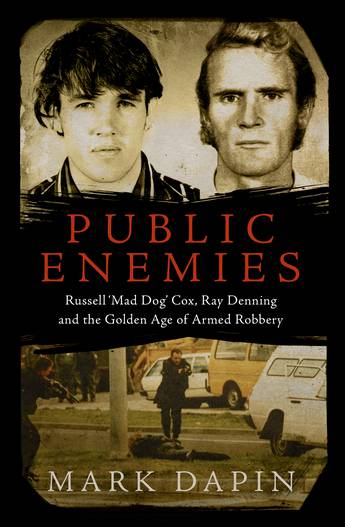
    Public Enemies Russell ‘Mad Dog’ Cox, Ray Denning and the Golden Age of Armed Robbery

    Unlike today when it is a struggle to find an ATM, let alone an actual bank, the period of the late 1960’s to the end of 1990’s saw Bank branches sprout on almost every high street corner. Hence it is not surprising that it became the ‘Golden Age of Armed Robbery’; prospective armed robbers could undertake intense reconnaissance, and be assured of a healthy reward for their efforts. Amongst these professional criminals, Russell Cox and Ray Denning were considered to be Australia’s No.1 and No. 2 public adversaries. Their diverse but intertwined lives are chronicled in great detail in Mark Dapin’s well research book ‘Public Enemies’.

    Although quite different characters both started life similarly; their fathers were habitual criminals who spent most of their time when not incarcerated, getting drunk.  There was little upon which to model a wholesome life. Spending their formative years in barbarous children’s homes and brutal juvenile reform institutions, which were places not about rehabilitation but ruthless punishment and sexual abuse, they were disadvantaged from the start.

    Here the main subjects of the book forged networks which stood them in good stead throughout their criminal careers; it’s not surprising that theirs was a life of crime and violence.  Although Mark Dapin has some degree of sympathy towards these men and others like them, he makes it clear that he doesn’t want to glamourize their violent actions, as there are many innocent victims whose suffering ripples through their families to this day.

    Cox’s and Denning’s daring escapes from what were considered impenetrable prisons, has the making of a ‘Boys’ Own Adventure’. After one such bid for freedom, Denning managed to locate Cox in eight days; something which the police could not do in almost eleven years. The author contextualizes their story by introducing their associates, common enemies and even their victims.

    This gripping, entertaining but confrontational book leaves the reader wondering who were the felons; the police who verballed suspects and weren’t averse to using vicious force or those who were actually doing time for breaking the law.

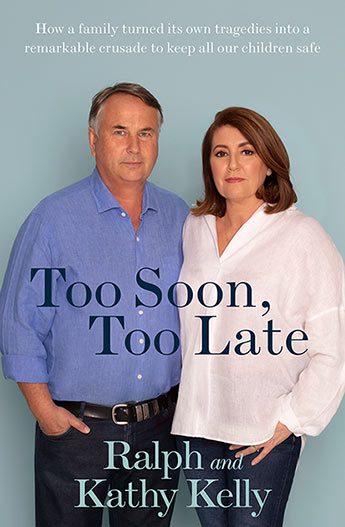
  • Too Soon, Too Late

    Too Soon, Too Late

    Ralph and Kathy Kelly, on the death of their sons, held a mirror up to the people of Australia whom, upon reflection, found it difficult to face the reality of their collective ugliness: So began their campaign to try to make changes to the laws of New South Wales, and by doing so have seen the introduction of tougher laws for ‘coward punch’ deaths.

    In the late evening of 7 July 2012, the Kelly’s phone rang, bringing with it the shocking news that their son Thomas was in Emergency at the Royal Price Alfred Hospital in Sydney and they needed to get there as soon as possible. Thomas was 18 years old.

    Living more than a 90-minute drive from Sydney, they headed out into the night, not really understanding what fate held in store for them. Their precious son, out on his first real date in Kings Cross, had been the victim of a ‘coward punch’, delivered by a man with absolutely no connection to Thomas; a man in a rage, passing in a taxi, who simply decided to get out and ‘king hit’ someone!

    As the Kelly’s struggled to recover from this terrific blow, slowing picking up and fitting the pieces back together in some kind of mosaic, their determination to campaign for change in the Laws commenced, backed by a raft of people who also saw a strong need for change in so many aspects of not just the Law, but of how society as a whole viewed the violence that was becoming all to easily accepted as a modern tragedy out of control.

    Unfortunately for the Kelly family there was more tragedy waiting to occur, with the death of their youngest son Stuart, after his entry to the prestigious University of Sydney’s, St Pauls College. Once again, they received a call from Royal Price Alfred Hospital Emergency Department, this time from Stuart saying come and get him, immediately. He would not say why!

    Months later, as the direct result of events that occurred at the College on that night, Stuart took his own life, leaving behind an unclear set of circumstances, but also beginning a serious investigation as to the horrific practice of ‘hazing’ undertaken there and the cover-up that had been part of the culture of the College for many, many years. Stuart was 19 years old.

    Too Soon, Too Late is their story; cathartic and vulnerable, strong and full of yet unhealed sorrow; a story that reaches out to everyone who has ever faced the terribly darks nights of the of soul on the loss of their precious children, holding out hope for a better and brighter future, that change can happen.

    Ralph and Kathy’s story, as well as their daughter Madelaine’s, is also a reminder that social change needs to take place before tragedy occurs, more young lives are senselessly lost and more families struggle to cope with the unreality of young lives taken all too soon.

    Change has occurred as the direct result of Ralph and Kathy Kelly’s efforts through the Thomas Kelly Youth Foundation and the Take Kare program now know as Stay Kind, continuing the good work of reaching out to vulnerable youth, focusing on the message of kindness and caring, rather than in Kathy’s words, accepting ‘a society where bullying, violence and sadness destroy the very essence of who we are. Think about that, be involved and demand a world where our children grow up where kindness is the norm.’

    Too Soon, too late is a story that calls out and demands social change and one that will remain in the minds and hearts of people from every walk of life. Courageous and beautiful.

  • A Spark of Light

    A Spark of Light

    Jodie Picoult has once again plunged the reader into an immediate situation, where lives are in the balance, and the scene is dire. There is urgency in the first page and it continues to evolve as we meet and understand the characters who have made choices that they now have to live with. The novel is structured in such a way that we enter into a hostage crisis. Moving backwards through the hours of the situation we meet the characters and their reasons for being where they are.

    Told with great compassion, understanding, and knowledge, we learn that there is a gunman, who has already shot someone. He has entered an Abortion Clinic, and has several women captive. His motives are not yet clear, but we look at the women who are in the building and learn their stories. One of the women is an anti-Abortion member, who has infiltrated the clinic trying to get legal information to help to close it down. Another young woman is at the clinic to get a prescription for the contraceptive pill.

    The stories of the various people in the clinic are compelling. The doctor who completes the procedures has great religious faith and believes that women should be given a chance when their situation calls for desperate measures. Each person has an informed and compelling argument as to why they believe so passionately in their personal view. When the Police arrive at the scene, they set up to negotiate with the gunman. No one is aware that it is the negotiator’s daughter in the clinic. Hugh has raised his daughter with so much love and understanding that he could never have dreamed that she would be there. Senior officers want to remove him, but it is Hugh that the gunman recognises and speaks to.

    Everyone in this story has a clear and compelling reason to be where they are and to think the way they do. Ms Picoult has built a complex tale that makes you question your own beliefs and raises so many points that you cannot help but to become involved. This is not a story to read and not have an opinion. Even the young girl who went to get the contraceptive pill, because she wanted to be an adult, realises it is not sex that makes you an adult; it was having to make decisions, sometimes awful ones.

    At the end of the story, there is quite a section of research by the author. She quotes the number of acts of violence committed by anti-abortion protestors in the USA. The numbers are quite shocking, but as bad, is the list of politicians who have passed more than 280 laws restricting access to abortions. It is not that the author is promoting abortion; she believes that there are many steps such as education, contraception, and counselling that could limit the necessary outcomes.