Tag: language

  • Bookish Words & their Surprising Stories

    Bookish Words & their Surprising Stories

    If you are a lover of words, their origins and meanings, this small book with a big title, is for you. David Crystal is a professor of linguistics at Bangor University. The anthology that he has compiled shows the way words have shaped our writing and reading over the centuries.

    He tells the story behind these 100 words and idioms, and uncovers many surprises relating to how meanings have changed. Each entry shows the stages of influence and linguistic origins, and the development is traced over time.

     When Romeo first kisses Juliet, she says “You kiss by the’ book.”  She means he kisses expertly as if following a set of instructions. Today, we refer to things that have been done in a specific way as “By the Book.”  Someone who never does things by the book is considered a free spirit.

     Deadline. This word was used as a boundary line. Prisoners risked being shot if they crossed the boundary line. It was first used in the mid 1800’s to mean motionless, such as a fishing line.

    At the end of the fascinating wander through words and idioms, there is a section on further reading which mentions other books and authors who collect words and their usages. Following that there is an index of the words examined.

    Bookish Words & Their Surprising Meanings is a meticulously detailed compilation.

  • Too Many Cheeky Dogs (Bigismob Jigiwan Dog)

    Too Many Cheeky Dogs (Bigismob Jigiwan Dog)

    Too Many Cheeky Dogs (Bigismob Jigiwan Dog) from Johanna Bell and Dion Beasley is well presented in a colourful hardback picture book. The language used to tell the story is Kriol, which is spoken by about 20,000 Aboriginal people in the Northern Territory. There are different words in Kriol depending on where you live. This is a bilingual book, and as such is very important in helping children to see their own language in print, and to hear their own stories.

    Initially the set out of the story appears to be complex, but once you understand the system it becomes easier with the first double spread consisting of a page in yellow with yellow writing. If you look at the back of the book there are several translations (as well as English). The next double spread is in red, and has the Kriol language in several forms. If a translation is needed you look at the back under the red writing.

    The story itself would delight a young child, as it is humorous, repetitive, and familiar. The first page begins “On Monday I walked to my auntie’s house and guess what I saw?” Each day is named and the places where the child walks would be known. There is also the introduction of numbers and colours, so lots of essential information in a simple text.

    Many children have drawn the illustrations and their wonderful naivety emphasises the important features of animals and surrounds. The dogs have very large teeth and claws, while the cakes are colourful and delicious.

    Too Many Cheeky Dogs (Bigismob Jigiwan Dog) is an excellent production of a book for educating children in their own language. The illustrations while captivating, tie in with the text beautifully, and the language concepts as well as number facts are cleverly presented. The book has captured the essence of the lifestyle familiar to the children of this culture.

  • Punctuation..?

    Punctuation..?

    Let us face it, punctuation is pain. Somehow you never ever seem to get those squiggles, blots, and other ink spots and lines to behave and end up in the right places. But help is a hand with this quirky and somewhat tongue-in-cheek look at this bane on every writer, editors, sub editors and a student’s life, Punctuation.

    Following the alphabet, as why would you not, when dealing with the finer points of the English language, the first  little ink blot to be presented is the Apostrophe which is most commonly used to indicate possession by a person or thing by someone else. Simple you may think, that is until you get to differentiating singular and plural nouns……. Yes, well!

    Following on is short order under C is Colon: No, not the human colon but two little dots standing one on top of the other, that is until you get to the semi-colon which is a dot and an comma standing on top of one another, each with their own purpose on the page to list or to balance a statement.

    Exclamation marks are a favourite for stressing a point, making a loud statement, or presenting a warning, indicating regret, hope or joy with so many wonderfully, inappropriate uses in a sentence, but when used correctly adds a slight fillip of drama to a sentence!!

    The Question mark thought it had the last word, as it is used to pose direct or tag questions, considered very important in some aspect s of life, let  alone grammar, that was before Quotation marks added their bit and then that dratted semi-colon had to take the last few pages, didn’t it?

    Regardless of how Punctuation is dressed or undressed, it is a most important aspect of written and spoken English, set to confront and confound but in this natty little book, which is accompanied by some delightfully zany characters helping out with meaning and understanding, Punctuation begins to be completely sane and definitely rational.

    Without it a sentence would look very odd as it would have no real shape or form no meaning and be very difficult to understand making language even more confusing than it is already by using an Ellipsis to round out this sentence………..  See what I mean!

    Punctuation (the book) should be considered as a must purchase for anyone who writes, is a student or is learning the English language as a second or third language, as it  has been very well  constructed presenting the various aspects of punctuation in a clear and easily understood manner. Grab a copy and begin to get your punctuation correct!…, “UMMM”.

  • Word to the Wise: Untangling the mix-ups, misuse and myths of language

    Word to the Wise: Untangling the mix-ups, misuse and myths of language

    Word to the Wise is a very handy book. It’s by an unashamed, or is that unabashed, language nerd, Mark Broatch and now sits between my dictionary and thesaurus. It begins with some brief tips about how to write purposefully and clearly from this experienced writer and journalist.

    When I first looked at the title I thought it was a spiritual self-help tome for the already wise. Fortunately, the subtitle set me straight, so I put it to the test by looking up ‘straight’ – Index p 141 (tick)   “Something that’s straight is without angle or curve or not askew (tick); as well as not humorous, (not!) direct, ordered, undiluted etc. Then some more about straight persons and straight roads and racecourses followed by the mix-up word ‘strait’, then ‘straightened’ meaning restricted.

    All of that just goes to show the English language is truly as frustrating and as fascinating as it would appear to be, but on another level it’s also an entertaining and educative non-fiction read; the kind of thing you can dip into and bring greater clarity to your writing.


  • Hemingway’s Havana: A Reflection of the Writer’s Life in Cuba

    Hemingway’s Havana: A Reflection of the Writer’s Life in Cuba

    Cuba, a place beloved of Hemingway has come to life in this intimate and emotional tribute to the writer Ernest Hemingway, who for many years made Cuba his base, a place where he lived for the longest period of his life, a place where he wrote prolifically, much of which was published posthumously.

    Respected photographer and writer Robert Wheeler has followed Hemingway’s life from the heady days in Paris to the period of time in his life when he settled down, finding some kind of peace and acceptance in his troubled and colourful life.

    Hemingway’s Havana has been carefully segmented commencing with a wonderful and warm Forward by America Fuentes, granddaughter of Hemingway’s long-time friend, Gregorio Fuentes, captain of his fishing boat, Pilar and confidant which tells more than anything else of the love and respect held by Fuente and the Cubans for this ‘man of the sea’.

    More than 100 coloured photographs make up this intimate biography of a man who is considered as one of the most influential writers of the modern day with his genteel and fluid use of the English language used to paint an unforgettable picture in words.

    Spending much of his life as a war correspondent, Hemingway found his way to Havana in 1934 in his newly purchased fishing boat Pilar, a craft he spent many long and happy hours sailing, a craft which became the inspiration of Pulitzer Prize winning novel The Old man and the Sea. His love of the sea saw him kitting out his boat as he carefully patrolled the waters of the Caribbean during World War II, on the search for German submarines. It also earned him unsought recognition with from the FBI. His third wife, Martha Gellhorn joined him there.

    Through the medium of photography the halcyon days of Hemingway’s time have been captured once again, presenting to the world the wonderful allure and charm of a country which has been largely seal off from the world over the past 50 years and more.

    Hemingway’s favourite places have been captured with a warm intimacy, each photograph in the main body of the book having a page of script telling a story of times past and present, from the Malecon, a five mile stretch of sea wall that attracted both intrigue and beauty, to his connection with Fidel Castro and Che Guevera, to his final days in Cuba in 1959 and 1960.

    During those last two years he created A Moveable Feast a collection of stories based on notebooks he recovered from a long forgotten trunk stored at the Ritz. He also fine-tuned several other manuscripts released after his death in 1961.

    In Hemingway’s Havana, Wheeler has created a wonderful, colourful and warm tribute to a man who saw much, gave much and suffered much in his life: a man who lived life to the fullest, loved robustly and delivered a legacy to the literary world that is yet to be surpassed.

  • Signs of Australia: Vintage signs from the city to the outback

    Signs of Australia: Vintage signs from the city to the outback

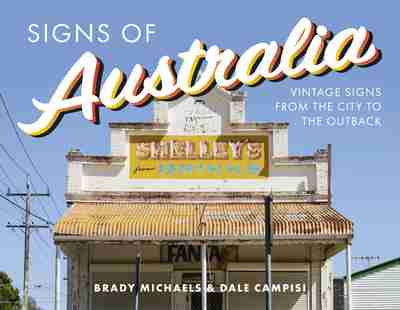
    and delightful log, or if you like recording or cataloguing, of an aspect of Australian life which is sadly slowly fading into obscurity. Perhaps it is something you can gift to yourself as a present under the tree or just simply because you deserve it!

    Very little can be done to preserve such icons of Australian history as many of the signs captured , have now moved into thee realms of what is known by those in the know as ‘ghost signs; ads for products long passed into history. Signs such as Solyptol Soap, something many will remember from their childhood, as it was present in every household of the time, used for a myriad of uses for its antiseptic properties and the well-known Dingo on the side of the heritage listed flour mills in Fremantle. This icon of Fremantle was restored in 2016.

    Brady Michaels and Dale Campisi have been avid vintage sign hunters for over a decade, having been inducted into the obsession by three signs in particular, which they lovingly refer to as Melbourne Icons: Skipping Girl, a top hatted pig and the Nylex clock. This love affair encouraged them to take a road trip across the eight states of Australia in an  attempt to discover and record, this fascinating history of signwriting and typography, both of which have become a niche art form, having been replaced by computer generated images and decal application.

    For the traveller this is a perfect gift, as if offers a little bit of something similar to a treasure hunt, to the long and winding roads of Australia and the many small towns it goes through. The signs are often hidden, faded and forlorn, just begging to be discovered and marvelled over. A few have been rescued and rejuvenated, to live again as a sign post to days gone by. Some are from times not so long ago, but have moved on to make place for yet another aspect of modern day life.

    With the advent of the neon sign during the 1950’s, signage was born again, heralding in  an era of opulence, post war pizazz and vivacious, advertising anything and everything in a manner that was marvelled at, due in part to this colourful new technology,  as well as the many eye catching designs, which were fantastic pieces of stylised art.

    The book has been divided up into States and then subheadings of the various towns where the signs have been discovered, but none the less, those who decide to add this element of fun and treasure hunting to their journey, will still have to have a keen eye to discover many of them, as they are discrete and often times, very well hidden.

    Signs of Australia is a lovely collection of photographs to be savoured, as it has many, many, memories enclosed within the pages and it will, regardless of how you choose to travel, armchair of other, provide hours of fun and enjoyment wandering down memory lane.

  • Flowerpaedia: 1000 flowers and their meanings

    Flowerpaedia: 1000 flowers and their meanings

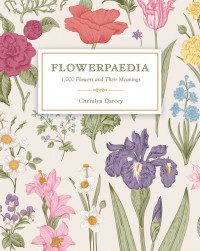
    Flowers and people, people and flowers: both appear to be inseparable but why is this so, why we get so much pleasure, so much enjoyment from these beautiful creations, is embedded into our DNA, in a form that is largely unrecognisable, but is often made apparent when we feel a connectedness to the flowers which grace our gardens, the wild blossoming landscapes of our countries, the gentle love that is felt when a gift of flowers is given.

    Cheralyn Darcey has spent many years working with, researching and enjoying not just the beauty of flowers, but learning to tune into what she refers to as the ‘language of flowers’, their meaning, the gifts of healing and balance they bring into our lives and our daily existence.

    In compiling a work of love, she has documented the world of flowers into what she terms a ‘Flowerpaedia’ allowing everyone and anyone who enjoys the flowers, to have a quick and easy reference guide into far more than the colourful moment captured by the eye and the senses.

    Flowers have for centuries been used for many purposes, from freshening up the Castle to giving as a gift of love, researched for their healing properties, used in traditional medicines, as well as to ward off evil and create magik, to name just a few. The knowledge was often carefully guarded, handed down through the generations, used sparingly as required. As the years passed much of this knowledge was lost but thankfully is now being re-discovered; made available to anyone who chooses to discover more about plants and the many secrets of their world, their language.

    Darcey, as a passionate ethnobotanist, states that plants do indeed have their own language, that they speak with each other and that we as humans, have been translating this language into meaning which is passed down through the generations. Most of us are familiar with the well-known Rosemary for remembrance and red Roses, or Roses and the gift of love. This is just the beginning, the tip of the information there for understanding, enjoyment and pleasure.

    Within this comprehensive book, carefully divided into Meanings, Flowers and Resources we are able to discover the real meaning behind the many blooms we take for granted, their properties, their blessings, and uses.

    As Darcey points out, being able to easily find this information gives a greater richness to much of what we do: in a simple illustration which will resonate, she asks, what basis is used when choosing flowers as a gift for a friend? Are they flowers that appeal to you or are they flower that will appeal to your friend and bring with them the thoughts and love that are offered.

    As you dip into this gift of love, the discoveries made will not just add another perspective to your life, but also allow you to choose with care and love the right flowers, or even vegetables to add something special, something additional to your life.

  • Fucking Apostrophes

    Fucking Apostrophes

    Well, what can one say about Fucking Apostrophes other than finally, someone out there has decided to write a little book which deals with this terrible issue of Apostrophes. After all they have plagued people for ever and ever and ever, since that dratted man, one Geoffrey Troy, who was a printer and not a linguist, for some reason or other, decided to introduce Apostrophes into the French Language. Perhaps therein lays the cause of the modern day anguish when having to deal with these things called Apostrophes! The French language!

    It then follows, as the French had them for use in printing, the English also had to have them, and somehow or other they have weaselled and worked their way into the English language, there to plague us all from time to time, like every day to be sure!

    But, by the time you have finished working your way through this serious, but ‘tongue-in-cheek’ guide to the correct use of the Apostrophe, you will either be one of two things, considerably wiser or completely confused.

    Who would ever thought a simple little blot on the paper that resembles a tadpole or a number nine with the hole filled in, could cause such angst within the framework of a language. The Greeks may have been the root cause of the issue, but it took the French and the British to refine the little blot into something else entirely.

    Used in so many ways these days, as a decoration in signage or the latest trendy way to present a business name, correctly as it was intended to be as a component of the English language, or a tool to send people completely insane trying to work out just where to put the B……y thing, it still remains a fascinating blot which will and can, and does, change the emphasis of the words used, and if you get it wrong, whoa betide!!

    For those of you who love language this is a definite must read, for those of you struggling to cope with this apparently simple little blot, it is an essential part of your kit, and for everyone else, if nothing else it will give you a good laugh, you will be able to show off your new found skills with the correct placement of Apostrophes, or else give it to someone you know as great little Christmas gift.