Tag: Kafka

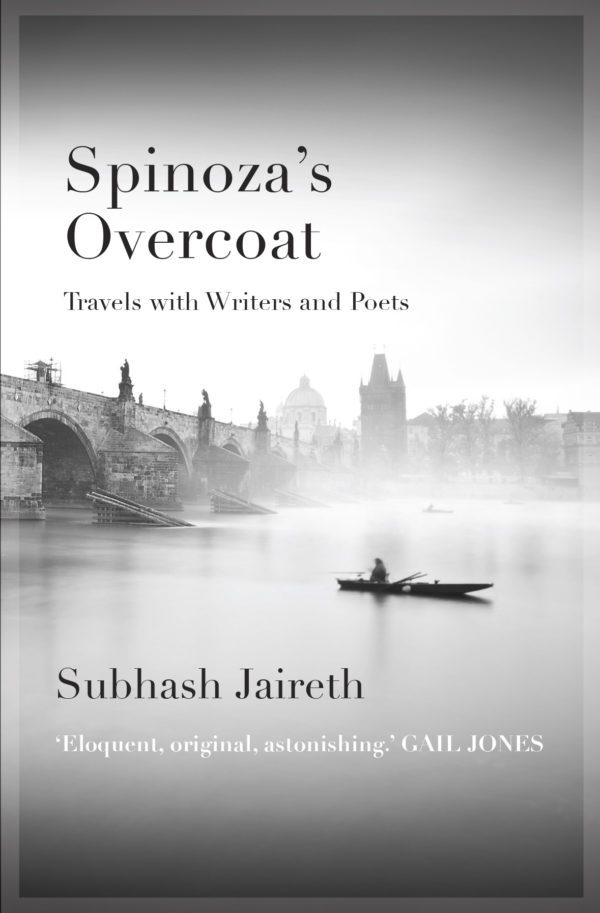
  • Spinoza’s Overcoat: Travels with writers and poets

    Spinoza’s Overcoat: Travels with writers and poets

    “I hope reading this book will turn its readers into inquisitive explorers ready to open doors and windows to the world of writing other than their own beloved English” Subash Jaireth.

    Subhash Jaireth’s work Spinoza’s Overcoat is an absolute marvel in the use of language, of words; their rise and fall, rhythm and tempo reaching out to tell the story of a poet, an author, who through the wonder of words, has sketched a story which went on to influence the lives of readers, whom over the many years since the works upon which the essays are based were written, have been many.

    Spinoza’s Overcoat is a collection of twelve essays, each based on a work read by Jaireth over his lifetime, works that have remained with him, enticing, tempting him to go one step further, to create his own work based around these few, or many, words.

    Ottla, Kafka’s Favourite Sister begins with the words, ‘It starts to rain as I step out of my hotel.’ Simple words, but somehow the magic of what is to come has already begun to be woven. By the end of the page, it is impossible not to continue further and further into the amazingly intricate and unsettling life of Franz Kafka, his beloved younger sister Ottla and the tragedy bought about by War. Deeply disturbing, the story is told in the first person, in current times with the end piece providing answers but leaving, hanging in the ether, more questions.

    Another slightly disturbing essay is Spinoza’s Overcoat, which looks at the issues of mental health via the vehicle of Baruch Spinoza, a man considered to be ‘one of the most important philosophers—and certainly the most radical—of the early modern period’ and his overcoat. Paul Celen, himself a poet, is convinced Rembrandt painted Spinoza in one of his many portraits. He decides to go to Amsterdam to visit the House where Spinoza lived and finally died from silicosis at the age of 44 years. Celen is also 44 years but certainly not yet ready for death.

    Jaireth speaks across many languages and cultures with this intense, fascinating and eloquent work which could, in some instances, be considered as almost a biography of the poem or piece of literature which provoked the essay.

    The real beauty of such a work is writers such as Mayakovskii, a Russian poet, considered a genius by his peers, polarised his readers; the fascinating story of poet and writer Ito Hiromi – Killing Kanoko – a story filled with hope and challenge, are introduced or in some instances re-introduced, into the everyday world of literature, dusted down and presented to a new generation of readers, who once again will be enchanted with their writing and poetry.

    As an essay in word craft, presented mostly in First Person, the blend of fact and fiction creates rich emotion, crafted by a teller of stories in love with and holding a true fascination for the written word, which lingers long after the final essay is read.

  • Forest Dark

    Forest Dark

    When a man simply gets up and leaves his life behind, heading for Tel Aviv, arriving at the Hilton, he is looking for a new concept in life, or on his life in particular, which sets off a train of events that proves both profound and refreshing.

    A briefcase found in the middle of the desert, monogramed but with no trace of the owner is indicative of man in crisis, a man trying to find the core essence of a life he has built for himself; that of a successful lawyer, husband and father.

    A woman leaves her family in Brooklyn and arrives at the same hotel in Tel Aviv in the hope that returning to the place of her childhood, a place filled with family memories, may  release the writer’s block she has being plagued with for some time. She is a successful writer facing more challenges within her family that she cares to admit.

    When she is recruited by a man saying he is a Professor of Literature and he needs her help, she agrees without realising what it is she has signed up for, discovering almost too late that the journey she so willingly agreed to be a part of, will have a profound and lasting effects on her life in a manner she would never, ever have expected.

    Deep and movingly haunting, this is a tale of self-discovery taken to the nth degree as acclaimed author Nicole Krauss addresses the frailty of the human spirit and the fine line we all walk as we travel through life. Carefully structured and beautifully written, and in many, many ways confrontational, the story of two people caught in what is an almost Kafkaesque situation, where reality blurs into bizarre or nightmarish situations, is reflective of a time when certain choices in personal decision making is not always easy and can often have unexpected outcomes.

    If you enjoy post-modernist writing, in the sense of a differing style to modern day writing, a scenario of ’what if’ and a reflection of life, where you a can stand to one side and perhaps see yourself reflected in the writing, this is a novel you will absolutely enjoy.

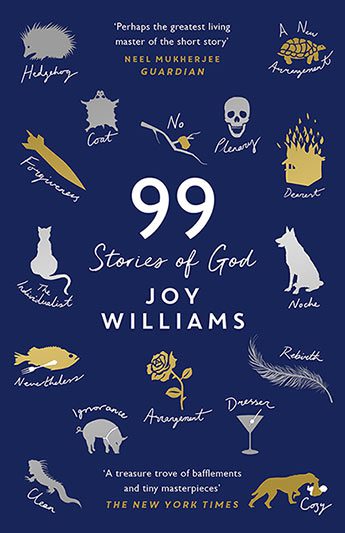
  • Ninety-Nine Stories of God

    Ninety-Nine Stories of God

    Beautiful, cynical, full of joy and irreverence, this incredibly erudite, eclectic, collection of short stories looking at the many places the divinity ‘God’ is, could be or might be through the spectacles of people’s lives, encapsulates so very much of humanity without trying too hard because, without being overly obviously nor offering her point of view, Joy Williams captures the many unanswered, unknowns of the everyday person.

    She has, in the 99 stories, collected snippets relating to such people as Dr Lucas Mix and his wife in conversation #50, when they found themselves in the wilds of Mexico instead of Laramie, with no understanding of how they got there, asking the question, why!

    Franz Kafka joins in the conversation when he offers an insight into his writing and the fact that he often considered he was not at all human. In the final sentence in this piece, God offers an answer; of sorts. Conversation #23 looks at an old man at a wedding whom no one seemed to know; who is he, who was he – perhaps they should not have been so rude, as maybe, he may have been, could have been  Jesus, ponders the Bride.

    Each of the 99 conversations looks at very different issues; from a film director who wanted to make a ground breaking film about elephants, to daughters/sisters reflecting on the death of their mother and the beautiful poignancy of her final words, then to the NY Times talking about a flawed opinion, which ultimately adds up to the miniature of everyday life encapsulated into short, timeless, often to be repeated moments known and familiar to us all.

    The final story ponders the imponderable and relates to the day the Lord visited a little known town in Maine, and the final question to be asked by us all, “What’s going to happen after I’m dead’?

    A wonderful book to simply pick up and read a quick story or two in a quiet moment, which will allow you to do as the writer has possibly intended, take minute to reflect, to accept and to consider that perhaps God, the great divine one, really is there all the time, really is an intrinsic component of your life, regardless of how, why, where or even, when.