Tag: Japan

  • Mystical Places (Inspired Traveller’s Guide)

    Mystical Places (Inspired Traveller’s Guide)

    How many places are there in the world we would all like to go and see one day, places that hold a certain something that makes them magical, devout or mystical such as the Comino Trail, a pilgrimage of reverence for Christians for centuries, Xanadu, a place more than just a name in a popular song; a place of legend, or Takachino in Kyushu, Japan a place deeply embedded in the Shinto faith.

    Sadly with the advent of the Corona virus many of these mystical places are now for many travellers going to remain places they would like to or have love to have gone, but probably never will.

    Simply reading the introduction to  Mystical Places, Inspired Traveller’s Guide, is to step directly into the world of the armchair traveller prepared to travel to exotically magical, folkloric places on this earth, couched in some wonderful stories rich for the telling over, in many cases, hundreds of years.

    The Hexentanzplatz Plateau in Germany’s Harz Mountains has for generations been known as a place of sorcery, a place of Saxon worship, a place where witches danced across the floor, gathering from across Europe to meet on Walpurgisnacht. What a place to visit.

    Shrouded in mystery, especially at sunrise and sunset the Pinnacles are to be found along the west coast of Western Australia, standing proud and tall in a sea of often shifting white sand, always changing, in spite of the often still atmosphere surrounding these enigmatic limestone edifices.

    A side trip to California is called for to visit Mount Shasta a mountain that , while not the largest or highest in the USA is enveloped in a dangerous beauty; one that people have for millennia come to worship at, to request and often be awarded that which they seek!

    As a choice of destination these are just a few from the exotic list compiled by Sarah Baxter and illustrated by Amy Grimes, to tempt you to forget your current surrounding, worries and fears, to settle into your very comfortable, cost effective armchair, with of course your complimentary drink of choice, before setting out to discover places you may already know, or many others that are yet to be discovered and enjoyed for a wonderful, amazing and enjoyable moment in time.

  • The Lost Future of Pepperharrow

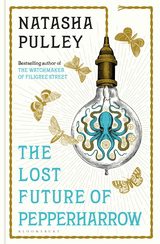
    The Lost Future of Pepperharrow

    This absorbing story follows on from “The Watchmaker of Filigree Street,” but can easily be read as a stand- alone. It is an Historical Fantasy, set mostly in Japan, in the 1880s. The timeline weaves back and forth but mostly over a ten- year period. This makes it easy to adjust to and is used as a back story to explain circumstances.

    The characters are absorbing and wonderfully portrayed. Mori is the wealthy Japanese clairvoyant who was a Samurai. He “Remembers the future.” Because he is heavily involved in International Politics, and has this gift, he needs to take some drastic actions, (organising murder, being one.)

    Thaniel is his English friend and lover. He works for the Foreign Office and is being posted to Tokyo. He, like Mori, has a huge intellect. Together, while in England, they adopt a young orphan girl from the Workhouse, and she is also incredibly gifted and unusual.

    The trio move to Japan and stay at Mori’s mansion where Thaniel is startled to meet Mori’s wife Ms Pepperharrow. What an amazing back story she has! Also, at the house is the Japanese Prime Minister, who has to negotiate a strategy for the flotilla of Russian ships off the coast. Danger from invasion is real, and Mori is seen to be an important cog in the decisions made to avoid war.

    Thaniel moves to the Foreign Office to begin his work, but strange forces are at play here. The servants complain about ghosts who appear when a fire is lit. They are terrified. Thaniel is sympathetic, but when he is startled awake and finds a sooty handprint on his shirt, he sees the need for immediate action. To complicate matters, all metal objects begin to heat up until material or skin burns when making contact. This is felt to be due to the proximity of Mt Fuji, which is quite active.

    If you enjoy a story with a complex plot, vibrant settings, elusive magic, supernatural overtones and a dynamic cast of characters, then you will relish this book. The prose is strong, direct and energetic, but often a wry twist will force a chuckle. This book is a keeper, one to be picked up again and again.


  • The Jade Lily

    The Jade Lily

    While she was overseas on holiday the idea for this book gradually came to the Kirsty Manning. In Honhkou, she noticed a “Rusted Star of David inset into a doorway.” That led to a visit to the Shanghai Jewish Refugees Museum. She has used historical research to detail a fictional family’s journey, and experiences during, and after, the war.

    The story outlines the journey over time of the Jewish Bernfield family and their lives, as the Germans invade their home in Austria. Narrated by Romy, the twelve year old daughter, and also Alexandra, her granddaughter, we pass from the present to the past to gradually delve into mysteries that have held the family together in love.

    When Romy, Papa and Mutti witnessed Kristallnacht, and saw their brother and son shot, they knew they had to leave Austria. Through a very good friend, they were able to get visas to China, and being a fine doctor, the father was offered a position in a hospital in Shanghai. They were privileged because of their medical backgrounds, and because they had money. The Bernfields made great efforts to fit in to the large Jewish Society of refugees in Shanghai, and they also made friends with local Chinese.

    Romy enjoyed her time learning a new language, meeting new friends and studying at school. Romy met Nina on the boat to China, and although Nina was living with an uncle, Romy and Nina kept in contact. Romy also had great friends in Li and her brother Jiang, whose father was also a doctor, but of Chinese traditional medicines. He and Papa shared many ideas.

    We meet Alexandra, Romy’s granddaughter, when she has been called to Australia as her Opa is dying. As Romy and Opa migrated to Australia from Shanghai, and raised Alexandra, she is sure of the love and family ties she will find. However, Alexandra wants to learn more about her mother, who died when she was young.

    The strength and love that dominate this story is quite remarkable. The calamities that Romy has faced as a young girl, then as a young adult, are enormous. The Japanese invasion of China and some of the atrocities committed there were witnessed by Romy, who used her medical knowledge to help the locals. Her parents had not left for work at the hospital when their building was bombed, so yet again, Romy witnessed the death of loved ones.

    It is hard to convey the fascinating search Alexandra has in China, while looking for information about her mother. It is also remarkable how little is known about the Jewish refugees in China. The characters in this novel stand firm in the face of adversity, and are totally loving, as their idea of family unity comes before all else.

    Such a unique story told in a gradual revelation of facts and ideas is compelling and great reading.

  • Neon Pilgrim

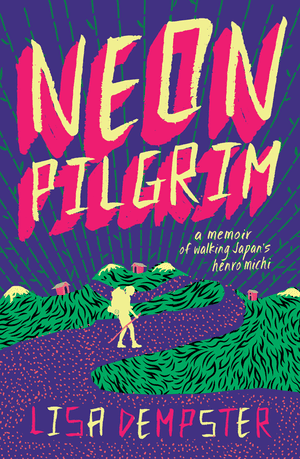
    Neon Pilgrim

    On the Island of Shikoku, there is an 88 Temple Pilgrimage which is walked by many people. It consists of a 1200 kilometre loop around the island, to pray at temples renovated and revered by Kobo Daishi, a Buddhist Monk. Many people complete this pilgrimage by bus, but many also prefer the experience of walking the trail on foot. They are identified by wearing a white jacket, and carrying a stick for walking. A prayer is said at each temple, and a stamp placed in a book for the traveler. There are special accommodation huts set aside for the traveler, and often gifts of food or drink are given by the locals.

     Lisa Dempster was a young exchange student from Australia who lived in Japan for a year to learn the language and customs. She spent her time attending school and fitting in with her new family. At age twenty six, Lisa was in a bad way. She was overweight, suffering from depression, living with her Mum in Australia and had little to look forward to in life. She knew that staying in this cycle of unemployment and misery would lead nowhere, and so she decided to walk the 88 Temple Pilgrimages she had heard so much about. So it was without any training, little planning, and a faint hope for happiness that she set out.

     The author has shared her travels faithfully; we understand the pain of her blistered feet and bleeding chaffed thighs with the focus of the first few days to get up and get going again. Her discomfort doesn’t magically diminish as she walks along. Each day is a struggle, with the heat and humidity, and mosquitoes adding to her misery. The walk is mainly a solitary one, and the few people Lisa meets are special, and conversations are precious. The reality of this Pilgrimage, tough and unrelenting, is tempered by some wonderful descriptions of the local scenery.

     For every Temple Lisa visits, her prayer remains the same; she recites the heart Sutra, and then prays to be healed. There is no euphoric ending to her pilgrimage, but a pride in her achievements and the willingness to go home and have a go at life. Life indeed changed as the she was offered a marvellous job and proceeded to involve herself in work and travel again, with helping to organise the Melbourne Writer’s Week Festival, one of the challenges given to her. However, depression is an insidious emotion, and after a few years, Lisa found herself challenged, once again choosing to walk the trails of the Grampians, where she gained comfort.

     This is such an honourable story, told from the heart and never, ever pretending to be anything other than truthful. Best wishes must go to Lisa for the courage and struggles she has faced and shared. Hers is a personal journey that is worth rereading for the inspiration, courage and beautiful scenery along the way.