Tag: Irish

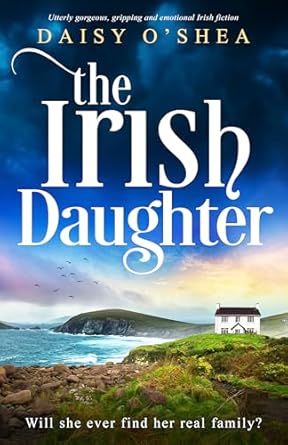
  • The Irish Daughter:

    The Irish Daughter:

    The Polio Epidemic  that occurred in Ireland during the late 1948-1955 era struck fear into parents and is the era in which Daisy O’Shea has set her latest novel The Irish Daughter, creating the characters of Esther, desperate to bring her child home from the hospital, Hannah who is to grow up learning to live with the permanent disability caused by polio and Adrian her father, a bitter and silent man who had little time for his crippled daughter.

    With a gentle skill, O’Shea tells the story of the road travelled by many during these years and the aftermath of the crippling disease as she peals back the layers of a family in crisis; the sad and lonely life that Hannah leads and the almost hatred she has learned tolerate from her father and siblings  after the death of her mother Esther to cancer.

    She meets an Englishman, Justin Sanders, in the boreen, who is looking for her father; he is trying to learn about his grandfather’s involvement in the IRA and has been told that Adrian Barry would be able to help with the history of the area and the people. Hannah takes him up in her donkey cart driving him back to his car.

    They strike up a conversation which will have long term repercussions as they both realize they do enjoy each other’s company and that they can work together to try to discover more about what happened so many years ago.

    Summoned to the Solicitors office in nearby Bantry she is given terrible news about the inheritance she understood was hers; her estranged brother Mark also has been requested to attend.

    This sets off a chain of events over which she has no control but will eventually lead to Hannah discovering that the community she felt had always shunned her have been watching over here since the death of her father, but from  distance, and that sometimes, when something is very important you have to fight for what you believe is right.

    A gentle love story, a trip down the pathway of history and a reflection on the love and support of a community when there is a need come together seamlessly in this captivating and emotional story of The Irish Daughter.
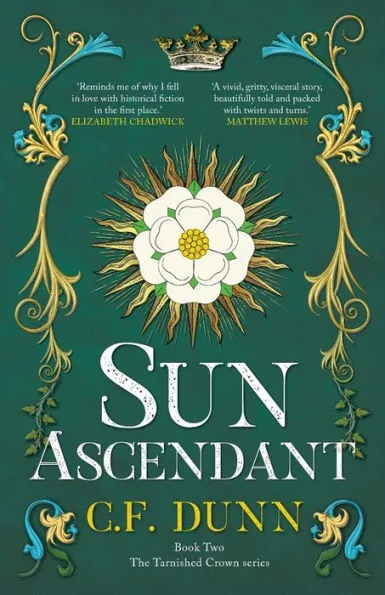
  • Sun Ascendant

    Sun Ascendant

    Sun Ascendant continues the story of Isobel Fenton, only child of Sir Geoffrey Fenton, a woman who upon her father’s death inherited his lands and castle, making her a much desired asset to any man who had an eye to expand his lands and holdings.

    Sent to live in the household of Earl Langdon she is raped by him, and made his mistress, her life being one of misfortune, followed by more misfortune and detested by his wife. Almost managing to escape the Dukes clutches, his brother Robert falls in love with her and she becomes pregnant, which adds another layer of difficulty to her situation as the Earl believes the child to be his.

    Meanwhile Thomas Lacey, the man she was betrothed to by her father, now desires her, her lands and her wealth and is prepared to overlook the fact that she has lain with other men and delivered a child; he will stop a very little to get her.

    Set during the bloody War of the Roses, family was pitted against family, no one was trusted and Thomas Lacey was certainly a man not to be trusted. After the death of the Earl, Isobel returns to her beloved Beaumancote, where Thomas propositions her.

    Unfortunately for Isobel, her life takes a further turn for the worse as Lacey is not about to walk away from what he considers should rightfully be his. She rejects him and by doing so puts Beaumancote and all the villager’s in a dire situation.

    Amongst all the bloodshed a love story is threaded carefully throughout the storyline, that of brother for brother and woman for man, mother for son, laced with hatred, treachery and jealousy.

    CF Dunn has taken a challenging time in the history Britain, where England was defeated in France after many years of conflict for European dominance. Returning to England they find that politically everything is in conflict; family pitted against family with King Edward and Richard, Earl of Warwick at serious odds with one another.

    The Tarnished Crown series set during the 15th century is an excellent read for anyone who enjoys historic fiction, which is gripping, intense and very well researched.

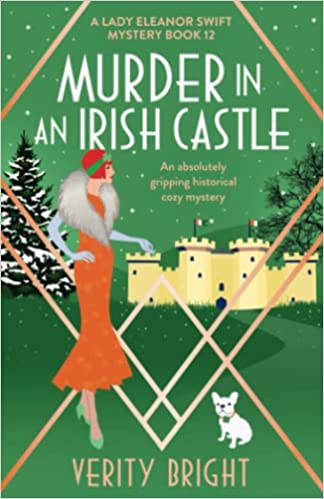
  • Murder in an Irish Castle: A Lady Eleanor Swift Mystery

    Murder in an Irish Castle: A Lady Eleanor Swift Mystery

    We meet Lady Eleanor and her trusty major domo Clifford, along with Gladstone as they journey to Lady Eleanor’s family castle of Henelley Castle, just outside of the small town of Derrydee in Ireland. That she is even away from her home at Christmas is surprise as she and Clifford, by default, have very firm ideas about how Christmas should be spent.  And so begins the 12th mystery in the Lady Eleanor Swift Mystery series, Murder in an Irish Castle.

    The skies are dark, the rain is threatening and it is getting very cold. Travelling excessively slowly as the road is challenging, they narrowly avoid running over the body of a man lying on the road. He is barely alive and so they place him in the Rolls and reverse back along the road, hoping they can find the Convent that seems to be marked on their map.

    Unfortunately, the mystery man dies and it is not long before Ellie and Clifford realise there is something seriously amiss in Derrydee. To begin with, there is no ‘family’ retainers waiting to greet them, the Castle is clean but without staff other than one retainer who lives in the Lodge, the Doctor is not being straight forward about the death of the man and the Mother Superior was anything but helpful.

    Things only get murkier as the days pass with the Police less than cooperative, the Publican, a jolly fellow, hiding secrets and the Rolls being made unusable by the theft, in daylight as well, of engine parts! What have they walked into?

    Eleanor and Clifford can’t help but get involved and once the gatehouse burns to the ground, killing their retainer, the gloves are off, as there is definitely something terrible happening in Derrydee and they need to find out what, before anyone else is killed. And it is Christmas.

    Murder in an Irish Castle is full of the unexpected as Eleanor and Clifford, aided by the trusty Gladstone, and his latest furry friend the ginger house cat, do their best to enjoy the season, get to know the towns people and also solve the mystery of who the man was and what he was doing in the laneway.

    There, it would seem, is really never a dull moment in Lady Eleanor’s life. It is also the perfect way to spend an afternoon, or an evening, escaping into the world of cozy murders with a well-constructed plot, a bit of fun and a very interesting ending.

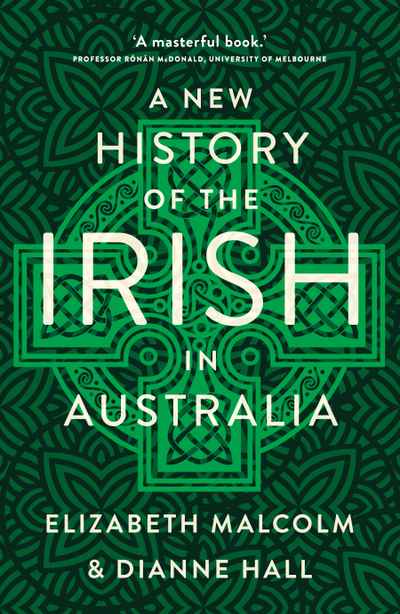
  • A New History of the Irish in Australia

    A New History of the Irish in Australia

    The New History of the Irish in Australia is a well-researched and in-depth examination of the lives of Irish immigrants and their offspring in Australia. It illustrates the intolerance shown to these immigrants across a broad range of society and offers a much-needed perspective from a viewpoint other than the past primarily Anglocentric works.

    The authors provide an interesting aspect in the way the Irish may have considered themselves and their place in the developing country of Australia compared with Chinese immigrants and Indigenous Australians. Malcolm and Hall suggest the Irish regarded themselves above these groups yet they also related to their lot in life under English colonial rule.

    The prejudice and ingrained bias against the Irish by the British hierarchy is demonstrated through popular culture and employment, with stereotypes of simian caricatures common in print media of the time and Irish being specifically rejected by signs such as ‘No Irish need apply’ in job advertisements. The low opinion of Irish people persisted into the 20th century, and despite the barriers faced their tenacity to settle and progress in their new country is exemplified.

    The inclusion of chapters regarding crime as well as asylum admissions lack strong analysis of the statistics provided, and possible reasons behind the higher representation of Irish in these areas. Hopefully, future analysis may provide a clearer indication of the reasons behind such numbers.

    It is disappointing, however, that the content of statistics as well as anecdotes concentrates on Australia’s east coast, particularly NSW and Victoria. While these colonies/states had the highest number of Irish migrants, the other parts of the continent really required more than a token mention. The inclusion of Irish stories and experiences in these places would certainly benefit the overall picture of Irish in Australia.

    With a broader geographical base of information, an even more refreshing and compelling story of pioneering Irish immigrants and their progeny could emerge.

  • Irish Mist

    Irish Mist

    Richard Dillion describes his music as something that just happens once he sits down at the keyboard. In this absolutely beautiful album, Irish Mist, dedicated to his mother who passed away earlier this year at the age of 98 years, his music certainly does appear t0 just happen, in the most delightful way.

    As his fingers lightly stroke the keys, the emotion behind each of the pieces which go to form this delicate touch of Ireland swaddled in the gentle mists of another soft day, is very apparent. There is gentleness about the music especially Mathair Eireann (Mother Irelands) specifically dedicated to his mother.

    The music simply flows, offering a slight nostalgia, but then a lovely light, delightfully intriguing piece changes the mood to one of fun, laughter and enjoyment, aptly described as Dancing on the Light, which segues almost diffidently into Dying of the Light as the day draws to an end, the fun and laughter just a memory as the more sombre nature of the night to come draws in.

    The traditional Scottish Folk song Skye Boat has been delicately offered with the feel that Dillion is there, in the small rowing boat, as it slowly progresses across the sea, reflecting on the days gone by and the eventual ending of the journey. This is a piece which remains as beautiful now, as it was when first written as an ‘aire’ in 1870, before the well-known lyrics were added.

    Susan Bourke, on violin, joins Dillon, on Into The Mines, a piece which could perhaps best described as a lament, as the weeping of violin adds that texture of sorrow, of timelessness, often to be found in so many of the ‘old countries’ which have known such torment, hardship and sorrow.

    Wild Mountain Thyme heralds in the moodiness of the open spaces, untamed and yet telling of a history going back centuries, to the days before even the Celts walked on the shores and through the mountains; the thyme, growing wild on the sides of these same mountains, providing a link with the past. Under the hands of Dillion on the keys, all these thoughts, feelings and emotions are there to be enjoyed and understood.

    Mother’s Eyes also in dedication to his mother is a piece that teases around the edges of the memory, with influences that remind of various songs, even hymns, learned during childhood, that remain in the mind bringing with them memories of family, church and very different world.

    His chosen piece for the finale in this soothing, healing and immersing collection of gentleness is Deidre’s Dance, once again a delicate and yet robust piece, that rounds out an album of peace, joy and love.

    Categorise this album as you will but one word defines it; Beautiful.