Tag: Indigenous

  • Indigenous Tattoo Traditions: Humanity through Skin and Ink

    Indigenous Tattoo Traditions: Humanity through Skin and Ink

    LARS KRUTAK

    “For thousands of years, tattooing or permanently marking the skin on the body, has allowed people to convey their individual or group identities. The markings also show important life transitions and journeys or can express a person’s creativity.”  In Indigenous Tattoo Traditions the author presents a great range of tattooing methods used by Indigenous peoples, both by coloured photographs and diagrams. He examines tattooing as an art form, cultural explanation and permanent record of the wearer’s memories and ideals.

    Lars interviews Indigenous artists and discusses how many of the old traditions have been revived. He has collected and photographed many ancient and rare tattoos and has passed them on for the posterity and future of the group. Some of the groups interviewed, (always with permission) include people from Africa and the Middle East. He has also recorded and photographed tattooed mummies and figurines in Egypt. A detailed look at the tools used for the body marking is also shown, as are the tools used by Native North Americans.

    In the Northern Philippines, tattoos have been very detailed and cover large areas of the body. An illustration shows the extent of the markings over the back, legs and buttocks. In the past, the taking of a human life was a prerequisite for receiving warrior chest tattoos among some groups. In Japan tattoos were often put over injuries or aching limbs for therapeutic healing. One lady recorded said that she tattooed herself to strengthen her eyesight.

    There is a great deal of fascinating information presented, supported by many photographs and diagrams. The whole book is a visual treat. It includes End Notes, a Bibliography and an Index.

  • Through Old Eyes – Poems by Uncle Wes Marne

    Through Old Eyes – Poems by Uncle Wes Marne

     Through Old Eyes is a small book of poems that would make the most wonderful teaching resource. It could be used by teachers, parents, and students. Uncle Wes has written, with great simplicity and heartfelt honesty. He has also used humour, beauty and love of life to inspire the reader. The poems are grouped under headings; CAMPFIRE DREAMING, MY PLACE, INDIGENOUS ONES, THE ROAD AND PAYMENT TO COME.

    Some of these poems are as satisfying to read as sitting by a campfire looking at the star-studded sky. Others express feeling that is so heavily charged it could not be written in prose. With a simplicity of expression, Uncle Wes has layered suggestions that again are too complex for prose. These beautifully wrought short poems convey to the reader a sense of time, place and being that touches a familiarity between all of us.

    An early poem in the “Campfire set”, shows a deep sense of contentment as a man stretches out on his blanket. Warmed by the fire, with the billy boiled and a tasty dinner consumed, he looks at the stars and he understands,

    “Each light up there was a campfire

    Lit by a warrior of old

    The brighter the light, the better the man

    Who has travelled on before.”

    There are other poems which are not as comfortable to read, but nothing that does not hold a hope for the future.  A yearning for the old ways and stories which tell the culture helps us all to realise the importance and wonder that Uncle Wes has realised.

    Uncle Wes celebrated the 100th anniversary of his birth….April 25th 1922

  • Guardians: Wylah the Koorie Warrior 1

    Guardians: Wylah the Koorie Warrior 1

    As she lies dying, Grandmother, the Koori Warrior gives Wylah, the artist, her boomerang in the hope that she will take on the mantle and find the warrior within, to become the new Koori Warrior and thus save her tribe and their animals.  

    Authors Jordon Gould and Richard Pritchard tell the story of Wylah, the young Peek Whurrong girl from Maar Nation, who must save her family from an invading dragon army. Set in a fantasy alternative history world, the story of ‘Wylah The Koorie Warrior’ has been 40,000 years in the making,

    When her students started becoming disruptive Wylah, their indigenous art teacher, decides to distract them by taking them out of the cave to enjoy a ride on a kangaroo. However, she soon notices that Po, one of her more troublesome pupils is missing, so she returns to the cave.

    Before she and Po can leave the cave there is a sudden rock fall and they become trapped inside. After being dug out they realize that their world has changed; the conquering dragons have stolen all the village people including her family; her grandmother lies dying on the ground.    

    It is Wylah’s task to rescue her people and animals in order to bring them home. She can’t do this by herself. In order to defeat the powerful dragons, she has to find and reunite the five great Guardians of the tribe; this will be challenging. She has to transform into a warrior, so she must think strong and be strong, which will take time and effort.

    As young readers will be entranced not only by the sensitively captivating illustrations, but also by the adventures of Wylah they will learn and understand more about the different cultural aspects, history, language and story of Australia’s First Nation people. Book two of Wylah’s heroic acts is on the horizon.

    Note to teachers and Parents: The publishers have provided ‘Teacher Tips’ and tie ins to the Australian curriculum on their website. There is also a list of English and Peek Whurrong words contained in the story in a glossary at the end of the book.

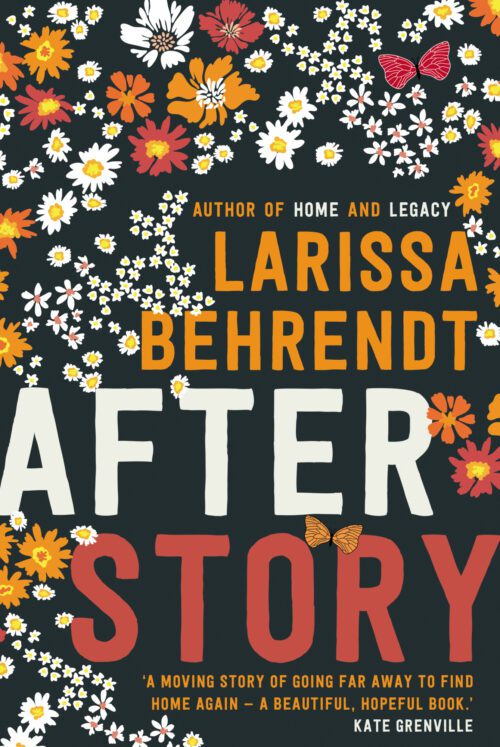
  • After Story

    After Story

    After Story is truly an original and amazing story. It is wonderfully and seamlessly constructed, and riveting reading.

    Della is an Aboriginal woman who lives in a tiny town called Frog Hollow. She has had a catastrophic event in her life which she acknowledges she will never get over. Jasmine is her daughter, who has defied all odds and gone to university. Mother and daughter are not particularly close, so it came as a surprise when Jasmine invited her to come on a Literary Tour of England. They were to travel with a professor and a group, visiting homes of the Bronte sisters, Jane Austen, Shakespeare Virginia Wolf, and many more.

    Each day is written by Della and then by Jasmine, and it is here that the reader will be holding their breath. While Jasmine observes and looks after her mother, she also discusses the merits of the authors with the group. Della who has not read any of the authors listens carefully and has her own thoughts and observations. They are so powerful; they need re reading. For example, near Thomas Hardy’s home was an ancient Druid stone. “Most people don’t even know about the things Aboriginal people built, Della thought”. Many of them were destroyed when the British came. They would rather think of us as backward. It made it easier to take away our children.

    At Stratford-upon-Avon, the tour guide said, “No other culture produced a Shakespeare.” Della thought “Well, no other culture produced an Aunty Elaine, and I wondered why people had to make these comparisons.” Aunty Elaine was the storyteller, who passed on knowledge to the younger people. She always knew the appropriate story and the message it was meant to send.

    It is quite thrilling to read a chapter looking at the authors and literature from Jasmine, then to be privy to Della’s thoughts about the same experience.

    After Story from Larissa Behrendt is pure gold.

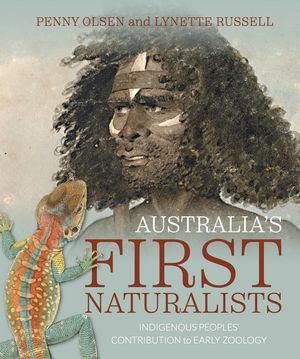
  • Australia’s First Naturalists: Indigenous Peoples’ Contribution to Early Zoology

    Australia’s First Naturalists: Indigenous Peoples’ Contribution to Early Zoology

    When we speak of Australia’s early Naturalists and Zoologists, we often think of Joseph Banks and his fellow scientists. But the very survival of the aborigines depended on an intimate knowledge of all living things. Shown in rock art, the local people understood where certain animals and plants were to be found, when they were to be found and how they were to be treated.

    The first settlers treasured the unusual flora and fauna; they wanted to classify it and saw it as a prize. Aboriginal people valued animals for food, the symbolism and inter connectedness they represented. Some of the animals they perceived as being non-human people. When samples of flora, or animals were sent to England with their Aboriginal names, they were almost always given a scientific name.

    As the population of Australia increased, so some species of birds and mammals were being decimated. These were often associated with sacred symbols or food for indigenous people, but the thirst for knowledge and fame kept the scientists busy. They often sought the help of Aboriginal guides who went on several expeditions, many of which are described in Australia’s First Naturalists with intimate knowledge passed on.

    Australia’s First Naturalists is a fascinating look at the developing colony and how the environment was described, although the true nature of the caretakers of the land was not really understood. Such practices as burning the land to restore it and moving about to allow the land to recover, were not fully understood. The intimate knowledge of the land passed on by stories, song, and dance, was again not fully understood.

    Australia’s First Naturalists is a beautifully illustrated book, with many original plates and articles used which covers the periods from pre-Settlement to Contemporary Aboriginal and Torres Strait Islander Land and Sea Managers and enhances our knowledge of the story of early Australia.

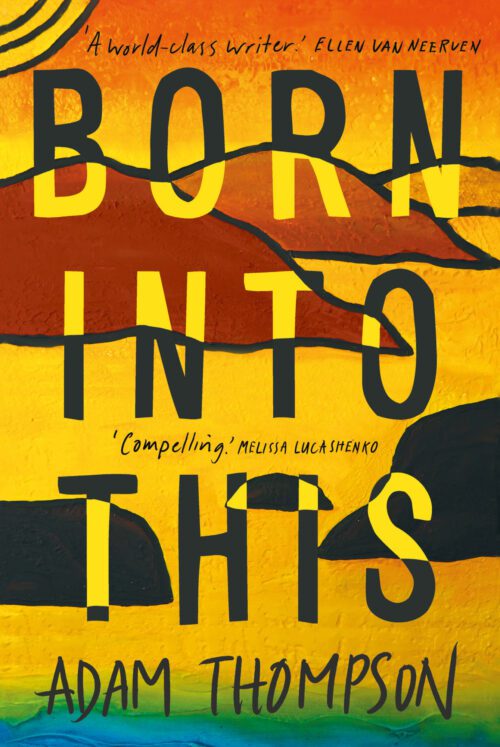
  • Born Into This

    Born Into This

    Adam Thompson has in his delicately crafted debut work Born Into This, captured the essence of what life is like from a First Nations peoples perspective, of life in the fast paced modern day world of Australia and all its efforts to slowly move towards  some form of acceptance and reconciliation.

    Sensitive, funny, quirky and telling, the stories that make up the anthology are about people, life, living, challenge and the very everyday nature of change. The Old Tin Mine investigates the price of pride and refusal to take on change. Honey is a fascinating read that captures in entirety the outcome of abuse, disrespect and like the circle of life, what goes round, eventually comes around, this time with a tragic end.

    Careful use of words build a verbal artwork in Bleak Conditions which creates a reflection on family bonds, tolerance and the marginalised that live in the parks of the country, as Jarrod is rescued in the depth of a Tasmanian winter, yet again from a camp on the edge of a park. How long can family bonds hold or will they remain broken forever?

    Dorothy gets very upset about what she perceives as in an imposter, a school friend of sorts who claims to have Aboriginal ancestry, or does she. The Descendant looks at the very heart of what it means to be Indigenous, with roots that go back thousands of years.

    Born Into This is indigenous only because Adam Thompson is Indigenous, He has worked for more than twenty years for the Tasmanian Aboriginal Centre, caring for the land and heritage to preserve community history. The one salient and overlying emotion captured in each of the stories is they could be about anyone, young, old, indigenous, an immigrant from another time and place, as each of the pieces is written about the very fragility of the human spirit.

    Deeply reflective of culture, Born Into This is poignant, hopeful, raw, honest, beautiful and an absolute gem.

  • ‘Lowitja’

    ‘Lowitja’

    Told she’d never make anything of herself, Lowitja O’Donoghue, Australian of the Year, AC, CBE, DSG and recipient of the papal honour of Dame of the Order of St Gregory the Great, not to mention several honorary degrees, certainly proved this assertion wrong. In this authorised biography, Stuart Rintoul details Lowitja’s life and Australia’s indigenous history against government policies, laws and legislation.

    Born in Indulkana, northern South Australia to a Pitjantjatjara mother, Lily, in 1932, she was the fifth of six children.  However, when she was two years old, her Irish father, Tom O’Donoghue, took Lowitja and two of her siblings to Colebrook Home for Half- Cast Children; cutting her off completely from her people and culture.  After gaining her Intermediate Certificate she entered her Leaving Year but left before taking the exam, because at 16, she undertook her first job as nanny for a family of six children in Victor Harbor. Later while working as a nurse’ aide in Victor Harbor, she decided to undertake nursing training at the Royal Adelaide Hospital; obtaining admittance to the course proved quite difficult.

    Leaving her position as charge nurse, she spent a brief time in Assam, India working a nurse relieving on leave missionaries. In 1962, due to the Sino-Indian War, she returned to South Australia, as an aboriginal liaison officer in the Education Department. The next 50 years would see Lowitja become one of Australia’s most respected and recognisable indigenous leaders. Her commitment to Aboriginal people, human rights and social justice, can never be overestimated; these were challenging times.

    Readers who enjoy biographies will thoroughly enjoy ‘Lowitja’; a dignified, extraordinary woman, a great Australian and remarkable leader. However, I also highly recommend this comprehensive, well researched and documented book, to readers who want to get a better understanding of the history of Aboriginal affairs, workings of Aboriginal agencies and of government policy in modern Australia.

  • The Rock: Looking into Australia’s ‘Heart of Darkness’ from the edge of its wild frontier

    The Rock: Looking into Australia’s ‘Heart of Darkness’ from the edge of its wild frontier

    Aaron Smith has written a brutally honest expose of Australian social and political behaviours toward Torres Strait Islanders and Aboriginal people. With great insight he reveals attitudes and their effects upon locals. Growing up in a white middle class family he became a journalist for the Torres Strait Islander. He was also the editor and paper boy. Living in the community and working side by side with the Islanders, he observes first hand, the injustice towards a vulnerable people. He has spoken up for those who are marginalised and have no power.

    The author’s dismay towards an uncaring political regime and Australian people in general is keenly felt. He views the nation’s failing to support the Traditional owners of this land as appalling. To close the gap between poverty and mainstream Australians would take more than “Missionaries, Mad Men, Misfits and Mercenaries.”

    Because the historical and political views are intertwined with the author’s real life, the heat, the poverty, the diseases, and the lawlessness are a story themselves. Some of the characters he describes are glorious. Captain Magic takes Aaron to Daru where he will meet all the top Government politicians. They have been ferried across in special boats gifted to the Islanders. The timing of the trip means that the rough waters swamp the politicians while Captain Magic weaves his boat between the troughs and peaks of the waves.

    The Rock is a book which should be read by everyone: by students, politicians and everyday Australians who are so removed from understanding the plight of Traditional People. How can we sit back and live with the appalling injustice in our land? Aaron you have brought this plight to our attention, now is the time for us all to begin to rectify it.

  • Ghost Bird

    Ghost Bird

    Stacey and her sister Laney are 17 year old mirror twins; direct opposites in personality and behaviour. So, when Laney mysteriously goes missing; her twin sister and the ‘mob’ are desperate to find her. Being torn between listening to her dreams urging her to find Laney, or to adhering to science and education, Stacey becomes disobedient and involves the Millers, with whom the family has had a long running feud. Nothing is as it appears, and before her mission is complete Stacey will learn a great deal about herself, her community and its members.

    Author Lisa Fuller has set this gripping tale in Eidsvold, in regional Queensland, where tensions run high between indigenous and non-indigenous families. The use of Aboriginal vernacular by the protagonist Stacey to drive the story, enhances its authenticity and its charm. Ms Fuller uses her deep knowledge of her cultural heritage to produce a story of love, strong family bonds and long held beliefs.

    This is a powerful thought-provoking book which is rich in detail; it includes the themes of racism, bullying, colonization and Aboriginal culture. However, explicit language and some violence would make this book more suitable for the older teenager.

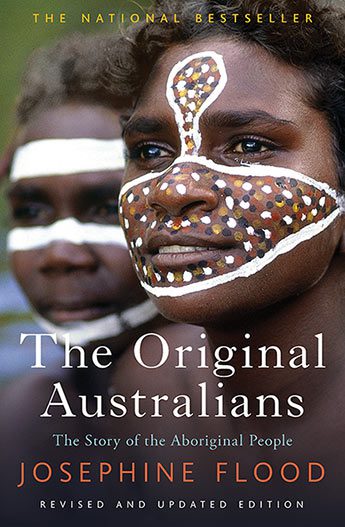
  • The Original Australians The story of the Aboriginal People

    The Original Australians The story of the Aboriginal People

    The Original Australians was released onto the market in 2006. This volume of work from respected archaeologist Josephine Flood soon became a best seller, purchased by many with a genuine desire to understand more about the indigenous peoples of Australia, the first people of Australia, the people who had long lived, nurtured and farmed the lands before the arrival of Captain James Cook and then the flood of white settlers.

    Comprehensive and detailed she investigates the history of the Aborigines, their distant beginnings in lands far away from the Australian subcontinent, their culture, spirituality, traditions, their lifestyle and the effect of white settlement on this race of ancient people.

    Now considered as the oldest surviving civilization in the world, Flood explores the many differences in the tribal groups, due to their location, food sources and climatic conditions. Asking some of the hard questions, she presents answers to many of the common questions asked, particularly in relation to modern day Indigenous peoples, how they are adapting, their resilience and their ability to transform, to be able to hold a place in of the demands of a far faster, more destructive way of life.

    Originally written in an attempt to evaluate a number of claims made by Henry Reynolds in his book The Other Side of the Frontier and Geoffrey Blainey’s Triumph of the Nomads, Flood eventually realised, after a request from friends visiting Australia about reading they could undertake before their visit, there was nothing available on Australian Aboriginal society for anyone to be able to read and enjoy.

    More information has become available since the first printing and now in the latest revised edition, the text and style used has made this a work very accessible to anyone with an interest in this topical subject matter, now wide open for discussion and debate within political and public circles.

    Much fresh information has been included, updating information which is based on the original questions sought and supplied by a range of people, who in their desire to understand fully, created the very basis of the storyline.

    The list is long, challenging and to date some of the 22 questions asked, many still do not have hard and fast answers, particularly in relation to the more recent 30 years or so, when the modern Australians, both aboriginal and white, have had to confront the reality of ‘The Stolen Generation’, Sorry Day, campaigning for representation in Parliament, and the right to be recognised as members of the Australian Constitution and so much more.

    Flood says there is still a long way to go, to close what is now referred to as ‘Closing the Gap’ and on that basis, probably this will not be the only revision of this work.

    Closing this comprehensive look at Australian Cultural history is an Appendix of places, festivals, tours to cultural experiences and culture that makes an ideal beginning point for anyone, visitor or permanent resident, to see and understand first-hand the history of an old and ancient culture, still thriving and striving in today’s world.