Tag: India

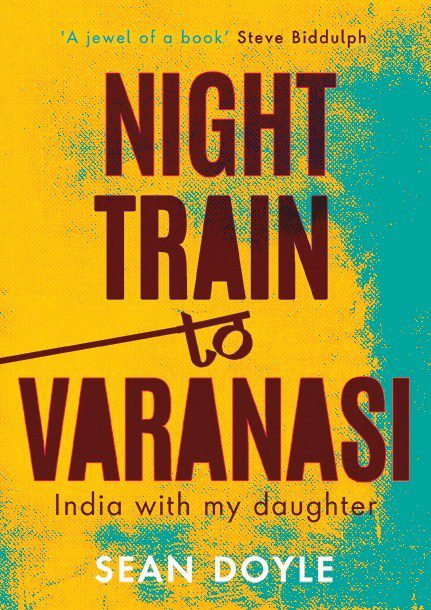
  • Night Train to Varanasi

    Night Train to Varanasi

    Biography, travelogue and downright good story just about sums up Night Train to Varanasi from Sean Doyle, a man who is passionate about his beloved India, his family and the fine art of travel, not necessarily in that order.

    He made the monumental decision to travel with his daughter Anna to the kaleidoscopic world of India, a place he lost this heart to as an impressionable young man, to encourage her to experience life in another world, a life he had once enjoyed and returned to on every possible occasion.

    Anna had undergone recent trauma that had left her unsure, fragile with a huge giving heart that was very easily hurt. Once she finished high school and in that time between worlds, they set off to India for two months: two months that was to change their relationship, give them a deeper understanding of each other and age Sean considerably, as he was torn between keeping his beloved first born safe, but letting her unfurl her wings while remaining safe in a culture that is and was, as complex as it appeared.

    Sean Doyle paints the tapestry that is the real India in words that are carefully sought, offering his love affair with India as the backdrop to so much. Traveling by trains did not always go as planned, neither did travelling by bus. The accommodation was reasonable, the generosity of the Indian people legendary when a fellow traveller was in need.

    Their story is but a single thread in the rich tapestry being woven, as they make their way slowly along the pathway he travelled so  many years before, both he and Anna learning so much, not just about each other but about life, letting go and growing up.

    A bit like slow travel, Night Train to Varanasi is a work that takes time to read, to enjoy, to imagine the bustle of the streets, the pollution, the divide between rich and poor, cast restrictions, danger , the ever present traffic and deeply ingrained culture that makes up the very heartbeat that is India.

    Night Train to Varanasi is a love affair, a love story for and with India; simple, complex, pure and eternally challenging.

  • A Murder at Malabar Hill

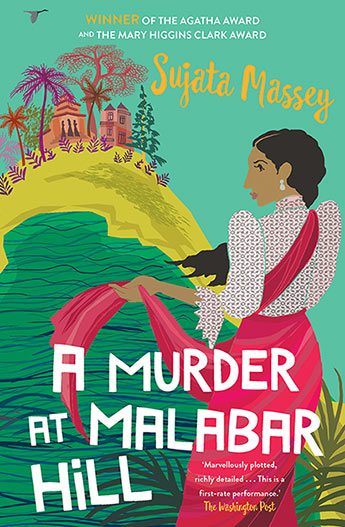
    A Murder at Malabar Hill

    This is an absolute gem of a novel, one not to be missed. It is a murder mystery that fans of Kinsey Milhone and Phryne Fisher will enjoy. Although a murder is committed and some life-threatening moments occur, Miss Perveen Mistry’s cool head and intelligent problem solving, ensure clever outcomes. The young lawyer is the first female in legal practice, and she is determined to raise awareness of the rights of women.

    The story is set in India and there are time slips between 1916 and 1921. These serve to give the reader an understanding of events in Perveen’s past life which explain her compassion for other women. Perveen lives in Bombay but moves to Calcutta for about a year. Following that, she moves to Oxford where she studied law. Her current situation shows her working for her father, who is a senior lawyer in the Bombay Courts.

    Perveen is given a case relating to the will of a deceased, wealthy man. The complexities of the religious and cultural standards need minute scrutiny and, it is here that she finds discrepancies. On approaching the three wives of the deceased man, and explaining these unusual issues, a plot is uncovered. A murder is committed, but by whom, and for what reason? The wives need protection, as do their children if the murderer has come from outside the closed house.

    The nature of various Religious groups is explained. Some customs such a “Binamazi” or locking away women during menstruation was also still practised in some areas. This makes for compelling reading although it does not intrude on the story. At the end there is a Glossary to assist with names of food, people, and clothing. The text flows easily and the story is gripping enough to make reading a pleasure.

    The story itself is a celebration of India’s first women lawyer, Cornelia Sorabji. She read law at Oxford and was the first woman to sit the British law exams in 1892. Perveen also shows what it was like to work as a female solicitor in British ruled India. The concluding chapter shows the lawyer and her friend going to a famous Hotel for a drink. They are refused alcohol. When summoning the Manager and showing him her card, Perveen presents an argument that is flawless. She and her friend Alice are then able to sit back and enjoy a gin together.

    A most enjoyable story, and the author has delighted readers with the notion that there will be more challenges for Perveen ahead in the next book in the series.

  • Deva

    Deva

    Seven tracks of pure bliss have been created by Deva Premal, along with her long-time partner Miten, in this spiritual collection of chants that wash the spirit and soul offering peace, calmness and immense love.

    Seven Chakra Gayatri Mantra begins the bliss filled journey, a piece which is an original composition of Deva’s composed more than twenty years ago, only now having its debut – the intent of the piece is ‘an invocation to illuminate the seven chakras, blessing the seven realms – from the earth plane to the aboded of supreme truth’ a perfect way to commence this journey. As a final piece it is offered as the last track as a Prabhu Mix – the God mix, a fitting conclusion to an album of worship.

    Joined on this work by long-time partner Miten on vocals, Manose on bansuri, vocals and a range of percussive instruments, Joby Baker on piano, keyboard, vocals, guitar and percussion. Anoushka Shankar joins with sitar on two of the pieces, once again bringing together a range of eastern talent to complement Deva’s relaxed and evocative style of chanting.

    Deva and Miten have led the resurgence of sacred chanting, an element of music that is once again becoming popular for its soothing, uplifting, mediative properties and cross-cultural acceptance as a sacred form of music. Add the ancient to the more contemporary style of genre known as world -fusion and you have music with an eastern influence that garners wide appeal over a range of many differing modalities.

    Prabhujee (a prayer to Prabhuji – my sweet lord) was written by Pundit Ravi Shankar and features his daughter Anoushka Shankar on sitar, which blends beautifully with the soothing tones of Deva, as she ushers in a deeper state of refection and meditation within the 8.45sec song; a piece long enough to offer a short, but refreshing moment of contemplation in a busy day.

    As with all of her works the German born chanteur seeks perfection. In the softly hypnotic Buddham Sharanam she has achieved a divine state of stillness with a delicate touch gently enhanced by the occasional use of the bansuri – calm perfection.

    The selection of chants chosen for this album reflect the journey Deva has undertaken over the past twenty years, from her shy beginnings as a back-up singer for Mitten, to a diva in the world of sacred music, bringing to the modern world centuries old chants and music to heal, relax and quite the jangling of the manic world of today.

    Absolutely beautiful, relaxing and divine.

  • Max Champion and the Great Race Car Robbery

    Max Champion and the Great Race Car Robbery

    Written in his wonderfully measured style of words, Alexander McCall Smith has created a gentle story about courage, goodness and honesty which will delight the hearts of younger readers.

    Max, his Mother and his grandfather are very poor. Max and his Mum live in a very small house and grandfather lives in the shed at the bottom of the garden.

    Max has to help Grandfather Gus in his garage, as well as helping his Mother and when he is not at school doing his part-time job mowing lawns. In their village lives a family of very wealthy people, The Grabbers, who like to win. They are not very nice, are very boastful and certainly not very honest.

    When Mr Grabber brings his car to Grandfather Gus’s garage to have it cleaned, Max offers to wash the car, something at which he is very good. While he is washing the mud off the car, he finds a badge on the old fashioned racing style car that has his family name on it, Champion, and wonders why this is so: how could this be.

    From then on so very much happens between the greedy Grabbers, and Max and his family that the entire book takes on feeling of riotous adventure which could simply end up anywhere at all: maybe the Grabbers will win the day or maybe Max and his grandfather, with a little bit of help from their friends will emerge the winners.

    Kate Hindley, with her accompanying illustrations has captured the spirit of the book perfectly, which compliments McCall Smiths slight zany style of writing perfectly.

    Bound in a hard cover, with dust jacket, the entire book, from cover to final page is a great big, old fashioned story, one of which Grandparents will enjoy reading to their grandchildren and children will enjoy reading to themselves.

  • I’ve Come To Say Goodbye

    I’ve Come To Say Goodbye

    In The Chaos Of India An Unlikely Friendship Is Born

    Barbara Carmichael, is an author, an artist and a woman of great resourcefulness and understanding. She has created this narrative around her fifteen trips to India, and her recount of the people, sights, sounds and smells is honestly shared. The stories are carefully told, factually and faithfully reported. Over the years she developed a relationship with an Indian family that became very close, so much so that she was considered one of them.

    Barbara’s first trip to India was in 2006. She went with a friend who was a buyer for a shop. The women met Tarun, a spice merchant who also sold silver bracelets, necklaces and earrings. Barbie instantly developed a friendship that was to last from 2006 to 2014, when he suddenly passed away. Each time she visited Udaipur, she would meet with Tarun and his family. His elderly mother could not speak English, but was warm and welcoming, and Manisha, his wife, also accepted the “sister” her husband had met. Rudrakshi was the only daughter and was much loved by her family.

    Each time Barbara, the Australian artist, visited India she took photos, and wrote copious notes in her journals. Sometimes she was invited over, once for a wedding, and other times just to see different parts of the districts that she loved. She once had a meal with a Maharaja, as well as taking part in many festivals and sight seeing tours. Her experiences are factually told. She doesn’t avoid the dust, the heat, Delhi Belly, or the poorer accommodation that she experienced.

    The descriptive writing is very evocative. A fort visited was once lived in by a king; she relates as, “We saw his bedroom, the bedroom of his legal wife, the bedrooms of his illegal wives, and the bedroom of his mistresses. The light played rainbow patterns on the marble floor of the dancing room, where a troupe of dancing girls entertained him.”

    During her visits she sees many icons, and evokes a sense of peace at the end of the day, by sitting on the rooftop drinking Holy Water (Gin) watching the colour fade from the day, and the enormous moon begin to rise.

    The sadness and loss that the author feels when her friend Tarun dies, has been the catalyst to tell this story, a story which is poignantly beautiful. The sense of the sun never leaving you is ever present as the pages are tipped with gold paint.

     For anyone who has been to India, or would like to visit, this is a practical guide to the customs and issues of the country.

  • If Truth Be Told  A Monk’s Memoir

    If Truth Be Told A Monk’s Memoir

    What is it that drives a person to give up all they have worked for to take up the life of a monk, to step away from all they love and hold dear, to become one with not just themselves, earth and nature, but with God?

    In this honest, enjoyable and intriguing memoir told by On Swami, he explains why and what it was that encouraged him to do just that; to set a pathway through his life that was to be ultimately undeniable; something that all his life, in an almost subliminal way, he knew he would do; undertake the life lived by a monk.

    Approaching his 3oth birthday, he began seriously to consider becoming a monk; casting off his worldly goods to follow a desire which was getting stronger, more insistent every day; a desire to follow what he truly believed was his life purpose.

    Planning his way towards what he considered his destiny was done with the precision to be expected from a businessman of his ability and standing. On the chosen day he walked into an internet café, emailed his family and business associates, letting them know he was going away, destroyed his SIM card, deleted his email account and set out with a feeling of immense vulnerably, to discover the way forward to a ‘new inner life’.

    As his story unfolds, it is very easy to walk with him as he discovers the pathway to becoming a monk is not all he has thought, or even dreamed, it would be. He discovers several of the personages he has read about and respected from afar, are perhaps not the best role models, but the humble people who help out when needed, devote their time and effort to helping him survive and walk with him on his journey, often come with many lessons he needed to learn.

    Today, Om Swami is a very different man to the young child growing up in India: he is a man who followed his calling, suffered as he sought the Divine, learned his lessons, often the hard way, discovering once he finally reached enlightenment, that there is one truth, that of the eternal truth; which is to have the right to live your life to the fullest.

    Written in a manner to be enjoyed, the words come from a very personal and truthful place: that of a man facing often terrifying options, in the firm and unshakeable belief that no matter what the world and the elements choose to test him with, he would eventually see God, see the ultimate, and by doing so would become a far, far better person.

    His conclusion to his time of renouncement is not what would logically be expected. Once again it is befitting of a man who had to take it to the limit, no matter what, to discover the ultimate truth.


  • The Windfall

    The Windfall


    Set in India, this is the story of two people and their extended family, who in midlife have a dramatic change to their world. The language used by the author reflects beautifully, the thoughts and emotions experienced by the characters. Speaking of the main character’s mother, Diksha says, “Once a week they went out for dinner, and Mr Jha’s mother would dress in the latest fashion of the town and push her feet into sandals with high heels and stiff straps that made her ankles bleed and she loved it.” This gently flowing language explains and sets the tone of the story.

     Mr Jha is the main character. He began a website some years previously, and developed and built it up. Now an international company has bought the site for millions of dollars. Mr and Mrs Jha have always lived with their son Rupak in a housing complex, where they watched Rupak grow up and also watched their neighbours wash, iron, cook and argue. Windows were never closed and the close proximity of each apartment meant there was little privacy. This is the way they have always lived, and now Rupak is going to study overseas, Mr Jha has decided it is time for he and his wife to move. Not to another country or city, but to the elite side of Delhi, where each house is isolated and the silence is overwhelming.

     The humour in the tale comes from the way the husband and wife gradually adapt to their new way of life, and the old habits which still persist. Mr Jha notices that even though they have a bidet now, Mrs Jha still keeps her mug in the bathroom…. The neighbours are a mystery to Mr Jha, who wonders if he should get a pool because the other houses in the street have one. The lounge that he has specially imported from Japan with Swarovski crystals embedded in it is very impressive, but rather uncomfortable to sit on.

     As time passes, Mr and Mrs Jha gradually adapt to the new neighbourhood and the exclusive club. They begin to see the nasty, insincere people who are shallow and needy, and realize they have a wonderful relationship, and a greater degree of groundedness which will always serve them well.

     Now they have recovered from the shock of absolute wealth and the idiotic way it makes some people behave, they are determined to find contentment and fulfilment in their lives. This is a gentle story and a delightful reflection on custom and culture from another country.


  • The Amazing Story of the Man Who Cycled from India to Europe for Love

    The Amazing Story of the Man Who Cycled from India to Europe for Love

    “The word caste is derived from the Portuguese casta meaning race, breed, or ancestry. Historically, there were four levels of caste. At the top, the Brahmin (intellectuals), then the Kshatriya (warriors), followed by the Vaishya (traders) and finally the Shudra (servants). Some groups of people were banished from the system, and were referred to as untouchables, and they are socially excluded in some places still.” This is the strongest message to come from this love story. The injustice and wickedness that transpires when people are discriminated against from birth, is shown to be something that blights a person’s lifetime.

     Per has written his story, which is the epitome of struggle and faith and belief, to survive and prosper. As a child, PK, as he was called, lived a happy and secure life, not understanding until much later that he was an Untouchable. When he went to school, he was made to sit on the verandah, and told never to touch anyone else at school. It was the same at the temple, and in the village. However, on the day PK was born, a fortune teller foretold that he would marry a white woman, who was from far away, and owned a forest. The lad, as he grew to manhood, clung to this dream or prophecy.

     PK went to Art School, but through lack of money, had to sleep on the streets. He found drawing portraits of tourists profitable, and gained a fine reputation. Indira Ghandi, who wanted the caste system abolished, invited him to come to the palace and draw her likeness.

     A Swedish girl, Lotta, was travelling through India and came across PK.  They began to talk, and met several times, developing a firm friendship, which soon blossomed into love. Even though PK’s father “married them,” Lotta had to return to Sweden, leaving a devastated PK behind.  His resolve and determination were incredible, as he struggled to plan and pursue his future, and just where in the world that might take him.

     The book is an intense, factual and understated look at the life of one man in a caste system.  It is a move towards educating people about ancient traditions that are maintained in our modern world.

  • The Mysterious Mr Jacob: Diamond Merchant, Magician and Spy

    The Mysterious Mr Jacob: Diamond Merchant, Magician and Spy

    This narrative history about Alexander Jacob has been well researched, and paints a realistic picture of the times in India. It is set in the late 1800s and is intense in the detailing of the people, places, politics and the British authority. Central to the story is the amazing achievements of Mr Jacob, who arrived as a penniless child in Bombay. The story would be intriguing enough, but add to it the largest diamond in the world, and a transaction that went horribly wrong, and our curiosity is aroused.

     As Alexander grew, he knew he had to embrace every opportunity that came before him. He dabbled in magic and mysticism and eventually became a gem trader. It was here that he began to make serious profits, selling gems to the British and also the Indian Nizam. Mr Jacob became a confidante of Viceroy’s and Maharajas, and was eagerly sought after by the elite society of the time. Those people who knew him, all thought of him as mysterious, charismatic and enigmatic.

     In the summer months when life was challenging on the plains, the gem trader followed the wealthy and the British to Simla. This cool village in the mountains was the perfect spot for Mr Jacob to set up in the bazaar, as well as visit the British aristocracy and the wealthy Indian rulers, showing his wares. He became familiar with both groups, and often had information for the British about the movements and directions of Indian troops, as well as becoming a trusted gem dealer.

     When the largest diamond in the world came into Alexander’s possession, the fabulously wealthy Nizam of Hyderabad wanted to buy it. But the transaction went horribly wrong. The Nizam accused him of fraud, which created a very public trial in the Calcutta High Court, and made headlines around the world.

     When he died the Times of London wrote that the “Wonderfully diversified stage of India has seen no more romantic and arresting figure in our time than that of Mr A.A.Jacob. …he had unrivaled knowledge of precious stones, a wide knowledge of Eastern life, language, art, literature, philosophy and occultism.”

     The detailed notes and bibliography at the end of the book confirm the large number of sources the author consulted to make this an in depth, and accurate look at a truly remarkable man.

  • Black British

    Black British

    Congratulations must go to the author on her first novel. It is a wonderful read. It tells the story of her family life set in the dramatic period (1958) in India after the withdrawal of the British. The descriptive writing is engrossing, while the humour and family antics make it enjoyable and hard to put down. Ms De Souza has been able to capture the characters in the novel in an intimate and careful way. You would be sure to know them if you met them in the street!

     The De Souza family consists of Mum, Dad, Lorraine, Lilly and Lucy. The story is narrated by Lucy as she returns to her home in Kanpur as an adult. Their family were descended from the Portuguese who originally lived much further south in Goa. The extended family settled further north, in Kanpur, and followed the British traditions. Then the British left. The family had no one to socialise with as the locals despised them, so they were a close knit family. Father managed the mill, and would have nothing to do with corruption or black money. They were always prepared for trouble, always very careful to take many precautions, both around their home and when going out.

     Due to these restrictions, the evenings were spent together, with much reading of stories, playing of games and the bickering that will always exist between three girls. Mother was a patient, resourceful woman, who worked incredibly hard to make life fun and rewarding for all. There were some hilarious moments when Lucy first arrived at the Catholic School. She couldn’t believe the Nuns wanted her to call them Sister. “But I have sisters”, she replied with shocked disbelief.

      After having three children in quick succession, Mother decided to take a holiday. This was explained to the girls, but Lucy, at about five years of age, didn’t quite understand the implications. On the day after her mother left, she went to school and was overwhelmed by the enormity of her mother’s absence. She screamed! Long and loud and red in the face until her uncle came to pick her up from school; but not before all of the other children in her class were screaming as well.

     Lucy was a very bright girl who caused her to question and speak up when she sensed injustice. She became aware of the fact that their extended family was surrounded by hostile people, and she was not accepted by the British either. As the girls grew, they realised that they would have to leave the home that they loved and the animals they had used as guards, Reg the dog, and the geese, and the turkeys. Older members of the family died, and the family safety  became paramount.                                                 

      Returning as an adult, Lucy realised “There is an inherent human need in each of us to know what went before us, and how we are related to it and therefore to each other. It is this knowledge that anchors us to our identity…” She stands before the Church where her family have been baptised for the last four hundred years, and looks around. The sense of belonging she has yearned for in England is here. Now she can explore it and move on.