Tag: Hollywood

  • The Hollywood Runaway 

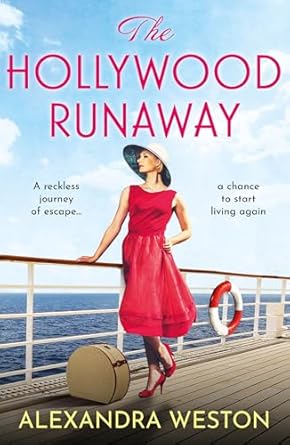
    The Hollywood Runaway 

    Alexandra Weston has captured the essence of change and challenge in The Hollywood Runaway with nightclub singer Olivia Swift, a woman who found herself having to flee her former life, terrified that if she is caught, she is in very serious trouble.

    The SS Ocean Princess is boarding the last passengers ready to cross the vast ocean to America to begin a new and hopefully prosperous life. Olivia, dressed in a beautiful white lace dress, wide brimmed hat with white lace trim with a suitcase in each hand, is standing in the line.

    This was to have been her wedding day, instead she is told Jimmy, the love of her life, is married with young children. Jimmy is a man who wants what he wants and makes sure he gets it; he wants her, but she does not want the lies and deception any longer.

    Making the decision to disappear Olivia is terrified he will come looking for her as she has a roll of his money found under her bed, having rolled under there last time he was in her flat, and she has kept it.

    Eventually she begins to relax as the ship moves further away from her old life and when she is given the opportunity to sing with a hastily convened jazz band on the ship she agrees to do so, enjoying being back on stage once again, her ability and reputation as a singer already well known to the passengers.

    Reaching New York, she parts company with Frank McManaman who she met onboard, a man on his way to becoming a great architect but joins forces with Nora Corrigan, an incorrigible optimist and one who has family in New York.

    Time passes, each of them becoming successful with Olivia discovered as star potential while singing with the Pip Brooks band in New York. She is offered a plum role in a movie which she accepts which helps her begin the journey back to Frank; the man who cared deeply for her but had his own pathway to travel.

    The Hollywood Runaway is a heartwarming and a delightful novella perfect for a quick read when time is pressing but you simply must have a little escapism in your life.

  • The Lavendar Bride

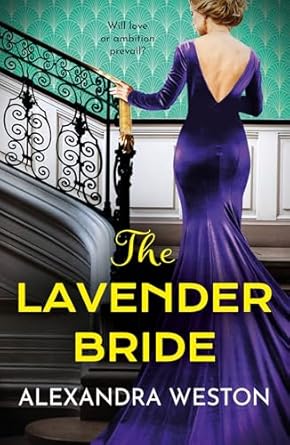
    The Lavendar Bride

    Set in 1946 and the following post World War II years, The Lavender Bride is based loosely on the life of Hollywood legend Rock Hudson, who while playing alongside Doris Day, became a huge star, marrying Phyllis Gates to hide the fact that he was ‘gay’.

    The post wars years in America saw the rise of homophobia, the fear that Communism was going to overtake America with Senator Joe McCarty ushering in the fear mongering years of McCarthy-ism, which is where this intriguing and intimate story is firmly set.

    Audrey is a dreamer; she dreams of one day moving to Hollywood and becoming something in the glamorous industry of film. She has a great and dear friend Freddie, who she is completely convinced will one day marry her, that they will go there together to begin a life faraway from Britain and her bully of a father.

    But as with all dreams they fall to pieces all to easily, but this does not deter Audrey as she still goes to Hollywood, landing a job with a ruthless and unscrupulous Agent who just happened to manage the hottest property in Hollywood, the rising star Rex Trent.

    Everything was going well, until it was not and that is when Audrey really begins to see the ruthless and unscrupulous side of the glitz and glamour that is Hollywood, as she still naively believes what she is being told. When she realises she has been tricked into helping cover up who and what Rex Trent really is, she is devastated, isolated and very lonely.

    She refuses to let what has happened get her down and meets Jack purely by accident; a talented artist who works in the props side of film making. They keep on meeting by accident and form a deep friendship which helps Audrey through the tumultuous relationship she has with Rex.

    Audrey’s life seems to be out of control, purposeless until she is asked to once again rescue Rex from his own folly. She reluctantly flies to Canada and there, in a strange quirk of fate, finds salvation and a deep, binding love.

    The many layers of life in the American Movie industry during the halcyon years of the 1950’s and ‘60’s have been well captured by Alexandra Weston. Her research notes offer a greater depth to The Lavender Bride, which is a captivating read with the storyline being extremely believable.

  • Once Upon a Time in Hollywood

    Once Upon a Time in Hollywood

    Quentin Tarantino is well known throughout the film world as a producer who delivers a top product that will win awards. Once upon a time in Hollywood, the movie, is no exception as it was nominated for 5 Golden Globes and 10 Academy Award nominations and won a number of categories across the board.

    The book of the movie is something else again, as it is unusual to present the screen play first and then create the book second, which is what has happened. Known for his flair, creativity and imagination Taranatino sets the scene in Hollywood during the halcyon years when anything and everything went in Hollywood.

    A fading actor who is being recruited to work in the ‘spaghetti westerns’ beloved of the 1970’s theater audience, brings the once famous actor to a teetering point in his career, a point he does not want to accept but is reluctant to do much about, still floating on the belief that the next big role is just around the corner.

    His stunt double and longtime friend, Cliff Booth seems to be going from strength to strength, a man who shows little fear, loves women and uses his World War 11 service background to his advantage, occasionally on the wrong side of legal.

    Name dropping of the many famous actors who had a stellar career in these halcyon days becomes a little tiresome in the written word, but on the screen would perhaps pass as unremarkable; part of the ambience and background, but also helps to portrays the helpless slide into mediocrity Rick Dalton is facing, as he has worked with a number of these people over the past years of his career.

    Amongst the very wordy pages is a good storyline which once discovered holds well, as the many aspects of which Hollywood became infamous for during these years are portrayed by the people who knew and lived through the era.

    As a first novel Tarantino’s written style is interesting. Film buffs and fans of Tarantino will enjoy the broadest aspect of storytelling portraying the ruthlessness, tragedy, sex and compassion that lay behind the scenes of glitz and glamour, Hollywood style.

  • A Piano Story

    A Piano Story

    In a slightly different direction to his usual jazz style, Jim Pearce has created a wonderful album of music that encourages the listener to simply listen, enjoy and return to a time when many, many, movies came with wonderful music scapes, depicting a softly romantic overtone: a time when to go out meant to ‘dress to the nines’ as a night out was a very special event.

    A Piano Story shows the full scope of Pearce’s creativity, as it is allowed to blossom and grow with the music coming under the lose category of ‘feel-good’, with many of the pieces taking on an influence from composers such as Richard Rodgers, Cole Porter, George Gershwin and the like, but with, in some instances, a slightly classical overtone.

    Pearce’s passion for music from the 1940’s era has been threaded throughout this lovely series of what can be considered, and as described by Pearce, as ‘small soundtracks through life’ as reflected in The Old Neighbourhood, which is a catchy little tune featuring a lovely strings section, accenting the style of pizzicato, reminiscent of old movie introductions, which flows along nicely, then comes to an abrupt halt!

    Beautiful Moment is a dreamy piece featuring woodwinds and strings, with a major element of piano threading together which is slow, stately and immensely enjoyable all the while allowing a picture to be created in the mind. A light romance, fitting for summer time, or any time for that matter, when the heart is light, has been created with Deep in your eyes, which is another attractive, enjoyable orchestral piece, filled with joy and sunshine which simply bounces along.

    A charming little music picture arrives with Ecstatic Musing which is an interesting title, but one that describes the piece perfectly, as although it has a light melody it has a hidden depth which calls for a pause, a minute in time to spend musing.

    Changing the pace to a lively beat is Clouds and Bicycles which is a rich and once again, catchy little tune, guaranteed to remind one of riding the bicycle ever faster to try and make it indoors before the clouds arrive, bringing with them the rain: fun, fast and a little ditzy, this pieces showcases the talents of the orchestral backing very nicely.

    Each of the songs is reflective of the era of moody music, scene setting pieces, combined with gentle influences and pays tribute to time long gone, now only to be experienced through the medium of many of the classic movie scores of the 1940’s and ‘50’s, as in the piece Dark Moon Sets which is sombre and moody.

    You Are My Sun and Moon, created in a tribute to Richard Rodgers encapsulates all of the greatness to be found in this style of music.  Slightly bluesy, it lets the imagination proceed to a jazz club or bar, the lights are low, the mood mellow and romantic, the dance slow, seductive and tender.

    Gorgeous, rich, sensual and simply designed for enjoyment this is an album created with music that tells a story which will appeal time and time again.

  • The Naked Witch

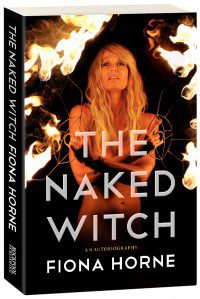
    The Naked Witch

    She has reached the very highest of highs and absolutely the lowest of lows in her career, somehow managing to survive to tell the tale; and what a tale it is to tell.

    Fiona Horne was adopted as a baby into a family who went on to adopt another two children. Somehow she did not fit in, did not have the right ‘anything’ to please her father and although her mother tried hard, somehow Fiona and her mother never really jelled.

    As a young child she seemed to be the one who was bullied and picked on, deliberately dumbing her abilities and intelligence down at school, desperately trying to make friends and fit into what was considered the ‘norm’.

    This lack of self-confidence and self-respect saw her withdrawing into the Australian bush close to her home, finding a little cave where she could simply be herself, creating a space where she could make a little alter and gather together a few coloured rocks, feathers as well as bits and pieces that caught her young eye. As she later says, this was the foundation of becoming a Witch in the modern world.

    Her pathway through life has been based on a crash and burn mentality and regardless of how successful she became, she always seemed to end up in a state of deep depression and self-loathing.  She was a founding member of the electro-pop group Def FX. Fame but sadly not fortune was hers for the taking until the co-coordinator decided, in 1997, in a simple phone call to end it all with the words, “I don’t want to do this anymore”! Def FX was no more.

    While a member of this iconic group she became immersed in Witchcraft, setting up alters wherever they were preforming, reading every bit of literature she could find on the subject. This was the platform for her rise to the top in Hollywood as a celebrity, the face of Modern Witchcraft, she became the author of three books on Witchcraft and Magick, was a TV personality and so much more.

    She marries, but sadly this does not last, plunging her once more into the abyss of total despair, destruction and self-loathing once again.  This time though, she is rescued by a friend who opens a new doorway for her, that of completing her commercial pilot’s licence and stepping into a world she realised was a where she wanted, needed to be; that of a bush pilot flying in humanitarian aid, as well as a youth outreach worker, living in the Caribbean, enjoying life and accepting that anything in life can be overcome or accomplished.

    Reading the autobiography, there are deep moments of immense sadness and joy. There are also so many challenges that have been faced; the wonder of it all is that she managed to survive at all.

    Reading the last few chapters, as Fiona struggles once again to overcome her demons, accept the changes in her life and enjoy living in the moment, she also learns to accept that the most basic, fundamental principle she has learned over her flamboyant career is:

    ‘Learning instead of asking, to give. Instead of holding, to let go. To trust that somehow what I needed would appear. And then learning to accept that I did not need to know, and in fact, must not pursue, anything specific.’

    The roller coaster ride that was the life of Fiona Horne tells a remarkable story about a person who is truly a survivor, who has battled the forces of darkness, to finally come into the light of peace and acceptance. In telling her story she hopes that ‘it would be good for its readers’.

  • Creating The Illusion: A fashionable history of Hollywood Costume Designers.

    Creating The Illusion: A fashionable history of Hollywood Costume Designers.

    Who would ever have thought the world of costume design could be so political, dangerous, fascinating and sumptuous all at the same time, but it was very much so at the dawning of the film era, an era that has gone from the silent screen and costumes designed to provoke, tantalise and enthral, let alone set the standards for glamorous fashion throughout the ages.

    Complied by Jay Jorgensen in a desire to share his fascination with the often unsung heroes behind the glamour of the silver screen, the costume designers beginning in 1909, when William Selig began to make films in Los Angeles, now have their day and are able, in so many ways, to tell their stories.

    1909 was the beginning of the movie industry we know today but costume mattered little to these early pioneers and it was not until DW Griffith realised that wearing the same outfit, usually owned by the star, and in every scene was compromising the integrity of the film being made.

    He was the first filmmaker to reinvest in his costuming but also hiring a designer to create the costumes for the production. As you turn the pages of this fascinating look at the other side of Hollywood you will enjoy not only the stories of the designers but little known  facts about the stars whom wore the costumes, the life and times of a budding industry.

    Beginning at the Silent Era of film these designers pushed all the boundaries prevalent in society during the post war years, right through until the Wall Street crash, which not only saw a change of societies attitudes but a craving to move on from the excess of the “Jazz Age’ into something that was more fitting of the times and the traditional values.

    The Golden Era of Hollywood saw the birth of Haute Couture designers making a name for themselves, not just on the runways of Paris but also on the Hollywood screens. Designers such as Coco Chanel were enticed to design for producer Samuel Goldwyn, a coupling of talent that was sadly destined not to last. But the simple, well cut styles created by Chanel did have a long lasting effect on the ladies of Hollywood as they struggled to learn and understand that simple, yet elegant style so beloved of Chanel.

    Cecil Beaton dressed Audrey Hepburn in her unforgettable role of Eliza Doolittle in ‘My Fair Lady’. As a designer for Hollywood blockbusters he was already well known as he was already designing for a variety of theatre presentations from Revues, to ballet and West End Theatre productions.

    The Modern era heralded in change once again and a new range of designs to suite the era; those such as Norma Koch, Theodora Van Runkle and Bob Mackie designed and created, not just for the screen, with their style and flair moving into the fashion scene readily. Outfits such as those worn by Faye Dunaway in the Thomas Crown Affair’ became the accepted norm for women’s fashion.

    The final chapters are more in the nature of a Question and Answer with the various designers of the more current movies which show a fascination with their craft, the actors they dress and the movies. This also gives a greater understanding of what creates the art of excellent costuming and costume design, as well as an insight to the actors who wore the various outfits which helped create memorable characters such as Capitan Jack Sparrow, Willy Wonka,  Danny  Zuko and Sandy Olsson of ‘Grease’ fame, and Meryl Streep’s character Sophie in ‘Sophie’s Choice’.

    If you are into fashion, movies, glamour, and design or simply love to read about the old days of Hollywood, glamour, a lifestyle long gone, and the people who remained, in many cases the unsung heroes of the silver screen, this is a book that you will enjoy for many, many years.

    From the early beginnings of the outrageous years of the ‘twenties’ to modern day creativity, the evolution of Hollywood, fashion and film makes far more fascination reading than any tales created for the silver screen.

    From the magnificent to the mundane there is something on every page to keep you interested, intrigued and fascinated.