Tag: histroy

  • The House of Blue Glass

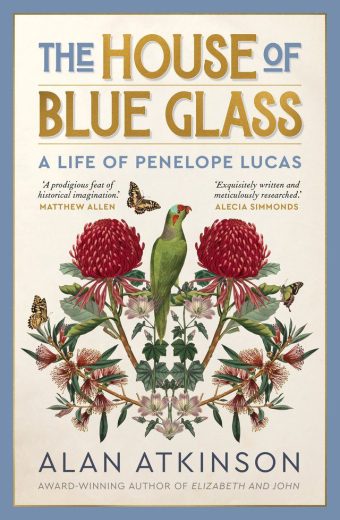
    The House of Blue Glass

    The author, Alan Atkinson, is a Historian with post graduate degrees from four universities. He has been a Fullbright Scholar and is the author of books on Australian history. His research is detailed, with many pages of notes and a large Bibliography.

    The House of Blue Glass revels the life of Penelope Lucas, but who was Penelope Lucas? To find this out, Alan has taken us back to this woman’s antecedents. Three generations previously, we learn about the family, the society they lived in and the influences that came to affect Penelope.

    Born in England in 1796 she was well educated and confident. She came to meet John McArthur when he was in England. He was so impressed by her gentility and knowledge that he invited her to accompany him back to Australia. She was to be a Governess to his children. She was the first free woman to travel independently to the South Land.

    It seems that Elizabeth McArthur was “Unsurprisingly upset,” when her husband arrived home from England with a young lady. We know this because hundreds of letters of Elizabeth’s still exist. Elizabeth was at a point where she was ready to seek new challenges and broaden her horizons. She and Penelope were similar ages, and after a time worked together and developed a relationship which expanded the McArthur empire as well as educating the children. Penelope learned about the Indigenous people and how the McArthur’s tried to work with them.

    Now that John McArthur was home and organizing his trade venture, Penelope was given the task of managing the books as well as caring for the children. She did both jobs well. She was the backbone of the farm and family.

    In later life, Penelope was granted 500 acres of crown land by Lachlan McQuarie as she was earning a steady wage. This woman defied the odds for a successful woman to own land and become a respectable citizen.

    The Blue Glass in the title of this book refers to the invisible barrier by which women of that time were surrounded. It was not a glass ceiling as there was no room for movement, but an all-encompassing barrier, preventing movement in any direction at that time.

  • The Suit: Form, Function and Style

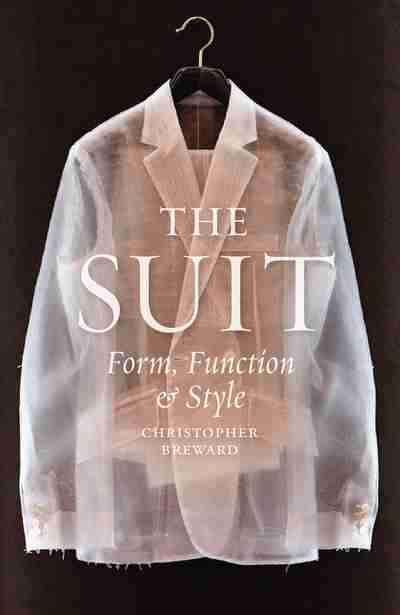
    The Suit: Form, Function and Style

    The Suit has always seemed to have been there in the halls of fashion, in the street, for the working man, for the up and coming in the business world and as a mark of power in hallowed halls of the power brokers of the business world.

    The Suit therefore, is something that is taken for granted in the world of men’s dressing and in various times women’s fashion; but it has not always been thus. The Suit is considered as one of the foremost symbols of modern society which stretches back as far as the French and English Courts of the mid seventeenth century, when it was considered to be the model of sartorial elegance by wearing a bespoke outfit, often referred to as a ‘mish-mash’ of garments, which denoted your standing in society.

    The more flamboyant and embellished the higher the status of the gentleman. This mode of dressing was, in the following years, frowned up by the Puritans who stripped the outfit down to basic garments, and so began the journey of the Suit, which has over the centuries evolved and remained a standard item in men’s apparel.

    Along with the creating of the bespoke suit of clothing came a complete industry of tailors and garment makers, weavers, button-makers and so forth who perfected their craft to an art form, so much so that in London it was considered the height of fashion to have you garments made by a certain tailor, whoever happened to be in fashion at the time, most of whom had their workshops and outlets in Saville Row in London. In America, Brooks brothers took on the mantle of dressing men with a sartorial elegance which still holds today.

    The Europeans have also over the years developed with panache a suit that occasionally places the more traditional of men’s tailoring in the shade, but rather than take on the more formal aspect of the suit they have branched out, making the more causal or relaxed style of suiting something that is and was and has been for many, many years enjoyed for the comfort and very wearable elegance that can be achieve with the use of different fabrics and a loose styling.

    Suit’s like every other aspect fashion go in and out of vogue. The Seventeenth century saw a range of lavish, heavily ornate garments created in the name of a suit of clothing, the eighteenth century saw much of this extravagance pared back. The nineteenth century saw a change from breeches to trousers, with the very forward and rakish outfit introduced into the world of feminine apparel.

    Enter the twentieth century where just about anything went over a time with a casual elegance becoming an accepted norm of society. Mass production also gained traction making the Suit affordable for men of all levels of society, which began to break down the class system which until this time made owning a suit a very expensive proposition.

    But over the years the Suit has perhaps, and always will be, a symbol of status, of power, of prestige and of the avant-garde of society.

    It has had its extremes of fashion, as with the Zoot Suit which was a very symbolic piece of clothing in America, the Carnaby Street incarnation created as a symbol of the new and emerging generation; the power suits of Brooks Brothers and Saville Row denoting the businessman, the power broker, the man about town, the drab featureless Mao Suit created as a symbol of revolution in China, and the sensual relaxed suit of Gianni Versace, all rub shoulders amongst the wonderfully colourful, complex and fascinating history of the humble, or perhaps not so humble Suit.

    There is much fascination in the history of The Suit, its creation, uses, misuses and power symbols, over its four hundred year history that makes this work and intriguing and interesting read, but the age old conundrum still does apply, ‘Does the suit maketh and man or doth the man maketh the suit’.

    Perhaps a little bit of both, maybe!

  • The Secret Of The Blue Glass

    The Secret Of The Blue Glass

     Although this story is a fantasy about “Little People”, it is set in Japan before, during and after the Second World War, it is narrated simply and with understatement, which serves to touch the emotions. The unspoken words are the most powerful. Yuri, the daughter, understands that her gentle father has been locked up for saying that he didn’t believe in war. Her mother refuses to let Yuri visit her father because of the awful conditions he is kept in.

     The story follows Yuri’s family, and when she is evacuated during the war, we follow her to the countryside. Here she lives with an elderly aunt, and a blind grandmother. We learn about Yuri’s brothers from the letters her mother sends.

     Tetsu, the thoughtful brother who helps Yuri and visits her, and Shin, who is training and can’t wait to go to fight in the war, are mentioned. We also learn that the bombing of Tokyo, where Yuri’s family home was, is imminent. When Yuri left her home for the country, it was decided that she would take the Little People with her for safety.

     The British born Little People, who age at a slower rate than humans, were originally brought to Japan, by an English teacher. When she had to leave the country, suddenly, she entrusted them to her most caring, and reliable student. He had to take them home and hide them away, and fill their blue glass goblet each day with milk.

     The Little People had a family life as rich and complex as the people they lived with. The two adolescent children were adventurous and exasperating, as appropriate for their age. It is through them that the family met Yahei the pigeon. They developed a firm friendship with him and eventually he took them flying to explore the area.

     The stories of both families, and in particular Yuri, have been cleverly woven together. The imagination of the writer gently transports us into the willing suspension of disbelief. The Little People were amazed when they found a clock on a wall, which had another little person in it.

     There are very gentle and touching romantic inferences, followed by the stark backdrop of the poverty and hardship of war. Children, who appreciate the depth of this story, will forever keep this book as a treasure, touched by the spirit in which it is written.

    Pushkin Children’s Books have been published with the aim of sharing “tales from different languages and cultures with younger readers”. They choose the very best stories from around the world, both fairy tale and fantasy. Tomiko has written a multi layered story for competent readers, who are thoughtful and discerning.