Tag: history

  • Postscript

    Postscript

    Life, Love and Loss in Australian Letters 

    It’s a rare occasion when a letter appears in our letterbox; according to Australia Post only three percent of their business relates to letter mail, most of that is official mail. A personal letter or card is generally gratefully received as it lifts the receivers’ spirit; it indicates that someone has given them thought and dedicated time to put these thoughts on paper. Some express love while others update the reader about recent family events; all are individual but relatable.

    Spanning over 200 years, the National Library of Australia holds millions of letters in its collection; until now many have never been seen. Publisher Lauren Smith and her NLA team have carefully selected the best letters; those that give the reader a sense of how much they have in common with the writer. Some are written by famous authors such as Jane Austin while others are by lesser-known individuals, such as John Wing whose suggestion about the departure of athletes at the 1956 Melbourne Olympic is still practiced today.

    Each chapter provides the reader with the selected letter, the background of its writer and of the responder; Lauren Smith had invited contemporary Australian writers to compose new letters in response to the chosen ones; a postscript with a modern twist. This combination of original and new letter engages the readers and may even inspire them to drop a letter in the post to a loved one.

    Hopefully, this collection will lead to the rediscovery of the lost art of letter writing.

  • Australia Remembers

    Australia Remembers

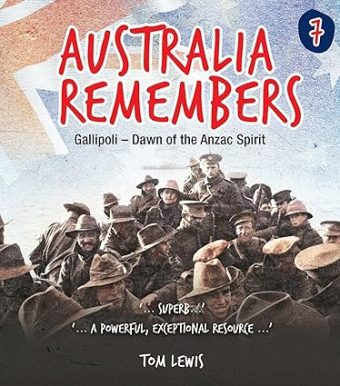
    Gallipoli: Dawn of the Anzac Spirit (Volume 7)

    The word ‘Gallipoli’ is what most Australians would associate with ANZAC Day, the march and the biscuits, but few would be able to distinguish the real story about the campaign from the many myths, which have grown over time.

     Dr Tom Lewis Australian author, military historian and former naval officer’s latest beautifully rendered and thoroughly researched book “Australia Remembers Gallipoli – Dawn of the ANZAC Spirit”, is a wonderful introduction to primary aged children to the broader meaning of this time in Australia’s past; it’s a great resource to help answer the questions about war and remembrance. 

    The author clearly sets out the events and reasons surrounding Australia’s involvement into what was to be ‘The Great War’ (later to be known as World War I).  This comprehensive non-fiction reference follows the soldiers through their training, hardship of the landing at Gallipoli, difficulties of life in the trenches, battles and final successful evacuation. It doesn’t just finish with one of the safest military withdrawals, but also answers those questions of ‘What happened to the original ANZACs?, ‘Why do we celebrate a campaign not won?’, and ‘Were the ANZACs the only ones involved?’

    With a clear layout, age-appropriate text, relevant historic photos, ‘Words to Remember’, and ‘Did You Know’, makes this complete account suitable for a wide age range; adults will also find themselves obtaining a greater understanding of this period in world history. The ‘Think About It’ section can be used as excellent discussion starters and the ‘Activities to Keep the Story Alive’ at the back of the book, are a wonderful way for parents and teachers to keep the legacy alive.

    This visually rich book is definitely a must for all home, school and public libraries.

  • Female Guards of Nazi Brutality

    Female Guards of Nazi Brutality

    When Ordinary Women became Architects of Atrocity

    Even though it is more than eighty years since the cessation of the Second World War, the history that is now coming to life is a lesson to all; that when people are put under duress, are programmed to believe what they are told, tragedy and horror are the result.

    When Adolf Hitler created his world of a pure Arian race setting out to eliminate anyone born in the Jewish faith, he and many others, both men and women, showed the world what people can and do become under certain circumstances.

    Female Guards of Nazi Brutality from N Koster documents the lives of ten women, all from everyday families, nurses, teachers, farm girls, workers, all young women, all easily able to be indoctrinated as Hitler Youth.

    Each one rose through the ranks, each one became a person of significance within the interment camps, each one became capable of carrying out horrific acts of violence against other women, children and men.

    Survivors told the stories of these women who were feared, who felt nothing other than power, control over others, who eventually stood trial, all but one who was killed by the British, several who went on to lead a normal life, within the community after the War.

    Although it seems incredible this can happen, that these women could change once again, post war, to become people of standing within their communities, it documents what the human psyche is capable of when subjected to the right conditions.

    Koster has carefully researched and documented this section of history, recorded the names of these women, who along with their horrific deeds, would otherwise slowly fade from history and by doing so she raises the question, ‘What does power do to the powerless once it is given?’, a point on which we as humanity need to reflect.

    Confrontational in extreme, Female Guards of Nazi Brutality documents the tragedy that flows down through generations when lives/cultures are shattered,’when conscience is surrendered to system.’

    For readers who wish to discover more about these women there is a Bibliography, along with Archival and Trial Records at the rear of the book.

  • Girl In A Box

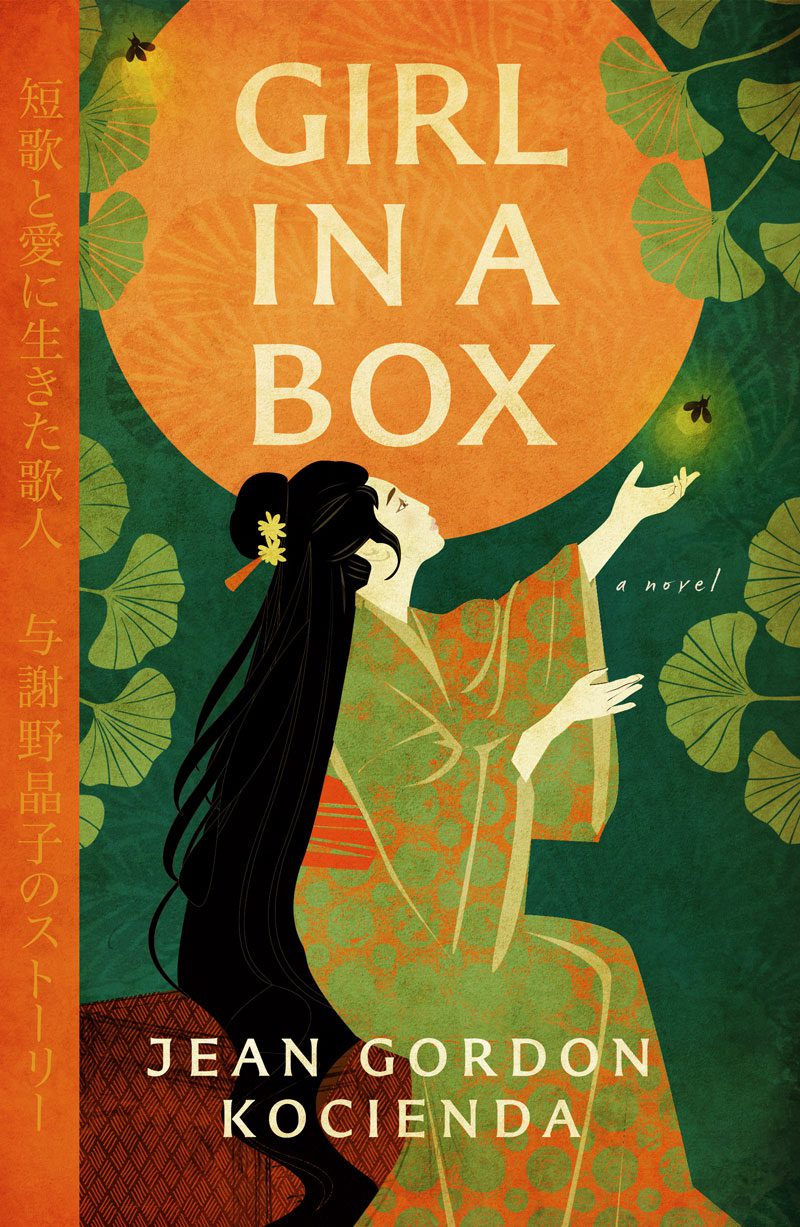
    Girl In A Box

    She was in a box, a box that was her life. She dreamed of breaking out, becoming somebody, living a different life, not the same as her mothers, fathers and stepsister, but one she made on her own, one filled with poetry, vibrant, vital and exciting.

    Yosano Akiko (Ho Sho) saw the world, her world through the eyes of a poet, a dreamer, that of someone who could make a difference and be respected as a woman.

    Set in Japan in the early twentieth century Girl in a Box captures the life of so many talented young women of the time, raised within strict guidelines, raised to be married to the best suitor, become mothers and work hard, a time when Japan was at the very edges of ‘ the suffragette era’, a time when the Emperor was opening Japan up to the Western world though poetry, art and travel.

    Akiko meets the charismatic Tekkan, a poet some few years older, at a poetry reading event, attended by defying her parents, which becomes a regular weekly pattern in her life; one that breaths life and love into her dreams of one day becoming a poet of note.

    She commits the ‘crime’ of fleeing from her family to live with Tekkan which begins a life of poverty, deep love, jealousy, travel, tragedy, fame and eventually acceptance. She follows Tekkan to France at the end of the Belle Époque era where she lauded as a celebrity for her captivating Haiku poetry and writing.

     Returning to Tokyo she resumes her life as a mother, poet, and writer, always struggling to earn enough money to feed, clothe and house her ever-growing family before good fortune arrives at their door.

    Giving birth to thirteen children, eleven of whom survived, children whom while a part of her life, were almost additional, she was work focused, needing to be ‘useful’ in her marriage. She became the first woman to translate the epic Life of Genji into modern Japanese while carving out a career in literary circles that saw her reach Celebrity status.

     After the death of her beloved Tekkan in 1935, Akiko now a much older woman looking back on her life, is faced with some raw truths, that life is lived in a box, that of your own making no matter how many times you choose to try and break out of that box.

    Based on the life of Yosano Akiko (Ho Sho) 1878-1942, Jean Gordon Kocienda has woven an elegant transition of life which in so many ways reflects the life of women down through the ages, using each year of her life as a milestone. Each year is introduced with poetry of Akiko as she tells her story, before broadening out in her later years as she has time to reflect, to regret and time still to try and make amends to the daughter she believes she wronged so badly.

    Kocienda has handled the passing of time with care, as she captures the heartbeat of a woman, a nation, and many of her literary friends as they begin to break away from the tradition that has bound them so tightly.

    The Girl on a Box is a story that deserves to be read at a gentle pace to be able to carefully absorb the storyline, to understand the woman who made a difference, the  woman who faced the same challenges as the modern woman as she balanced her life from child to lover, mother, wife, poet, writer and eventually lecturer.

    Who was she: was a Japanese author, poet, feminist, pacifist, and social reformer, active in the late Meiji era as well as the Taishō and early Shōwa eras of Japan.] She is one of the most noted, and most controversial, post-classical female poets of Japan. Wikipedia

  • The Queen’s Atlas: Saxton’s Elizabethan Masterpiece

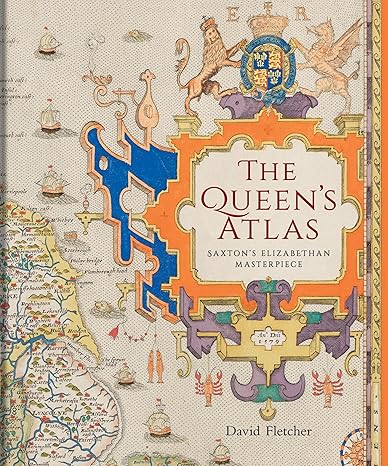
    The Queen’s Atlas: Saxton’s Elizabethan Masterpiece

    The Queen’s Atlas is a book of great beauty. The maps are wonderfully reproduced in colour, and the many documents and pictures all contribute to an extraordinary historical story about a man of whom most of us have never heard. It is a treasure.

    Christopher Saxton was often referred to as the “Father of British Cartography.” He was born around 1542. His birthdate is not specific as he was not from the elevated levels of society. He spent his early years in Yorkshire and came from a farming family.

    In later years he was apprenticed to a surveyor named Rudd, who surveyed and checked local information, ‘in keeping with Renaissance Scientific ideals.’ Rudd was emphatic that he must view all sites and travel himself rather than listen to the accounts of others.

    Saxton took over the surveying and mapping of England at a time of change. In the 16th Century map making was becoming essential and concern for scale and accuracy demanded.

    There was a practical use of maps for defence, and intelligence gathering, as well as being used for propaganda and patriotism. In the 1570s cartography was recognised as an important tool for the country, and Gerard Mercator introduced his project.

    In 1573 Saxton received a commission from Queen Elizabeth 1st to conduct a National Survey. He chose to conduct the survey by County, making a series of medium scale maps showing settlements, and major landscape features. The chapters continue to discuss ‘The Scientific and Intellectual background, surveying techniques and texts, and surveying instruments.’

    This fascinating look at the maps of Saxton’s and the context of the politics of the times will engage readers completely. A wonderful historical book.

  • The Angel Prophecy

    The Angel Prophecy

    The Angel Prophecy, book five in the  Hunter Files from Rob Jones is a chilling, fast  moving adventure that sees HARPA members in some serious trouble, kidnapped and held ransom by a man who is pure evil; a man who believes his beliefs are the true way of life and means to make sure he succeeds in banishing evil.

    Alesky Petkevich, or Oriax, a religious zealot has spent a lifetime creating immense wealth, collecting invaluable religious artifacts, and using that wealth to open doors as well as clean away the evil he has also created. He is illusive, wicked and you could say depraved.

    HARPA’s last mission was to uncover what they believed was King Arthurs Sword, Excalibur at Tintagel, which is now in their custody, but the reality is, it is the Sword of the Archangel Michael, a powerful weapon which in the wrong hands could result in utter devastation. Oriax is aware of this and wants that sword; he is prepared to go to any ends to get it, to use the power to fulfil what he considers his life’s work.

    Max Hunter and the team, those whom have not been kidnapped by Oriax, are now trying to work out how best to not only rescue their team members Quinn Mosley, Professor Juliette Bonnaire from UNESCO and Jim and Suzannah Gates but keep the sword safe.

    This leads them on a mission that is both horrifying, fraught with danger at every turn and brings them to St Catherines Monastery at the base of Mount Sinai, built more than one and a half thousand years before at what is considered to the site where Moses saw the Burning Bush  and is now a sacred site for both Jewish and Christian religions.

    Petkevich brings them all together, unwillingly in Harper and the team’s opinion, to witness the power held within the sword, and believes that with the sword in his hands he is unstoppable. But is he!

    Rob Jones has taken a slice of history and used it as a very real possibility which does make the storyline a lot more believable as well as offering an interesting place to be researched, that of St Catherines Monastery built between 548 and 565, which is the world’s oldest continuously inhabited Christian monastery.

  • War After Ukraine

    War After Ukraine

    Making Sense of War

    War After Ukraine draws to a finale the three book series on making Sense of War from Christopher K Pike in which he details the How, Why, Where, When and What of War in order to try and further understand the continuum that is war; an apparently senseless and bloody undertaking that has occurred since history has been recorded but is something that goes back further than that; to the very beginning of mankind.

    Written as a series Pike conceptualises the political aspect of war along with the additional facets that are necessary to consider one country taking up arms against another and the reasons for this undertaking, or War to commence.

    War After Ukraine was in draft form when Russia made the decision to invade Ukraine to gain back what it considered its lawful territory, that of Ukraine to create once again what is nostalgically referred to as the old Soviet Union.

    Unfortunately, it is proving to be one of the most cataclysmic decisions undertaken since the cessation of World War II and one which is going to have far reaching effects, many of which are still unknown with the collapse of the Russian Federation within the next ten years, considered as high on the list of probable repercussions.

    In 2025 this tragedy is still unfolding but analytically it is proving to be all or everything that Pike discusses in this series: politics, ego, wealth, history, power and man’s violent nature!

    Over centuries many have tried to understand War with little success, have spent many hours in analysis, and have all come to the same or similar conclusion, that war is an intricate segment of man which before Napolean,  was considered as a normal process of life and which eventually results in the resolution of differences between Countries or  Nation States.

    Over five specific segments’, some of which reiterate points from the earlier books, About War and War In Context Pike once again ponders with well researched fact the illusive answer to what really causes War!

     Suitable for anyone who has an interest in War, is a scholar or simply enjoys reading a fascinating and well-constructed history of one aspect of man’s journey on this earth, War After Ukraine and the previous books are well worth the time required to dig deep into what is essentially the psychology of man down through the Centuries.

    To end on a quote to ponder from Trotsky (1879-1940) …’you may not be interested in war, but war may be interested in you’.

  • The Art of the Scribe

    The Art of the Scribe

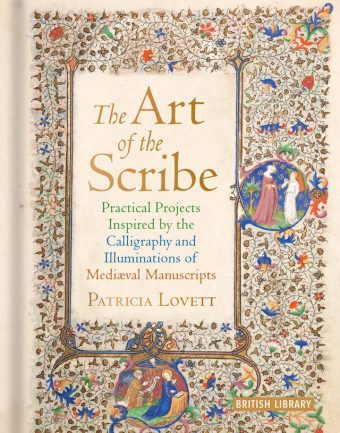
    In this beautiful coffee table book, The Art of the Scribe Patricia Lovett has combined the practical art of calligraphy while looking at ancient manuscripts to show some of the most beautiful works and how to replicate them. We learn about the history of calligraphy and the styles used by ancient scholars. Some of the examples of work are presented from Italian, French and English scribes. The history we learn from these translated manuscripts is captivating, while the art and colour of the manuscripts encourages lingering.

    Each section of the book discusses a style of calligraphy and shows practical applications. In Uncials, the author shows how to centre the text, use simple sponged decorations and free up the text. In other sections we are shown how to Highlight a line for emphasis, how to write text vertically, how to add painting decorations, and how to write in circles. Then Patricia moves on to talk about materials, such as metallic paints, parchment and vellum, pens, brushes, and sloping boards.

    This book is a joy to the eye as well as a fascinating look into past writings. If you are practicing calligraphy you will wish to have this book by your side forever. If you love translations of old manuscripts and the humour and history, they bring you will wish to have this book by your side forever. If you love detailed artwork and exquisite visual pieces you again will keep this book close. For the sheer beauty of it and the interesting details about writing and art this will always be a treasure.

  • Alice’s Oxford

    Alice’s Oxford

    People and Places that Inspired Wonderland

    Professor Hunt introduces Alice’s Oxford by telling the reader how the stories told to Alice by Charles Dodgson evolved into the most treasured tales, Alice in Wonderland and Through the Looking Glass.

    Dodgson, (Lewis Carroll), was keen to keep his professional life quite separate from that of his life as an author. He treasured his memories of Alice and the time they spent together and spent seven years writing stories while intimately involved in the day-to-day life in Oxford. Parts of Oxford that both Alice and Charles would have known are little changed today.

     This book shows us that the two stories told are quite different.” Wonderland, although it was densely layered as it developed from a personal gift to a published book has an air of spontaneity”.. ….. Alice is more contrived.

     There is also much conjecture about why Charles chose John Tenniel as the illustrator. John was a leading satirical artist of the day. His skill increased the complexity of the texts, but he found Charles difficult and demanding to work with.

    Further chapters in this book look at the history and layout of Oxford with a map showing a section of streets and buildings included in the stories. From there, different places are shown and their inclusion into the stories discussed.

    In the Ashmolean Museum there is a painting showing a nightmarish wood. This is thought to be the basis of the wood in the Looking Glass. The famous marmalade in the eyes of those who lived in Oxford was Coopers. The recipe for the jam was given to the Coopers by Alice’s mother. Alice found some when she was falling down the hole.

    The notes, further reading, picture credits and index of people and places, makes this a very detailed and complete work. There are many hours of discoveries to be found in this small treasure.

  • Out of the Woods

    Out of the Woods

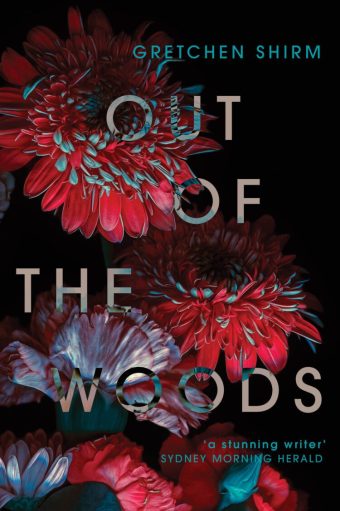
    ‘Out of the Woods’ set in 2000, by highly regarded author Gretchen Shirm, takes the reader back to a terrible time in the history of Republika Srpska, Bosnia and Herzegovina; the trail of a former military man, charged with war crimes during the Genocide that occurred in the small mountain town Srebrenica in July 1995.

    Jess, a middle-aged Australian woman, while working as the secretary to an Australian judge during this trail of “K”, not only explores The Hague, and other Dutch cities in The Netherlands, but also her life as a child, mother and now as single divorced woman.

    As Jess sits through the evidence of mostly women, who have lost husbands, brothers and other family members, relating the horrors of the genocide, she has difficulty in associating them with the defendant in the dock.

    As a result of her friendship with Merjen, one of the women, who has suffered unbearable loss and who had given testimony at the trial, Jess’s compassion for the people of Srebrenica is complete. 

    As Jess’s knowledge and understanding of the extent of this Genocide grows, so does that of the readers, who will be continually asking themselves ‘How could this have been allowed to happen?’ They will be moved by the extracts of recorded testimonies, which have been placed at the beginning of each chapter.

    Readers will not be able to leave what they have read of this terrible event behind. This thought provoking novel will no doubt give them greater compassion for those who have endured suffering.