Tag: grief

  • White Noise

    White Noise

    Growing up as a teenager in the twenty first century can be quite challenging, but growing up as a neurodiverse female teenager in a single parent household provides another dimension. In her debut novel Raelke Grimmer, sympathetically relates the story of a year in the life of fifteen-year-old autistic Emma, who lives with her widowed doctor father in a suburb of Darwin.

    Emma and Summer, have been best friends for many years, but over the years their friendship changes; Summer’s family move to a new house and Emma’s relationship with Elliott develops. Both girls are confronted with the ‘normal’ teenage situations; drugs, alcohol and love. However, underlying these challenges, Emma and her father are still processing the grief of the loss of Emma’s mother.   

    I highly recommend this engaging book to teenage readers, who will definitely identity with Emma, Summer and the other teenage characters, as they negotiate the ups and downs of Year 11.    

  • Travellers

    Travellers

    In this well contrived storyline the subjects of mental health, spirituality, healing and understanding are woven together to create a fascinating journey to a world of alternatives, which while at times could be considered as confrontational, also carefully offers much for consideration on how we as people live, or choose to live, our lives.

    Travellers wraps around the theme of loss when Don Banks, psychiatrist is trying to find his way through the trauma caused by the death of his daughter. He and his wife are estranged after this tragedy; she is seriously disconnected, choosing to spend her days in self-inflicted isolation, he is trying to find a pathway to accept what has happened and move on with his life.

    When a troubled young man, Mason, becomes his patient his world takes a change of direction that is unexpected. As Masons’ story unfolds, Don Banks finds he is becoming more involved that he should but it is not until Mason reveals some surprising details of Dons home, he begins to think that there is far more to Mason and his story than he understands.

    As the narrative progresses Donald Altman carefully opens the Pandora’s box of mental health, viewing it from a vastly different perspective. As both Ben and Mason are in need of help and understanding, are they helping each other to heal or does the mysterious ‘Traveller Jacqui’ have more to do with the healing process that either man understands.

    Interesting and in turn somewhat challenging, Travellers is a complex storyline, which has perhaps a little too much built into the journey undertaken by both Don and Mason and although well-constructed with a skillful use of wording, the conclusion arrives with more of a whimper than a bang!

  • In the Shade of Olive Trees

    In the Shade of Olive Trees

    Heartbreaking and heart-warming In The Shade of Olive Trees has been beautifully written and captures perfectly, the absolute desolation that can occur when life dishes up the unexpected.

    Julia Brooks’ world is turned upside down on her wedding day. Will, the man she was to marry finally arrives at the church and informs her he can’t marry her, as it would not be fair; he is and has been having a long term affair.

    She is shattered and in false bravado, fuelled by a considerable intake of champagne, makes the decision to carry on with the carefully planned ‘honeymoon’ trip to Italy, a place she has always wanted to travel too. Her carefully prepared itinerary will make the journey easy, or so she considers, from her state of grief!

    On the flight to Florence, Italy she meets Harriett Morris, a woman she finds she relates to, who as it turns out, runs a retreat for ‘Widowed Travellers’ at Porto Venere. She invites Julia to come to ‘Olive Haven’, handing her a card and glossy pamphlet which details what she offers, created especially for women who are lost in grief and need to heal.

    After a series of devastating events and a chance encounter, Julia finds herself travelling to Olive Haven with Alex, a dear friend of Harriett’s and so begins the cathartic, confrontational, healing journey back to discovering who she really is and what she wants from her life.

    It is very had to credit this is a debut novel from Kate Laak, as the characters are beautifully portrayed, the setting of Florence, the countryside of Italy and Porto Venere have been skilfully created. The vibrancy of Italy enchants, as do the wonderful people Julia meets along the way that try to help her heal a broken heart!

    She has also, with great skill, woven into the story the many layers of grieving and healing that take place as time moves steadily onward.

    Captivating and difficult to put down, have a box of chocolates, a box of tissues as well as a glass of Champagne handy and join Julia as she bravely tackles her ‘honeymoon’ journey as a solo traveller, all the while beginning to understand so much about life, herself and what she wants in her future.

  • THE ART OF GRIEVING

    THE ART OF GRIEVING

    GENTLE SELF-CARE PRACTICES TO HEAL A BROKEN HEART

    At the beginning of The Art of Grieving there are two pages without introduction, just there; eloquently written the words capture in totality the sudden and devastating event called grief as it enters your life, unwanted, unannounced, but there: changing the familiar to the unfamiliar, changing you forever.

    Corinne Laan has spent a lifetime writing this book as growing up watching the effects of grief in all its many facets on her life and that of her family, eventually beginning to working with mothers and babies, women who have and are experiencing grief with the loss of a child, infertility issues, still born births and miscarriage.

    Training as a nurse she found she gravitated to this area of work and then on to further study as a traditional Chinese Medicine practitioner. Having been ‘offered the thought’ about a book such as this back in the 1970’s, the advent of the current COVID epidemic, the lock-downs which saw families grieving the loss of loved one from a distance, many losing their jobs, business and contracts, saw the idea become a reality.

    One important point made early in the chapters is that we all grieve over the course of a life journey, but in this modern day of fast paced living, the massive impact of grief is frequently understated; not given anywhere near enough understanding. Sadly, over time the ceremonies concerning death and burial have been pared down to the basics. These traditional rituals help in so many ways with the grieving process.

     Death is to be pushed to one side, as to recognise death is to admit to weakness. Strange, considering death occurs every minute of every day, but grieving is not always associated with death of a person, it can also have the same debilitating effect upon the loss of a job, career, divorce and so many more everyday aspects of life.

    How to get through the sadness, the tough times, the process if you like of grieving has been carefully set down as a self-guided process which will encourage embracing your grief, learning to understand the many levels of grieving and accepting the journey based on a 12 step process and much more.

    Each of the steps comes with a short introduction, before moving into the ritual, the aspect of self-care, which is often the first thing to be neglected. Many of the simple, uncomplicated rituals can be carried with you, such as the prayer ritual, or mantra which can be used anywhere, anytime, others are little more complex as healing and grief is not a one size fits all situation

    Beautifully presented, written with love and understanding, warmth and welcome, The Art of Grieving sets out so much we are afraid to accept, making grief more understandable, acceptable, and the art of healing, of slowly moving forward so much easier.

  • True Friends

    True Friends

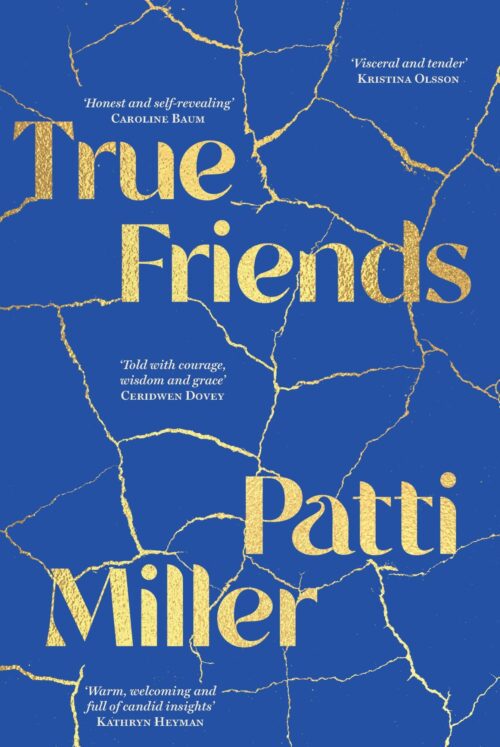
    Friendship comes under the microscope, or rather the keyboard of award winning author Patti Miller in True Friends, as she sits down to take a serious look at what is involved in friendship and the effect that occurs when a lifelong friendship comes to an end.

    Written in a somewhat sombre and reflective style, the works tend to wander across that pages in the form of a long term friendship; an assumption that you get what it is that is being talked about, discussed and that the love and warmth folded into that friendship over the years, crosses boundaries to fill the cracks.

    Patti and Gina had been friends for years, sharing life both in Australia and overseas together, the highs, lows and the sheer fun of life and living. Gina had become a warm and familiar part of Patti’s life, and when the slow coolness began to creep in eventually seeing the door close, she was left wondering about what friendship, true friendship is all about; what is the emotional glue that although it seems it would never undo, somehow more often than not, simply does.

    Exquisitely layered there is much room for though within each page, as the season of grief must be faced and understood. The many questions are asked; perhaps it was my fault, what did I do wrong, blame laying, blame acceptance, but all the while really trying understanding what did go wrong, if anything and the deeply buried hope that someday Gina, would come back into her life.

    True Friends is a very personal memoir of a search for a reason, or a cause that is familiar to everyone. Some friendships are only meant to last a short time, others for a lifetime but to have one true friend is a most special thing offered by life.

    Patti Miller refers to her process of her journey as ‘archaeology’ and uses other friendships past and present to enable understanding of this loss of friendship.

    Laying out ‘friendship’ in many forms brings with it an understanding of the aspects of friendship. Looking back to friendships made as a child, she struggles to remember much more than images, floating thoughts, adolescent friendship, school mates, people who travelled the same pathway for a period of time, but also moved on, leaving behind memories as fleeting as time.

    Slow to read, perseverance is required but it is well worth the time invested to be able to take out what consists of the meaning of ‘true friendship’, which also presents a clearer understanding of the fragile nature of friendship; long, short, casual and indifferent.

  • THE SPACE BETWEEN THE STARS

    THE SPACE BETWEEN THE STARS

    Bittersweet, emotional and beautiful, Indira Naidoo takes grief out of the darkness and brings it into the light as her tribute and farewell to her beloved sister Stargirl, in The Space Between the Stars in a manner that is both cathartic and healing.

    Indira Naidoo is a woman who uses words as her daily currency. She uses this skill to share her journey in a very gentle and personal way, as she struggled emotionally and intellectually, to accept or explain the death of her sister, a woman who was at the top of her career pinnacle, successful, fun and working in a world she loved, that of Media.

    What was it that caused Stargirl to take her life one dark night at the beginning if the COVID pandemic? She blamed herself as the older sister; she should have seen the signs that something was so wrong. Her grief was debilitating, unimaginable and isolating. The blame was palpable.

    As the days passed, her grief knew no bounds. On a morning jog, in the fresh, brisk breeze off Sydney harbour, she jogged up Mrs Macquaries Road passing through a grove of golden wattle, the sounds of a City in motion slowly dispersing; two figbirds were cooing high in the branches and a soft gentle sound, a whisper of the leaves asking her to come in closer, come in, come in was mesmeric.

    Although she had felt the vibration of this sacred place before, a place of suffering and regeneration, this time she stopped, finding a place to sit on the grass, a time to simply be. When she took note of her surrounding the first thing she noticed was a tiny spiders web in the grass, glistening in the morning light.

    Looking up she realised she was under the branches of a very old Morten Bay fig, a tree that had witnessed much over its long life. Very slowly she began to feel she could simply be; to be there nothing asked and nothing given, just space and time.

    Each of the chapters is based on a memory of the three sisters, Indira, Dreamcatcher and Stargirl growing up in a family that moved countries several times, their parents in search of adventure, their lives made richer for the experience. A year apart the girls were as close as they could be, each full of mischief, loving the challenge of growing up.

    Vignettes capture moments in time that are funny, naughty, captivating with each bringing back many memories of growing up in a world less troubled, far more freedom being given to children and the many adventures there to be had just by simply being children.

    As a broadcaster Indira Naidoo had interviewed many people on a wide variety of subjects, but found, as the days and weeks passed, often with time spent under the Morten Bay fig, she began to truly wonder what secrets nature held that were helping her healing begin.

    She reached out to horticulturalists, ornithologists’, astrologers, and many more people all in touch with the earth and nature, in an attempt to understand why so many of the small things in nature meant so much to her, and how they were helping her in their gentle, unobtrusive way, begin to put back some of the pieces of her life.

    A beautiful chapter, amongst the many, is Uber Goodbye, about the magic and mystery that truly does surround, that reaches out when there is a desperate need, a deep grief to be soothed.

    In the final chapter Indira Naidoo addresses the issue of grief and its place in her life. She uses Ernest Hemmingway’s advice, ‘Write hard and clear about what hurts’, reflecting on the lessons learned and bravery discovered by spending time in nature, learning to listen to what is freely there to be discovered.

    Grief is a journey everyone experiences very differently: The Space Between the Stars is her journey.

  • The Fifth Season

    The Fifth Season

    The Fifth Season is not a book for everyone as it is dark, deep and prods at the very things we all like to keep locked away, that of our own mortality, death and dying; an often disturbing subject that comes with many layers.

    Salom says he has always had a fascination with crime, particularly with missing people, those found without an identity or those who simply disappear, go missing without a trace, which forms the basis of The Fifth Season; maybe the season of death, despair and lost hope, or even possibly time.

    As with all of his works, Salom has intricately crafted the character of Jack, a man who is going to write his first novel, fascinated by the story of a man who disappeared from Blue Bay. Jack discovers a book written by Simon, who is possibly not Simon at all, but lived in the place he is renting.  Jack is also facing his own issues with mortality.

    Sarah’s sister Alice has also gone missing; Sarah is trying desperately to find her, painting pictures of her sister throughout the country, hoping someone will recognise her; she is shrouded in never ending grief, hoping against all odds her sister will  return or be found. They meet in Blue Bay: both fixated on missing people who are lost and yet may eventually be found.

    Filled with the unexpected, a myriad of twists and turns, the words paint a clear and emotional picture of life changed forever. There is a black humour to Jack, as he believes he can only write in a room completely black; he is fascinated by the crazy mosaics in the backyard, which he knows have been crafted by the man, Simon, who lived in the house but disappeared, apparently without a trace of his whereabouts.

    Haunting and definitely a book which will bring forth many personal issues, it is also an abstract and unforgettable peek into the mind of an author who delights in crafting novels that are far left of center, with a simple but continuous storyline, an all too human thread  embroidered in rich detail.

    Not for the fainthearted but for those who enjoy seriously alternate literature, The Fifth Season  portrays ‘the tenuousness of life and what it means to be both lost and found which can be summed up in the words: He will ask his little suitcase what to do. The Moving finger writes; and having writ, Moves on…………………….’

  • The Space We’re In

    The Space We’re In

    ‘I am ten and Max is five.’ You wonder why a book opens with these words, but as as you read further it become apparent these are very powerful words in the life of Frank, as he negotiates his way through the many aspects of life with a brother who is on the Autism spectrum and a life that goes terribly, terribly wrong.

    Katya Balen has written The Space We’re In in an emotional and captivating manner as she details, in diary format, the days of Franks life, as he counts down to the important events in his family’s life.

    Max is due to begin school and needs to have new shoes: so too does Frank, but it is not a simple event as Max hates people touching his feet! Max can make a meltdown become something spectacular, particularly when things in his world do not go right.

    As the days draw closer to the beginning of school, there seems to be something wrong in the balance of family life. His beloved mother is not well. She is the anchor in Franks life; she is an artist who can create the stars, the moon, galaxies, his world, in massive paintings. But she is no longer painting as since Max was born, she no longer has time. Now she has terrible headaches and is at the Doctors and hospital a lot.

    As the days march steadily onwards tragedy strikes the family with everyone, including his Dad having a major ‘meltdown’ except Max, who seems to be coping better than anyone else.

    Katya Balen captures, day by day, the very real elements of grief and a family struggling to cope with the unimaginable. As Frank withdraws into his own world, it is heartbreaking to see how a young child copes with loss, to eventually emerge to discover that a new version of family has been created.

    One year on, and also the final chapter, the writing is very telling, perfect, full of real emotion, acceptance and understanding. The age range for The Space We’re In is unlimited as it reaches out to everyone who is coping with change, challenge and acceptance.

    As the story is told through the eyes and emotions of a ten-year-old the message reaches across barriers, rich and full of understanding of the many challenges faced by so many in the world of today.

    As a debut novel from Katya Balen it is an absolutely stunning first venture.

  • Being Black ‘n Chicken, and Chips

    Being Black ‘n Chicken, and Chips

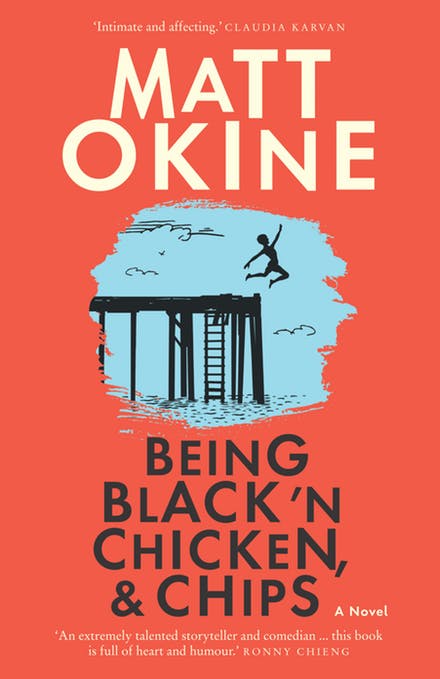
    Matt Okine has, in Being Black ‘n’ Chicken, & Chips, opened a very interesting dialog on coming of age, coping with curves life throws at you and puberty, through the eyes and emotions of Mike Amon, a kid who is at the cusp of the very real world of becoming a teenager; a kid who just wants to be like everyone else, fall in love, well at least have his first kiss and become a star athlete. Mike just wants to be cool!

    It’s 1998 and Mike has just started high school. He and his Mum have recently returned from a trip to Tasmania as a celebration of his completing primary school, a trip which was absolutely something special and kind of marked the completion of one life and the beginning another.

    He rather fancies Zoe Ingham, a girl from school who he desperately wants to hang out with, share a first kiss with, spend time with and as thirteen-year old’s do, he spends hours dreaming about their first date, practicing kissing and in between times trying to be the best athlete possible.

    When his beloved Mum is diagnosed with terminal Cancer, life for Mike changes dramatically as he has to spend much more time with his dad: A dad he does not know very well, a dad who does things very differently, a dad who is African.

    As the days pass, Mike has to try and accept that his Mum not going to recover, no matter how desperately he wants this to happen and that his life will change forever.

    Although there are similarities between Okines background and that of Mike, this is most definitely Mikes story, told through the eyes of pubescent youth suddenly discovering that life is more often black that white, discovering friendship can be found in the most unlikely of places, and that growing up comes with responsibilities and choice.

    Matt Okine takes the almost taboo subjects of grief, puberty and racism, weaving them into the story in a manner that tugs on the emotions, returns every reader to the days of their adolescence, handles deftly the issue of racism, faces the finality of death and the grieving process in a candid and yet very down to earth style.

    In his compelling debut novel, Okine has laced the somewhat sombre storyline together with skill, humour and almost cringeworthy lines from Mike, as he tries to weave his way though a rapidly changing world of denial, acceptance and challenge and in doing so has created a work with broad appeal.

    A beautiful story, an enthralling read.

  • The Breeding Season

    The Breeding Season

    It is perhaps best if the background of the author, Amanda Niehaus is understood before beginning what could be considered as a dark and traumatic read with her debut novel The Breeding Season.

    Billed as a ‘breathtaking debut novel’ , Niehaus takes a subject which is often considered as taboo, far too emotionally difficult to discuss, that of the death of a much-awaited child before birth, or even directly at birth, paring back the raw, brutal and often destructive emotions that are present at such a time.

    Through the characters of Elise and Dan, she almost clinically explores the complexities of love and human emotion, which leaves a somewhat disturbing presence, even as the last page is read.

    Their son is stillborn; the day of his funeral the day the rain comes to Brisbane, the day the world and all it contained for this couple, struggling to come to terms with the tragedy their lives have become, since the death of their much-awaited child slowly begins to dissolve.

    Niehaus explores the destructive power of choice when it is taken too far, as Elise involves herself in her work, isolating herself as she returns to the fieldwork and world of science she so loves. Dan, a writer, struggling to cope not just with the death of his child but the pain of his wife, is driven to complete a work begun on his controversial artist uncle. Dan, is also facing unresolved issues from his family life, the death of his mother.

    In a subtle manner the emphasis of the storyline is on the feminine aspect of the grieving, which is easily understood, but in doing so the character of Dan seems to be dulled, diminished by the immensity of Elise’s pain.

    Once there was love where there now seems to be nothing but pain and the very real question many couples facing such tragedy must ask is, are they able to move beyond tragedy to rebuild on what was once love.

    The Breeding Season is a complex novel partially based on Niehaus’ own life as a scientist and mother, which provides an undoubted ring of truth to the emotion and background of the story.

    A work not recommended for the fait hearted, but one that if noir literature is your thing, will be one to be enjoyed.