Tag: Greece

  • Honour’s Mimic

    Honour’s Mimic

    To read Honour’s Mimic is such a pleasure. The author is gifted in her writing and the reader cannot help but linger over phrases and descriptions. Charmian Clift is less well known than her husband author, George Johnston, but her writing, as does his, stands the test of time. The novel was written using the deep knowledge she gained while living on the Greek island of Kalymnos. The story describes a romance but breaks the rules of the time.

    Kathy has moved to a Greek Island to support her friend who has married a wealthy Greek boat owner. While friend Milly is pregnant and disinterested in local affairs and needs lots of rest, Kathy is free to move about the island and get to know the people and customs.

    She has her own issues as she is recuperating from a car accident and a dull marriage. Kathy meets a sponge diver named Fotis. It is his face which captivates her. Here the author broke the rules of conventional love stories by pairing a well-bred lady with a diver who could barely read. It works so beautifully.

    From the beginning the reader has a sense that there will be no happy ending. Fotis’s greatest wish is to migrate to Australia, and while Kathy writes to many agencies to help him there is no way he can go. The Greek men who are divers on the sponge boats live a very precarious life with death or injury a fact of life.

    Set amid the beautifully described Island the author brings this story to a conclusion, encompassing the characters met and a beginning understanding of their lives.

    Nadia Wheatley has been responsible for bringing Charmian’s writings to our attention. She has written an afterword which explains how the author used her own experiences while living on the Island. Charmian was supporting her husband in his writings but absorbed every aspect of the culture to create her own story. Her writing will touch your soul.
  • Two Nights in Lisbon

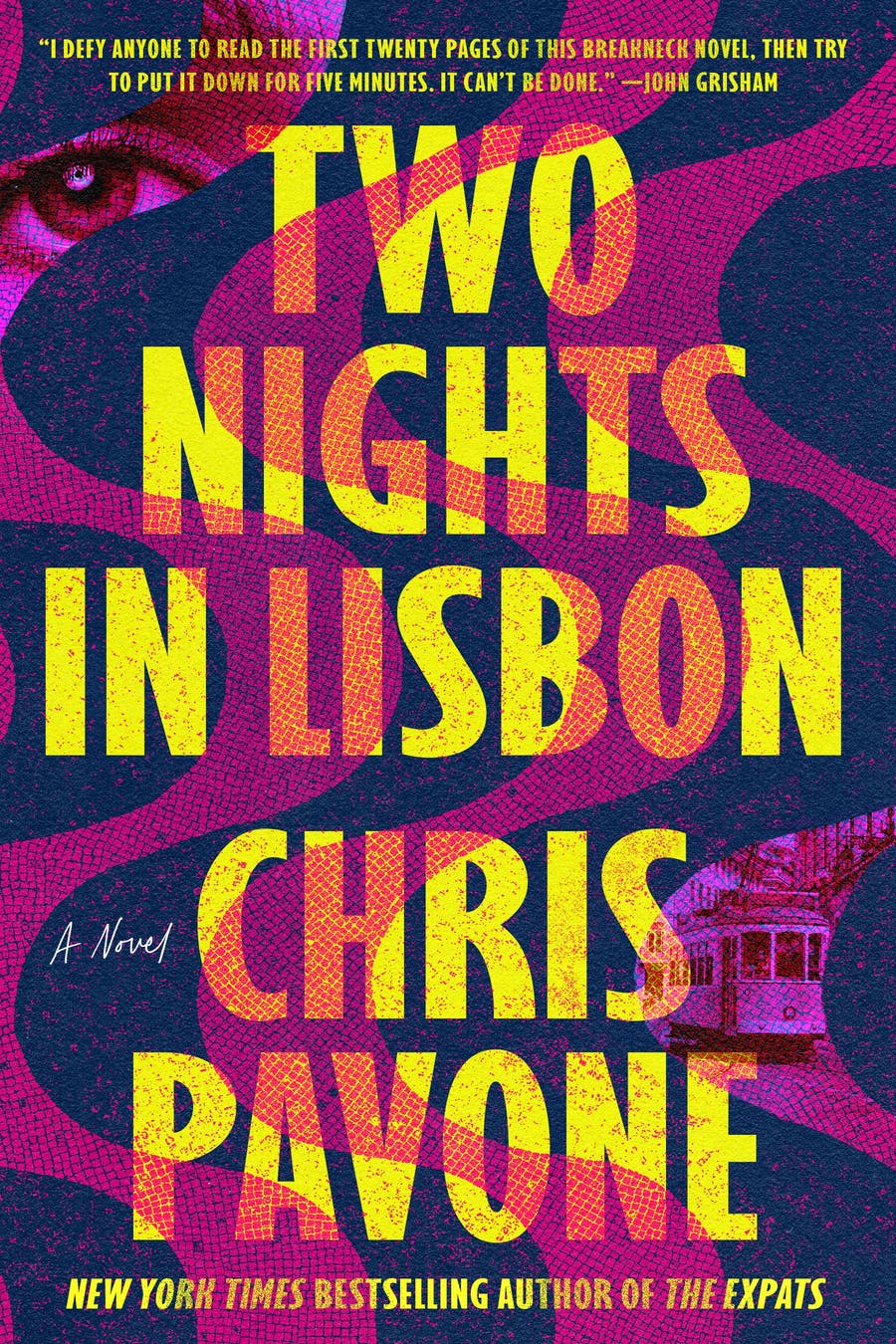
    Two Nights in Lisbon

    I was over halfway through this book when I realized that it was only 9.42pm on day two in Lisbon.  I also needed to stop for a breath. What a fast paced, cracking story this is! Two days encompasses most of the plot and by day three the puzzle has still not been revealed, but the characters are leaving Lisbon in the most suspicious way.

    To begin the tale of Two Nights in Lisbon, Ariel and her new husband, John, have come to Lisbon to meet with John’s business associates. When Ariel is asleep early in the morning, John decides to go for a walk. Later she wakes and assumes her husband is stretching his legs. Several hours later she realises that something is wrong.

    She goes to the Police who are rather sceptical and feel he may be lost. In desperation Ariel goes to the American Embassy who are also not sure how valid this disappearance is. A message demanding money for John’s life changes everybody’s mind.

    The plot is complex but never baffling. There are flashbacks to Ariel’s early days, which help us understand her reasoning, but add further to the puzzle. Why did she change her name? And was John really a former CIA agent? As the police begin their tracking, the Embassy staff realise this has the potential to affect the whole of American security; the pace quickens.

    Although Two Nights in Lisbon has 433 pages it is a fast read. You can’t help turning pages to see what happens next. It is a thrilling, rewarding, and satisfying story.

  • Little Nothings

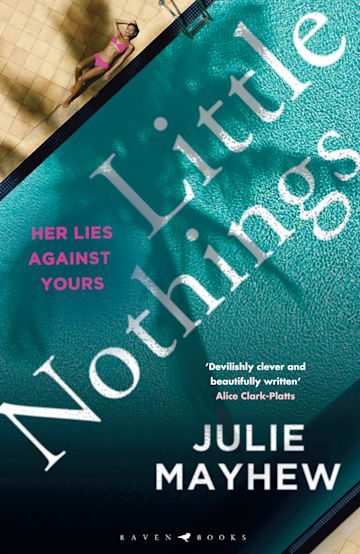
    Little Nothings

    Little Nothings is captivating in an intriguing way. One can’t help but reflect on their own relationships with close friends and the vital role they play. Many young women have found lifelong friendships in Mothers’ groups after the tumultuous times following the birth of their first child. Women share their stories over sickly smelling shoulders, and with bloodshot eyes. This is how Liv Travers gets to meet Beth and Binnie.

    For the first time in her life, Liv has friends. Always, she has travelled through school and University watching others from the sidelines. Now, she has a husband and a child and two very best friends. The women get together regularly and share many common opinions, and laughs.

    Then Ange joins the group. Suddenly the dynamics change. At first everyone loves Ange and her wisdom. She is creative and meticulous in her knowledge of her friends and their personalities.

    Gradually Ange makes suggestions of where to go for the family holidays (Corfu sounds wonderful) “And while we are there, let’s arrange a wedding for my partner and myself…..”. The subtle nuances with which Ange permeates her suggestions begin to repel Liv and attract Beth and Binnie.

    Recalling a desperately lonely past, Liv worries that she will lose her best friends. The unhappy woman meets a fashion model in Corfu, who just for fun, offers to help Liv.  

    By following the thought processes of Liv, the reader begins to understand her actions. There is no surety of what will occur until the end of the story. It is like holding a ticking time bomb in your hands.

  • Temple of Dreams

    Temple of Dreams

    In a change of style from her Pandora trilogy Carolyn Matthews has set her latest novel Temple of Dreams between modern day Britain and ancient Greece, which as a setting for a tale between two worlds is ideal.

    The main character Sebastian (Seb) is trying to come to terms with the death of his adopted parents in a Motorway pile up. He has no real idea about his birth parents: the only clue he does have is a distinctive broach left pined to his blanket at the Maternity Hospital.

    It is fairly obvious that he has a somewhat different ability in his life, as when he is first met, he is stuck in a narrow lane due to a vehicle breakdown. He uses his strength to singlehandedly move the car out of the way, thinking nothing of this ability, other than it was needed to get him to his destination on time.

    He is on his way to undertake a course in natural medicine which has been modelled on ancient Greek healing. After spending the night in the Temple in the gardens of the Clinic, he dreams he has returned to Greece, which eventually leads him into unchartered and undiscovered realms.

    When he meets Fliss, who saw him shift the car, a relationship begins to be established that means a lot to them both. As his birth past is a mystery, she encourages him to try and discover who are his birth parents, to consider whether it may have any bearing on the dreams and time travel he is experiencing.

    The pace of the work tends to be set for a slow read, but can be either undertaken as a cover to cover, or little by little, which is perhaps the preferred option, as it gives the script time to settle, become established and therefore the nuances, which in some instances are somewhat subtle, time to be absorbed.

    Much evolves in this storyline which can almost be overwhelming and therefor, runs the risk of becoming dysfunctional as a work that appeals largely to a broad imagination. Perhaps Temple of Dreams could have been created as a trilogy as many of the scenario’s are such that they would make an ideal standalone book.

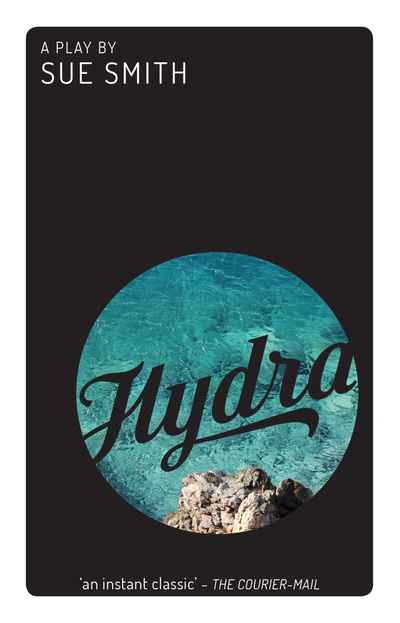
  • Hydra

    Hydra

    Reading a play can be a two edged sword, in that you interpret it how you choose, not necessarily how playwright intended, but in Hydra, Sue Smith has deconstructed the emotional and destructive love between what is billed as Australia’s famous literary couple Charmain Clift and George Johnston, weaving the words of their acclaimed works throughout their everyday lives into a play that is powerful, raw and as tumultuous as the people themselves, making it very difficult to misconstrue the intent of the piece.

    Set on the Island of Hydra, Charmain Clift and George Johnston have left behind the post war years of Sydney to follow their dream; to live away from the madness of city life, to return to the simple pleasures and to give their children and their writing time to grow and mature.

    Told through the eyes of their oldest son Martin, the years of what turned out to be almost exile on Hydra, paints a fascinating canvas of passion, talent, jealously, obsession and in the final years and days of their life together, illness and alcoholism.

    Charmain dreamed of being free, being able to write, to dream and to fly in her new life on Hydra; George wanted the simple life after the years spent as a War Correspondent, a life where his children could grow without the trappings of a more mercenary civilisation.

    Being the first artists to escape into a modern bohemian lifestyle on Hydra, they were the beginning of an eclectic group who discovered Hydra, believing it to be a place where talent would blossom, that daily life was simple, wholesome and achievable.; sadly this dream turned out to be far less than the shining vision once held.

    Facing poverty, struggling to write the ‘great’ novel, deteriorating health and the crumbling of the dream, George finally begins to write what was to become the award wining novel My Brother Jack, and then the follow-up novel Clean Straw for Nothing. Charmain never realised her dream of writing her great novel, considering George was the focus and her role was that of midwife to his work.

    Their talent was remarkable, their story one of tragedy and despair, their life together one of immense highs and desperate lows.

    Performed in March to huge acclaim by the State Theatre Company of South Australia and Queensland Theatre, Sue Smith has captured to perfection a storyline which will remain with both the reader and the audience: a play which could be considered as on its way to becoming a classic piece for intimate theatre.