Tag: ghosts

  • Paranormal Perspectives: One Big Box of ‘Paranormal Tricks’?

    Paranormal Perspectives: One Big Box of ‘Paranormal Tricks’?

    In the final chapter of Paranormal Perspectives: One Big Box Of Paranormal Tricks there is a quote from Charles Dickens, ‘An idea, like a ghost, must be spoke to a little before it will explain itself’, which is the perfect perspective with which to view the world of the paranormal or unexplained mysteries that do occur with little or no logical basis.

    John Frazer in his latest book, which is somewhat of an auto-biography, raises many issues relating to the world of paranormal or occult activities that invite reflection, as he reflects on some of his many excursions into what many refer to as ‘ghost hunting’, in an attempt to discover whether many of the so called haunted buildings that dot the landscape in England and Europe, are haunted or are simply legends and folk lore handed down through the ages.

    Laced with a solid, at times, dose of scepticism, he strips back what makes up paranormal, does it really exist and if so, why. What is real and what is a not and how to try and tell the difference, makes fascinating reading as he uses well known cases, as well as paranormal researchers and their methods as ‘case’ studies to illustrate the point or perspective under discussion.

    He shares how he became fascinated with the world of paranormal, and how this has led him to critically examine so much of what is held to be ‘truth’ from a Christian perspective, which has a very strong influence on what is and is not considered as ‘paranormal’.

    For anyone who has an interest in seeking out paranormal activities or desiring a deeper understanding of what many psychics refer to as ‘the other side of the veil’, the charlatans and tricksters over the generations who made money through duplicity and the modern methods used to verify or otherwise, usual or unexplained ghostly activities, this an excellent place to begin.

    Fraser leaves with the reader the time old question, is the paranormal just one big box of tricks or is there far more to the paranormal than is first seen or acknowledged?

  • The Ballad of Melodie Rose

    The Ballad of Melodie Rose

    The Ballad of Melodie Rose moves into a different time at Direleaf Hall, a different group of girls and of course a different challenge to be solved to when we first met the somewhat unusual residents that formed the captivating story of The Heartsong of Wonder Quinn.

    Melodie Rose arrives at Direleaf Hall with a note pinned to her duffle coat. She realized she was dead about that time, but somehow she was not afraid, she was very peaceful, not happy, just peaceful. A lovely woman came to answer the door and she felt she knew this woman who said she was her grandmother.

    She meets the other three girls who also live the otherworld of Direleaf Hall, all different all left somewhere in between, all ghosts all curious about the current events unfolding. She also gets to meet the few girls who still live at Direleaf Hall, those whose parents see the benefits of this fresh, outdoor but traditional school.

    A woman dressed all in white keeps coming to the Hall wanting of buy it, but Ms Gallow will not sell the Hall to her. Time is running out thought and the four girls understand that all they hold dear, and all the other girls that live at Direleaf Hall love, is going to end. Forever.

    What can be done to change the flow of events could be up the girls and of course the grumpy but loveable crow Hollowbeak, who is none to happy about being returned and separated from his beloved Wonder Quinn.

    But things are not all they seem and as the time passes Melodie Rose, who once was noted for the beautiful voice, begins to realise perhaps she is not a ghost at all, but someone who was sent to help. Beautifully wrapped in longing and desire, Melody Rose learns what it means to understand what belonging, bravery and facing your fears is all about; courage.

    Once again Kate Gordon has written a story that while slightly complex is beautifully worded to tell a tale that charms, enchants and intrigues in The Ballad of Melodie Rose.

  • The Wattle Seed Inn

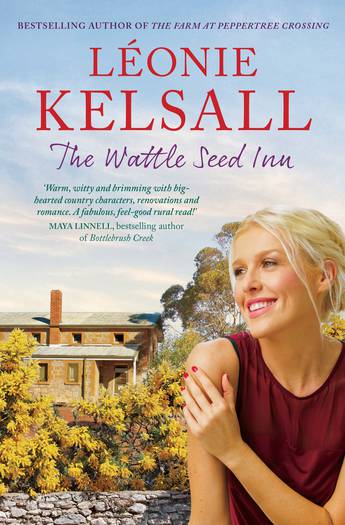
    The Wattle Seed Inn

    It is always grand to see a book set in South Australia. Leonie Kelsall does a fine job of sharing many aspects of this state, and the beautiful countryside around the River Murray.

    Gabrielle is the main character in The Wattle Seed Inn. She comes from a wealthy and privileged background and was a partner with a man who was a highflyer. In business she was his PR consultant and was excellent at her work. Their private lives were entwined for some years until the relationship began to fray. Chastised by her partner for not having enough passion, Gabrielle decides to leave and focus her attention on renovating an old pub she bought years ago.

    This slim, beautiful, sophisticated woman arrived at a tiny town one evening. She was greeted in the local pub with friendship and a large dose of culture shock. In the morning Gabrielle went to visit her purchase and was horrified by how derelict and run down it had become.  Previous owners had made alterations which destroyed much of the natural features. What a job she had to manage!

    Despite the difficulties of finding workmen, she began to get help from some talented locals who were generous with their time. One of them in particular is strongly attracted to Gabrielle, but his problems prevent him from getting to know her. It turns out Gabrielle has problems of her own and when they meet their difficulties seem insurmountable. There is also a ghost in the story who was a previous owner who cared and loved the old Hotel.

    Leonie Kelsall has not shied away from dark issues but has tempered then with humour, romance, and friendships.

  • Ghostology

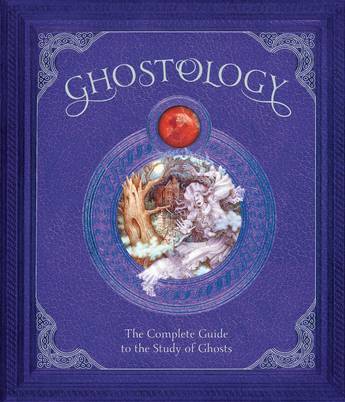
    Ghostology

    Now Ghosts being Ghosts are ethereal creatures that operate by their own rules, which as anyone who has ever had a close or otherwise encounter, completely understands. Ghosts also do enjoy creating mysterious mysteries which humans delight in trying to understand, often to the ethereal beings delight.

    Ghostology The Complete Guide to the Study of Ghosts reveals much information to be to be understood and explained, because over many years Ghosts have been often misunderstood, but as the pages will advise often there was very good reason for this misunderstanding, as in the case of Howling Anneke.  Should anyone go near her former home in Tarrytown, she would shriek and scream until they left. But once Lucinda Curtle, the author of this book, moved in, Anneke learned that not all humans were troublemakers and arrived each evening to help in the construction of the book.

    Divided up into specific sections Ghostology is the perfect guide for newcomers to the field of Ghostology, or absolutely anyone who really wants to know more about  ‘ the other side’ and the very colourful characters who still remain to make their presence felt as they so desire.

    There are maps, hidden sections, carefully constructed messages tucked away on every single page,  a sealed section that must be opened with great care, things you need to gather to make your own Ghostology Field Kit, just in case you really want to get serious, followed by detailed information on How To Hunt Ghosts!

    There is at the beginning, a Letter to the Editor in a separate envelope and at the end a sealed envelope titled Official Documents enclosed for you to discover.

    Beautifully presented  there are hours and hours of reading, information, or mis-information depending on who decided to drop in from their eerie haunts to offer advice, help or simply to do ghostly things during the writing and illustrating, to keep you amused, as well as provide a completely new understanding of things that do often go bump in the night. Anne Yvonne Gilbert, Doug Sirois and Garry Walton who did the illustrations, swear they have seen all of these people who feature on the pages!

    While Ghostology was supposed to be realised worldwide in time for Halloween, somehow it got a little late in some Countries, but that really has no bearing on the contents as they are relevant to everyone all the time.

    So if you have some time left from summer holidays, are in lock-down in other parts of the world and have or can get a copy, perhaps now is the perfect time to begin your study of Ghosts and other mysterious mysteries that are there to be discovered.  But do remember curiosity is a wonderful thing, but not all Ghosts are what they seem, so perhaps proceed with care and if you are sure to get frightened make sure an adult is there to check out the information for you.

    Enjoy your Ghostly journey as you learn how to become a Ghost hunter!

  • The Lightness of Dark

    The Lightness of Dark

    “If we love, we grieve. That’s the deal”. Nick Cave

    To this end Fiona Joy Hawkins and Rebecca Daniel have created a most elegant, gentle and almost heavenly body of work, The Lightness of Dark reflecting on the grief and darkness that can surround the very soul, before the lightness of acceptance is ushered in and life, once again, continues onward, never the same, forever different.

    A small beautifully constructed booklet accompanies the music, telling the story behind the inspiration with each of the sections having a wonderful quote overlaying the graceful photography.

    A tribute to Rick Wright the keyboard player for Pink Floyd, who passed away in 2008, introduces the body of the work in Heavenly Voices, the soft, gentle sound of the ‘cello offering an invitation to enter. The wordless vocals of Fiona Joy and Rebecca Daniels rise over the delicately constructed piece, which also introduces The Kanimbla Quartet, joining all the threads together in a perfect tapestry.

    Ghosts Insanity Angels tells the story of the early days of loss, when there is an overwhelming madness that descends; a belief that the world has gone mad, insane and all will be well, until the reality descends and eventually, the Angles who watch over us lead us out of the darkness of despair. A beautiful piece from Nick Cave also blesses this composition with his words of wisdom.

    Interwoven Threads of Chance is a slow, measured, melancholic piece for chamber quartet, played with emotion buy The Kanimbla Quartet, featuring viola, sharing the story of the fine threads of chance that enter life, creating the love that is as essential to life as is grief, both often fleeting, both immensely felt, interwoven to remain in eternity.

    An intriguing piece Sugar Plum Ghost, is a much lighter song, featuring Hawkins on piano and Daniels on violin, once again using their wordless vocals to entwine the two mediums in a tribute to Tchaikovsky’s Dance of the Sugar Plum Fairy.

    Inspired by Jethro Tull, Empty Moments captures the emptiness of space when someone has gone, the hole left behind, still fresh, new, waiting for something to fill the void. Written by Rebecca Daniels and performed by The Kanimbla Quartet, with Fiona Joy Hawkins on piano, Empty Moments is a most reflective and beautiful piece.

    The final piece Finding The Way Out is a rather genteel Celtic dance song offering the gift of a small ray of sunshine into a life that has been in darkness, suggesting a fleeting moment of joy, of happiness there to be enjoyed before once again continuing on with life’s journey.

    Recorded in the Blue Mountains of New South Wales on a gloriously beautiful day, the subtle, timeless majesty of the Australian bush, the darkness and light, the joy and sorrow coming down through the Ages has somehow been captured and woven into the final recording, adding something rare and very special to this deep, emotional, elegant collection.

    A final word from Fiona Joy Hawkins completes this beautiful eleven track work when she says,

    “When the world seems dark, a fleeting moment of light is like a smile.”

  • Story of Ghosts

    Story of Ghosts

    In this unusual album, Story of Ghosts, the presence of those unseen and yet observed is ever present, brought into full view through the sensitive and elegant creation of the composer, pianist and singer Fiona Joy, known worldwide for her immense talent on the keyboard.

    Song for Dunnie commences this latest and her third album, with a measured and yet happily cheerful feel, whereas Story of Angels changes the dynamic somewhat as Fiona Joy sensitively explores the story of those who are with us always, unseen, and yet felt, their spirit ever-present.

    It is fitting, after dealing with Angels, that Contemplating requests a little time out to reflect, ponder on the immensity that is life, a hidden reminder tucked away to prompt one that contemplation is something always required on life’s journey.

    As the tracks drift onwards the calibre of the music speaks for itself in that it is reflective, soulful, hesitant at times, as if Fiona Joy is asking for permission to pare back the layers to the gems that lie often not all that far below the surface, such as in the piece The White Light which is gentle, delicate and pure, but with an underlying power and strength; a beautiful piece.

    Story of Ghosts once again returns to the basis for the album, that of looking back, looking forward, seeking and yet knowing that everywhere one looks, travels, and observes there are always the ghosting of those gone before, creating an intriguing and introspective piece that delights with its unique character.

    Being out of control is a relative experience and one familiar to all, a state of which Fiona Joy has attempted to describe in the piece Story of Insanity, a dark and deliberate composition threaded with light and hope accompanied by the knowledge that all things do pass, even the darkest and most outrageous of times.

    For those new to the works of Fiona Joy this is a wonderful, neo-classical style of music that offers much be enjoyed, with the final track Before the Light being a piece of significance, as it is a dreamy, contemplative piece with a deep, rich vibe that offers a meaningful conclusion to a beautiful, hauntingly provocative and reflective, contemporary piano album.


  • The Endsister

    The Endsister

    This is an exceptional story that has been written exceptionally well. As the story progresses, each of the characters adds a chapter, giving an immediacy to the reading, and an instant understanding of how each person reacts to the circumstances their family is involved in. The story begins with a family in an Australian outback town, and then moves to a huge old house in London.

    The beginning pages show a happy and busy family. Mum, Dad and five children all live together in a tiny cottage on a farm. Else is having a major problem with her music. She is quite gifted and identifies herself as a violinist rather than a girl. Clancy is the older brother, and he has problems with girls and teasing. The twins are happy playing together, while Sibbi, the four year old is a contented child who has free run off the farm.

    Money is always short. Mum is studying, and dad who was once a lawyer has chosen country life over business suits. A letter arrives notifying Dave that he has inherited an old home in Central London. He chats with Mum and the children, and they decide to go and claim the house and live there, as their tenancy in the cottage is coming to an end. From the beginning we realise that something has happened to the family in their new house.  The introduction tells us that “Something stirs in the attic, it shudders, a cobwebbed thing, tattered and dusty.” Sibbi talks about the girls who come into her room.  Now we meet Almost Annie and Hardly Alice, who write a chapter themselves.

    Everyone has changed. Mum becomes totally distracted with her study; Dad is going to the lawyer’s office each day to work out the taxes and legal issues, while Sibbi becomes quieter, more withdrawn and sickly. Else who left her violin behind in Australia is depressed, and Clancy is just angry.  The two outside girls have to be dealt with to restore the family to its close and united former unit.

    With great imagination, and humour, the author introduces Dad’s idea of fixing things. Then Else who has found another violin takes things into her own hands. The story, the settings, the characters and the ghosts all are meshed together beautifully to make a satisfying and complete tale. One is never sure where the family is headed, or what will happen next, but the large old house must be cleared of its secrets before anyone can live in it.

    It is always good to read such an imaginative and complete work.


  • Anyone But Ivy Pocket

    Anyone But Ivy Pocket

    Ivy Pocket is a ladies maid but not just an ordinary ladies maid, she is really quite extraordinary in that no matter what she tries to do, somehow or other things do not always turn out to go the way they should.

    She has once again found herself without a job in Paris, and with no sure idea of how long her last wage from Countess Carbuncle will last her she is a bit desperate to find either another job or another employer.

    Neither seems to be coming along so when the Manager of the Hotel refuses her a job of work, she has to leave. The bellboy calls her back as she is walking out of the Hotel; she has been commanded to appear before the Duchess of Trinity who is dying and wants Ivy to fulfil a last request.

    It turns out this last request is to take a diamond to  a former friend of the Duchesses, Lady Prudence, to be handed to her daughter Matilda on her birthday; and that is when the adventure begins for Ivy Pocket.

    Now Ivy is a special little girl who never takes things at face value, who always believes her own make-believe and certainly, if not definitely, sees the world through rose coloured glasses, or a different dimension.

    Ivy soon finds her way on-board a ship to England with strict instruction on how to travel safely to England and to get the diamond to the rightful owner without mishap.

    But…. as Ivy Pocket is involved nothing goes as planned, leaving a trail of dead and dangerous people in her wake as she travels on to Butterfield Park, in Sussex, to complete her commission of delivering the Clock Diamond to Matilda.

    As Ivy has no who her parents were, as she was abandoned on the steps of the Harrington Home for Unwanted Children at the age of 5 years old and this could have something to do with the way she looks at the world, she finds that once she reaches Butterfield Park, strange and unlooked for occurrence’s begin to happen, giving her flashback’s to when she was a small child, amongst other things.

    But what could all this have to do with the stupid old diamond……………..well that is why you need to keep on reading to find out.

    But rest assured, with Ivy Pocket in charge the ending will not be anything even you could dream up.

    A fabulous read for children in the 10-13 year age range who enjoy the quirky, out there style of imagination, where anything could and usually does manage to happen.

    What will Ivy Pocket get up to next is yet to be revealed, providing of course all ends well at Butterfield Park?

  • A Ghost’s Story

    A Ghost’s Story

    The title of this story explains that this is not simply a ghost story, but a story told by a ghost. In a very cleverly woven tale, the ghost speaks to us directly, having his/her story added to by research notes, which have been gathered together by a collator.  These notes refer to the ghost’s activities, and have been carefully collated by a spiritual believer.

     The beginning of the ghost is beautifully described.

     “I am aware. Of light and dark. Of  shade. Of colour. Of cold and warmth.”  The spirit is telling us of a tale and moments to be remembered,  in case her consciousness comes to an end. There is a male and female side to this spirit, John King and Katie King. From typed sheets and older documents, the tale is woven between the living and the spirit world.

     Katie discovers a family who wish to communicate with the spirit world and she follows this family. At first they invoke her, but in order to liven things up a little, they introduce a “show” aspect to their séances.

     The two boys in the family become expert at hiding in a cupboard and inviting guests to tie their hands. The cupboard is closed and within seconds, the sound of musical instruments being played in the cupboard with them is heard. This act becomes so popular that the family travel overseas and perform for many a famous person. At times Katie helps out with the odd trick that fails, astounding both the audience and the performers.

     This story is told with accompanying notes which relate to the spirit’s story. At the end of her time, Katie manages to type up her thoughts and the collator makes notes that explain and clarify many issues. It is a clever weaving of a story and accompanying research, allowing the reader to move between the past and the present.  The imagination used to maintain this style and capture periods of time, is strong and believable.