Tag: garden

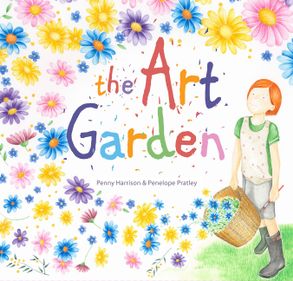
  • The Art Garden: Sowing the seeds of creativity

    The Art Garden: Sowing the seeds of creativity

    The creative urge is strong in most young children. You can see it in their play, their activities and their interests. Today, most children have the opportunity to experience a range of skills to art, to cooking, to gardening and acting and many more. They are given a chance to discover strengths in their abilities and they can also recognise weaknesses.

     Sadie is a little girl who has seen her best friend paint, and draw many pictures. His art makes “Sadie’s heart smile”. Although she loves colours, and finding patterns, she just can’t capture what she visualises with a paint brush. She tries and tries, but cannot master this medium. After many attempts to paint, Sadie gives up in frustration, and sits in her favourite tree, to stare at her favourite place. The garden. She tends this with loving care and sees the patterns and shapes in leaves and flowers. Suddenly, Sadie realises how she can achieve the colour and pattern and creative design that she wants.

     This is a great look at alternatives to our own first thoughts. Not giving up on an idea but finding a way around stoppages is demonstrated. Sadie still loves her best friends painting, but now she can produce, colour, shape and form in her own special way.


  • The Midsummer Garden

    The Midsummer Garden

    There are so many fascinating aspects to this story that most people will find something to keep them reading, eager to discover solutions. There is a beautiful weaving of stories between a French woman, Artemisia, in1487, and Pip, a Tasmanian woman, in 2014. Both are fascinated by herbs and plants. Both women are romantically involved, and both women love cooking. The combining of the two stories, and descriptions of each separate setting, is very cleverly done.

     Pip is studying and completing her data collection for a PHD in Marine biology. She is engaged to Jack who wants to marry her, but wants her to put her study on hold. Pip knows that, if she has a break from her studies, it will be difficult to return, and resents Jack pressuring her. Artemisia is a young woman who was left at a chateau as a baby. A kindly Abbot saw to her growing up, and she had lessons in reading and writing with the young heir of the chateau. She was assigned to the kitchen, but was very often in the garden with the Abbot collecting herbs, or planting vegetables.

     Life in France in the 1400s for a kitchen maid or cook was similar to slave labour.   Artemisia was to discover just how bad things could get, when the kindly Abbot, who had cared for her for many years, died. His replacement was an angry and volatile man, who beat the staff and intimidated the monks. It was then very unexpected, that a local spice merchant who supplied the kitchen with fresh herbs, should meet and fall in love with Artemisia, and she with him.

     Both women face great dilemmas. Pip has a desperate need to continue her research, and discover how she can positively affect the sea life she works with, and Artemisia wonders how she can escape from the servitude she works under, and leave to marry. While Pip has a loving and supportive family to back her, Artemisia is alone. However, the cook begins to write her imaginative recipes down and stores them in great metal pots, which hang in the kitchen. It is these pots that come to Pip, being passed down from generation to generation.

     Fascinating facts emerge as Pip finds the recipes, and has them forensically examined. While we have an insight into the cook’s life, Pip can only wonder at the beauty of the herbs, and the way that they are used. Romance is a reality for both women, but both had to make their own way.

     So many interesting facts emerge about the use of herbs, and ways to cook with them that most people will want to try a few of the ideas out. What an interesting story, filled with joy, sorrow and gardens.

  • The Bee Friendly Garden

    The Bee Friendly Garden

    Well, thank you Doug Purdie, and that is meant in the nicest of ways, for writing this book and making me take an entire new look at the plans for the new garden designed to be constructed this Spring.

    After reading just the first few pages the realisation of what was needed was not a patch of lawn, sleepers and gravel but new, water wise, native garden filled with flowering plants that attract bees, will look wonderful, and once established, be  seriously water wise. If selected carefully for the area, the garden will look beautiful all year round.

    And so plan B was created, the yard now looks like an excavation site and the new garden is underway. Once the spring weather settles down, the plants will go in and with good fortune will be established to withstand the summer heat.

    As you read further into the book you realise just how important creating a beautiful, bee friendly garden is becoming. Bees were everywhere during our childhood; you could not walk on the grass during spring when the clover was flowering for fear of being stung. Now you are struggling to find the clover let alone the bees. So what to do is the major question as this is not something that is just prevalent to your area, but nation-wide and indeed world-wide. Bees are fast disappearing as we rapidly destroy their environment.

    Like most major environmental changes that are happening through the world, the magnitude of the event can be paralysing, but as Purdie says over and over again, we can each do a little and by doing a little, a lot will happen.

    In this beautifully presented book he takes us on an educated journey, not just into establishing best practice gardens, but into a world of colour and delight which can easily be achieved wherever you live. If all you have is a small Juliette balcony or a large acreage, he has advice, tips and planting that can be used to get the best results both from an aesthetic perspective as well as encouraging the bees back into your ‘back yard’.

    Over half the book is devoted to species of plants both native and exotic, insects you need in your garden, herbs that are both colourful, useful and taste delicious.  Coupled with serious information on the best way to establish your Bee friendly garden, there are glorious pictures to simply enjoy as you sit and plan your new garden, plot, pot or in some cases ‘olive oil’ tin of summer herbs or flowers.

    A lovely section on Bee Hotels is both educational and encourages a little quirkiness in your new Bee friendly garden.

    The final segment, the Appendix, is one that all gardeners should take note of, as it is on Pest Control Recipes which will take care of the unwanted critters in the garden, protect and encourage the most desired and keep your flowers, vegies, natives and herbs Bee friendly as well as environmentally friendly.

    Thank you Doug Purdie!