Tag: future

  • So What Does It All Mean?: The Secrets of Life: From Big Bang to Trump

    So What Does It All Mean?: The Secrets of Life: From Big Bang to Trump

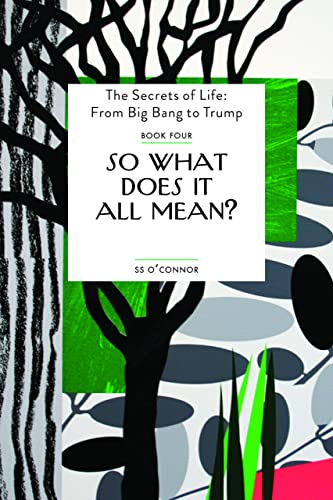
    The final book the fascinating series The Secrets of Life: So What Does It All Mean in many ways presents elements of this massive work in a far from conclusive style, as O’Connor recaps much of the previous three books, in order to present what he considers is a pretty good forward projection as to where our world is headed.

    Inspite of our best efforts, he does not consider we are in for the Big Bang, but that we as an ever evolving species are moving towards the next phase of what could be considered, ‘this comes next’. Perhaps as he suggests all this turmoil is indicative of slowly moving towards a more Community based world which is more tolerant, kinder and less dependent on the “Big Man” telling the world what he wants to achieve.

    Although many of O’Connor’s theories seem to be a bit light and fanciful, the reality is that we are still a series of organisms wandering about, reforming to absorb the many facets of an ever changing world. This has been proven to be a slow but steady process, in some cases very slow, which has over the past 200 years, speed up to a pace which may not be sustainable in its present form.

    As with all of the previous books there is much to ponder over again, a considerable amount that challenges the very basis of entrenched beliefs and a massive amount which, when given serious thought, makes absolute sense.

    The future as O’Connor presents it, is a place that is exciting, involving many differing drivers to times past, as history will attribute too, but looking back over the past 50 years, life has changed, which is an undeniable fact.

    So What Does It All Mean is in essence a very positive view of the future of the world: a world many of us will not live to see, but in our own small way will have contributed to, in one way or another. But as always, time and only time, holds the answer and until then much of what has been theorised upon and researched will make for many excellent debates.

  • Wildlife in the Balance

    Wildlife in the Balance

    Why Animals are Humanity’s Best Hope

    Simon Mustoe has spent his life working in the field of Ecology and environmental impact and preservation. He is first and foremost a scientist who for many years worked within the dictates of the scientific structure until, in one single moment in time, he realised he/we have been looking at the human impact on our world from the wrong viewpoint.

    Wildlife in the Balance is the story of this revolutionary idea, a new perspective and a fresh and powerful look at why animals do matter and our place as Humans in the animal kingdom, of which we have become the highest evolved species, but the one which will most likely see the end of life as we know it on this planet.

    Written as a detective style book, Mustoe looks at where we came from and where we appear to be heading, no holds barred, but in a manner that sets the chain of evolution over the past Two thousand years plus down in easy to comprehend format.

    Facts rub shoulders with figures which makes for daunting reading but it also helps to underline just why every species on this planet is important; that each species has a job to do and when this chain is interrupted the link is broken, often forever, as happens when a species is eradicated; extinct!

    Their job is now redundant but is it really, or do we as humans simply keep on accepting the new way as the ‘norm’, when we should be ringing the alarm bells and really understanding just how each piece of the eco system fits into a seamless pattern for survival.

    But what can we do to change this destructive pattern that has been formed is interesting, as sadly most of us have no idea of the reality of evolutionary change, even though we are living in its midst.

    Basically human life on earth has always, yes always, depended on its place in the wildlife ecosystems which have created the conditions for us to succeed to the place we are now. If we do not begin to take our place in this system as members of the animal kingdom seriously, little will change and the imbalance caused will fail to see human world survive.

    Interesting, fascinating and in parts terrifying, Wildlife in the Balance is a serious wake-up call to stop paying lip service and start taking our world seriously, before it is seriously far too late. Dotted throughout the pages are pen and ink drawings with snippets of fascinating facts which do help break the sometime somber, actually often somber, details Mustoe is presenting.

    Wildlife in the Balance could easily be considered as the most important book to have been created in the world of environment and ecological science, suitable for a wide and diverse age range and should be considered, at the very least as a rallying call, or maybe even a war cry to arms.

  • T

    T

    Modern, hard hitting, truthful and yet gentle, Allan Fyfe has captured the true devastation of the world of drugs, dealing and reality in his novel “T”, a work that captures the blurred lines of reality that exist once the pathway to drug use is chosen.

    T is or was once a young man with a future, a pathway to a career, a passion for music and a mother who, while dysfunctional at times loved him. Growing up in the Mandurah region of Peel he learned the hard way about survival, until he took that first step into a world only known to users.

    In one-day T is reminded of the fragility of life. Going to his dealer mate Gulp place he sees an ambulance outside his silo home, two policemen looking on smoking cigarettes. In a series of disastrous minutes, one of the ambo’s removing Gulps body falls through a rotten timber step and the body on the gurney becomes airborne.

    Several hours later he is driving along the road to Yunderup when he stops as a body appears to fall from heaven directly in front ofthis car!  It was simply all too much. This introduces T or Timothy or Tim as he was once, in a manner that is careful, gentle with words and eloquently creates the emotion required that runs throughout the duration of the story.

    An acceptance of hopelessness, of bewilderment and a deep sense of loss, not understood, but recognised runs alongside the delusional microcosm of a world out of touch with reality. Central to the story is Lori-Bird a quietly decisive figure, T does not treat well, as well as a cast of others who populate the seedy side of town, all out for a deal, all looking for something unattainable.

    Gulp, although dead, adds a little heavenly wisdom from time to time, which occasionally brings some sanity into T’s very mixed up world; a world where he realises he is a mess of humanity but feels powerless to be able to do anything about it.

    Fyfe has fashioned a powerful tale based around the history of the Peel region and the indigenous people, the overwhelming distortion prevalent in the world of meth-amphetamine use, the lack of any ability to make any sort of rational decision and the tragedy of a young life gone, wasted forever.

    Will there be any sort of peace, or happiness for T or has he gone far too far over the edge to ever find his way back? Does he even want too is the question posed, as Fyfe presents very cleverly and clearly the all too real world that is a very normal part of modern day society.

    “T”: is it a novel that needed to be written; Yes, it is. Is it a comfortable read, in parts, yes, as it has some very much larger than life characters and a Shetland pony. A wry sense of humour often and unexpectedly occurs, to lighten the moment but overall, the ever present sense of hopelessness, of futility and desperation tends to make this a book best read gently, in your own space and time.

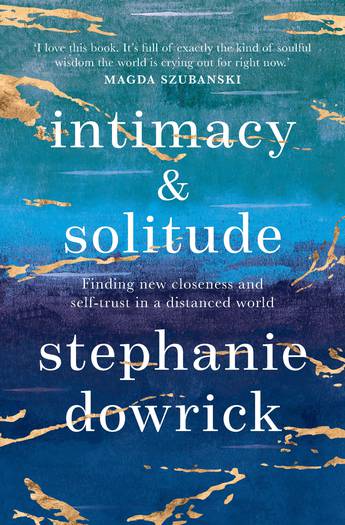
  • Intimacy and Solitude

    Intimacy and Solitude

    Finding new closeness and self-trust in a distanced world

    Intimacy and Solitude was first published in 1991 to great acclaim; so much so that over the years it has been republished in 2002, 2014 and now in 2021, which has a considerable amount to say about the writings of Stephanie Dowrick and her understanding of the human psyche.

     Over the past two years the ravages of the pandemic have wreaked havoc on personal relationships, families and in so many a loss of self-esteem. So much has changed in a very short space of time. Families have had to learn to get along together, a first in many instances, relationships have changed, collapsed or gone on to become stronger. Change has and is occurring and it is how we learn to care for ourselves, to manage that change is going to make the difference as to how the future forms.

    Greif, uncertainty and serious doubt about the future of the world as we used to know it, is in many people’s foremost consciousness, along with the very necessary requirement of planning to provide for family and self-going forward.

    So much in Intimacy and Solitude forms the very basis of who we are and how we go forward with relationships, beginning with the most fundamental of all beginnings, learning to know who we are and how we care, or begin to learn to care about ourselves.

    Dowrick spent many years gathering the material for the book, telling her findings in a style that is comfortable and in the form of almost a story, carefully updating the reprints over the years to keep information current. Perhaps overall, one of the most important findings Dowrick offers is the fact that Intimacy and Solitude go very well together.

    She points out that even in the most closely knit relationships, the most important suspect of keeping both yourself and the relationship healthy is Solitude; the deep, almost primal need to spend time with self and only self.

    Dowrick encourages us to learn self-acceptance, compassion for ourselves and others and in doing so discover a new world of opportunities and insights to be able to make lasting positive change.

    Part one: Self: Is that who I am offers a wonderful little piece from Michael Leunig ‘Sitting on the Fence’ which captures the content of the book perfectly:

    ‘Come sit beside me’ I said to myself

    And although it doesn’t make sense, I held my own hand as a small sign of trust

    And together I sat on the fence.

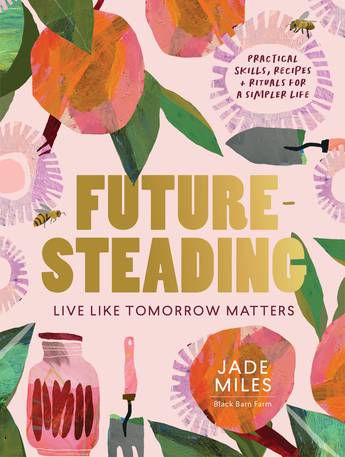
  • Futuresteading

    Futuresteading

    Live like tomorrow matters: Practical skills, recipes and rituals for a simpler life

    As the movement to safeguard the environment for future generations grows, there is a desire in the population to live a simpler life and to minimize the use of limited resources. Jade Miles, who with her husband Charlie Showers run Black Barn Farm, a biodiverse orchard, nursery and workshop space in north east Victoria has produced a valuable volume full of tips, and practical advice to help the reader to take small steps towards a wholesome sustainable life style.

    ‘Future-Steading’ is divided into two sections; ‘The Why’ and The How’.  ‘The Why’ explains the seven pillars on which ‘Future-Steading is based: ‘meet Mother Nature, Celebrate Simple, make your place, seek ritual, creating your clans, salute the seasons, and love local’. The author explains each of these pillars in detail; including how her family has incorporated the concepts on their property. The summary, at the end of each section provides the reader with simple real-world suggestions as to how to embrace the particular pillar being discussed.

    ‘The How’ follows the cycle of the seasons and provides the reader with a wealth of information as to how to maximize benefits from the bountiful gifts of nature. By including recipes, pollination, medicinal plant and crop rotation charts, this is not only an interesting read, it is also a wonderful guide for becoming more self-sufficient. For readers, who wish to further their knowledge and upskill for resilience, the author has included a detailed list of books and magazines.

    If you are looking to become more self- sufficient and don’t know where to start, look no further than this comprehensive guide. Not only is it full of easy to follow ideas, but it is also beautifully illustrated with magnificent photos and eye-catching illustrations.

  • How to Mars

    How to Mars

    If ever a story was hanging around waiting to captivate what could be a cult following How To Mars is or could be the perfect story, one that was inspired by an advertisement for six people to take one way trip to Mars; six people with not just a desire to go to Mars, but with the necessary scientific skills to be able to set up, run and maintain the small community.

    This totally abstract idea, which was real, but failed to gather the necessary momentum, captured Edenback’s imagination which expanded a random thought into, well, what if, resulting in How To Mars, a story that in so many ways could almost be true! Add in a reality TV show and really Mars is the very limit, or is it.

    Carefully selected, three men and three women are choosen from a grueling selection process to travel to Mars. The rule book is very explicit about every aspect of life on Mars, with the most important rule of all, No Sex! Why, because most everything else could have predictable outcome and as it is one-way trip, the Marsonauts would not return, thereby leaving a child or young person up in space, on Mars to be exact, on their own.

    But you guessed it, the unthinkable does happen and despite all the odds, operations and inability to have children on earth, Jenny falls pregnant to Josh and life on Mars becomes very interesting, as the reality is, life on Mars is very boring. Control is NOT happy at all, the other team members have various reactions and all of a sudden there is a massive revival in the reality TV show ratings, as those on earth wait to see the outcome of this new, unexpected aspect of life on Mars.

    Without giving too much away life does indeed get interesting as the pregnancy advances, with crew members all trying to adjust, relate to a pregnant woman and also find ways of getting ready for the birth of a child, as well as create the variety of things that child would need in the not too far distant future.

    Add into the mix a slightly unstable engineer, who is simply not coping with any sort of change, never really was, and the totally unknown aspect of giving birth in a far from normal situation and you have a vastly entertaining journey into an alternate universe, or possibly the future!

    In another aspect of the storyline the quirky nature of humanity is explored which relates to how we, as normal everyday people, which these Marsonauts are, each hiding secrets, each battered and bruised by life, all having their own reasons for wanting to take a one way trip to Mars, work through and learn to creatively cope with change.

    Grab a copy, enjoy a very funny, tongue-in-check read which may turn out to be eventually, in the maybe not too far distant future, not so fanciful after all! How to Mars, get your copy now!

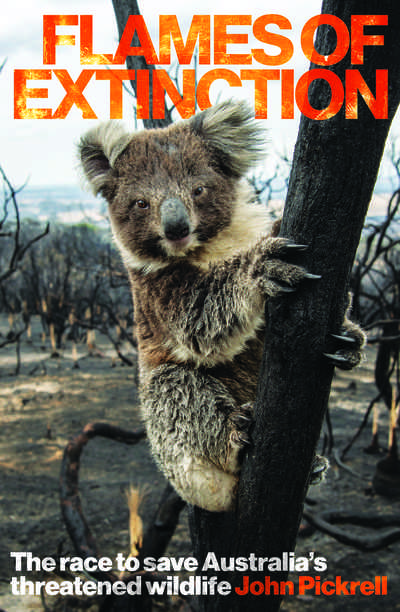
  • Flames of Extinction: The race to save Australia’s threatened wildlife

    Flames of Extinction: The race to save Australia’s threatened wildlife

    John Pickrell is an award-winning science writer. He has researched Flames of Extinction thoroughly and is very careful with his data and predictions. The beauty of this is that John has the ability to present a vast topic in an understandable and eminently readable style. Without the heart-breaking emotive photos and descriptions, he explains just how many of Australia’s animals are in danger of extinction; not only threatened species, but common species as well.

    Wild Fires in Australia have become more frequent and fiercer as the country comes to grips with the changing climate. The author investigates the effects of the 2019-2020 bushfires on Australian wildlife and ecosystems. He looks at stories from people involved with fighting the fires, rescuing animals, and conservationists. He also seeks information from land managers, and Aboriginal Rangers.

    In one of the chapters, John discusses our valuable waterways and how they have become polluted as the aftermath of bushfires which leads to destruction of the plants and animals which live there. He has also looked at how we address the fires before they occur. It seems that we need to specify particularly sensitive areas and delineate them and protect them. There are many positive works being prepared to save our endangered species, but central to this is the issue of Global Warming.

    Without scientists such as John, raising awareness of the plight of our country, it would be difficult to gather such a diversity of people from all walks of life, all focusing on the problem.

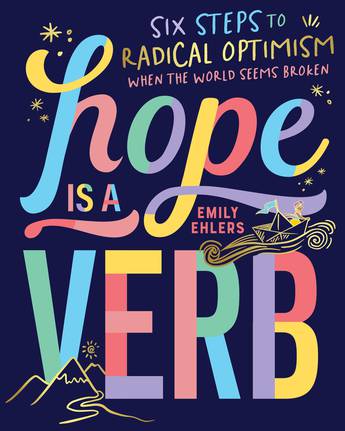
  • Hope is a Verb

    Hope is a Verb

    Six steps to radical optimism when the world seems broken

    Hope. What is it in real term? Is it an emotion that is fleeting, something to be sought, or is it the most interesting, challenging and comforting emotion we as humans on this planet have available to us in times of challenge, sorrow and despair?

    Hope is that and so very much more as Emily Ehlers has discovered and shares with her upbeat, riotously quirky, immensely enjoyable Hope is a verb; a colourful, well-constructed view based on Choosing Hope, rather than so many other emotions!

    Broken down into six sections Ehlers takes a very down to earth look at, well life, to put it simply, in the world of today where we are bombarded with so much negativity. It is all too easy to lose sight of the fact that there is hope, especially when everything around you seems to be turning dark or at the very least, a dismal shade of murky grey!

    Using a series of cartoonlike illustrations to highlight the point being discussed, the book is addictive in that it is so very easy to turn the next page to see what absolute gems are located there. In spite of your best efforts you will find yourself answering the questions posed and having fun, yep Fun! At the end of each section, a somewhat interesting feeling, called the beginning of hope may be able to be felt. If you are already a hopeful person your feelings may be brighter and stronger, but if you are relearning to hope, carry on as this burgeoning emotion will get stronger as you progress.

    It is a fact that everyone, as they progress through life will feel a sense of hopelessness, despair and downright misery, but as Ehlers says early in the book, the Introduction actually, following a series of steps to rekindle the flame of hope, to keep that little flame growing, is well worth the effort.

    Underlying all the words though is the message that by nurturing your own little flame of hope, you are adding to the future of the world; maybe not in a cataclysmic manner, but as one of many people who will make a difference simply by managing the ‘small stuff’ little by little, until it becomes a roar loud enough to make a serious difference.

    Each of the six steps could be considered as one small step on the way to building a ‘brighter better future’ that takes persistence, understanding, community and perhaps the hardest of all, change. But just in case you are struggling with feelings of gloom and doom that simply will not shift, she has also listed a range of support service to help you get back on track.

    Hope is  a Verb will have a wide age appeal, is well researched, carefully constructed and offers a clearer understanding of what hope is in today’s world, as well as a pathway forward to making a small difference in a world that often seems so totally broken!

    In a quote from the end of the Introduction, which kind of says it all, Ehlers says:

     ‘What if we nurtured hope like a tiny flame, feeding it with new visions and inspiring possibilities, daily acts of kindness and courage, stronger communities and a deeper sense of purpose, until that flame started to glow on its own?

    What a difference we all can and will and shall make!

  • Future Shock

    Future Shock

    How many times can WOW be used in conjunction with an album that is WOW from beginning to end? Jazz Fusion is the name of the game; style and class are the trademark of Michael Whalen, which is demonstrated to perfection in his latest work Future Shock, with a vibrant, melodic, feel good pulse prevalent throughout a varied and contemporary collection of tracks.

    So saying, get set for a foot tapping, hip swinging journey into fun, adventure and seriously good vibes as right from the first track, Future Shock the work is upbeat, laced with a hint of Morocco or the bazars of the  Middle East, capturing a pulsating rhythm that goes back a very long way, centuries perhaps.

    Bob Magnuson on sax absolutely rocks in Hop, Skip and Jump underpinning the overriding synth to create a true fusion of sounds. With Simon Philips on percussion and Tony Levin on electric bass, the move from pure to blended is glorious, before sliding into a more recognizable jazz beat in La Hermosa Noche, a piece that is a complete contrast to the former pieces.

    A captivating intro on synth presents the magical Lights of Home to express beautifully the magic of the night when lights twinkle and shine, the evening skies slowly darken and the mystery of the night is still to be revealed. Once again gloriously sensuous sax makes this piece a real treat.

    A big band sound is created in Poly Jam with the very clever and intricate use of electronics, electronica and skilled musicians having fun doing what they do best, make fantastic music.  Morning Song is a boppy little piece that is fresh, intoxicating and full of joy. Lively, refreshing, filled with sunshine and delight Morning Song is a guaranteed feel good song.

    Your Eyes, Your Touch, Your Kiss is the last track and one that is laid back, has a lovely blues overlay, is dreamy, mellow and immensely enjoyable, titillating the senses, relaxing the mind and pleasing the soul. Perfection.

    Summing up is relatively basic: Wow, delightful, wow, and fantastic. What more needs to be said, other than enjoy this rich collection from the creative and talented Michael Whalen: synthesizers, keyboards, electronic percussion & programming, Simon Phillips: drums & additional percussion, Bob Magnuson: saxophones, flute & shehnai and Tony Levin: electric & upright basses, Chapman stick.

  • The Simple Shift: How Useful Thinking Changes the Way You See Everything

    The Simple Shift: How Useful Thinking Changes the Way You See Everything

    Chris Helder is the Master of creating small books packed full of incredibly useful information which can be read preferably over a few hours, or several days. With his latest book The Simple Shift he looks at the madness in which we conduct our daily lives.

    This book was written before COVID-19 arrived, which in itself created much change, with many people being forced to take a fresh look at what drives their daily existence and their changing world in which they may, or may not, be able to hold down paid work. Life changed rapidly and is still changing, but the essence of Helder’s book still holds true, because the basis is helping people ‘through significant adversity in their lives’ and negotiating the craziness of everyday life, before or after COVID-19.

    As a sought after keynote speaker, Chris Helder has traveled the world speaking on useful beliefs; simple shifts on thinking and lifestyle and the power of ‘useful’, which is vastly different to ‘positive’, thinking, the power of understanding that right now is the ‘ greatest time in the history of the world to be alive’.

    This can be greeted with skepticism, but when seriously pondered, Helder is right, despite what is delivered daily via new sources and media hectoring. Why, because as he explains, in the course of The Simple Shift, if you choose to believe something you can find plenty of evidence to support those beliefs, whether they be positive or negative.

    As he says on later in the book: ‘Whenever something significant happens in your life, ask yourself two simple questions: why did this happen? What have I learned from it?  Then take those messages or answers and make them work for you.

    2020 is proving to be a year of massive change on many fronts, a year that will be long remembered as a watershed year for many reasons; many would agree that times are tough and going to get tougher if the governments of the world are to be believed, therefore it follows a change in thinking is required, a change of direction is necessary; that looking at the vast territory that is encompassed with ‘useful beliefs’ is something we are all going to need to undertake in this rapidly changing world.

    Helder could not have anticipated the changing societal framework of 2020 when he wrote The Simple Shift, but it is definitely a small book with a powerful message for and of our times, that should be used and read as a guide book to striding forward in a positive manner into the very different, ever changing future.