Tag: friends

  • Friends Like These

    Friends Like These

    MEG ROSOFF

    New York City, 1983.” Remember this time.” This is what Beth tells herself as she arrives in the overwhelming heat, rubbish strewn, smelly streets of New York. She is dragging a suitcase and looking for her accommodation. You see Beth is doing an internship as a journalist and this is her first time in a big city. Everything is strange and oppressive, especially her small room.

    Meg Rosoff has written a young adult novel which is fresh, interesting, and engaging in Friends Like These. Beth’s character is sensible and practical, but she will be dealing with a great many unknown situations. One of the many threads in this story deals with friendship.

    Edie is another of the interns beginning work. She is smart, wealthy, and observant. She takes Beth under her wing and teaches her how to notice things, to seek out what is behind every door and how it relates to their job.

    Beth has never met anyone like Edie, who is outwardly confident, but has been seeing a therapist for many years and has a bitter relationship with her mother. Edie is overawed by Beth’s good sense and uncomplicated thoughts. A deep friendship develops, but Beth is unused to the cunning and self-seeking attitude her friend gradually displays.

    On so many levels this is almost a practical handbook for any young woman beginning a career and interacting with extremes of personalities. It is a rewarding read for any person interested in observing characters, and their development.

  • Little Nothings

    Little Nothings

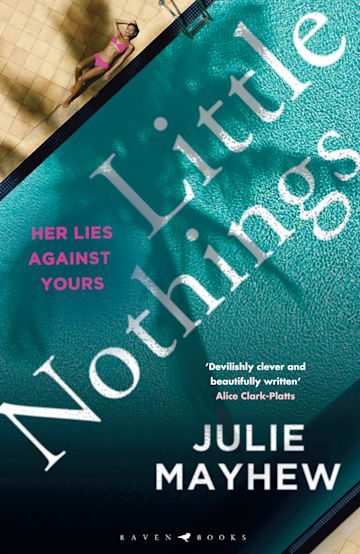
    Little Nothings is captivating in an intriguing way. One can’t help but reflect on their own relationships with close friends and the vital role they play. Many young women have found lifelong friendships in Mothers’ groups after the tumultuous times following the birth of their first child. Women share their stories over sickly smelling shoulders, and with bloodshot eyes. This is how Liv Travers gets to meet Beth and Binnie.

    For the first time in her life, Liv has friends. Always, she has travelled through school and University watching others from the sidelines. Now, she has a husband and a child and two very best friends. The women get together regularly and share many common opinions, and laughs.

    Then Ange joins the group. Suddenly the dynamics change. At first everyone loves Ange and her wisdom. She is creative and meticulous in her knowledge of her friends and their personalities.

    Gradually Ange makes suggestions of where to go for the family holidays (Corfu sounds wonderful) “And while we are there, let’s arrange a wedding for my partner and myself…..”. The subtle nuances with which Ange permeates her suggestions begin to repel Liv and attract Beth and Binnie.

    Recalling a desperately lonely past, Liv worries that she will lose her best friends. The unhappy woman meets a fashion model in Corfu, who just for fun, offers to help Liv.  

    By following the thought processes of Liv, the reader begins to understand her actions. There is no surety of what will occur until the end of the story. It is like holding a ticking time bomb in your hands.

  • Meesha Makes Friends A Big Bright Feelings Book

    Meesha Makes Friends A Big Bright Feelings Book

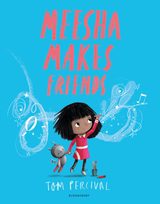
    Meesha Makes Friends tackles the time old problem of making friends, which is always a challenging issue regardless of how old you may be, or whatever the reason is that sees you looking for new friends. Perhaps you have moved countries, towns or schools.

    With his usual flair and aplomb Tom Percival, along with his new friend Meesha, take a look at this really, really difficult thing to do: make friends.

    Poor Meesha does not seem to be able to make friends at her new school. She really doesn’t seem to know how to go about saying the right things, or even doing the right thing; somehow it always seems to go wrong.

    But the one thing she is very good at is making things. Meesha loves to make pictures out of numbers, or pictures out of sounds, sometimes even both, but making friends, well that is really hard, until she gets a great idea, to make her own friends; friends she can take everywhere with her an never feel lonely.

    One day she is invited to a party, which she does not want to go to, and there on the stairs she meets another little boy, who also finds it hard to make friends. All of a sudden she does not feel sad or lonely and a lovely friendship is begun.

    As always Percival’s stories are accompanied with bold illustrations which show, often far better than the words, the emotional issues he is discussing in his delightful Big Bright Feelings series.

    Meesha makes Friends is the  perfect book for classroom use to open a discussion on making friends, a great book to help children who are finding making friends difficult and the perfect medium to remind everyone that if you see someone sitting outside the group looking on, spend a little time to make them feel welcome.

  • Bear Out There

    Bear Out There

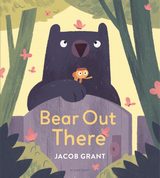
    Jacob Grant has created a lively slightly back to front story in Bear Out There, about Bear and his best friend Spider, two friends who simply could not be more different if they tried. Bear loves nothing better than to be inside, tucked up, warm, comfortable, maybe cleaning his house or drinking a lovely cup of tea.

    Spider is just exactly the opposite as he would rather be outside in the fresh air, the muddy fields having fun amongst the trees or just enjoying the warm sunshine. Somehow or other Spider talks Bear into coming outside while he flies his favourite kite, but something totally unexpected happens. Spiders kite gets lost. Oh, dear me what to do!

    Because they are such friends Bear agrees, somewhat grumpily, to help Spider try and find his kite and so the friends set off through the muddy woodland paths in search of the very well-hidden kite.  But it is what happens next that make both Bear and Spider realise that their friendship is the real deal, they truly are the best of friends.

    Gloriously free, colourful illustrations compliment the text making this the perfect reader for early readers, or little ones who love a good story.
    Based on the principles of friendship and what is really does mean, the storyline is charming and address the issues of having to step outside of your comfort zone sometimes because that is what friends do to help one another.

  • Music That Tells a Story

    Music That Tells a Story

    Award winning guitarist and composer Peter Xifaras has completely exploded the music spectrum with this totally stunningly, amazing double CD album, blending classical, symphony, ambient, and electronica together to create something magical, inspiring and all enveloping.

    Beginning with Disc 1, which in this situation is a great place to begin, he entices you into what could be considered as your own night in listening to seriously good symphony orchestra; But then the entire musicscape changes to an up-tempo perspective; music telling a story, what a story.

    The first segment Dreams in Bloom consist of six pieces which form the basis for Disc 2 and provided the inspiration of the written story created by Blu DuBois of The Living Pen, a story of love, dreams, melancholia and so much more.

    The final piece in this section is Dinner with Friends, inspired by the very real reunion of friends who had not enjoyed each other’s company for more than 25 years. When they came together once again, over a good bottle of wine and food, it was as if it was only yesterday they were together, making music, sharing stories, living life.

    Variations on a Theme of Tromboncino  is a contemporary visitation to music composed in circa 1500 by Italian Composer Bartolomeo Tromboncino, which is based on the Frottola, a secular song style popular in Italy throughout the 15th and 16th centuries. The four part style is beautifully revisited with the haunting sound of violins introducing the beautiful vocals of Felicia Farerre. The words are sung in Italian making this a poignantly beautiful tribute, presented in modern meter, to those composers of yesteryear whose music lives on into modern times.

    Gymnopedie Variations is another revisitation of two piano pieces composed by French composer Erik Satie, a pioneer of the ambient style of music; relaxing and unobtrusive. Piano played with precision introduces the segment creating a change of style, direction and emotion, which when followed by a compilation of strings underpinning the piano, is a pleasure to enjoy. Blu has the comfort of being a familiar piece, until the elements change pace, just before they slide back into that comfortable zone once again. Fabulous!

    The final component to Disc 1 is Hevene Quene which is based on the 13th century composition of an unknown person. Introduced with a flurry of well-engineered percussive sound, the two track section then moves into the olde English sound of a stringed instrument being plucked and strummed, before once again Felicia Farerre adds her elegant vocals to the mix to give a unique perspective to this time old composition.

    All this before the second disc is begun, is a bit like being introduced to too much beauty in one sitting. Disc 2 is glorious as it presents the story Dreams in Bloom, narrated by Joan Jacobs, telling the story of love, laughter, desire, romance and then the letter. Sadness, fear and acceptance of things passed and things to come: Reunion, presents, gifts and renewal in the Garden by the Sea. Jacobs’s beautiful English voice balances out the beauty of both the story and the song cycle of music.

    This is more than an album, composed by a fearsomely talented composer; it is a work of love, of understanding and inspiration, as Xifaras has taken the concept that music tells a story, which it indisputably does, adding a gentle tale written to compliment the strands which are all presented in the ‘instrumental order they are meant to be heard’.

    This is indeed something special and showcases Peter Xifaras’s versatility and ability to blend a wide a range of music and influences into a living work of art.

  • Piggy: Let’s Be Friends!

    Piggy: Let’s Be Friends!

    Piggy’s story comes in a wonderfully bright and colourful hardback book. The front cover shows the main character as being a bit quirky, with enormous glasses and a very sweet smile. He has obviously worked out that the way to develop good friendships begins with food. The bold colours continue through this story, giving it life and vivacity.

    The tale begins with a very lonely pig, just surrounded by his books. By chance he met Kate, and as the two of them arranged tea parties more friends popped along. In the forest community nearly everyone was by now well acquainted with each other; all except Mole.

     He lived under the forest you see, and so never had an opportunity to mingle. Miles the Mole also had an affliction. When he became nervous, he sneezed. One day Mole smelt Piggy’s roses and popped up to investigate the wonderful smell. Piggy saw him and called out, but Mole just sneezed and disappeared down his hole again.

    Hmmmm! Piggy was now thoroughly curious, and wanted to meet Mole. He and Kate talked it over and decided to invite Miles to one of their tea parties. Mole was so worried. What if he sneezed all the time? Maybe it was easier to stay underground and not appear foolish in front of others. However, there was the smell of the delicious muffins that Kate had freshly baked…..

    The illustrations in this book are charming. There is such gentleness to the characters and their surrounds it is almost as if you are invited to the party as well. When the mole is shown underground, the shades of brown could be harsh, but are softened by a warm glow. The story shows that by reaching out to others, you can bring joy and happiness for them as well as yourself. The text is really appropriate for reading aloud. It has small chunks of text on lighter coloured backgrounds for ease of following.

    Definitely a smiley ending.

  • I Just Ate My Friend

    I Just Ate My Friend

    Friends are not easy to come by, and to have the misfortune to have eaten your friend is a challenge indeed. This humorous and innocent story is really a learning opportunity, showing how eating your friend is going to leave you lonely, and how finding a new friend is difficult. Not just anyone can replace the friend you had, friends need to be of a similar persuasion, and size.

     Heidi has written this book with a delicious sense of humour, and pays tribute to the impulsive nature of children and the consequences of that spontaneous action. The story shows how the main character confesses to eating his friend, who was a good friend! The obvious step is to find a new friend, but that is not so easy; so many are unsuitable for many reasons. Some are too big, some are too small, and some are downright scary. The hunt for a new friend is now beginning to feel like a lost cause.

     The design and illustrations in this book are striking and powerful. The story is really told through this marvellous art work, where most pages have a black background and only one or two other characters depicted. The main character is yellow and we follow his journey through the pages of the book easily. He is simply drawn, with a body, two eyes two ears, and a mouth (showing a few sharp teeth). Other characters are shown have the same simple style and come in different colours and shapes.

     The text is in white against the black background, which makes it easy to read. The sentences are very short and succinct. “Hello, would you be my friend”, is often repeated, encouraging involvement by younger readers. The size of the text is large enough to be followed by a finger, and is predictable.

     Once the character begins to question his impulsive action, doubt begins to make him wonder if he will ever find another friend. The ending is quite shocking and realistic which makes for a humorous response again. This hardback picture book is one which presents children with a gutsy, believable look at life in the funniest and simplest way.

  • By the Light of the Moon

    By the Light of the Moon

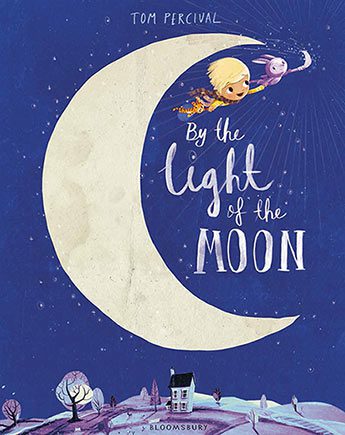
    Moving house is a traumatic time, and for young Ivan, it was strange and unfriendly. His first night in his new house proves quite a challenge, as nothing is as it was. Even the moon looks different. With a gentle fantasy story, Ivan understands that in time he will feel at home here, and he will adjust. I love the end pages which will fascinate children. They show the different phases of the moon, and the correct terminology for each phase.


    Ivan is alone and sad in his bedroom. Nothing looks the same. He goes to the window to check out the moon and sees a light flying down from the sky. Ivan runs outside to see what the light is. He discovers a friendly being, whom shows him many marvelous things.

    They play together for some time, but eventually his friend says that it’s time to go home. Sadly Ivan reflects that this is not like his other home. His friend shows him some visions in the future, and Ivan understands that in time there will be many happy occasions, and he will grow to be attached to this house.

     The author has such a gentle way of telling a story that it would appeal to a child who is facing a new problem. There are small bodies of text spread out on the pages to encourage independent reading. The text size varies, getting larger for more emphasis to be used.

     The illustrations are appropriately coloured, sometimes the pages contain a lot of black as Ivan goes outside into the night, however, when his friend begins to paint everything with moonlight, the colours change and vary.  The front cover is decorated with a drawing of the moon, and sprinkles of silver, which is visually very appealing.

     Again, it is the end pages that invite a close examination. They show the phases of the moon, the first page being black with blue shaped moons, and the opposite page being blue with black shaped moons in their varying stages.

     The story is gentle and calm, while the focus is on the moon and how it oversees our lives.