Tag: French

  • Meli & Mac: rendez-vous with a Flamingo

    Meli & Mac: rendez-vous with a Flamingo

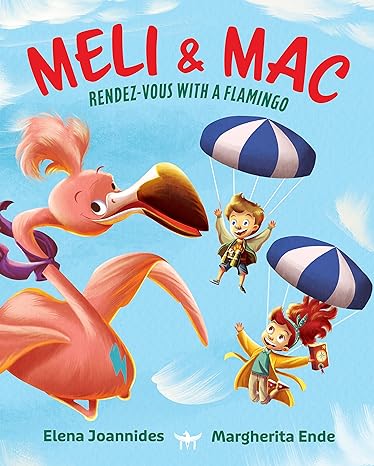
    Meli and Mac are having one of those days where they need to do some reading; in Mac’s case he is reading or trying to read, how to speak in French. He is a bit fed up and complains to his big sister Meli who points out they need to know a little bit of French as they are going to Paris for a holiday.

    He does agree and when she says she would really like to be able to speak Flamingo, he immediately grabs his magic bag, Meli grabs her coat and magic journal and before you can say abracadabra, they head out into serendipity forest to begin a fantastic adventure.

    As they find a pink feather falling to the ground they decided to go exploring up the tree, one thing leads to another and there, high in the tree they meet Freddie, a Flamingo who speaks French, who is tired and lost.

    He is supposed to be at the Shrimp Extravaganza at a big lake, but is not too sure where the lake is. Mac and Meli take out their magical map, and with Freddie slowly changing his colour to pink stripes, they find their way to the lake with a little magic to help them on their journey, naturally.

    Meli and Mac: Rendez-vous with a Flamingo is a great little story built around Flamingos which are found in profusion in some areas of France, so naturally they speak French. It also explains how they get their very distinctive colour: Pink!

    The French words used are translated in little sections at the bottom of the page, which make it very easy for beginners to learn and understand simple French vocabulary.  Bright illustrations, a fast paced story and a good adventure make this an excellent book for young readers who are learning another language, or just want a few words other than English with which to confound their friends.

  • The Little French Bridal Shop

    The Little French Bridal Shop

    Do not be fooled by the cover and title of The Little French Bridal Shop. While it is indeed charming, it also raises issues that many of us must face. The main character, Larisa, has returned to her small seaside hometown. Her great aunt has died, and Larisa wants to stay in the beloved house for a last time. In fact, she is running away from everything, and reality is slipping away from her.

    The young woman decides to renovate the grand house and then sell it. As a child, she spent a great deal of time with her great aunt who taught her many things. One of the local boys, Jack, used to come to the house as well. Aunt Ursula gave the children lessons in music appreciation and discussed many and varied topics to extend the children’s knowledge and experience. They both loved her dearly.

    When Jack discovers that Larisa is back, he helps her to renovate the house, and they discover ease and comfort in each other’s company. However, Jack is married, and Larisa is undecided about her current partner. As an only child, Larisa adores her parents, but cannot cope with the fact that her mother is beginning to develop dementia. Larisa has so many worries and fears to cope with. Grieving for her aunt, terrified of losing her mother, uncertain of her future, it is no wonder she begins to fob off the local villagers with strange tales.

    There are many obstacles for Larissa to overcome. She must maintain a hold on reality to logically continue with her life. This story is one that reflects times when we all have struggled, but the understanding that hard times do not last forever, ensures the final conclusion to the story is more than satisfactory.

  • The Little French Bridal Shop

    The Little French Bridal Shop

    Do not be fooled by the cover and title of The Little French Bridal Shop. While it is indeed charming, it also raises issues that many of us must face. The main character, Larisa, has returned to her small seaside hometown. Her great aunt has died, and Larisa wants to stay in the beloved house for a last time. In fact, she is running away from everything, and reality is slipping away from her.

    The young woman decides to renovate the grand house and then sell it. As a child, she spent a great deal of time with her great aunt who taught her many things. One of the local boys, Jack, used to come to the house as well. Aunt Ursula gave the children lessons in music appreciation and discussed many and varied topics to extend the children’s knowledge and experience. They both loved her dearly.

    When Jack discovers that Larisa is back, he helps her to renovate the house, and they discover ease and comfort in each other’s company. However, Jack is married, and Larisa is undecided about her current partner. As an only child, Larisa adores her parents, but cannot cope with the fact that her mother is beginning to develop dementia. Larisa has so many worries and fears to cope with. Grieving for her aunt, terrified of losing her mother, uncertain of her future, it is no wonder she begins to fob off the local villagers with strange tales.

    Larisa has many obstacles to overcome. She must maintain a hold on reality to logically continue with her life. This story is one that reflects times when we all have struggled, but the understanding that hard times do not last forever, ensures the final conclusion to the story is more than satisfactory.

  • Tussaud

    Tussaud

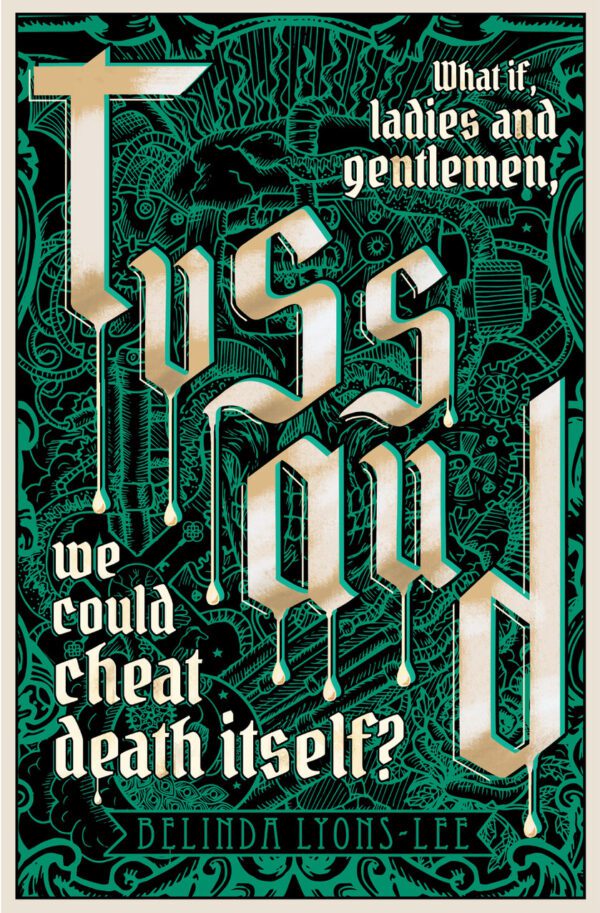
    The French Revolution: It’s one of those historical moments that have spawned as many legends as there are truths. It’s almost like a real life version of Game of Thrones and House of Cards which is the setting of the latest book I have been reviewing; Tussaud by Belinda Lyons- Lee.

    The story starts off in picturesque France Though it would be more picturesque if it wasn’t for the mob violence and the public decapitations. Marie Tussaud is recovering from the trauma of almost being made short by a head during the French Revolution. Focusing on making of death masks, the deal she made to avoid the Louis XVI treatment, she is offered the chance to move to London by Philidor, a famous magician, in order to assist in the creation of a wax automaton show.

    The show falls apart but Tussaud and her business partner strike a deal with one William Cavendish, an aristocrat who you could politely describe as unique and idiosyncratic. The deal; come to his estate and make a wax automation in the likeness of a long gone girl, in return for the means to make a new show.  A simple enough deal but as the story goes forward, and twists and turns amount, Marie Tussad starts to understand that not all is what it seems.

    Now Tussaud is obviously a fictional story, but like all good historical fictions it is steeped in fact and research. Marie Tassaud is a real person. She is well known for creating the death masks of numerous victims of the French Terror (the name given to the politically inspired violence following the overthrow of the monarchy).

    Her wax museum is considered either a must see when going to London or an expensive tourist trap. Also the background of her character in the book rings true, she was indeed almost a victim of the French Terror. Apparently Welbeck Estate is a real place in the UK and indeed has an underground ball room (though having looked at the modern day photos of said ballroom I couldn’t help but feel a little disappointed).

    Though Tussaud is marketed as revolving around Marie Tussaud, it has a good portion revolve around both Philidor and the Duke.The book is written in first person and you’re able to get the point of view of all three of the main characters which provides an added layer to the story.  For me the most interesting character was the Duke.

    All up Tussaud is a mystery novel based in the aftermath of a very pivotal historical event. Is the book for everyone? Certainly not! However it is by no means terrible. The author Belinda Lyons- Lee certainly put alot of effort into writing a novel which is grounded in fact. I would say the book is more slanted to the teenage and young adult audience.

  • The French Gift

    The French Gift

    Kirsty Manning states,” It has long been my quest in Historical Fiction to draw attention to forgotten pockets of history.” something she has done an extraordinarily fine way. Her book “The Jade Lilly,” dealt with Jewish refugees who fled to Shanghai during World War 2. 

    The following book, “The Lost Jewels,” deals with a little-known discovery of a hoard of magnificent jewels found in a basement in Cheapside, England. Her latest book The French Gift deals with women in the French Resistance, during the invasion of Germany. Agnes Humbert was such a woman and the author has based this story on her exploits.

    The French Gift is a captivating novel set during the Second World War and in modern times. Kirsty moves easily through the time frames with her characters. The War heroine, Josephine, returned home after the war, developing a loving relationship with her nephew, his wife Evie and their son Hugo.

    Evie runs a shop in Paris as a preserver of Botanical Manuscripts. When Josephine dies the family is approached by a museum to display her memoirs as a memorial to all the Resistance Fighters.

    While in prison, and later in the rayon factory, Josephine befriends a French maid, Margot, who has been accused of murder. The injustice done to this young girl appals Josephine who desperately wants to clear Margot’s name.

    We have the two stories running parallel, yet cleverly entwined. With her careful research and eye for detail, Kirsty Manning has written a shocking account of the brutality metered out to these women, and the quest for Evie to find the truth to clear Margot’s name. Alongside the accurate retelling of war times, we have a murder mystery which is brilliant in its complexity.

    I can’t wait to see what “Pocket of history,” Kirsty Manning will reveal next.

  • The Sisters Saint-Claire and the Royal Mouse Ball

    The Sisters Saint-Claire and the Royal Mouse Ball

    In a dainty little story created from rhyming couplets, five French mice, all who love fashion, food and of course all things French, come to the help of their Queen Julie S Cheeser, who wants to hold a Royal ball, but somehow can’t get it quite right, as nearly all of the lovely mice from the township feel they simply will not be able to go to the ball, because they do not have clothing suitable to wear.

    This puts poor Queen Julie in a terrible situation, but what to do? She finds her way to the home of Harriet, Violet, Beatrice, Minette, little Cecile and their parents and asks what it is that is preventing the invited guests from accepting her invitation.

    They invite her in for a cup of tea and help Queen Julie solve the sad situation with ease. Because they all love fashion, and because they have always had to be careful with the money they spend, all the mice have always shopped for their fashion very carefully, never overspending and always making something new, out of something old.

    A plan is created to issue another invitation, this time inviting all the mice to come to the ball in outfits made from things in their own house. What a wonderful idea.

    This is a gorgeous and delicate story about, family, friends and being happy with what you have, as well as carefully illustrating the point that sometimes, even thought you think everyone else is better off than you, because they have everything they ever wanted, this is not always the case.

    As this is the second adventure for the Sisters Saint-Claire, it sets the standard for what is sure to be more wonderful rhyming storylines from Clair Gibson. The illustrations from Tamsin Ainslie create a delightful old-world charm which complements the text beautifully. On many of the pages so many little items are there to be discovered making this a book that will appeal to little girls who love fashion, tiny little bits and bobs and a really good mouse tale to tell.

  • Crew    The story of the men who flew RAAF Lancaster J for Jig

    Crew The story of the men who flew RAAF Lancaster J for Jig

    Many went to war and many, many never came home. Who were they, who were their families and what made them take on sometimes unimaginable tasks in a war so far, from their homeland.

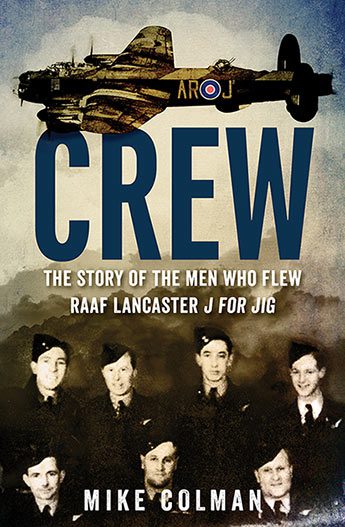
    In Crew, Mike Coleman tells the story of the men who made up the RAAF Lancaster bomber J for JIG crew, based in Lincolnshire. On the night of 11 November 1943, two Scots, and five Australians, all young men, set off on a mission to bomb factories in Schweinfurt, Germany but never made it, being shot down in the night skies over France.

    The words of Laurie Woods, Bomb aimer, RAAF 460 Squadron, when he said ‘You didn’t make friends because you didn’t know how long you, or they would be alive, but your crewmates were different. Your crew was everything, they were your life’, sums up succinctly the situation faced and lived by these men on a daily basis

    Your crew, pulled together from various places, were the men you grew to know intimately, as your very life often depended on their skill levels and reaction in crisis. All young, some with young families of their own, some on their first sortie, the good, the bad and the naïve came together, none expecting their life would be long, as they flying often daily, over dangerous enemy territory.

    Living on the edge bought with it a special mateship; getting the job done and returning safely to base bought with it a skill set second to none. Mike Coleman has carefully researched the history of this crew; John Dunlop, Ron Ferguson, Peter Mallon, Tony D’Arcey, Cliff Hopgood, Dave Baxter and Bill Martin bringing all seven men into focus once again.

    J for JIG was shot down over France, with four of men killed, Bill Martin severely injured and Baxter and D’Arcey finding themselves on the run, hidden by villagers, with all three men eventually ending up in POW camps, along with many others.

    Baxter and D’Arcey were repatriated after the war, eventually returning to Australia to make what they could out of their lives and experiences.

    In as much as this is the story of all the men who made up the crew of J for JIG, is it more their personal story of joining a war for what was a just and fair cause, evading capture, escape, chance and mateship which makes it poignant. A memorial tree proudly stands in the suburb of St Johns Woods in Brisbane dedicated to the memory of Cliff Hopwood and in many ways by default, all the men who went from that area to fight in World War 2.

    Fascinating, immensely readable and well written, Crew is far more than a history lesson, it is a work that travels from the heady and dangerous days of Lancaster Bombers and their crews based at Lancashire, England, to the bravery and compassion of the many who tried to help the survivors, to the modern days of Australia where the memories and letters from these men and their families creates another chapter in the archives of Australia and history.

    Lest we forget!

  • The French Art of Not Giving a F*ck The simple secret to true happiness, the French way

    The French Art of Not Giving a F*ck The simple secret to true happiness, the French way

    The author believes that we have become so bogged down in our search for happiness that we are creating and obeying more and more rules. At first, it would seem (by the title), that we should not bother about any regulations, but should be free and content. However, when we examine the chapters in the book, one realizes that Fabrice has cleverly interwoven strategies for peace and harmony, but discards the rules. There are fifteen chapters in the book, each one starting with F**K. So we have F**k Meditating, F**k Obeying, F**K Being Wise, until the last chapter which is a bit of an eye opener, F**k disciplining your kids.

     The author is concerned that our obsession with performance is poisoning the world. He believes that the current mantra of society is Profitability and Usefulness. And so, even for the simple art of meditation, which he practices regularly, there are no hard and fast rules. His advice is, “You meditate only when you stop trying to meditate.” So, recognising that you are uptight and giving yourself a break, seems to be his way. Meditation is to be seen as a form of Freedom rather than rules and protocols. The author goes on to describe what his thoughts are as he meditates.

     As we pass through the chapters, other pieces of advice are suggested. Why blindly follow rules? Are we just followers, who anticipate orders? Is our main aim not to make any ripples? Interestingly, Fabrice says that we think, “Wisdom is a destination, not a path.” Buddha, Christ and Nelson Mandela were all very human in the way that they responded to life. That is with passion, anger and a desire to promote social change. The getting of wisdom seems cold and disconnected and far from the warmth of reality. Taking a risk is very dangerous for those who seek to be perfect, and coming to terms with the idea of the “best possible “idea, is one we could all think about.

     The final chapter is about disciplining your children. Fabrice acknowledges that children need to grow up learning and obeying rules. As parents, we need to be respectful and benevolent, and engage with our children when a situation arises. “Help them to confront their own life, rather than torturing them to fit yours.”

     Taking time to appreciate nature, and reflect on things that please you, such as music and art, is a way to happiness, as is the ability to have a childlike appreciation of the world around you, without constraints. The author is a Doctor of Philosophy, and the founder of the Western School of Meditation. There are a great many interesting thoughts and ideas in this book, and once the shock value has worn off, many of the ideas are worth exploring. The further readings to support his proposals are interesting, and worth following up.