Tag: France

  • The War Within Me

    The War Within Me

    The second novel in the Queens of Navarre trilogy, The War Within Me from Tracy Ryan continues with Princess Jeanne d’Albret a woman who is determined, purposeful and intelligent. She is a twice born royal, her father the King of Navarre, her Uncle the King of France.

    Sickly as a child she is wed at an early age to William of Jülich-Cleves-Berge, in a political move to strengthen alliances. This marriage in name only, was annulled in 1545. She was later married to Antoine of Bourbon in 1548, a handsome man who she loved to desperation. Together they ruled Navarre after the death of Jeanne’s father in 1555.

    Their life together became embattled as Antoine was forever absent fighting one battle or another, a man who was of the Catholic faith, and eventually a man who could not be trusted as he spread his alliance thin, courting whoever he felt could better achieve his ends.

     In The War Within Me Tracy Ryan as captured in great detail the turbulence of the times of Jeanne’s rule, the influence of her mother, Margaret of Angouleme respected and revered through Navarre and France, who desired to move into the Protestant faith but found she was unable to sever the ties to the Catholic religion. Jeanne as a young woman accepted the Protestant faith, becoming a true and faithful believer until her death.

    Moving through the pages of history Ryan has created a work that while based on the few documents that have survived the turbulent times of Jeanne’s life and rule, illustrate that Jeanne was a woman who committed to her life course with courage and conviction.

    Determined to try and achieve the freedom to choose your faith, she took on the might of the Catholic Church and the French Court, thankfully not living to see the horror that took place in 1572, when France ordered the slaughter of the Huguenots which was then retaliated.

    Beautifully written and detailed this return to the turbulent times of history is most enlightening. It is a time in history which had profound influence on religion throughout France and Spain.

    The third book in the series, To Share His Fortune follows the life of Princess Margot, wife of Jeanne’s son Henri, one of her two surviving children, as she takes up the role of Queen of Navarre.
  • Murder on the French Riviera

    Murder on the French Riviera

    A Miss Underhay Mystery Book 16

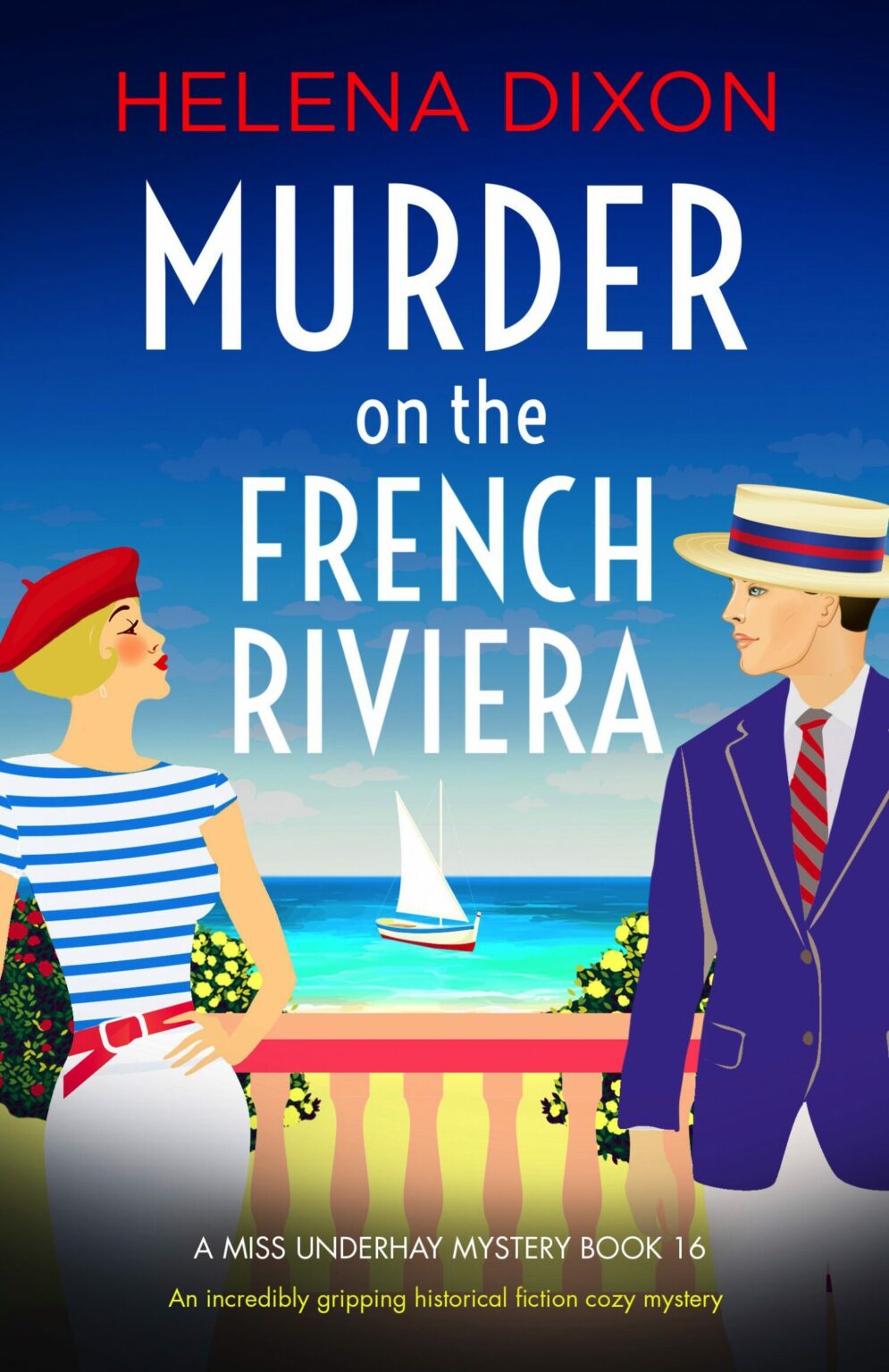
    It is 1936 and Europe is in a state of unease. France has just held a general election and the Italian forces have captured Addis Ababa. Mussolini is putting his men into power, looking at a very long game and in general the British Government is finding this situation seriously disturbing. 

    There are people at work gathering information which needs to be clandestinely bought to London and when Kitty Bryant and her husband Matt are propositioned to go to France and bring back some documents, they agree to do so reluctantly.

    Kitty and Matt arrive in Nice, enjoying the luxury of the very elegant Hotel they have been booked into before deciding to go for a walk. Wandering down a series of small side streets they come across the body man of a who looks like a tramp, but has very good shoes.

    In his pocket they find a book of matches from the Casino Plessy and a metal key with a wooden label and so begins the latest adventure in the Miss Underhay Mystery series Murder on the French Riviera.

    The plot is fast moving, very cleverly planned and full of more twists and turns than the streets of Nice, as Kitty and Matt discover that the ‘holiday’ to collect the papers is far more dangerous than they were lead to believe. Innocent people are being killed, they have come under suspicion by the local Police, and it is fast becoming apparent there is something really sinister happening.

    Attending the Gala birthday party of Helene Dupont, where the guests are an eclectic mix of wealth and power, they realise they are under suspicion, not just by the Police but the very people who are involved with Mussolini and Hitler; the people who want the missing documents back!

    Deciding they need to leave Nice as soon as possible, even though they have not got the papers, they take the train to Paris believing they will be safely away from the murderous intent of the someone in Nice, whom it appears will stop at very little to get back what they want.

    But they are very, very wrong!

    Murder on the French Riviera is a real cliff hanger of a murder mystery with a very well hidden murderer and an excellent secondary plot running through the narrative.

    A great afternoon on the couch read.

  • Memoirs of a French Courtesan: Volume 1: Rebellion

    Memoirs of a French Courtesan: Volume 1: Rebellion

    In 1852 Celeste Mogador wrote her memoirs in self-defence. Speaking out about the lack of justice to be found in France during the dangerous years of her growing from childhood to adulthood, her life changing rapidly as she faced up to the reality of survival as a young and beautiful girl on her own, her story fills four volumes.

    Raised as a spoilt, beautiful child she was much loved and doted upon by her parents until her father died. Her mother, remarrying a man who turned out to be a vile and brutish man, saw Celeste and her mother leaving the familiarity of their home in Paris to take up work in a town far from this man and his brutality.

    Time passes and as Celeste grows into a captivating teen, her mother’s choice in men, always rather poor, sees Celeste forced to leave her home once again, but this time she discovers she is going to be on her own, as her mother has rejected her through a spate of jealous anger.

    Celeste, is remanded in the local Police station, before she eventually finds a friendship of sorts, which leads her into her new life as a prostitute; a situation not all that uncommon for women who had no means of support.

    As this is a Memoir published to outrage and acclaim in 1858 France, it presents a detailed and real story of life for those of a lower or middle class existence at the time of political upheaval, where marriage made women the property of the man, their lives considered of little account.

    Not an overly long read, this is the first of four books translated from the French which for those interested in history makes a most informative read. Celeste transitioned from indulged child, to homelessness, prostitution, discovering fame as a Hippodrome performer who eventually met, fell in love with and married a Nobleman.

    Translation, wording and time make a difference but Memoirs of a French Courtesan Vol 1: Rebellion also highlights that even though this was written more than150 years ago, in many instances little has really changed in the world of women who are unfortunate enough to fall on hard and difficult times.

  • The Queen’s Apprenticeship

    The Queen’s Apprenticeship

    Born into French Royalty in 1442, Marguerite de Navarre, was like many women of affluence, bartered off to Charles IV of Alencon for political reasons. She later became a woman of influence upon her second marriage to Henry II of Naverre, becoming the Queen of Naverre.

    Jehanne or Josse as she becomes known, is a cast out itinerant child, who longs to be a printer; to follow in her father’s footsteps. Disguised a boy for safety, she eventually finds her way to Paris and joins a band of Printers and Publishers, where she achieves her dearest wish, to learn the art of Printing.

    Meanwhile, Marguerite, an educated and intelligent woman, prolific writer, poet, student of life and Politics, is fascinated by the Reformation beginning to occur within religious circles. She writes to a well-known cleric of the time, keen to learn from him.

    These two woman come together through a series of complex circumstances. The Reformation is beginning to become a powerful force sweeping through Europe and Britain, printing presses are being closed everywhere; there is one way ahead and to challenge this means death and destruction.

    Propaganda is still being printed as the industry has gone ‘underground’, but this also sees Josse once again out of a job, homeless and wondering. Times are very dangerous for those who would flout the doctrines now being taught.

    Both Marguerite and Josse are intelligent, therefor considered dangerous, forced to some degree to live their lives as dictated by men, but determined, each in their own way to support the change that is beginning to occur across Europe.

    Tracy Ryan has, through what is to be a trilogy, captured a slice of history that was to eventually dominate, bringing with it tumultuous times, danger and death to those who opposed the dictates of the Church.

    The Queen’s Apprenticeship leaves the door wide open for book two in what is going to be an enthralling return to the 15th century through the eyes and times of two women, Marguerite and Josse: one born into riches, one born into poverty; both survivors,

    The Queen’s Apprenticeship is the first in a series of three novels focussed on the Queens of the Navarre.

  • Second Place

    Second Place

    Told in the first person through a conversation with Jeffers, Second Place is a beautifully executed look at life, desire, male/female fate and provocation.

    Set in France during the blistering heat of summer, a woman falls in love with a painting she is attracted to, inexplicably! To her, her life is a mystery, a round of days of routine, never quite satisfying some undefinable need.

    She invites the artist L to the farm where she and her husband have lived comfortably and in return he is expected to paint her portrait; the very last thing L intends. Down on his luck the once sought out artist is happy to free load for the summer, inviting his current girlfriend, comfortable with manipulating the situation to suite himself. As the summer drags ever onward, the once happy home becomes a place of distrust and distress.

    The lure of the unattainable, so redolent of humanity has been explored well as the woman, later referred to as M, slowly destroys not only her peace, but that of her husband and home in a search for fulfillment through the seductive power of art.

    L, the artist has been well crafted with inspiration drawn from the life of DH Lawrence and his somewhat flamboyant, hedonistic lifestyle which adds a certain authenticity to this character as well as the overall story. Well written in clear structured language, Second Place is an excellent reflection on the power of delusion.

  • Josephine’s Garden

    Josephine’s Garden

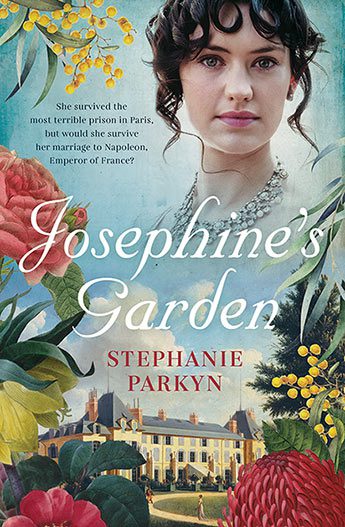
    History provides a abundant backdrop for a wealth of historical fiction with the Empress Josephine, beloved of Napoleon Bonaparte, with her colourful life and lasting legacy providing rich ground for writers such as Stephanie Parkyn to weave fact with fiction, to create a story which if only history could talk, is perhaps, not so far from reality.

    Set in the heady aftermath of the French Revolution, when hopes where held high for a better and far more equal life for all Frenchmen and women, the stunningly beautiful Rose de Beauharnais discovers the life she once led, before her imprisonment the Bastille, has gone completely.

    She faces the time old problem of how to survive in a much-changed world, eventually making the most of her attributes, to become one of era’s most scandalous socialites. Bonaparte is a young man, obsessed with his rise to the top of the political scene, ruthless, unscrupulous and obsessive in his drive and ambition. Both fall desperately in love, recognising a kindred soul in each other.

    Rising to the position of Empress, Josephine and Bonaparte’s love boarders on the obsessive, both driven, both wanting the lot from life and both prepared to go to great lengths to get what they want.

    Eventually Josephine’s failure to give Bonaparte a child sees her being replaced by a series of lovers, divorced by Napoleon but allowed to keep her beloved Chateau de Malmaison, where over the years, she created not only a magnificent home but ‘gathered around (her) the rarest plants growing on French soil…’ as well as a menagerie of what were then considered as exotic animals.

    As Josephine rises to scandalous fame and then falls into almost peaceful obscurity, she befriends Marthe Desfriches and Anne Serreaux. Josephine’s Garden is the story of these three very different women from three different levels of society and how a common, almost a dangerous thread, binding them together.

    Lovers of historical fiction will find Josephine’s Garden spellbinding, rich and an immensely enjoyable blend of fact and fiction, which is very easily able to be related to, as these three courageous women face the same struggles in their obsession and desire to become mothers.

  • The Second Worst Restaurant in France

    The Second Worst Restaurant in France

    Feeling somewhat frazzled by the everyday world and need to opt out into another dimension for a while? Step into the latest work from Alexander McCall Smith as he takes us, on a gourmand’s journey into France, this time, to yes, The Second Worst Restaurant in France.

    Paul Stewart is once again in a dilemma. Recently returned from his time in Tuscany, he has committed to writing a new book on The Philosophy of Food, but somehow or other, as always, life seems to be conspiring against him, by complicating what really should be a very simple matter.

    Gloria, his agent and now girlfriend has moved in with him, along with her two cats, a situation which is causing considerable disruption to Pauls everyday routine and although he is trying go get words to paper it simply is not working.

    Pauls charismatic and somewhat eccentric cousin Chloe offers him lunch, an ear to listen and then a month in the country at her rented house in France. He grasps the opportunity with both hands. He heads off to places unknown, loaded down with a head brimming full of ideas, a cousin who seems to be not what she appears, coming to rest in a village that is, as it turns out, the home of truly the second worst restaurant in France.

    After a dose of food poisoning, the birth of the waitresses child during service at the restaurant, followed by a call for help from Chloe, who is, or appears to be, lining up Claude, the chef at the restaurant to be husband number six, Paul begins to wonder if writing the Philosophy of Food really is what he want to do.

    Caught up in the petty quarrels, family disputes and something rather sinister in the village of Saint Vincent la Colline, Paul quickly comes to realise that life will always take interesting twists and turns, leaving in its wake the question to be answered as always, Does the means justify the end?

    A delicious Table d’Hote served up with a wry sense of humour, the very aroma of country France with a soupçon of McCall Smith levity from what could all to rapidly, under new chef Hugo, become The Second Worst Best Restaurant in France!

    As always, a fabulous read transporting you to ‘some other place’ just for that moment in time.


  • Digger

    Digger

    Digger was a very much loved little kangaroo who went to war; he was there in the trenches of France. He found a home in his beloved owners pocket when he went to war, a long time ago, as a soldier serving in the Australian Army, or as it was then called the Australian Infantry Forces, formed to help Britain fight against the horror of the German Army.

    Annie owned Digger first and when her brother James was going away to fight, she very carefully stitched the name Digger on him and gave him to James. James was injured and so was Digger. But James recovered from his wounds, Digger was lovingly repaired and both returned to the front.

    When Digger finally returned to Australia he has been lovingly repaired once again by Collette, one of the girls who looked after James and Digger the first time they were injured.

    The story of James and Digger and the tragedy of the First World War has been beautifully told and is a ‘quiet reminder of the casualties of war and a tribute to the French children who once tended the graves of the Australian soldiers who dies on the Western Front in the Heroic battle for Villers-Bretonneux in April 1918’.

    Heart-warmingly poignant this is a story that tells a tale of family, friendship and the bonds that can form even though the people involved are so far, far away.

    The words are beautifully crafted, the illustrations bring the poignancy of the situation to life once again in, a fitting and loving tribute to all who went, gave and served so very far away from their loved ones, and still do so today.