Tag: Finance

  • Get Growing

    Get Growing

    A No-Nonsense Guide to Cultivating Wealth and Financial Freedom

    Jessica Brady is woman who never thought she would develop a career in money management. To her money was something that you needed to have to be able to live but was just another part of life and living.

    Along her life pathway she realised the scales were not always balanced in wealth advancement, or money management and decided that ‘money know-how’ was something that could be learned no matter where you were placed on societies ladder. All you needed to do was be educated as to how this could and can be done, by understanding what it means to really be able to grow your money, to build up a nest egg to a better, more comfortable future: with no guilt attached.

    Get Growing is written in language that is very easy to both understand and enjoy – a no-frills walk through what she refers to as a  ‘no nonsense guide to cultivating wealth and financial freedom’ which it most definitely is; it is  a call to arms, one that will see you face the fear, the challenge and the success built on sound principals and common sense.

    Using the analogy of creating a garden, planting the seeds, weeding out the issues and putting in the hard work to build something that will result in wealth creation, is very relatable; common sense if you prefer. Recognising that wealth creation means different things to different people she encourages everyone to investigate becoming financially free, no matter what the future may deliver, no matter where you are placed, or think you are placed in society, and ‘Get Growing”.

    Her personal story establishes  the background of the book, her realisation that being nice to her clients that were constantly breaking the guidelines set down for their wealth management or growth, was not dong anyone any favours, along with her desire to make wealth creation something anyone can achieve, has led to her current pathway, a woman on a mission to change the way ‘wealth’ is viewed. Is she succeeding – most definitely!

    Get Growing is highly recommended for anyone, no matter your walk of life, who is wondering how they can gain financial stability in today’s world of continuous and rapid financial challenge.

  • Why You Should Date Your Bank, Not Marry Them!

    Why You Should Date Your Bank, Not Marry Them!

    Your guide to understanding the mortgage world and improving your financial confidence

    Why You Should Date Your Bank, Not Marry Them has been written with the most selfless of reasons. Having found herself alone with a child and with very little understanding of the financial world, Cara Julian had to put in the hard work to understand how to access the correct and most beneficial financial information for herself.

    The money world has been mostly male dominated, and in the past, loyalty to banks was a foundation stone for our society. Demystifying the complicated and important process of obtaining a mortgage and financial independence is crucial for a single woman’s survival. The value in this book is the setting out, the simplicity of steps to be taken and the structure.

    There is a starting point where we are asked to evaluate income, expenses assets and liabilities and dot point steps to do this. The next main idea is” Creating a vision,” and again we are walked through steps. Saving goals and debt management are explained and then comes the Action. Along this path, we are reminded to celebrate milestones, connect with others and seek mentorship and guidance.

    Following these preparations comes the chapter “Demystifying the world of mortgages.” Here, there is a glossary of terms which is extensive and simple. Having a Mortgage Broker to inform and support one through the process of buying a house and preparing a mortgage can be an immensely important and comforting partnership. There are so many basic tips given, such as fees you are most likely to pay before the purchase of a house.

    Strategies to pay off your home loan are given at the end of the book. Paying the mortgage off fortnightly instead of monthly can enable your loan to be paid off sooner. So many helpful and positive tips given make this book a must read for anyone considering buying a home. Cara has done a great service to women in producing this Survival Guide in such an accessible manner.

  • How To Not Work Forever: Start Investing and Build a Life You Love

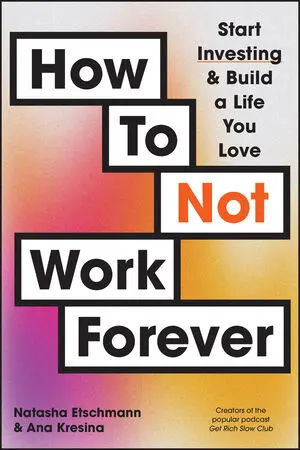
    How To Not Work Forever: Start Investing and Build a Life You Love

    How To Not Work Forever is a very well presented ‘how to’ guide to Investing so that you have choices as to whether you chose to work forever, or whether you look at the many and varied options available in today’s world; because you are financially able to do so, through smart investing.

    Natasha Etschmann and Ana Kresina share their years of experience investing, each one beginning in a very small and hesitant way, towards building a solid financial foundation which would allow them to choose their pathway in life, rather than have it chosen for them.

    In this practical, hands-on guide they look at all aspects of investing and why you should seriously consider, from a very young age, managing your money, wealth building and building a sound investment strategy. Over the course of the book they point out there is no such thing as ‘get rich quick’, unless for some reason you win lotto, or inherit a lot of money.

    Part 1 deals with Getting Confident with Money, something we are mostly not comfortable with, as it is a subject seldom discussed, which covers the Why: why are you investing, learning to manage your money or rather, facing the hard facts of where your money is going and where you will find the money to invest; no borrowing allowed!

    There is an excellent, very practical section on Investing basics, written in easy to understand language which will help all first time and any occasional investor understand the world of investment in a clean and concise manner.

    Part 11 Start Investing and Build a Life You Love sets out strategies, options, various way and means of investing, risk strategy, safe investing, building a portfolio and most importantly, there is a considerable amount of time spent on explaining the Financial Market, how it operates, the many options, as well as the diverse and often complicated language.

    Both Tash and Ana share their journey into the world of Investing, both in positive and negative circumstances, which helps keep the information in the book ‘grounded in reality’ which is of vital importance to anyone who is seriously considering investing for the first time. The Case Studies used are also very helpful as they are also full of very relatable advice.

    By the time the Conclusion is reached you will have made a decision to either opt in, even if it is only in very small way or out. You will have discovered many investment options, some suitable for what you want to achieve, you will also have discovered the pitfalls and the very important fact of understanding Finance before you leap into the unknown.

    How To Not Work Forever is a must have for anyone who is or has considered Investing or in just interested in the money market and how to grow your small investment into something very worthwhile.

    Highly recommended!

  • Ace and Chica’s Wild Money Tails: Borrowing 

    Ace and Chica’s Wild Money Tails: Borrowing 

    Anthony Chimirri states,” My goal for this book is to assist the future generation’s basic financial literacy.” He has most certainly achieved this goal. The book is very cleverly set out as a Picture Book. He has used two ‘staffie’ dogs as the main characters.

    One of them has a great idea. He wants to start selling dog treats to his family, but he has no money to buy them. He asks his sister if she could help but she wants something to keep until the money is paid. Successful sales mean borrowing again to keep his business going.

    The concept of borrowing money can be a complex one. There are time frames to consider; and sureties, market research, and availability are some of the other factors.  Finding someone trustworthy, to borrow from, (his sister) is very important also.

    Ace and Chica’s Wild Money Tales: Borrowing is presented as a Picture Book and in this format is an excellent vessel for conveying an understanding of financial literature. The discussion and questions elicited from this story make it suitable for all ages. As a teaching tool it would be a great asset when introducing business skills to younger and older children.

    Anthony has also written several other ‘Ace and Chica” books on Investing and Tax. Hopefully he will continue this series as it is an important Educational Tool to be used by teachers and parents.

  • Stop Worrying about Money: Start Planning Now to Secure Your Financial Future

    Stop Worrying about Money: Start Planning Now to Secure Your Financial Future

    ‘Money is the root of all evil’ is an old saying which in so many ways is very true, but it is a given that money also is a life necessity; managing money is also a life necessity that so few do successfully, finding themselves deep in debt even though they earn more than sufficient for their needs.

    In Stop Worrying about Money Jacqui Clark shares her many years of expertise in the money market, with a sound common sense approach to looking towards the future and encouraging you to start taking control of your money.

    Life is full of unexpected twists and turn and more often than we like to admit, carefully created plans can come crashing down in what seems to be only a few short minutes.

    Loss of a job, divorce, family tragedy, illness and overspending to name just a few instances, can have a crippling effect on income and lifestyle. What to do, how to manage in limited financial situations and importantly, how to learn from the experience and begin to future proof your finances, are all discussed in a very down to earth manner.

    To help with this she details the planning, goal setting and reviewing money mistakes which are all important aspects of future proofing your finances, with worksheets to encourage you to understand and plan better use of your money.

    One very interesting chapter is Build a trusted personal financial village, something that for the average income earner looks like a big undertaking, but by the end of the chapter the importance of doing this, even if you do not consider you earn enough, is very obvious.

    Various strategies are presented to encourage you to stop worrying about money and begin to manage it. Areas such as taking a break, maybe you have long service leave but want to take longer than the time you have financial support for, Estate planning, let’s face it we are all mortal and this is a very volatile area for those left to deal with, setting up a ‘side hustle’ and the pros and cons of doing so, are discussed in a very practical manner, along with much more of interest in the modern working/family lifestyle.

    Maybe you are considering downsizing, or tree-changing’,  to reduce your debt load but are unsure if it is the right thing to do. Follow the planning strategies set out which are designed to cover all aspects of a specific lifestyle change which will encourage serious discussion and thinking.

    Perhaps the overarching and most important aspect for future-proofing is addressed in the final chapter, Educate the next generation. Most children are not educated well in any aspect of money management and therefor are prime candidates for a massive debt load with the ease of borrowing money, credit card use and pay later schemes.

    Clarke says the best legacy you can give your children is the understanding of money management and as she states, ‘share your reflections with them’. They will thank you for it in the future.

    Sound practical common sense, along with learned experience and a genuine desire to stop people worrying about their money and begin to make it work for them, not against them, makes Stop Worrying about Money an essential household book.

  • The Property Wealth Blueprint: How to build a robust portfolio to generate passive income and live the life you desire

    The Property Wealth Blueprint: How to build a robust portfolio to generate passive income and live the life you desire

    Investing is a subject that is often fraught with difficulties, a good amount of fear of the unknown and at the bottom the list of emotions, a desire to be able to become debt free, have a good work life balance and the ability to give back; to simply enjoy life.

    Rasti Vaibhav learned at an early age the power of understanding finance, with the death of his father leaving the young teenager as the sole male with the task of supporting his family through the dark days.

    Entrepreneurship seemed to be a natural calling as he saved up his pocket money, purchased a collector series of comic books, renting them out to friends from a stall in his parent’s backyard at a very young age. Realising that a good education was important he also understood that being competitive was a necessity to be able to succeed in a chosen field, which for him was Finance.

    Over his years as an Equities Analyst and Portfolio manager for the Big 4 Banks in Australia it became apparent that property was the foundation to sound investment. The Property Wealth Blueprint is the result of his years of doing what he loves best, helping people grow their wealth.

    Not an overly long book Vaibhav sets out the rules, or strategies that he has found work well to create a property wealth blueprint, which if followed will reap benefits, allowing anyone who wants to put the time and effort into developing their property portfolio to be able to make a comfortable lifestyle choice.

    Chapter one sets out exactly what it is you are reading about as it asks the very pertinent question ‘Start with your why,’ which immediately makes you think about why you wish to learn more about investing and what you wish to achieve.

    Many times throughout the book Vaibhav says that property investment must be taken seriously. Like any other business, a sound plan needs to be developed and an understanding of how the property market works, the highs and lows, when to buy and sell and when to use leverage, a most important aspect of expanding your property portfolio needs to be learned and understood. Effectively property investment needs to be treated like any other undertaking, researched, managed and respected.

    His emphasis on developing a team of advisers and specialists to guide you in your investing is also important, as they can help you through difficult patches, even though at first glance they seem to be a waste of money that could be used to gain another property.  Relating to this is the most informative chapter, Habits of Ineffective Property Investors; those who only last one or two properties and fail to grasp opportunities, sadly many.

    By the last page you will be well informed about property investment and on the road to building a sound asset base which will, over time and attention grow into achieving lifetime goals.

    The Property Wealth Blueprint really is a must read for anyone who is contemplating or already in the process of building a property portfolio.

  • The No-Regrets Guide to Retirement: How to Live Well, Invest Wisely and Make Your Money Last

    The No-Regrets Guide to Retirement: How to Live Well, Invest Wisely and Make Your Money Last

    Retirement is something many look forward to as a time of relaxation, enjoyment and importantly being able to choose what to do on a daily basis. Much is discussed over the working years as to Super Funds, self-funded retirement and quality of life for the many years of retirement the modern person can look forward too, at the end of their working life.

    The biggest issue that is often raised is will you have enough money to retire on comfortably to give you and allow you, to have the lifestyle of choice? Patricia Howard has spent many years in the Financial Industry and now shares some of the blatantly obvious pitfalls faced by many, when they realise that they do have money to splash about as they choose, thanks to their prudent saving and healthy retirement fund.

    As she underlines over and over again, managing your money is more important than ever if you want to live well, regardless of whether you retire seriously well provided for or with a modest amount set aside to bolster the Pension.

    Forward planning is essential as after a few years of retirement many older people decide they want to realise a dream, to perhaps start their own business, travel widely, or maybe even write their life story. So what do you do to ensure this is there for you once you do decide to ‘begin’ again? What if you are a single woman, single male, a person who retired on only a small Super nest egg, backed up by the Pension or what if you are in the generation that are encouraged to be self-funded retirees, are all issues that need to be investigated before the event arrives.

    Looking at retiring early or are being encouraged to retire early, facing change that perhaps was not planned for is all discussed in The No Regrets Guide to Retirement. Subject matter is addressed in a plain, easy to understand style that will have many nodding heads and agreeing with the sentiment and sound advice offered: Pots of Gold, Sexually transmitted debt, the bank of Mum and Dad, ‘bucket list’ and so much more is discussed and finally planning your Estate, which is of critical importance.

    Sound advice delivered in a no nonsense style really does make The No Regrets Guide to Retirement critical reading material to allow you, manage your money wisely so that you can retire in style, live comfortably, avoid so many of the pitfalls, but most importantly enjoy the halcyon years you have been looking forward to enjoying in style!

  • On Your Own Two Feet: Steady Steps to Women’s Financial Independence

    On Your Own Two Feet: Steady Steps to Women’s Financial Independence

    Perhaps the most telling quote in On Your Own Two Feet commences Section 1; Stepping out on the right foot, ‘At some stage in life a woman will be solely responsible for the financial decisions of the household,’ spoken by Don Connelly which would have to be the biggest truism in every females life, whether it be as a single woman, single mother, widow or one half of a couple, married or otherwise.

    With this point as an established fact, it is best to understand how to go about perceiving the often complex world of finance and the steps to take to ensure a future that can be largely free of financial stress and strain. Helen Baker originally wrote this excellent guide to financial management for women in 2014 and now presents the expanded and revised edition based on the past ten years working with women, helping them address their particular financial requirements through a raft of circumstances.

    Easy to read and very clearly presented Baker looks at every aspect of finance to give women some control and certainly with their future, because as many women have learned to their cost, ‘women should not rely on a man as a financial plan!’ She also takes a very clear look at estate planning, what happens if you get a ‘lump sum’ payment, and how to think outside the square to become financially independent.

    A quirky sense of humour runs through the pages, which takes some of the heaviness off a topic which can at the best of times, be heavy going, let alone when you are facing real and frightening changes brought about by divorce, redundancy, illness, becoming a widow, facing terminal illness or aged care.  All of these areas can be managed with some forethought as well as serious planning being undertaken at an earlier time in life, and also by understanding the modern world of finance and strategic planning.

    Now with massive changes occurring in society due to the many unknowns based in the Corona Virus pandemic, the release of this updated version could not have been undertaken at a better time to encourage women everywhere and of all ages, to take an active part in their roles within a family structure or as a single person, planning for the future.

    With solid credentials, Baker is in the 1% of financial advisers who are licensed and holding a Batchelor of Commerce and two Master’s degrees, she also has life experience relating too much of what is presented in the book.

    On Your Own Two Feet is a book that keeps on giving, as it covers every aspect of woman’s financial journey through life; from commencing work  to writing a Will and is one that can be read from cover to cover or used as a reference guide, chapter by chapter.

    Perfect for any woman starting out in life, facing challenges or simply wanting to know more about financial security, On Your Own Two Feet is something like, ‘A journey of a thousand miles begins with fabulous new shoes’, (as Lao Tzu once possibly said), Helen Baker ensures in this 2019 edition, those fabulous new shoes can be there for you when you begin your thousand mile journey.

  • The Barefoot Investor: The Only Money Guide You’ll Ever Need

    The Barefoot Investor: The Only Money Guide You’ll Ever Need

    Timely is a word for this release as, if you live in Australia at the moment where the ‘bubble’, in relation to finance has definitely burst, changes to the Aged Pensions and Superannuation are now in effect, and the long arm of the Governments stringent cost cutting measure are beginning to bite, taking note of the very sound information detailed in this down to earth look at saving your money and investing wisely, needs to be on the top of the MUST READ list.

    Scott Pape, his wife Liz along with their baby son, were just one of the many victims of the  devastating bushfires to sweep through country Victoria ten years ago, leaving their property blackened, the livestock dead or dying and their home and possessions, charred rubble lying on the ground.

    Looking out at the devastation surrounding them, his wife screaming with the pain of their loss, the baby crying and shock the overwhelming emotion, he took a deep breath and said to Liz and himself, ‘I’ve got this…’ not completely understanding just what he had either ‘got’ or ‘said’.

    They went out and bought an apple tree to plant as the symbol of a new beginning and although it was a small start, it was a beginning, a focus and a way forward. Some ten years on, Scott Pape and his very small beginning, have seen him grow and develop as one of the respected leaders in the world of financial investment and management, all based on his experiences of having to make it work, having to rebuild and having to set out strategies to be able to progress, rebuild and have a future of his and Liz’s choosing.

    Throughout the chapters he has set out his very simple strategies for doing exactly the same thing; building wealth and building a future you can be proud off. Perhaps the strategy may not be what another sources may advise, but the most important thing recognised by Scott Pape is that life is full of issues, some larger, some smaller than others, but that these issues such as divorce, death, redundancy, natural disasters and so forth affect each of us in a different manner; but there is hope and light at the end of the tunnel for everyone on a financial basis simply by taking the first step, scary though it may be.

    Each of the chapters is well laid out, written in language we can all relate to and for once, begins at the beginning, which not all books on finance seem to do. His very simple philosophy, begins with, assess your situation, take good look at where you are now, then where you want to be and then, go out to dinner and ‘put into place, The Barefoot Steps’, you really cannot go wrong; after all what have you go to lose!

    Each of the Chapters or Steps conclude with a case study, offered by people from all walks of life who found themselves in a financial mess for one reason or another, all of whom have taken Pape’s advice to heart and are now happily in charge of their finances and financial future. Nothing is based on ‘rocket science’ just on plain, old fashioned common sense, knowledge relating to how Financial institutions operate and how you, by looking carefully at how you can make changes, save money and prosper.

    Rounding off the information he looks at what next, in Part II as a Recap and offers you some more advice on what possibilities you may like to investigate once have achieved your goals and are looking to perhaps leaving a legacy, all of which make for interesting consideration and round out the journey to successful financial management, yours!

    Get the book, read the instructions, enjoy dining out on a monthly basis and most importantly, while you accumulate financial freedom, learn to live life, because life, as most of you understand all too well, holds many unknown challenges.