Tag: Fashion

  • Champagne at Seven! (Bitches of Fifth Avenue)

    Champagne at Seven! (Bitches of Fifth Avenue)

    Champagne at Seven is a snappy, well written, serious tilt at the often unseen, but generally understood side of wealth that is all too real, all too dangerous and all too easy to shatter into a million pieces, by simply failing to follow the invisible rules that govern the ‘Wives’ of powerful men.

    Olivia Wyatt loves fashion, the colours, texture, the art of creating a glamourous look mixing new with vintage. She does not like her life as the wife of Edwin Wyatt, CEO of a very prestigious Advertising Company. She is considered as the ‘most interesting and recognised hostess’ in Washington DC.

    She used to live for the life she now hates; the fake sweetness, the must dos of so called high society.  She is rapidly falling out of love, not just with Edwin, but with her glamourous lifestyle. She understands that somehow she has an innate ability to create wonderful dinner parties, dress in stunning style without too much effort and swim through societies vicious gossip, which makes her dinner parties high on the list of places to see and be seen.

    Edwin, yet again, charms her into staging another last minute dinner party that evening for some top line guests; men she has never heard of and could not care less about, but as it is what she does best, she pulls out all stops to make another memorable evening happen.

    This one becomes more memorable than most, turning Olivia’s life upside down with cruel reality as she discovers she has to create a new life for herself and daughter Gwynnie.

    As fashion is something she loves and understands, she sets out to begin again, finding the road somewhat challenging, until she is offered a position at her favourite store Harper James, which as it turns out is not all she was lead to believe.

    Toni Glickman survived for many years in the cut throat world of high fashion, facing the depression, fear, backstabbing and the relentless pressure to sell, sell, sell. She brings this to the new series Bitches of Fifth Avenue Book one – Champagne at Seven with flair and passion, which sets the background for more from Olivia, as she begins again in world that could be just as cut throat as the one she has left behind.

  • Three Birds Renovations: Dream Home How-To

    Three Birds Renovations: Dream Home How-To

    Bonnie Hindmarsh, Erin Cayless and Lana Taylor have been best friends for nearly twenty years. They began the “Three Birds Renovation” brand and began sharing their knowledge of design and home renovations in various ways. Their online courses, The Reno School, and the Three Birds Styling School, have been popular. Their first book, Three Birds Renovations, was shortlisted for a 2019 Australian Book Industry award.

    To begin with, the question is asked, “How do you want to feel in this space?” Then the page’s reveal many before and after photographs of houses, rooms and spaces which have been changed. Some in major ways, some with only small adjustments. Every page poses a question such as, “What is the first thing you see when you walk into your bathroom?” This needs to be a feature in some way. The photographs give examples of this.

    Chapter one details “Colour me Hampton”, and the following chapters deal with Farmhouse styles, Holiday homes, and the Three Birds HQ. There is also information on Extensions, Cottages, Christmas decorating, and pages showing “Rock Star Renovators.” These people have used the principles outlined and renovated areas of their homes.

    For anyone who wishes to work in a small way, or a large way, to renovate their home, the principles and ideas in Three Birds Renovations: Dream Home How To, will inspire and encourage them to begin a transformation. The photographs are clear, and the details are illuminated to draw attention. This is a helpful and fantastic book for all homemakers and a great coffee table read.

  • Little Book of Yves Saint Laurent

    Little Book of Yves Saint Laurent

    Compact yet comprehensive, the Little Book of Yves Saint Laurent is the perfect gift for anyone who has an interest in fashion and fashion history. Emma Baxter-Wright has traced with care the journey of a young child who was the oldest of three, growing up in a world of privilege in Orana, Algeria, a ‘melting pot’ of cosmopolitan influences.

    Yves Saint Laurent’s love of fashion was encouraged by his mother from a young age, but it was not until he attended the performance of Moliere’s L’Ecole de femmes, with sets and costumes designed by Christian Bernard, Saint Laurent became enchanted with a world of magic, colour and art.

    Joining the House of Dior as a young fashion student he moved through the ranks under the guidance of Christian Dior, a man who saw and understood the talent and drive of the young designer. Dior understood clearly that Saint Laurent would be the next successor to the House of Dior which came to fruition with the early death of Dior at the age of 52 years.

    At the age of twenty one, Saint Laurent was now considered as the Head of the House of Dior and in many aspects, the rest is fashion history. His debut show held on 30 January 1958 was a stellar event which was hailed as a massive success. It was not long after this event he was to meet his life partner Pierre Berge, a determined, successful man.

    Saint Laurent pushed the boundaries of fashion throughout his career, often being influenced by Balenciaga, Chanel and in the creation of the ‘Beat’ collection, the French actress and Jazz singer Juliette Greco.

    In 1961 the House of Yves Saint Laurent was launched which, no longer influenced by the constraints of Dior, saw Saint Laurent usher in a new wave of fashion, colour and shape onto the fashion scene, pieces which were also considered as wearable art, a trademark which stayed with him.

    Trouble times in Paris saw him move to Marrakesh in 1968 which inspired the edgy, controversial collection of duffle coats, leather jackets and the ‘outrageous black chiffon ‘see through dress’. Trouser suites were his trade mark, but everything was considered as inspiration for the designer who loved colour, shape, form and texture but more importantly, understood a woman’s need to enjoy and wear comfortable, fashionable, fluid styles.

    Yves Saint Laurent died in 2008 leaving as his legacy fashion like none other and fashion that set the trend for stylish pieces without boundaries, still noticeable throughout today’s world of fashion, but not yet equalled.

    Pierre Berge went on to create the The Fondation Pierre Berge-Yves Saint Laurent to preserve the thousands of garments, sketches and accessories which culminated in the opening of two YSL Museums, in Paris and Marrakesh which opened in October 2017 to celebrate the flamboyant genius of the man who went on to create a fresh, edgy design in Couture fashion and in doing so, became the most ‘influential designer of contemporary fashion in the twentieth century’.

    Yves Saint Laurent’s rise was meteoric, his legacy astounding, his gift to women’s fashion unrivalled, his life ever changing, all of which has been beautifully co-captured in brief and illustrated within the Little Book of Yves Saint Laurent with a number of stunning pieces images from his vast collection strategically placed throughout the pages.

  • Kimono: Kyoto to Catwalk

    Kimono: Kyoto to Catwalk

    Early in 2020 the Victoria & Albert Museum in London opened the sartorially elegant exhibition Kimono: Kyoto to Catwalk, timed to coincide with the Olympic Games to be held in Tokyo later in the year, but due to the global pandemic COVID-19, this has had to be postponed to a future date.

    In the meantime, a magnificent coffee table book created in line with the exhibition has been launched; a book which is elegant, sumptuous, rich in the glory and magnificent photography of garments on display.

    Anna Jackson curator and Keeper of the Asian Department at the V&A has a gathered together 250 Kimono’s and Kimono inspired garments, to present more than just a garment collection. The history of these simple, elegant and inspiring garments has been thoroughly researched, along with the impact they have had on the international fashion scene for more than 150 years, but this impact to a lesser degree, can be traced back much further.

    The Kimono in the traditional sense has its own fascinating history as a garment of social and cultural significance, but in reality, the name, derived from “kasode”, meaning a garment with small sleeves, which depending on the period, also signified the style or fashion of the garment, simply referred to a simple, plain garment. Over the various periods, the garments or Kimono’s came to represent many differing things; from the wealth of the owner, to their social standing, significance and so much more.

    Throughout the pages of this fascinating documentary, the history of Japan, as well as the fraught relationship Japan has held with the world over many centuries, has also been included, adding a depth to the work which is as fascinating as the history of the garments.

    Consisting of more than 300 pages, most of these have either a full colour plate or smaller picture displayed and, in some instances, the fascinating and perfectly crafted items considered as essentials to be worn or carried with the wearing of the garment, are also shown.

    Many of the garments which have remained intact down through the years are those of immense beauty and rich tapestry, created only to be worn once or on ceremonial occasions, certainly not to be worn in everyday use. Amongst the items on display is the garment worn by Freddie Mercury as a challenge to gender and sexuality. David Bowie designed his signature white flowing outfit after a visit to Japan where he met Bando Tamasburo, who taught him how to apply traditional Kabuki makeup. Boy George and Bjork also used the kimono style in their costuming, along with many others.

    One of the more significant periods in 20th century fashion is that of the Art Deco period of early the 1920’s – 1930’s, which saw the relaxed, luxurious style introduced into women’s fashion in Europe, until the post-World War II era, when all things Japanese were considerably frowned upon. It was not until much later when fashion once again, on the search for something different, something unique, saw the loose flowing stylish garment return.

    Kimono: Kyoto to Catwalk traces this journey beautifully, in great detail and splendour, creating a book which will be treasured by anyone who is at all artistically inclined, lovers of fashion, history aficionados or students of fashion and design.

    Not just a book for the elite within an industry, or exhibition attendee, this is a seriously constructed  work based on the exhibition, and one of permanence and history which will live on long after the exhibition has finally been dismantled.

  • What Will Be Worn: A McWhirters story

    What Will Be Worn: A McWhirters story

    Tracing the family history comes with its own sense of intrigue and at times likens the journeyman to a novice sleuth, seeking out the secrets of past lives. Melissa Fagan, a member of the McWhirter family, decided she would take a journey into her families past. Her family, whose name was synonymous with one of Queensland’s most famous retail families, during the heady days of Department stores, paints a very colourful picture of days long gone, which in so many ways were not that far removed for life as we know it in modern times.

    McWhirter’s Department Store is still located on Brunswick Street, Fortitude valley, wrapping around the corner as it has since its creation in stages from 1899-1929. It sits proudly as a Dowager, overlooking less splendid examples of architecture, now a Heritage listed icon, a tribute to the glory days of wealth and posterity in an Australia where to take a risk, to gamble on the future, could see wealth untold or terrible poverty.

    But as Melissa Fagan discovered the very many ghosts of the family led a colourful, privileged well-travelled life in Australia and subsequently Britain, as she gently explores the people and the passion that went to create McWhirter and Son (later to be McWhirters Ltd) from humble origins to become the symbol of retail success in Brisbane.

    As she carefully peals away the layers, she offers a wonderful portrait of her mother, a woman who grew up as a member of a noted family but always looking on as an outsider: her grandfather who had been booted, none to kindly out of the family, her grandmother her, a strong woman who lived her life by her own rules, and her own life, as she discovers more than she ever thought was possible, about not just her family members, but also her own life journey.

    A wonderfully unexpected journey also develops into what people wore, where the fashion of the time originated and the social status involved in the strong and long growth that was to see McWhirter’s and the drapery trade in Australia, particularly down the East Coast, grow to phenomenal levels. It is, as with all things family, a story in many parts about people who shaped Australia, raised the benchmark high and eventually fell, in a manner of speaking, from grace.

    Written with a light and delicate touch Melissa Fagan’s journey touches on so very much that is the fabric of family relationship’s, secrets hidden deep and the fascination of discovery when relatives, unknown to each other meet, trying up loose ends and unearthing so many more of the very diverse elements of people long past.

    Like a butterfly landing delicately on a leaf, Fagan slips in and out of not just her family history, but that of early Australia, the richness that can be slowly be discovered in the archives of time, there to amaze, entertain and explain so much that was locked away in the memories and pictures of family.

    An absolute gem!

  • Girl on Pointe  Chloe’s Guide to Taking on the World

    Girl on Pointe Chloe’s Guide to Taking on the World

    This colourful book shows the journey of young dancer, Chloe Lukasaik. Her life story is written with many photos and endorsements from friends. She is honest about her feelings and her passions, and shares many selfies and kiss selfies, and ideas for making a success of your life.

    The early chapters are filled with her wisdom and view of the world. She fully believes that one can overcome any obstacle, whatever it may be, referencing the fact that as a young child she had a condition which made one eye appear smaller than the other, and underwent several operations to correct this imperfection. Her family are very loving and supportive, and for eight years Chloe was an only child.

    Chloe always wanted to dance, and along with several girlfriends she perused her lessons and practised hard. When the family moved to a new city she decided to complete her schooling at home to make it easier to travel for her dancing and acting lessons.

    At the age of thirteen, Chloe auditioned for the show, ‘Dance Moms,’ a reality show that follows young dancers and their Mom’s from week to week. The show is very up close and personal, filming arguments and tensions between the Moms, who have their daughter’s best interest at heart.

    Following her stint for a few years in front of the camera, she quit the show. Chloe describes her life now as ‘Non-stop red carpets and photo shoots and celebrity filled parties’.

     I’m not sure that many young women could identify with Chloe’s upbringing. Her worldly tips for taking on the world and inspiring others come from a smooth and supported life.

    If you are pretty, come from a middle class background, and have parents, who are totally devoted to your well-being, you may enjoy this story.

  • Glitterati

    Glitterati

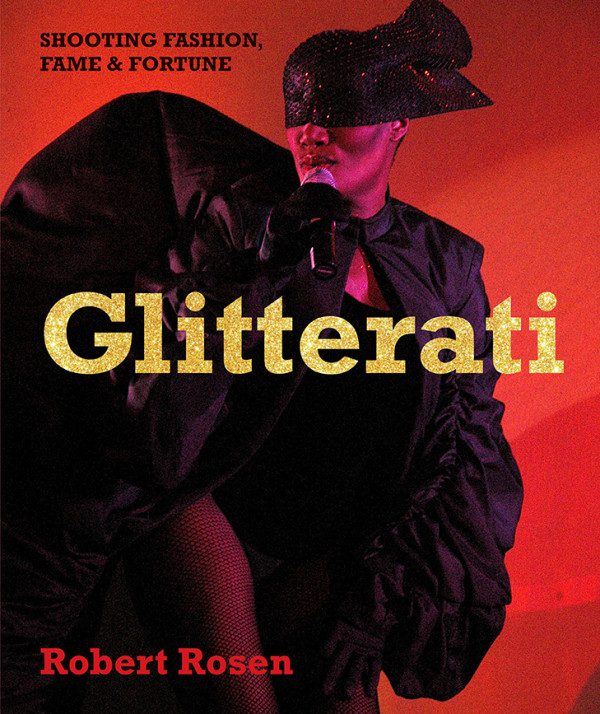
    What happens when you decided you have a talent for art, your teacher tells you, you really don’t have all that much talent as a painter and try taking up photography: you become famous, that’s what!

    Such was the story of Robert Rosen’s journey into becoming one of the top, if not the top photographer of the rich and famous, the people at the top of society from all walks of what is termed these days, as the ‘A’ List.

    Over his lifetime as photographer Rosen has built up an enviable reputation for his non-invasive manner of working, while managing to get the ‘shot’ of moment, but behind the flamboyance, the hyper and the eventual fame, there was years and years of hard work, refining and experimenting with his camera and grabbing any and every opportunity to photograph people. As an unsophisticated boy from Melbourne discovering the magic of photography in 1964, to a sophisticated and renowned photographer, was something he never envisaged when he took his first photograph.

    Never ever giving up on his dreams saw him finding his way about the world, sometimes on an offer of accommodation from a friend, other times simply because he was offered an opportunity to take pictures. Through a wide and diverse network of friends and acquaintances he was introduced to the people who mattered and gave him entre into the world of glitter he craved.

    The paparazzi world was beckoning on the streets of London and he was asked to be the social photographer for the Avant Guarde magazine followed by the Ritz Newspaper and so it began.

    In this absolutely glamourous collection of his work, selected by Rosen, he presents his story through words and pictures of the beautiful people over the past 50 years he has had the privilege to work with and photograph, in some cases many times over.

    From Presidents and Prime Ministers to rock stars, models and movie star, along with, in the early years the people whom he shared digs with, Rosen has capture them for all times, with his remarkable and subtle talent of being able to make them all look beyond beautiful.

    The illusive androgynous Grace Jones, Paul  and Linda McCartney, Joan Collins and hundreds more along with the catwalks of Paris, Rome, London and Australia have all been presented in Glitterati as a representation of a life well lived, by a man who never ever gave up following his dream.

    More than a coffee table book, this could rate as a work that should be considered by followers of fashion, photographers beginning their journey in life and anyone who has a keen eye for all the very little and big beautiful things that do, definitely add that little bit of glamour to what would otherwise be a rather dull and often times, ordinary life.


  • Slow Fashion: Aesthetics Meets Ethics

    Slow Fashion: Aesthetics Meets Ethics

    Much has being written about ethical fashion over recent years, especially since the collapse of Rana Plaza building in Bangladesh in 2013 killing or maiming more than 1,100 factory workers.

    The outrage was worldwide that these people, who were lowly paid, suffered extremely poor working conditions, and often lived far from their homes, suffered so terribly, due to poor management, excessive demands for cheap clothing generated by the spin doctors and a fashion industry that, instead of holding several shows per year, now was careering out of control, getting faster and faster; the demand getting more and more frenetic.

    But what has been done since the hue and cry has died down; something it would seem, thankfully and although the growth has been slow it is continuing and holding true to the ideals of Safia Minney, a woman who has worked tirelessly for more than 25 years to bring, safe, ethical fashion into the mainstream; to provide good working conditions for the womenwho manufacture the garments and provided a better and more stable industry which, she hopes, will eventually become the norm, rather than the poor relation to the fashion industry; that of Ethical fashion.

    In this look at what is taking place and has grown over the past 25 years in regard to Ethical fashion, we enter a world that seems almost idyllic, but it is not; it is a world that still has to produce a garment that is going to be sold on the world marketplace and that people are going to want to purchase; there-for all the same issues of production still apply,

    But  it is how Safia Minney goes about producing these garments that tells a so very different story; It tells of an industry that is slowing growing, finding its way into eclectic and selective marketplaces; resonating with younger buyers who want to be on-trend while supporting and promoting the environment, fair trade and ethical manufacturing.

    Each of the chapters details a differing aspect of the industry featuring wonderful cameo interviews with designers, producers and buyers, sellers and the entrepreneurs, who will do much to promote and ensure the ethical fashion ‘rag’ trade keeps on moving slowly, slowly forward.

    To read the various interviews presents an entirely different perspective into the manufacture and sale of eco and ethical clothing and the direction the few of the major fashion houses are heading as we move inexorably into 2017.

    With the amount of airspace environmental issue do receive from time to time, and in the wake of the Rana Plaza disaster you would have expected more to have been done, but like everything else built to last, first people have to make a conscious decision to support ethical fashion, then be prepared to a walk the talk and purchase the goods.

    The major point coming through the pages and via the people such as Zandra Rhodes, Moon Sharma, Cara Bartlett, Dean Newcombe and the like, is the one Safia Minney has been promoting all these years through her Fair Trade commitments and brand People Tree; if you look after your workers, provide a good workplace and environment, use ethically sourced and produced products, you produce a stable workforce, engaged with what they do which makes a happy, productive community producing a top quality product.

    Read the book, make up your own mind and be prepared to venture forth on a fresh new journey into wonderful, ethically produced fashion that will look fantastic, be a serious talking point amongst your friends and relatives, which will definitely last more than one season.

    But the best of all is you know you are making a small difference in someone’s life that is positive, and that you have joined the slowly increasing movement to hopefully one day in the not too distant future, move away from the sweat shops such as Rana Plaza and into the fresh clean air of ethically, environmentally produced fashion garments.

    Safia Minney has devoted more than 25 years of her life to creating and promoting the Fair Trade Movement which began in a very small way and has now swelled to an organisation known and respected world-wide.

    She has received and MBE for her work in the Fair Trade and fashion is industry with her work in the Fair Trade Movement seeing her being awarded Outstanding Social Entrepreneur by the World Economic Forum.

  • Grace & Style

    Grace & Style

    Jewellery, how we look, the latest fashion for clothing and make-up form a very important part of growing up and learning how to fit into whatever lifestyle you choose.

    With a wry, witty, zany sense of humour and a whole lot of tongue-in-cheek attitude, Grace Helberg takes a serious and not so serious look at the fun, disasters, down right catastrophes and moments when you simply wish the floor would open up and swallow you, preferably whole and instantaneously, as you search for your very own ‘style’.

    She, in her own inimitable manner, introduces the subject of style, and what we think, personally think that is, about what makes style and how you go about getting or finding it!

    As a teen moving into young adulthood she suffered an eating disorder, not quite anorexia, but a close run cousin to this debilitating condition. She realised it was all bought about by trying to be like her best friend, who was a whole lot slimmer. After finally realising she was the one with the issue, and thanks to meeting up with a young man she fell in love with, found her way out of the maze, then decided to work out just what image and finding it was all about.

    One thing lead on to another and she is now a best-selling author, comedian, actor and television and U-tube personality, all because of STYLE!

    In this look at what she considers her style and how to achieve the desired look, she also addresses the underlying issue of first discovering who you are, just how you really want to look, how to be comfortable and make the best shopping choices, at least some, sorry, most of the time.

    As well there are a huge amount of seriously good tips, tricks of the trade and ideas on how to go about  creating the ‘art of pretending you have it’, even when you are wearing your sweatpants down to the corner shop!

    Grace takes a look at make-up, the latest trends, past trends and fashion must haves, hair and the many ways of dealing with a ‘bad hair’ day, which does relate to ‘what happened to my hair overnight’!! There is a great little Bad Hair Character Wheel to help you come up with just the right style for the day like Debonair Detective, the Face of Fitness, or Domestic Goddess and as a last resort, Animal from the Muppets; the choice will be yours.

    The final chapters contain a marvellous ‘flow chart’ which goes with the Ten Commandments, the Eleventh Hour Inspirations and a serious section on ‘How to avoid the dreaded ‘Camel Toe’, which winds up this hugely zany, very serious, depending on how seriously you take finding your image, look at all the fashion and fun issues we have all had to work out, step by step, on our journey to achieving that mysterious thing called STYLE!

  • Fixing Fashion: Rethinking the Way We Make, Market and Buy Our Clothes

    Fixing Fashion: Rethinking the Way We Make, Market and Buy Our Clothes

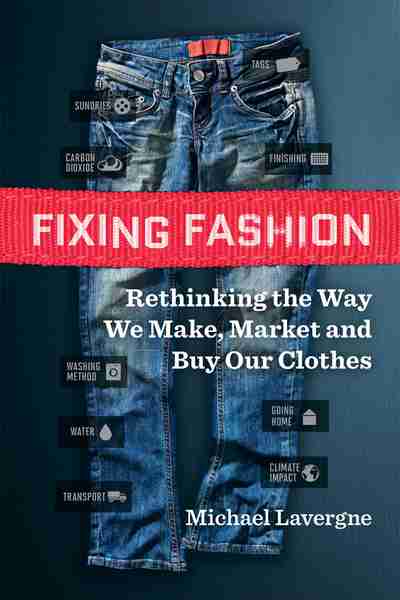
    The story told is one that we, as consumers of fashion, have all been aware of for many years, but somehow choose to ignore all in the name of cheaper and cheaper clothing.

    To say the fashion industry is full of exploitation on all levels is not an understatement, but in reality the cold hard fact of mass production. Sadly, the people at the bottom of the supply chain, are the people who can ill afford to be anywhere else, as the industry does to some degree provide a living for the poorest people in the world; the people who have very little and therefor are vulnerable to the whims of a profit driven industry.

    For more than twenty years the sad and sorry tale of the ‘rag trade’ leaves a lot to be desired and even thought legislation has been passed to help protect the exploited workers, that, like most other things, is not enforced or the companies involved have created means and ways around the rulings.

    Michael Lavergne landed in the industry almost by default and spent many years establishing new markets, new production lines in some of the world’s poorest countries. Along the way he began to realise there must, and has to be, a better way of doing business in the modern world; one that upholds workers’ rights and treats them far better than they have been treated in many years.

    Sadly, it is not until some horrific incident occurs, such as the Rana Plaza factory collapse in Bangladesh that killed 1130 people and injured 2500 more, the world takes collective look at the conditions that are a standard norm within the industry and cries out in horror. Unfortunately, little changes within the industry, as profit driven companies are still focused on the bottom line, and the worker still has little or no rights.

    Thankfully, over the past five or more years there is a move beginning to occur towards ethical trading within the industry, that at this time appears to be gaining momentum with a number of companies beginning to take responsibility for the damage they are creating and condoning, not just on a human front but on an environmental basis as well.

    Michael Lavernge has done a thorough and masterful job to laying out the industry, from the early days of the industrial revolution, to today’s gentle breeze of change beginning to be a small, but significant factor within an industry that is as corrupt as it is brutal, having little regard for human rights.

    Much in the book will surprise you, and if you knew nothing about the industry before you will have a comprehensive understanding by the last page.

    It is a compelling read and one that should be read by anyone entering the industry or studying the many aspects of what goes into making the clothes blithely placed on your back, regardless of where you purchase them and the branding!

    It is also refreshing to know that the movement towards ethical trading and manufacture is beginning to make a small but significant difference.

     In Lavergnes words, ‘ All the power we need to effect real change in the world is now in our hands. Truly it is. We decided where we spend our money. We decide what we choose to buy and believe in. (sic) …. As a society, as human beings, we must now decide firmly to do our part, or, by our silence and acquiescence, mark clearly for our children, our community and our future, what we have each personally deemed to be acceptable standards of dignity and justice.

    Perhaps we should all take a look at where we shop, which brands we purchase and begin to take a responsible look at supporting those companies striving to make a difference, in an industry staffed by people who can use all the help they can get.