Tag: farming

  • Motherland

    Motherland

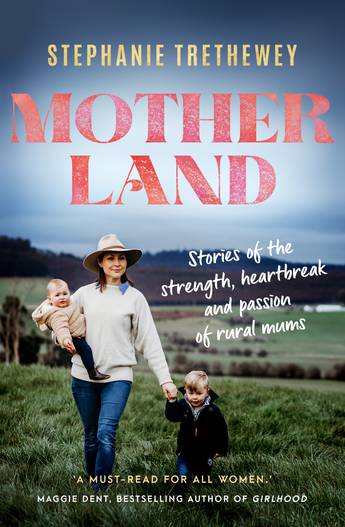
    Motherland is a superb compilation of short stories. The way they have been woven around the theme of women in the outback is most engaging. The foreword by Stephanie Trethewey is equally revealing as she discloses her past experiences. She was a single journalist hunting down the exciting stories in the city, and working at a frantic pace to keep up. Her life was fast, glamorous, and full on. Then one day, on a slow day, she met a farmer. He was speaking at a conference. Thus begins her journey.

    An impressive feature of this book is the map at the front. It clearly shows where each woman who has contributed a story to this book lives. It really helps to clarify the reader’s imagination, knowing the exact location in the country, of each author. All the states and territories are represented by women with their story to tell. Julie McDonald tells her story which changed her life in a second. She went from the happiest of women, married to the love of her life, to a widow with four children.

    Karen Brock from Tasmania was announced as the AgriFutures Rural woman of the Year in 2020. But life had not always been easy for her. As a young mother with two small children, she was subjected to domestic violence that was horrific. When you are alone and there “are kilometres of paddock around …and there’s no help,” it seems there is no way out. Again, isolation plays a huge part for country women.

    Each of the stories we read tell of the love of the country, the lifestyle and the family. For each story, there is a time when the lack of services and help can mean the difference between life and death. Motherland presents the courage and passion that these women show which is to be celebrated.
  • The Only Child

    The Only Child

    Between 1945 and 1973 one and a half million babies were given up for adoption in the USA; the young single mothers were often coerced into giving up their babies within a few weeks of birthing them. The practice, known more recently as forced adoption, was reportedly common in Australia between the 1950s and 1980s, with authorities failing to gain free and informed consent from thousands of young, unwed mothers before their newborns were removed.

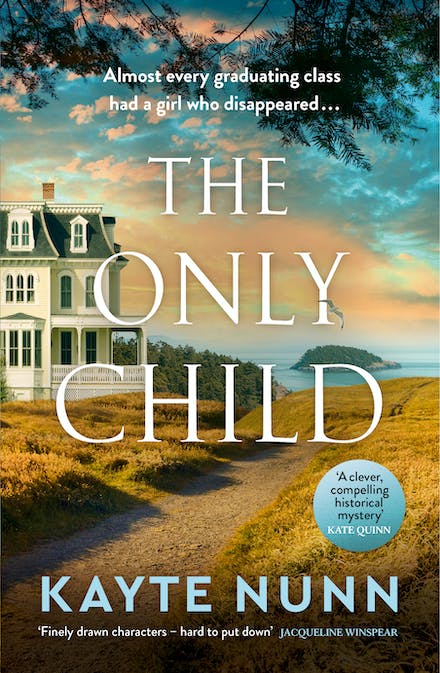
    Award winning author Kayte Nunn in her latest book ‘The Only Child’, intertwines the story of the treatment of these women in the late 1940s with an intriguing mystery murder plot set in 2013. 

    After a five year absence Frankie Gray, returns to the US and joins her mother, Diana, who is restoring the derelict Fairmile House, on an island in Puget Sound, which had served as a Catholic home for unwed mothers in the 1940s and 1950’s. She is looking forward to reconnecting with her teenage daughter, Izzy, before taking on a less stressful job as deputy sheriff on this normally sleepy island. 

    When the death of an elderly retired Nun in the Island’s nursing home where Frankie’s grandmother resides is deemed suspicious and then a tiny skeleton is discovered in the backyard of Fairmile House, Frankie can’t stay out of the murder investigations; there are questions which need answers.  Her informal investigations lead Frankie to discover the dark secrets behind the grand home which her mother is renovating.

    ‘The Only Child’ is in part an historical fiction and in part a crime mystery, with a touch of romance in which the narrative spans a dual timeline; 1949/50 Seattle and 2013 on a fictional island in Puget Sound.

    Readers will find this a fast but worthwhile read.

  • Wildflower Ridge

    Wildflower Ridge

    When Penny McIntyre’s life seems to implode, she is left looking at the pieces and wondering where to from here. Her stellar career in Marketing, with her own team and promotion just in reach, is under review as she has been bought to a standstill with a mystery illness.

    Ordered back to her family’s farm for enforced rest, she grudgingly agrees to go, leaving behind her boyfriend Vince, who she though was serious marriage material, and a career she loves, walking into a future she has no control over, but one she thought was only for a short time.

    Returning to McIntyre Park, she is absorbed once again in the life she grew up with; surrounded by family, the love of her father and the sibling rivalry between the four sisters which never seems to change.

    She also discovered that there was much about the past she had not understood at the time; the effect the loss of her mother had on the rest of her family and the decision she came to find a different life in the city, all had repercussions that still needed to be dealt with and accepted.

    One of the biggest shocks is that the love of her young life Tim Patterson, the main reason she left McIntyre Park for the city life, is now an entrenched member of family life, holding the position of farm hand.

    But as the days of her convalescence continue, her so perfect life in Melbourne seems to be unravelling, Vince is proving to be something other than she thought and fitting back into family life is proving to be not all that easy, Penny has time to think and take stock of her life.

    When her beloved father is involved in a farm accident, she realises she needs to make some serious choices about her life, her commitment to family and Tim Patterson.

    Maya Linnell is a fresh new voice to rural fiction, weaving a warm and loving story around life in rural Australia, family and the healing power of love.

    The storyline of Wildflower Ridge is familiar, comforting, warm and perfect for a winter’s day read in front of the fire.