Tag: families

  • Some Families Change

    Some Families Change

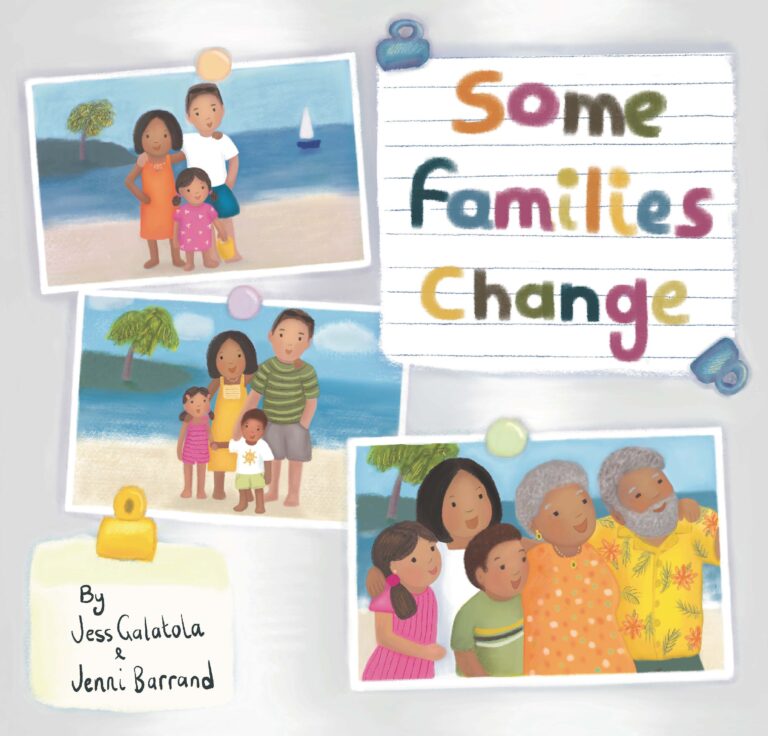
    The first page Some Families Change shows a busy street with a family moving into a house. The next page shows how families can change, sometimes getting smaller or bigger, or rearranging completely. Every family is different, and each has its own ways and people.

    There are sisters and Nona’s and cousins and Uncles in extended families. Some families have two fathers and two mothers, some families have parents who work or who stay at home.

    Families visit or stay awhile with each other, and older relatives die. Parents may live apart. Whatever your situation, sometimes feelings can make us sad. If you can find someone to talk to you will feel better, because there will mostly be someone who loves you.

    The idea of families and their different compositions is a good base for discussion. However, for some children there is great bitterness and misfortune and not many chances to talk about their loss.

    Some Families Change is a very helpful resource to help families guide their children through life’s many inevitable changes.

  • Never Look Desperate

    Never Look Desperate

    Tugging on the heartstrings, infuriating at times and deeply poignant, Never Look Desperate fromRachel Matthews, is set within the seldom discussed area of generational trauma and the wide spread, long lasting effects this causes on the ones who we are supposed to love and guide.

    Melbourne is beginning to reopen after the long, dark, desperate days of Covid; the residue of fear still remains. Bernard is steeped in misery as he has lost his wife, even though they were separated and his beloved father. He is lonely, wanting noting more than to be hugged, have someone to talk with, to be normal, whatever that means.

    Minh, fit, healthy, savvy and distanced from her family is seeking someone to be a part of her life, but is cautiuous about finding the right person. She has been hurt before.

    Goldie is struggling to cope with the death of her husband Marvin, a man she felt she had fallen out of love with many years before this death. She has focused her life around organic, environmental and spiritual guidelines, failing to understand her young son Bernard; turning him into what he considered a freak show.

    As each of the protagonists struggle to deal with their emotional issues, their sense of loss, grief and despair, each one acknowledges they are broken in spirit, wondering if they can ever heal and find someone who truly loves them.

     Matthews has captured the funny, wry reality and angst of these vulnerable souls and how they face their issues eventually; even though it took a disinfected cruise ship, in Goldie’s case, a step father who, facing serious illness, refuses to see his daughter and Bernard getting to know the man upstairs and why he plays such incredibility loud music.

    Beautifully constructed each of the characters have developed their personalities with flair, often reminiscent of those we know or have met on our life journeys, each one remaining long after the last page has been read.  A wry chuckle over some of Bernard’s antics returns, Goldie’s self-obsession has been well portrayed. Minh’s gentle softness balances the mother and son as they all struggle slowly into love.

    Never Look Desperate, is a delicately balanced work which will long remain as a much loved story of our times.

  • We Know a Place

    We Know a Place

    Once again award winning Australian author Maxine Beneba Clarke has created a picture book, which will engage and delight young emerging readers; it also fits beautifully into the ‘The Children’s Book Council’s Book Week 2023’ theme of “Read, Grow, Inspire”.

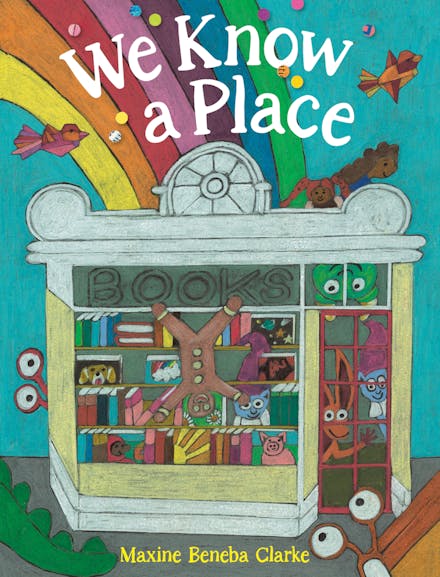
    ‘We Know A Place’ is about a family, which works and plays together. Every Saturday, once the chores are done, they are off to the local bookshop on Ballarat Street; one of their much loved places to visit. Here the children allow their imagination to flourish, as they explore the wondrous books of monsters, giants, pirates and trolls. Oh, no the trolls escape!

    Parents will engage with their children as they enthusiastically search the magnificent cray-pas illustrations, for characters from well-loved children’s stories.

    A must addition to every library’s collection.

  • Loving Sylvie

    Loving Sylvie

    It is easy to believe that Elizabeth Smither is a poet. She has the ability to expand on thoughts and scenes and possibilities, creating characters that you feel you have met. This narrative shifts between three women, Sylvie, her mother Madelaine, and grandmother Isobel. The story begins with Sylvie’s wedding, and gradually reveals the stories of her mother and her grandmother.

    The tale is set in several cities. Isobel lives with her husband Kit in Melbourne. Madelaine lived for some time in Paris, but later moved to Auckland with her new husband, with Sylvie being raised in Melbourne by her grandparents. To unravel the mesh of how this family became so disjointed, we need to look at the beginning when Kit and Isobel first had their baby, Madelaine.

    Loving Sylvie is written in four parts. Part one explains the character of Madelaine, who is a mystery to most people, and why she lived in Paris. The second part of the book tells of Sylvie’s wedding and how she copes with the change in her life. She and her husband live in a small flat above a fruit shop and each day find a piece of fruit on their window ledge. There is a great enmity between Sylvie and her Mother- in- Law, which evolves over time. The third part tells about Madelaine’s move to Auckland, and how she becomes more reflective to new relationships and places. The final fourth part of the book focusses on Isobel and how she eventually manages to bring the family together.

    The author is one of New Zealand’s finest, and it is her attention to detail, while expanding on characters and their innermost thoughts that is noticeable. The everyday details are noted, with the subtle humour relating to the characters, their actions and reasons, examined. This is a slow read to pore over and appreciate the language and descriptions.

  • So That’s How I Began

    So That’s How I Began

    Children are curious little people, always asking questions, with an endless the desire to learn and understand new things in life. There comes a time when they want to know where they came from, how did they become them, how were they born and all the sometimes very awkward little bits of information so very necessary to know.

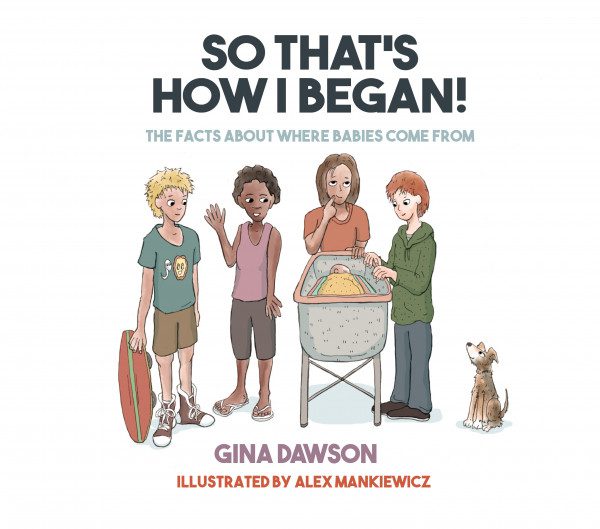
    In this age appropriate look at “where did I come from”, 2019 style, Gina Dawson and illustrator Alex Mankiewicz have crafted an excellent book on birth, reproduction, couples, including a page on IVF and donor sperm, always a challenging area and one they handle very diplomatically.

    So That’s How I Began can be read through from beginning to end or the relevant piece can be selected to answer the most pressing question of the moment. The illustrations are clear, quirky and very easy to understand, the language well considered and thought out to be easy to understand for a wide range of ages.

    The book can be read by parents to children, which depending on the age, would help as there may be more questions raised than answered, but the slightly older child will, by reading it themselves, gain a clear understanding of reproduction.

    Unfortunately, So That’s How I Began does dispel the time old of myths of being found in cabbage patches, or under mulberry bushes or even more amazingly magic, being carried by a Stork which are all lovely but not really all that informative for the modern-day youngster with a wide curiosity, which needs to be answered correctly!

    This is the perfect book to enter into the conversation of feelings, puberty, and change with the modern child, broaching so many of what are definitely awkward subject matters with ease, respect and understanding with age appropriate language.

    The final pages talk about being unique, which is a lovely and very salient point to draw to conclusion a most informative publication and reference book, that every family with young people should consider adding to their libraries.

  • The Wolf Hour

    The Wolf Hour

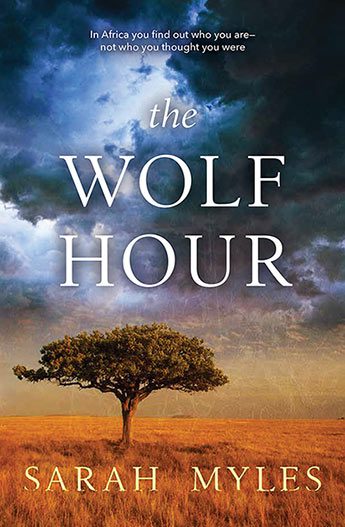
    The cover of The Wolf Hour has the one liner ‘In Africa you find out who you are – not who you thought you were’, a line which perfectly sums up this riveting story from Sarah Miles, a story which redefines families and the cost to the family unit once it begins to fracture .

    Based around the ongoing Rebel and Military issues in Uganda and the Congo, Sarah Miles throws a different perspective on a volatile situation focusing on the cultural perspective, corruption and the never ending hope that one day peace will come to war torn Africa.

    Tessa Lowell is working in Uganda to try and research firsthand the effects of PTSD and war on children. She considers this work vital to a successful completion of her PhD. Her brother Stephen has been a resident of Cape Town for some time; a man on the up, a man with money to spend and an eye for a good opportunity; a man with few morals and less scruples.

    The story opens with Tessa in a compound watching, tensely observing a ceremony; a tribal reconciliation to welcome back Oraako, a former child soldier, into the tribe. She is cautious, ever mindful this is something far from normal, with unimaginably sad consequences should it fail.

    She has also becomes aware there are to be a talks between Joseph Kony, leader of the Lord’s Résistance Army and the International Crisis Group somewhere in the Congo, in an effort to try and bring long wanted peace to the area. She  talks her way into the group, accepted reluctantly by the Delegates; after days of traveling and hiking through dense and dangerous jungle, the team final reach the jungle camp; a place where she meets 13 year old child soldier Francis, a hardened veteran of war, a believer of Kony’s and eventually to become an unlikely friend.

    Her decision has far reaching effects as it plunges her parents, in their safe and comfortable life in Australia, into a situation that has horrific consequences as Tessa is kidnapped and held for ransom by Kony’s men.

    Distraught, her parents eventually enlist the reluctant help of their son Stephen to try and rescue Tessa: he eventually agrees but also has his own agenda for flying into Uganda; an agenda that will challenge their belief in family, their children and themselves.

    Tessa, her parents and Stephen all discover they need to come to terms about who they really are and the façade that they considered was who they were!

    Fast moving, fascinating and written with an very real understating of the issues that are an everyday component of modern life in Africa, Sarah Miles looks below the surface to the world to discover the real person that lies not so very far below the façade.

    Brilliant, timely and a must read.