Tag: fame

  • Jumbo: The Most Famous Elephant Who Ever Lived

    Jumbo: The Most Famous Elephant Who Ever Lived

    Jumbo’s story is a true and complete description of the life of this huge elephant. It is aimed at older children and adults and is complemented by factual information along the way. The text is dense, the font is quite small and some of the issues addressed are quite complex.

    The story begins with the birth of Jumbo in a corner of South Africa more than 150 years ago. He was captured by local hunters who sold animals to Europeans. Zoos were opening all over the world, and wild animals were in demand, so Jumbo was led across deserts and finally reached Paris. From here he went to the London Zoo where he entertained adults and children for many years. His adventures did not end there because he was eventually sold to PT Barnum Circus, where he continued to perform and entertain.

    The pages of this book are filled with illustrations of a huge variety of animals and birds. There is a double page spread comparing an African elephant to an Indian elephant. The large amount of information means that this is a book to be kept and read for many years. Issues such as animal welfare and zoo standards can lead into discussions of value for children.

    After a tragic death, Jumbo’s bones were on display in an American Museum. Gradually circuses have stopped using wild animals in acts. Jumbo: The Most famous Elephant Who Ever Lived would be a great reference book for students or animal lovers in general.

  • Audrey Hepburn (Little People, Big Dreams)

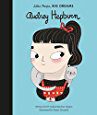
    Audrey Hepburn (Little People, Big Dreams)

    Audrey Hepburn was a much loved and respected women who went on to become the UNICEF Goodwill Ambassador, until her retirement in 1991.

    Born in 1929, she was ten years old when War broke out in Europe. She and her mother lived in Arnhem in the Netherlands where, as a small child, she began to take ballet lessons. She always wondered what she would be when she grew up, a ballerina or perhaps an actress.

    During the war food was hard to find and she became very ill, never ever becoming strong enough to live the professional  life of a ballerina and so she decided to  follow her other love, that of acting.

    She auditioned for parts and was finally selected for the Broadway production of Gigi and from there went on to become one of Hollywood’s much loved actresses, starring on many roles, some funny and others serious, winning a number of prestigious awards.

    When she retired from acting she was asked to take on another career altogether, that of the role of UNICEF Ambassador, where she would travel all around the world raising awareness and campaigning for the rights for all children to have food to eat, clean water to drink and medicine, should they be sick.

    Although she was famous, and had become was a rich woman, she never ever forgot what it was like to be hungry, thirsty and sick. She never forgot that there were far too many children in the world, just like she had been as a child and tried to do what she could make their lives a lot better.

    She was the special ambassador for United Nations Children’s Fund, (UNICEF) from 1988 until she retired in 1991. She died in 1993 at the age of 63.

    If you would like to know more about this famous and very beautiful woman, you may have seen her in My Fair Lady,  as Eliza Doolittle or in one of her other movies, and perhaps from reading about her life, you may become inspired as to what you too can do to help others.


  • Piglettes

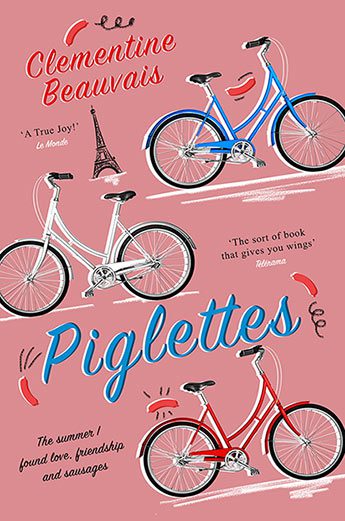
    Piglettes

    Initially the storyline of this book is quite shocking, and then one realizes that this is today’s world and this is how it is. Mireille is the narrator of this teenage story which begins with her discovery that she has come third in the pig pageant contest. This is a competition to select the ugliest girls in school, run by a male student, and voted for by other students on Facebook. Mireille was described as having a “fat blubbery bum, droopy breasts, a potato shaped chin and tiny porcine eyes.”

     After such an awful beginning, we gradually see that Mireille is able to live with this disastrous naming. The fact that her mother is a philosophy teacher, and has raised her daughter to be an un-emotive, rational thinking young woman helps enormously. The young girls who came first and second in the competition come to visit Mireille; they become friendly and decide that they have a common goal. That is to get to Paris for the Independence Day celebrations. The girls decide that they will cycle to Paris from the town of Bourg-en-Bresse where they live.

     At first it seems such an outrageous proposition, but with clear reasoning they borrow a trailer, three bikes and the help of Hakima’s brother, Kader. The girls, Mireille, Astrid, and Hakima have an attachment made for their bikes to tow the trailer, and Kader who lost his legs in the war, has a wheelchair. To raise money, the girls have enlisted grandparents help to make sausages which they can store in the fridge and sell at each stop.

     The journey becomes one of overcoming trials and stitch, but the girls and Kader persevere. A journalist from their home town is writing a running newspaper article about the girls, and they become celebrities as they travel along. Many people wave and befriend the piglettes as they cycle along the paths toward Paris. The man who began the pig pageant is so angry that they have found happiness and fame, that he visits them at night and slashes the tyres of their bikes. This works in their favour as a local bicycle repairman renews their bikes and the attachment to the trailer, making it lighter to tow.

     At no stage is there any hate or animosity shown towards the perpetrators of this indignity. Indeed, the girls are so focused on getting to Paris that it is not foremost in their minds. Mireille wants to confront the Presidents husband, Astrid wants to hear the music group she loves, and Hakima wants to confront the general, the man who was responsible for her brother losing his legs, who is getting a bravery medal.

     This is an uplifting story, and again, one that is quite shocking, but also quite possible in today’s world of cyber bullying. The disregard shown by the girls towards their attacker, and the elation they feel when they reach Paris and achieve their goals is wonderful. The writing is simple, clear and precise; the story unfolds at its own pace, and with gentle humour. I hope this becomes a go to book for teenage girls.