Tag: ethreal

  • Stranger Days

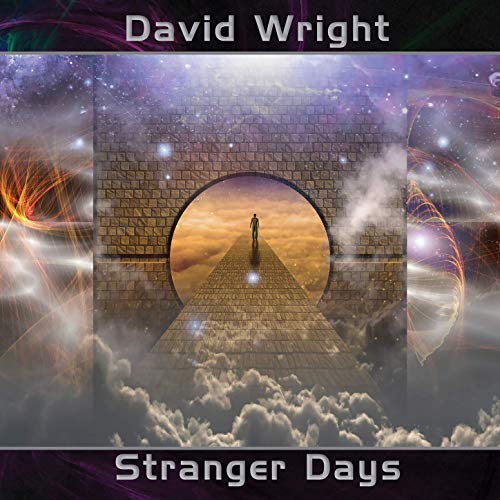
    Stranger Days

    David Wright has been around the music industry since 1989 with his distinctive acoustic style of music which has led to a career of firsts; in particular the founding of the AD music label, co-founding of the electronic rock band Code Indigo and electronic duo Callisto, amongst the more than thirty years of pushing musical boundaries, experimentation and eventual acceptance of electronic music as a standalone genre, a genre which is growing exponentially.

    On his latest album Stranger Days, a title which could pay tribute to some of the amazingly unusual occurrences of today’s society, the work consisting of two CD’s is retrospective, reflective and encapsulates many of his styles which have emerged over the years.

    The first disc is almost completely Ambient which creates a subtle, atmospheric ambience which is all encompassing, relaxing and simply offers relaxation, a little bit of romance and that enticing, ever intriguing concept of the vast, unknown that is Space. Perfect for background music in that it is non pretentious, the music is simply there within the space, seeping gently into the mind and soul offering the enchantment that is music.

    From mellow and gentle, , to the slightly edgier style with haunting vocals as in Call To Me featuring Carys clear vocals, the album is an amazing journey down through the years, with many of the pieces gathered to form the collection rediscovered once again and remixed to suite todays audience. Ryshera and Colours of the Night, two such pieces both on the second disc, will be familiar to long-time fans.

    In so many ways the work took on a form of its own, as it began, in David Wrights words, ‘as a simple, straightforward compilation, but evolved as a journey’, a journey 18 months in a the making and a journey offering much in new directions, which in the field of electronic music, will be interesting to follow.

    A twelve-page booklet accompanies the music with the lyrics penned by Carys to Melt Away and Call To Me which, when sung in her clear voice, are almost ethereal and also offers a small insight into the album and the philosophy of David Wright.

    Over the two-disc collection there is something for everyone to enjoy, the work has a certain ‘je ne sais quoi’, that undefinable, undeniable touch of the Master at work, doing what he loves to do, create amazing soundscapes to enchant and enjoy.

    A final word is tucked inside the back cover which encapsulates the entire collection and sentiment of the composer:

    “Sometime we have to travel to the edge of ourselves to find the centre.’

  • Mosaic

    Mosaic

    Wafting gently into the ether the inspirational, gentle and beautiful tones of Mosaic capture the imagination and spirit immediately. In this his sixth album David Wahler has woven the dynamic threads of true spirituality into an elegant eleven song collection full of serene, gentle and inspirational music for meditation and relaxation.

    As a child Wahler had a gift of music simply waiting to be released. He learned to play music by ear, then once formal tuition began, had to ‘unlearn’ all the bad habits he had developed playing anything and everything that appealed.

    Over the years he moved away from music, only returning in a fuller sense since his retirement some four years ago, from the world of Interior Design, committing himself once again to his first love. This love and passion for his music has manifested in work which is gentle, divine and absolutely perfect.

    On the inside of the cover there is a small poem from Randall Lund which captures the very essence of this work, Mosaic:

    The composer’s tale, A man of music… a mosaic of coloured notes, each note a song, complete, each song a single note played, in the life of one, man.

    As each of the songs evolve the melodies simply continue to resonate, weaving a spell offering a time and space completely separate to the humdrum of everyday life. The ethereal Child of the Universe almost seems to have captured the moment the Angels decide to sing, their voices blending in perfect harmony.

    A delicate up-tempo beat is introduced into the peaceful atmosphere with Elysian Dawn. Elysium was believed to be the paradise able to obtained by Greek hero’s immortalised as Gods. The gentle harmony of wordless vocals is offset with the sound of bird song, underpinned with the dainty sound of the harp, to create a piece which could be classed as a journey to paradise.

    In Lone Sky Night the twinkling of stars is very apparent in the first few bars, which is followed by the spacey notes of synth and piano intricately woven together to present the vast depth and mystique of the black velvet of the night sky lit with a clear and perfect light from stars, so near and yet so very far distant.

    Why draws this exquisite album to a close in a thoughtful and measured piece, with what could be considered as almost subliminal vocals permeating the more formal notes of the synth. As a final composition Why simply underwrites the vast talent of David Wahler.

    Mosaic through the gift of music given to David Wahler has lifted the bar once again in the genre of New Age music and could be considered as music straight from the heavens in its gentle, rich, mindful spirituality.

  • Ghost Stations

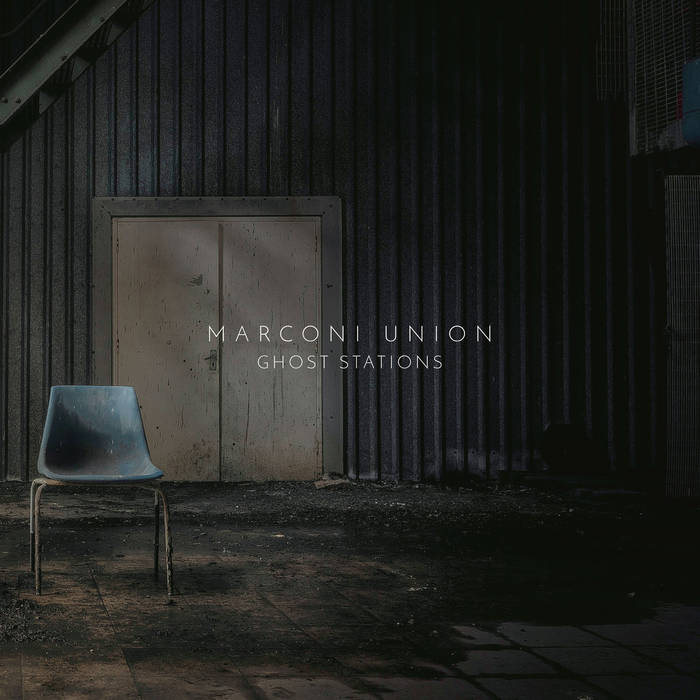
    Ghost Stations

    Once again the dark and mysterious men of Marconi Union have created an album that takes the electronic music genre to a level that is as unexpected as it is somehow or other, expected.

    Drone mixed with scratch, pulsating rhythm added, louder and more varied in texture, deeper and richer in essence, all created from simple sounds placed together to blend and mix into an exotic emotion, specifically  relevant to other worldly images, emotions and presence. The fact the title of the introductory track is Sleeper is also significant and can be construed in whatever manner appeals. Is the person asleep, is the person of another time, place and space, placed in this environment as a ‘sleeper’, and therefore the music is open to interpretation.

    But in a somewhat unusual occurrence, they have added in their words, ‘real playing to add to the feel’ with guest artists in Giorgio Li Calzi on trumpet and Andy Dobson on clarinet, introducing yet another element to the composition.

    The music is perfection; measured and solemn on occasion, misty and dreamy on others, discordant and grating as well, but always underpinned with the hint of experimentation that pushes boundaries, setting out to challenge as well as to entertain.

    Does Marconi Union have any specific musical direction? That would be a hard one to answer as each of their recent albums takes on the vibe of the moment, once again setting out to be perfection in sound, and surpassing constructed or contrived expectations. How best to describe their music other than seriously out there, is no easy task, because as always with this style of music, it is one that will either appeal or not, depending on the emotional space of the listener at the time. Designed to rasp or resonate, you will either love it or hate it.

    Listening closely to Ghost Stations you have the definite impression of derelict spaces, places where time has moved on and the human element has long since dissipated, abandonment, and the eerie essence of ghost towns.

    Alternatively, there is the feeling of travelling through space on a voyage into the great unknown, where every fibre, every emotion, every feeling is challenged, but allows a way forward into the unknown.

    Superb!