Tag: ethical

  • How to be Perfect: The Correct Answer to Every Moral Question

    How to be Perfect: The Correct Answer to Every Moral Question

    How to live a more ethical life has plagued people for thousands of years. According to the author of ‘How to be Perfect’, Michael Schur, it has never been tougher to do so.  Although we all have the potential to be virtuous, the circumstances surrounding an individual’s birth plays a significant part in how ethically that life is led.

    Using wit and deep insight, the author has written an accessible, educational guide to leading an ethical life, by drawing on the last 2,500 years of moral philosophical schools of thought. He explains and compares the theories of thinkers from Aristotle to Kant to Scanlon; each is applied to the sort of ethical dilemmas which arise in twenty first century life.

    His interest in moral philosophy began when he was researching material for his hugely popular TV show ‘The Good Place’. He fell in love with ethics because everything one does has some ethical component. As a result of this passion, he developed four simple questions one can ask oneself when encountering any ethical dilemma; be it great of small:

    What are we doing?

    Why are we doing it?

    Is there something we could do that’s better?

    Why is it better?

    However, by trying to do the right thing all the time, the author warns, will lead to ‘moral exhaustion’ Thus the challenge to readers is to try to improve and be a little better and more thoughtful today than they were yesterday.

    P.S. Don’t forget to read the numerous footnotes, which are not only delightfully humorous, but also add more obscure information which will enhance the enjoyment of this book.

  • Slow Fashion: Aesthetics Meets Ethics

    Slow Fashion: Aesthetics Meets Ethics

    Much has being written about ethical fashion over recent years, especially since the collapse of Rana Plaza building in Bangladesh in 2013 killing or maiming more than 1,100 factory workers.

    The outrage was worldwide that these people, who were lowly paid, suffered extremely poor working conditions, and often lived far from their homes, suffered so terribly, due to poor management, excessive demands for cheap clothing generated by the spin doctors and a fashion industry that, instead of holding several shows per year, now was careering out of control, getting faster and faster; the demand getting more and more frenetic.

    But what has been done since the hue and cry has died down; something it would seem, thankfully and although the growth has been slow it is continuing and holding true to the ideals of Safia Minney, a woman who has worked tirelessly for more than 25 years to bring, safe, ethical fashion into the mainstream; to provide good working conditions for the womenwho manufacture the garments and provided a better and more stable industry which, she hopes, will eventually become the norm, rather than the poor relation to the fashion industry; that of Ethical fashion.

    In this look at what is taking place and has grown over the past 25 years in regard to Ethical fashion, we enter a world that seems almost idyllic, but it is not; it is a world that still has to produce a garment that is going to be sold on the world marketplace and that people are going to want to purchase; there-for all the same issues of production still apply,

    But  it is how Safia Minney goes about producing these garments that tells a so very different story; It tells of an industry that is slowing growing, finding its way into eclectic and selective marketplaces; resonating with younger buyers who want to be on-trend while supporting and promoting the environment, fair trade and ethical manufacturing.

    Each of the chapters details a differing aspect of the industry featuring wonderful cameo interviews with designers, producers and buyers, sellers and the entrepreneurs, who will do much to promote and ensure the ethical fashion ‘rag’ trade keeps on moving slowly, slowly forward.

    To read the various interviews presents an entirely different perspective into the manufacture and sale of eco and ethical clothing and the direction the few of the major fashion houses are heading as we move inexorably into 2017.

    With the amount of airspace environmental issue do receive from time to time, and in the wake of the Rana Plaza disaster you would have expected more to have been done, but like everything else built to last, first people have to make a conscious decision to support ethical fashion, then be prepared to a walk the talk and purchase the goods.

    The major point coming through the pages and via the people such as Zandra Rhodes, Moon Sharma, Cara Bartlett, Dean Newcombe and the like, is the one Safia Minney has been promoting all these years through her Fair Trade commitments and brand People Tree; if you look after your workers, provide a good workplace and environment, use ethically sourced and produced products, you produce a stable workforce, engaged with what they do which makes a happy, productive community producing a top quality product.

    Read the book, make up your own mind and be prepared to venture forth on a fresh new journey into wonderful, ethically produced fashion that will look fantastic, be a serious talking point amongst your friends and relatives, which will definitely last more than one season.

    But the best of all is you know you are making a small difference in someone’s life that is positive, and that you have joined the slowly increasing movement to hopefully one day in the not too distant future, move away from the sweat shops such as Rana Plaza and into the fresh clean air of ethically, environmentally produced fashion garments.

    Safia Minney has devoted more than 25 years of her life to creating and promoting the Fair Trade Movement which began in a very small way and has now swelled to an organisation known and respected world-wide.

    She has received and MBE for her work in the Fair Trade and fashion is industry with her work in the Fair Trade Movement seeing her being awarded Outstanding Social Entrepreneur by the World Economic Forum.

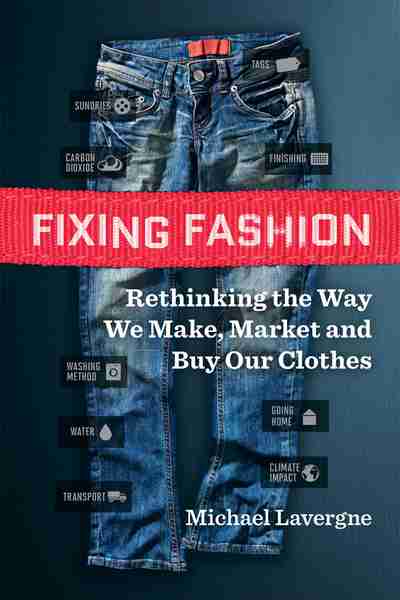
  • Fixing Fashion: Rethinking the Way We Make, Market and Buy Our Clothes

    Fixing Fashion: Rethinking the Way We Make, Market and Buy Our Clothes

    The story told is one that we, as consumers of fashion, have all been aware of for many years, but somehow choose to ignore all in the name of cheaper and cheaper clothing.

    To say the fashion industry is full of exploitation on all levels is not an understatement, but in reality the cold hard fact of mass production. Sadly, the people at the bottom of the supply chain, are the people who can ill afford to be anywhere else, as the industry does to some degree provide a living for the poorest people in the world; the people who have very little and therefor are vulnerable to the whims of a profit driven industry.

    For more than twenty years the sad and sorry tale of the ‘rag trade’ leaves a lot to be desired and even thought legislation has been passed to help protect the exploited workers, that, like most other things, is not enforced or the companies involved have created means and ways around the rulings.

    Michael Lavergne landed in the industry almost by default and spent many years establishing new markets, new production lines in some of the world’s poorest countries. Along the way he began to realise there must, and has to be, a better way of doing business in the modern world; one that upholds workers’ rights and treats them far better than they have been treated in many years.

    Sadly, it is not until some horrific incident occurs, such as the Rana Plaza factory collapse in Bangladesh that killed 1130 people and injured 2500 more, the world takes collective look at the conditions that are a standard norm within the industry and cries out in horror. Unfortunately, little changes within the industry, as profit driven companies are still focused on the bottom line, and the worker still has little or no rights.

    Thankfully, over the past five or more years there is a move beginning to occur towards ethical trading within the industry, that at this time appears to be gaining momentum with a number of companies beginning to take responsibility for the damage they are creating and condoning, not just on a human front but on an environmental basis as well.

    Michael Lavernge has done a thorough and masterful job to laying out the industry, from the early days of the industrial revolution, to today’s gentle breeze of change beginning to be a small, but significant factor within an industry that is as corrupt as it is brutal, having little regard for human rights.

    Much in the book will surprise you, and if you knew nothing about the industry before you will have a comprehensive understanding by the last page.

    It is a compelling read and one that should be read by anyone entering the industry or studying the many aspects of what goes into making the clothes blithely placed on your back, regardless of where you purchase them and the branding!

    It is also refreshing to know that the movement towards ethical trading and manufacture is beginning to make a small but significant difference.

     In Lavergnes words, ‘ All the power we need to effect real change in the world is now in our hands. Truly it is. We decided where we spend our money. We decide what we choose to buy and believe in. (sic) …. As a society, as human beings, we must now decide firmly to do our part, or, by our silence and acquiescence, mark clearly for our children, our community and our future, what we have each personally deemed to be acceptable standards of dignity and justice.

    Perhaps we should all take a look at where we shop, which brands we purchase and begin to take a responsible look at supporting those companies striving to make a difference, in an industry staffed by people who can use all the help they can get.