Tag: escape

  • The Zebra’s Great Escape

    The Zebra’s Great Escape

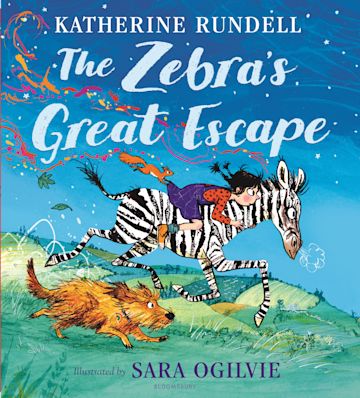
    From the picture on the front cover, we realise The Zebra’s Great Escape is not a gentle bedtime story. It shows a determined girl riding on a zebra followed by a scruffy dog. AN ADVENTURE!  is proclaimed by the bold colouring, silver letters and determined looks. This is a picture book with full page text, a story book but in a hardback format. It works really well.

    The story begins with Mink. She doesn’t believe in rules and loves to run wild and free. She is out one night having a swing when she hears a noise. It is a young zebra who is very distressed.  In his distress he is able to communicate with the girl.

    His parents have been captured by an evil man who has the pair in a cage. Mink thinks about this and realises that she must act quickly. The local scruffy, unfriendly dog is approached and offers to help. He notifies all the local birds and animals nearby who happily pass on the message that a zebra is searching for his parents.

    By word of beak, bark grunt and tweet, the message is conveyed, and the parents located. Then it is up to Mink to take the young zebra back to them. She rides the animal, guided by a squirrel, and then the rescue begins. What a wonderful story!

    The illustrations expand the text and complement the written word. They also add humour to the scene and lighten the mood. Along with the cranky dog who bargains for a bone, all the animals are shown as eager to help.

    The Zebra’s Great Escape is a terrific story for a younger reader. It is quite long but written in three parts. Most children will love this child driven story, no adults needed here. As with all excellent literature, this is a story for all ages.

  • The School That Escaped the Nazis

    The School That Escaped the Nazis

    Anna Essinger had great foresight in 1933, but never did she imagine that anything as inconceivably barbaric and inhumane could come to pass as Hitler and the Nazi party’s reign of terror; horror beyond what imagination could grasp.

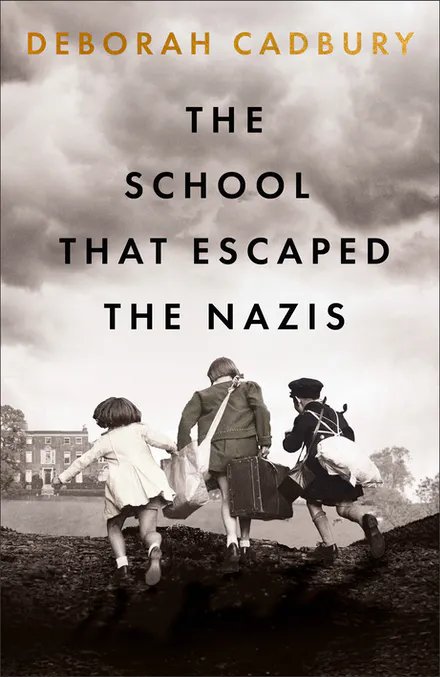
    In her comprehensively researched book ‘The School That Escaped the Nazis’, Deborah Cadbury relates the truly remarkable story of the German Jewish educator Anna Essinger, who not only, over the course of 22 years, cared for and taught over 900 children, but also gave them safety and love.

    After reading Hitler’s book ‘Mein Kamf’, Essinger realized that her progressive school in the south of Germany had no future. Hatching a dangerous and daring plan, Tante Anna, as she became known, quietly and methodically moved her school of 66 children to the safe haven Bunce Court in Kent, south England. Despite issues of illness, a shoestring budget, school inspectors and being enemy aliens in a foreign country, the school and its students thrived.

    By 1938 Kindertransport’s, the organised rescue efforts of children from Nazi-controlled territory, that took place during the nine months prior to the outbreak of the Second World War, began arriving in England. Now nearly 60 years old, Tanta Anna with help set up a reception camp to provide safety and security for 10,000 refugee children; many of whom were deeply disturbed.

    In June 1940, the school with roughly 140 students, again had to evacuate when southern England became a defense area. Given little over a week, the ever resilient Tanta Anna relocated the school to the dilapidated ‘Trench Hall’. With outstanding organizational acumen, resourcefulness and support from several wealthy benefactors, she saved the lives of hundreds of Jewish children in Nazi occupied territories.

     ‘The School That Escaped the Nazis’ is not only the amazing narrative of a little known hero and her enlightened education system, but it is the story of her students, many of whom went onto have distinguished careers.  After the war, her school had taken in numerous traumatised children survivors of the Nazi concentration camps, who no longer knew the meaning of a normal life. With her wisdom and compassion, she gave them a home and hope, and as one of her students asserts, his two years at Bunce Court ‘turned him back into a human being’.

    Although some readers may find the graphic recounting of the atrocities perpetrated during Hitler’s reign of terror, towards not only the Jewish population of much of Europe, confronting, I highly recommend this book to anyone who wants to gain a better understanding of the behaviours of the masses when one group of human beings is criminalized. 

  • THE LAST ESCAPE THE MAN BEHIND THE MOST DARING JAILBREAK IN AUSTRALIAN HISTORY

    THE LAST ESCAPE THE MAN BEHIND THE MOST DARING JAILBREAK IN AUSTRALIAN HISTORY

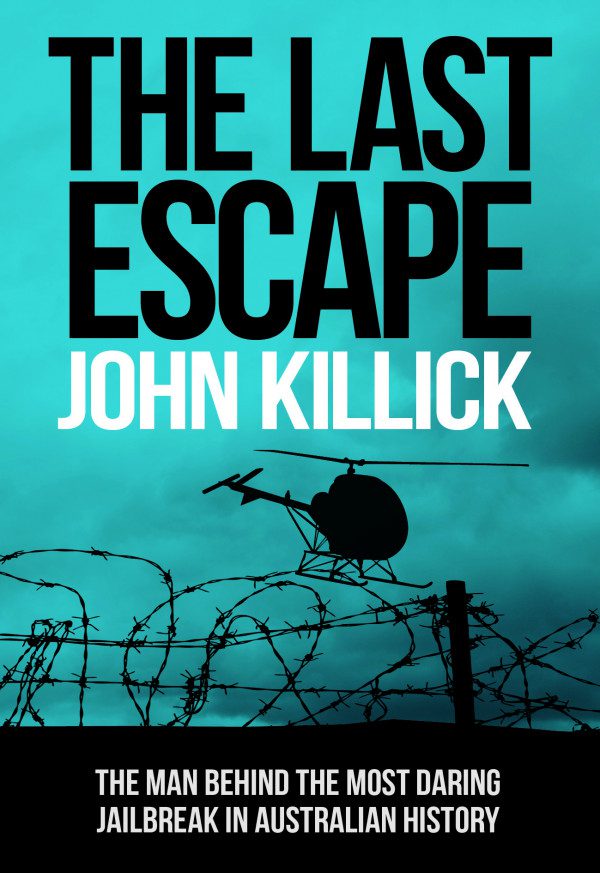
    Many readers will remember the News Headlines, “John and Lucy’s Great Escape”; this constitutes only a small portion of John Killick’s fascinating autobiography ‘The Last Escape” which chronicles his life both inside and outside the prison system. To add to the reader’s interest, the author not only links happenings in his life to major events in Australia but also to other notorious criminals, who share his time in custody.

    The suicide of John’s adoptive mother in his teen years triggered a shift from being a law abiding youngster to that of an angry petty criminal, who had little regard for other’s property. Disappointment in love and a growing addiction to gambling led to more serious crimes and ultimately John spending more than half a life time incarcerated in prison.  While in prison this career criminal developed his inherent literary skills by reading extensively and taking part in writing classes; these he put to great use by coordinating and contributing to a prison newspaper, entering writing competitions and later writing several books.

    Some would say the book is a story of self-discovery of a wasted life in prison. However, this book not only recounts John Killick’s life in many prisons around Australia but also the severity of conditions within these institutions. The philosophies of those implementing policies in the prison systems and the impact of these measures on prisoner rehabilitation are also explored by the author.

     Despite the outrageousness of the crimes, John Killick’s literary style allows the reader to empathize with not only the victims of these crimes but also with the harshness of author’s time in custody. The author makes no excuses for his behavior except to explain that most of his crimes were the result of his gambling habit.

    True crime readers who enjoy exploring the criminal mind and the reason for the perpetration of crime will find this book both an interesting and an enjoyable read. This autobiography is told with great honesty and lack of pretention: a true story of survival.

  • Escape Artist: The incredible Second World War of Johnny Peck

    Escape Artist: The incredible Second World War of Johnny Peck

    Johnny Peck was obviously born to be different, to accept that nothing sent to him to could not be overcome with a little thought, unswerving courage, a bit of good luck  and sheer determination. Peck grew up in a family that was struggling to cope with the after effects of the First World War, a father who was aggressive, often away on Navel duties. Growing up in Woollahra in Sydney’s east, close to the Garden Island Navy Base, life, in young Johnny’s eyes was not going to get better any time soon.

    His father remarried after the death of Johnny’s mother, but family life did not improve all that much. He planned his first escape at the age of 13 years, from his then home at Crib Point on the Mornington Peninsula, stealing his neighbour’s bike early one morning and riding the 80 kilometres to Melbourne. There he slept under a fire escape until a Policeman discovered him, gave him some fatherly advice, two shillings and sent him on his way.

    Four years later and considerably wiser, he enlisted in the Australian Infantry Services (AIF) becoming a member of the 2nd AIF and able to be sent overseas. He was just 17 years old but had given his date of birth as 16 February 1919, which would have made him legally able to serve.

    He fought with valour as a member of the 2/7th but first, after being sent to Jerusalem, his true age was discovered. He had to serve as a batman to General Thomas Blamey, until he had reached a suitable age of maturity for infantryman duties. Once he returned to his beloved regiment he fought in Bardia against the Italians, saw service in the Western Dessert towards the Libyan boarder, Tripoli and finally Crete, where he was captured.

    Crete was where he would begin the first of his many escapes which would eventually see him cover many thousands of kilometres across borders, torrid, inhospitable terrain and face almost certain death on many occasions. He depended on his wits and the endless courage and kindness of villagers on Crete, then later in Italy, to help him survive and on many occasions escape from the Germans.

    He, along with many others who placed their lives and those of their families at risk, helped him establish what could almost be considered as a highway to freedom for so many men escaping captivity or internment in Germany; or if Jewish certain death in the infamous German ‘camps’. His story is remarkable in that he survived at all, but that through cunning, skill and determination made a positive difference to the war efforts in Europe as a subversive element.

    Eventually though, his luck ran out and he was evacuated by the British to sit out the final years of the war in Britain.

    His story almost reads like a Boys Own of derring-do, and yes, to an extent is it; the major and overriding difference is that this story is absolutely true, as are the stories of the other servicemen whose names appear on the pages of a life lived on the edge.

    It is said that the greatest adventure known to modern man is to go off to War, perhaps this is the case, but in Johnny Peck’s case, as in so many other men of the time, it was also a chance to escape from the endless drudgery of trying to eke out an existence in the depression years leading up to the commencement of the Second World War.

    His story remained largely untold until after his death in 2002, but thanks to the efforts of Peter Monteath this remarkable story about a young man of great determination and courage, lives on to become one of the many that go to make up the remarkable history, of not just Australian fighting forces overseas, but also reminds us of the caring and courage displayed by ordinary people when faced with extraordinary events in their lives.