Tag: environmental

  • Mine

    Mine

    Award winning Tasmanian author Adam Ouston has accepted the challenge of creating a literary work that flows continuously in one sentence; his second novel “Mine” has done just that. “Mine” explores the history of the destruction of Tasmania’s unspoiled pre white environment through the eyes of an aging ecowarrior, the ‘poet’, who is trapped in an unused Tasmanian mine.

    Triggered by the death six months earlier, the almost eighty years old ‘Poet’, hoping to capture the landscape with his final project, decides to write a hauntology of the West Coast of Tasmania; a work which would bring together all his other works. When looking for the Chester Mine Hut, he found himself trapped in an old disused mine. It is here that his mind starts to reflect on his life.

    While immobilised in the abandoned mine, the ‘Poet’ continuous thoughts travel to his past history as an environmentalist and that of those whose mines destroyed Tasmania’s pristine wildness; James Crotty, and Edward Edwin Bowes Kelly. Ouston through the narrative of ‘Poet’ also explores the calamitous Mawson Antarctic expedition and the Mt Lyell mining disaster; his own inevitable death nearer than he’d hoped.

    While readers will find this well-researched history of Tasmania’s early mining exploration and that of Mawson’s Antarctic ‘adventures’ engaging, some might find this unconventional style of one long sentence and lack of narrative structure too challenging. 

  • The World’s Best National Parks in 500 Walks

    The World’s Best National Parks in 500 Walks

    Hiking routes and rambles through nature’s most enticing environments

    With photographs of natural beauty on every page, this walking guide is a joy to peruse. The author covers the world with her 500 walks, each one carefully documented and explained. For each place, a history of the area is given, the distance the walk covers, and the time taken to walk the track.

    The amount of luggage to be taken, whether it is overnight, how well the trail is marked is information included along with the gradient of the track and the best place to see spectacular views. The author mentions how strenuous the walk is and what season is the best to make the trip worthwhile.

    Special features, such as bird watching, wildflowers, and buildings of note are included in the information. Taking a picnic lunch or bathing suit makes other helpful hints. For mountainous areas, the height above sea level is given and a suggestion for packing a camping stove for a cup of tea. The areas included in the walks are, North America, South America, Europe, Africa and the Middle east, Asia, and Oceana.

    In Australia, we are invited to “Stroll through an ancient Art Gallery of people and animals.” This walk is found in Kakadu National Park and consists of a two kilometre walk that is partially wheelchair accessible.

    Mary has put together a huge range of walks, all of which she has completed. She visited her first park at the age of nine and loved the experience so much she became a park ranger. Her mission is to help preserve these beautiful wild places, make them accessible to all and encourage everyone to be as protective towards them as she is.

  • Stranded!: A Mostly True Story from Iceland

    Stranded!: A Mostly True Story from Iceland

    Bold colours, magic, a puzzle and educational information make up the story of Ævar Þór Benediktsson’s Grandfather Ævar, and how he got stranded on a volcano and almost turned into a Barbeque.

     Stranded – a mostly true story from Iceland is a most enjoyable and captivating tale which, as it turns out, just happens to be very topical at the moment with the volcanoes in Iceland featuring on World news on a regular basis.

    Grandfather was a scientist, explorer and photographer in Iceland; a very small country, actually an Island in the middle of nowhere. It is generally cold with long dark winters and very bright, long summers.

    In1964 a volcanic eruption was happening and a new island was being formed. Grandfather was very excited by this and watched what was happening very carefully. Several months past and he and his friend were eventually allowed to go onto the Island to records some scientific facts and take photographs.

    They were supposed to be there only for one day, but became so excited that it was getting dark, and cold, when they realised that perhaps it might be time to go. When they went to the place the boat should have been waiting for them, it was not there!

    From then on they were both involved in a very, very scary adventure because new forming volcanic Islands can be very dangerous places to be, especially when it is getting dark! Perhaps the Norse Gods were looking after them, but you have to read the story to find out what happened, because I am not going to tell you.

    There is a very informative section at the end of the book which tells a little about Iceland and a lot about the new volcano explored by Grandfather called Surtsey, named after a very powerful Norse God Surtr – a powerful fire giant.

    The vivid illustrations from Anne Wilson, born on the volcanic island of Ascension, in the South Atlantic add to the charm of the words wandering amongst the pictures, to create a wonderfully informative, enjoyable book with wide appeal.

  • The Good Captain

    The Good Captain

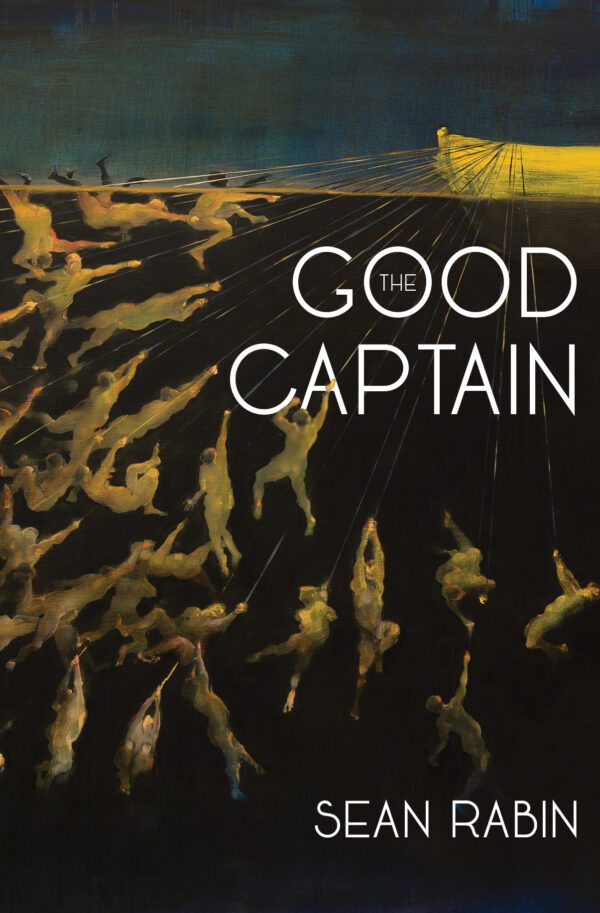
    Futuristic and perhaps all too real as the world still rushes headlong into climate crisis, Sean Rabin takes a somewhat cynical and almost satirical look at just what may and could happen when things go too far in The Good Captain.

    Rena captains the good ship Mama; she can taste, feel and understand the seas of the world. She is a child of the ocean, a person who has seen the best and worst of humanity and grieves endlessly for the carnage that has been wrought on the oceans of the world. Oceans that no longer have sharks, whales, schools of fish and sea birds.

    Her crew is made up of a many talented young and not so young people, who have all got a somewhat interesting and often tragic backstory, but are passionate about trying to change what seems to be the end of ocean life. They are almost without fault, idealistic, loyal to Reva and the cause.

    The story begins with the abduction of ‘cargo’ from a location in Tasmania. One of the team is badly injured, dying on the way to rendezvous with Mama. What is it all about is the first query, which eventually is explained, as the ‘cargo’ turns out to be the former Prime Minster of Australia, Angus Wallace Thompson who believes he is being held for ransom.  

    Days come and go with the crew struggling to cope with the loss of Roope, the wild seas, the internal anguish of living life in a world that is ever-changing and the hopelessness of one small vessel and a tiny crew trying to change an environmental disaster.

    As the rendezvous draws closer, Rena’s apparent care for human life, verses that of the creatures of the ocean becomes more apparent; her ruthlessness at disposing of fishing trawlers, her obsessive control over her ship and crew, is heartless, almost cruel which comes to a confrontational climax which is as unexpected as the rest of the story has been up to this final point.

    From a conceptual perspective, as with so much else in this storyline, the vessel Mama is futuristic; it is the womb from which all life stems. The concept Rabin has come up with both from a marine craft and medical science perspective makes for fascinating reading. While it could be considered this type of technology is far into the future, the thought is delivered that while this is fiction, just how much of the technology that is contained within ‘Mama’ is, in reality, already in use.

    Riveting and confrontational Rabin has delivered an unforgettable story in The Good Captain which all to readily could be a small peek into what could be considered as a bleak environmental future, but also takes a tilt at extremist behaviour and the negligence of Government to accept that climate change is a very real event, occurring now.

  • Being the Change: Live Well and Spark a Climate Revolution

    Being the Change: Live Well and Spark a Climate Revolution

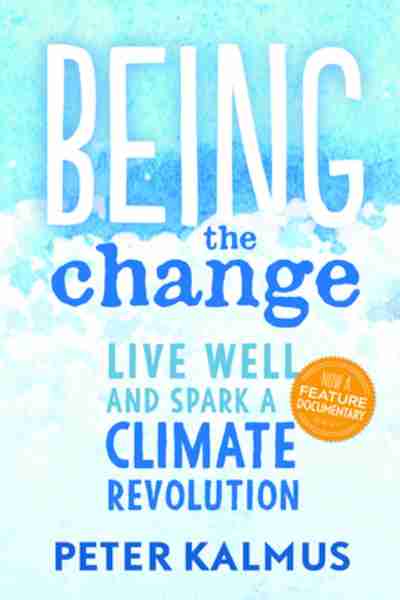
    For many the two words Climate Change have been enough to have them blocking their ears and offering to all around them a huge, ‘what the……..’ moment.  In this very practical look at making change from an environmental perspective, Peter Kalmus would agree that those two words have been done to death by politicians, spin doctors, advertising mediums and many others.

    But this man, who has a PhD in physics and is an atmospheric scientist at NASA, says that that in spite of the dire predictions forecast, there is hope for the future by merging science with practical applications which will create a way forward.

    During 2006 he became a convert to the principal that ‘global warming’ was a reality, not a piece of fiction and set about attempting to discover ways to try to rectify, in some small way, this dire situation. As a scientist, during the course of his work, he realised that global warming, in many forms was definitely making changes in all aspects of human life and most importantly to the planet; changes that scientists had spoken of for some years, changes which had been discussed at the highest global levels, but without any lasting major effect.

    In this book, written from a very personal perspective, he takes the reader through his journey to becoming not completely self-sufficient in his and his family’s lifestyle, but certainly changing his way of living; to cycling instead of driving the car, growing his own fruit and vegetables and so much more: and this from a man who had always lived in apartments and either caught public transport, or driven his car everywhere he or the family needed to go, purchasing their every need from chain stores and markets.

    His core message, backed up with scientific evidence, which would indicate that in the not too distant future, there will be a massive need to be able to be self-sufficient, as the reliance on fossil fuels will, of necessity, need to decrease. He has, in his lifestyle change, managed to achieve this aim and in doing so has reduced his impact to ‘under a tenth of the US average, become happier in the process’ and discovered life has become ‘awesome’.

    As discussed throughout the book, gradually the terrible havoc being caused by the lavish use of fossil fuels in every aspect of modern life is becoming very apparent and finally, after several decades of talking, scientist are being listened too, as the evidence of this practice is becoming undeniable.

    Kalmus has stated over and over again in this work, that unfortunately much of the damage to the planet will not be able to be reversed in any significant manner, but by people taking on a collective responsibility for living their lives in a far more basic and in a sustainable manner, something everyone can do, that change will occur, little by little.

    He is filled with optimism that people value their very existence and with the right incentives, the right information, will work towards a world, a lifestyle, that could be free of fossil fuels; that as fossil fuels dependence could be considered a drug of modern society, weaning away and becoming ‘clean’ is definitely possible and realistic.

    Written from a scientific, spiritual and personal perspective, backed up by global research, along with undeniable facts and figures, this work will make you take stock, encourage the implementation of some small or large changes your lifestyle, offering or ushering in a fresh, new future that is filled with the things we have, as a society all but forgotten; a sense of community, a sense of well-being and a sense of mastery over our own destinations.

    Anyone who is serious about changing their lifestyle permanently or even just a little should consider this work by Peter Kalmus as a guidebook, a mantra for change and a support for underpinning all the many reason why change is of immediate, almost dire, necessity.

  • The Natural Cook: Maximum taste, zero waste

    The Natural Cook: Maximum taste, zero waste

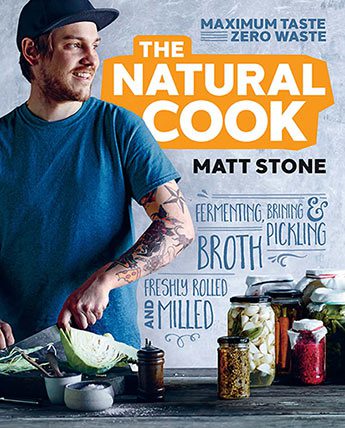
    With The Natural Cook you have more than just a book of wonderful, modern fusion style recipes, based in natural foods, you have almost a complete cookery course based on years of experience, from a guy who came up through the ranks of the cuisine circuit, beginning as a kitchen hand rising to become as well-known as a chef, as he is TV personality.

    In a few short years, depending on how you see it, Matt Stone has made more than a mark in the industry, he has helped, along with Joost Bakker, to create some of Australia’s most novel and environmentally friendly  ‘greenhouse’ restaurants and more recently working alongside Joost, their ‘zero-waste’ restaurants Silo and Brothl.

    Not too shabby as they say, and definitely the basis for an entire revisit of what we put on our plates and the best way to go about being environmentally conscious as we choose and prepare the foods we all do so enjoy.

    Beginning at the beginning, after the little chat about Matt and how he fell in love with food, is the chapter Freshly Rolled and Milled, with a little introduction to grains and millets and the best way to go about preparing, cooking and serving what is considered worldwide as a staple. There is a little of something for everyone from Greenhouse Breakfast Muffins, straight from the Greenhouse restaurant’s menu, to Porridge, with flair, and Auntie Susan Lemon Myrtle Cake, created especially for Matt by his Aunt.

    With this as a first chapter the rest is simply a foodie’s paradise as it deals with native foods, traditional ingredients and basic recipes, such as the one for Shortcrust Pastry. For the brave there is a chapter devoted to Edible Insects, which while many may consider is one step too far, many others delight to consider. Mind you it is not too large!

    Foraging is once again becoming a very ‘on-trend’ thing to do, but as in all things you need to know the good from the bad. This topic is addressed with some seriously good advice on what to pick and how best to go about knowing where to look and what to cook. A word of warning though: before you set out foraging in earnest, go out with someone who is an expert in plant selection.

    Underlying all the recipes is the desire to utilize whatever foods are in season for two main reasons, the cost and the freshness that cannot be obtained any other way, if you enjoy fresh seasonal produce and the best results from your recipes.

    Finally, and as all good books about food should have, is a delightfully refreshing section on Drinks, recreating some of the classics such as Lemon Myrtle Martini’s and Native Fruits Whisky Sour .

    Dotted throughout the pages are lovely little sections on drying and preserving, creating spice blends, making your own broths, all with the emphasis on using ‘bush tucker’ and fresh produce.

    As stated, this is far more than just a cookery book, this is a course in preparing, using and creating with Australian ingredients, reducing waste in the kitchen and most importantly using foods in season to be able to produce the most tasty, enjoyable dishes with flair, panache and pizzazz.