Tag: England

  • The House of Echoes

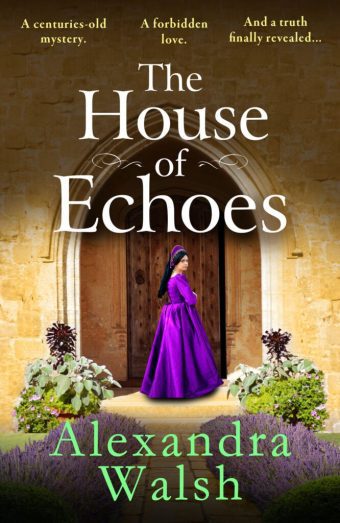
    The House of Echoes

    Anne Brandon, Baroness Grey of Powis, was a woman who was included in the Court circles, witnessed much of the tragedy of times and was a friend or close acquaintance of the women King Henry made his Queens, only to later dispose of them when another enticed him.

    The House of Echoes from Alexandra Walsh is set between the modern day and the Tudor Court of 1509 to 1547 as Anne Brandon grows from a young woman, married into a terrible marriage, later to live openly with the love of her life Randall Hanworth, until the death of her husband Edward Grey, Baron of Powis.

    Caroline Harvey is the public face of world famous, reclusive author Dexter Blake, the creator of the Ether Hercules series. She is returning to England at the completion of the filming of the eight book in the series, saddened as her grandfather would no longer be with her, but ready to launch the ninth and final book in the series.

    Returning to her home, Dexter’s Place in Pembrokeshire she is sorely missing her grandfather, but when she discovers there is to be a new bookstore opening at the Milford Marina complex she is delighted. It is part of a chain Ten to Midnight, which is owned by Gideon Morris a man she fell in love with as a young woman on the brink of adulthood.

    Both women have in the course of their life been left bereft, both women have had to face and overcome hatred, both women have loved deeply and irrevocably. Woven though the dual narrative is the timeless, medieval story of Tristan and Iseult (Isolde) which tells the tale of illicit love and tragedy which still, centuries later, resonates.

    Alexandra Walsh has carefully researched the historic content and uses the house Anne Brandon and Randall Hanworth called home as the modern, Dexter’s Place which ties the two stories together and in doing so, tells the story of so many of the women, influential and otherwise, whose stories call down through history, still untold.

    The House of Echoes is an excellent read with an informative section at the end of the book on the story of Anne Brandon and the history of the Tudor Court of King Henry VIII, which for those not familiar with this tumultuous time in history, will be very helpful.

  • The Shape of Darkness

    The Shape of Darkness

    Despite 21st century thinking, today many people still try to communicate with the spirit world at séances via mediums.  In the 19th century the public was fascinated by spiritualism despite it being increasingly debunked by scientists. Laura Purcell has captured this interest in mesmerism and spiritualism in her latest Gothic, historical novel “The Shape of Darkness”.

    Set in Victorian Bath the struggling protagonist, gentile Agnes, a 41 year old single feeble woman, tries to scrape a living to keep her nephew, Cedric and her mother from the workhouse. With the advent of photography, her profession of cutting silhouette portraits is declining as ‘shades’ are falling out of fashion. Her livelihood is further threatened by tragedy and death, which is striking her more recent customers; hence she fears for her reputation and personal safety. 

    Her only support is that of her over protective brother in law Dr Simon Carfax, husband of her deceased sister Constance, who seems intent on keeping her an invalid. Against his advice, Agnes seeks the help of the spiritualist ‘The White Sylph’, Pearl, an 11 year old girl born with albinism, to contact the victims with a view of unveiling the murderer and stopping future deaths.

    The author has often been likened to the prolific Daphne Du Maurier; however this book shows a more individual style. It is a murder mystery, which has supernatural overtones; some readers might find it a little melodramatic.  Many, on the other hand, will enjoy this page turning novel about violence, grief and coercive control set against a Victorian backdrop of grime, poverty and social inequality.  The twists and turns in the final chapters will keep readers totally engaged.

  • The Silk House

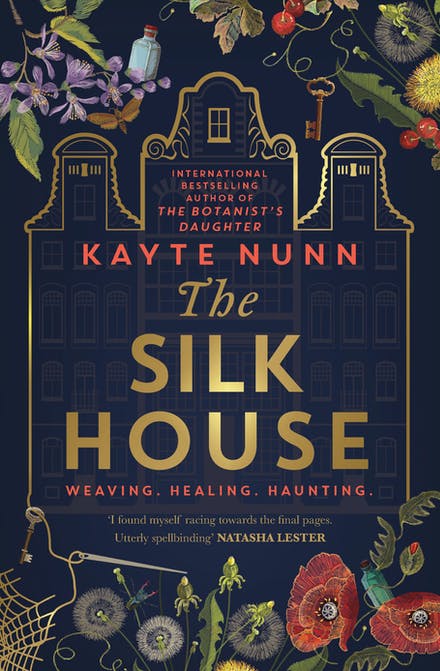
    The Silk House

    In every sense, The Silk House seems to have encapsulated the author’s passion for history, weaving and healing. Her enthusiasm for these topics makes the story come alive and with some interesting research and some fine imagination, a creative tale is told. Katye Nunn writes so well she seamlessly moves from the past to the present forming links for the reader.

    The story begins with Thea Rust, an Australian teacher who has been accepted to teach History at a Public School in England. Her father was an excellent student there, and the school has just decided to enrol girls. She was the ideal choice as her History teaching and studies are specifically what the school is looking for, as well as her sporting prowess on the hockey field. Until the girls and Thea have suitable housing, they are staying at a place called Silk House.

    Silk House is the central core to this story. We follow in earlier times, a maid called Rowan, who served there. In 1768, Rowan has been employed by the master of the house, Patrick Hollander. At the front is a shop selling fine silks. It is not a happy house though, as the maid Alice, resents Rowan, and makes her life difficult. The master and his wife have problems as it seems his wife is unable to conceive.

    At this time, a new pattern maker, Mary-Louise Stephenson approaches Patrick with some amazing styles and designs, and he is taken by their beauty. A poor manager, Patrick manages to inflame his wife, the maid and the pattern maker. The outcome is tragic.

    Thea, who is sensitive to the history of the house, senses a presence. There are physical signs of occupancy to contend with. Her introduction to a new school and a new country could not be more enthralling, mysterious and exciting. With help, Thea uncovers a tragedy and dismantles the problem. A very satisfying read in all respects!


  • Ultima

    Ultima

    Ultima is the third book in what is billed as a trilogy following on from the storyline established in the previous books, Maestra and Domina where Elizabeth Teerlinc carries on still wheeling and dealing her way through the dubious world of art dealers and forgeries.

    Beginning her career in England Judith discovered that her perchance for dealing in fake art was making life somewhat difficult. She makes a decision to reinvent herself and move to Europe, a fine choice, as she immediately begins to carry on where she left off in England, but with considerably more scope.  

    As the year unfolds, we meet her again, looking at creating a seriously fraudulent piece of work, attributing it to Gauguin. Her partners in this daring scheme are Da Silva, a crooked cop working for both the Mafia and the Russians, and Li, known to Da Silva, a Chinese factory worker and a man who is an artist able to create masterful copies of many works. She meets Li under her given name, that of Judith Rashleigh.

    Her trail of lies and deception moves across Europe and Tangiers, as does the body count. Her desires are still uncontrollable, and once she has fulfilled her sexual desires her love of killing sees her disposing of anyone who is beginning to threaten her lifestyle. The graphic nature of some of these scenes should be considered as pornographic and treated as such.

    The closer she and her team get to marketing the fake painting, Woman with a Fan, she finds the web of deceit is also building. As she has to return to England in order to sell the fake, she looks to her old boss Rupert from The House, to market the forgery. Judith/Elizabeth considers it is payback time!

    On her return to England she once again becomes Elizabeth Teerlinc, art dealer, and is almost uncovered for who she really is when she meets Angelique, a woman from her past life, who is a genuine expert in her field and one who may very easily spot the work as a forgery.

    If this is the final book in the series there has been yet another escape clause built into the life and times of one seriously Machiavellian character, in Judith Rashleigh, which perhaps means that she will live to meet her match, but as her life becomes ever more complex, she is forced to face up to some unpleasant issues from her past.

    Ever ruthless when she wants something and refusing to accept the person she is and always has been she has carefully laid what could be a pathway to a new future. She has disposed of the men and a woman stood in her way, determined to keep searching for the one person who really understands her and accepts her for whom and what she is; ruthless, cunning and totally without any sort of moral compass.


  • The Good Pilot Peter Woodhouse

    The Good Pilot Peter Woodhouse

    In his delicately insightful style, McCall Smith bring to life the dark and troubled time of World War II, setting this war-time romance in a small country village where everyone knows everyone else business.

    Val Elliot is a land girl learning to work on the land under the grateful and gentle tuition of farmer Archie, whose nephew Phil has gone off to fight Hitler. She is considered as a bright intelligent girl, who if it was not for the War would have gone far with her education. She has been bought up with her Aunt, the local postmistress, and nephew Willie, who although considered ‘simple’, always seemed to understand far more about the land and life ever than given credit.

    It is his placement on Ted Butters farm, a man who is hard and cruel, that proves to be the catalyst, for a working dog, aptly named Peter Woodhouse’s journey through life, to end up as the mascot for the American Reconnaissance Squadron based nearby, Val falling deeply in love and a friendship that was span the horror of the final days of Hitler’s reign in Europe, which would last right down the years to modern times.

    The storyline is simple but so beautifully embellished that every page brings to life the hardship, love, fear, terror and happiness of a time in history which bought out the best and worst in humanity, allowing the passage of time to wind through the imagination, to gently captivating the reader.

    The detail as always with the written word crafted by McCall Smith is as if a painter had taken a brush and captured in cameo, a time and place, painting it with the richness that is life in all its many guises.

    Lovers of Alexander McCall Smiths’ cosy, intimate style will absolutely adore his latest offering.