Tag: elephant

  • You Can’t Take and Elephant on the Bus

    You Can’t Take and Elephant on the Bus

    Back in hard book format for little people the funny, zany and loveable characters of You Can’t Take an Elephant on the Bus have come to life in a small board book suitable for 18 months-4 year olds, as they try and try to get an elephant on the bus, but they can’t because he would cause a terrible fuss, even if he would fit!

    The rhyming text is terrific to read out aloud and perfect for little ones to remember as they learn to understand why it is not a good thing to put a monkey in a shopping trolley or a giraffe in a plane, even if he so desperately wants to fly.

    Now a pig on a skateboard could be something to see, but oh, dear me what a catastrophe and so the absolute silliness that unfolds as the most unlikely animals try to do the almost the impossible, make for a very noisy, fun filled story time. 

    First published in 2015 You Can’t Take an Elephant on the Bus has become an all-time children’s favourite guaranteed to bring on a heaps of laughs and some very funny additions to the rhyming text. How could children resist.

  • You Can’t Take an Elephant on Holiday

    You Can’t Take an Elephant on Holiday

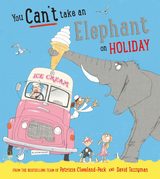
    You Can’t Take an Elephant on Holidays; but why not? Perhaps he is too big and will eat all the ice-creams leaving nothing for anyone else. In the fun filled pages created by Patricia Cleland-Peck and David Tazzyman, all the other animals also want to get to go on holidays as well. But why can’t a Cheetah drive the campervan, or Orangutans hit the waves on your surf board?

    Armadillo wants to help with the sandcastle building but somehow things may all fall down if he gets his way. Paddling with the Piranha fish could prove interesting just as Lion becoming the tour guide and roaring to get attention could create such a scary fuss.

    As the large, colourful pages turn all the creatures who would love to go on holidays except for one thing or another or other stopping them, are out to entertain while they figure out a fun way to spend the day.

    Once again the team of Cleland-Peck and Tazzyman are out to enchant and entertain with their latest adventure You Can’t Take an Elephant on Holidays which is perfect for spending time with little ones who just love to laugh out loud at the animal antics as well as adding a few of their own to the list of Elephant adventures and other fun things.

  • You Can’t Call an Elephant in an Emergency

    You Can’t Call an Elephant in an Emergency

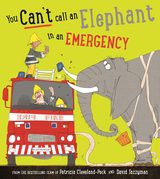
    Big, bold and a riot of fun, the slight whacky crew are back in their third book in the Can’t Call An Elephant series, as they all blunder into and through an emergency, and somehow all end up going on a holiday.

    Well presented this simply worded story shows children why it is so important to know the right person to go to in an emergency, rather than go to the wrong person such as Llama as a life guard as her manners are just to awful, or Sloth as a traffic cop because he does so love to sleep.

    Now Porcupine is the very last person to rely on if you need rescuing in a flood rescue craft. Why; because her very strong prickles might puncture the boat. Oh boy, what a disaster.

    As children everywhere know Elephants are very large creatures, who love to trumpet and slosh around as the firemen unroll their hoses in an emergency. They have a great laugh but what about the emergency!

    The fun filled antics of the most unlikely rescue creatures to ever put on uniforms creates an excellent platform for teaching about emergencies, what not to do and then, by association, who to look for if things do go terribly wrong.

    As a large picture book format the wording is suitable for beginner readers, the illustrations bold and colourful with a heap of built in, laugh out loud moments to be discovered.

    You Can’t Call an Elephant in an Emergency; find out why not!


  • Mackland Ave

    Mackland Ave

    Mackland Ave, like the house on the street that provided the inspiration for the tracks of the album, contains a little bit of everything, showcasing the diverse talent that is Mike Woodlark on this his second album, but the first under his own name.

    Listening to the Pines is a tune that was named by his grandmother, as to her, it represented to the sound of the wind as it creates a musical melody, lazily sighing amongst the trunks, leaves and limbs.

    Dark Locomotion perfectly captures that timeless pulsating sound of steam locomotive powering its way down the tracks to a final destination.

    The quirky track title An Elephants Soul is dedicated to Woodlarks’ mother whose totem animal is an Elephant. His gentle vocals reflect time spent with her on the porch looking at the stars, something so many have done and will continue to do both as children and adults.

    A powerful and wide soundscape is Legends of the Southwest inspired by western movies, outlaws, cinema and in his words, simply gave him permission to jam with himself. A fun and sweeping piece reminiscent of the days of the Wild West and Hollywood.

    Vincent Van Gogh gets a look in on Hey Vincent, introduced with guitar, with lovely vocalisation that pays tribute to the artists life story, his amazing work. The question is posed should they meet, what would Van Gogh think of him, in this very modern world. A second, stripped back and original version of this song completes the album.

    Rainshine dances across the keys presenting a pop synth flavour, before a deeper more brooding tone is introduced perfectly capturing the elements of a rainy, stormy day, when the heavens simply appear to be unable to decide what to deliver. Once again, some lovely worded vocals add a depth to the piece.

    Changing emotion once again is the classically inspired piece Graceful Grim, a beautiful piece for solo piano that transforms with its elegant simplicity. When followed by Dreameries and Home Cooked Dinner, a rather jaunty little piece, a wonderful soliloquy of thoughts, feeling and emotions has been presented.

    Mackland Ave is a fast paced, synth-based piece which is very up-tempo, catchy and bouncy, perfectly reflecting his time spent living on Mackland Ave; a place of dreams, love won and lost and above all learning about and living life.

    A great album to be enjoyed time and time and gain.

  • How to Tame a Human Tornado

    How to Tame a Human Tornado

     Paul Tobin says he has written this book for any child with questions. Certainly, reading this story will produce a multitude of queries and thought-provoking ideas. For Delphine, befriending Nate was something that she drifted into, and once learning about this young man and his extraordinary intellect she is hooked. Nate’s dog Bosper can talk, although he is not supposed to do that in public. The three make an effective team when it comes to preventing disaster in the way of Aliens or just evil people who want to rule the world.

    For children who love Fantasy, Science Fiction and Science, this book leads the way. The adventures the three get into are amazing. Of course, it helps that Nate has a Gold Elephant Credit Card, the most expensive one, and that he is able to solve most problems by using science and make incredibly accurate predictions. The arch enemy of the three children is Jakob Maculte and Luria Pevermore, who are the leaders of The Red Death Tea Society.

    Fortunately, Nate has built a car (Betsy) who is also capable of talking and action. When rocket mode is needed, she engages the cylinder and uses safeguards inside the car to protect the passengers. The car is not Nate’s only weapon and his ability to predict just how his enemies will react, and precisely what sprays they are using, (Spider attracting spray for Delphine) means he can quickly use an antidote.

    This is a story that moves along quickly and has quite remarkable characters. It needs a reasonable level of reading to follow the story and a great degree of compliance to understand the scientific reasoning of Nate. It is told with humour, a few farts and burps and spits, and will engage those adventurous children who wish they had a Gold Elephant Card.

  • Migration  Incredible Animal Journeys

    Migration Incredible Animal Journeys

    This is a reference book for students on how and why animals, fish and birds move from place to place. It is set out in a picture book format, making the information easy to access, and the illustrations reinforce the text with details. For ease of use, there is a contents page, and a map of the world at the end, showing all the migration patterns of creatures. Each animal or bird has a double page spread with a half a page of writing on one side and an opposite page with a full illustration covering both pages.

    Whales, Penguins, Terns, Butterflies, Dragonflies, Crabs and Turtles are just some of the creatures which are described, and their migration journeys examined. The book begins with an explanation of migration and describes why the creatures must move, and how many travel extensive distances to survive.

    The Emperor Penguin is the largest penguin in the world; we are shown and told how they travel in winter, leave the sea behind, and march one hundred kilometres inland to breed. Each finds its own place and the female then leaves one egg behind for the male to keep warm on his feet. The females return to the sea to go fishing. After four months, the female returns with fish.

    Swallows are an English bird which could not survive the cold winter. Once the cold sets in they become restless, they build up strength, then fly 10,000 km to Africa. Turtles can swim up to 1,000 km to get to the Ascension Island, where they lay their eggs at night. The Osprey is a large bird of prey that flies from Scotland to the west coast of Africa, to breed in the warmth. Each of these species survives by migrating many hundred of kilometres. It is fascinating to see their journeys and how they survive and flourish.

    The information in this book is delivered in small blocks of print, ideal for young students to skim and find the meaning and key words. It is ideal for research or for students with an interest in this area. There is a website given for follow up information.

    Although this is a wonderful reference book, it would have been easier to use if the colours of the illustrations were lighter, and the text font larger. On one page, the small dark print is over a dark colour page and not easy to read. It is still an accessible information book for the young.