Tag: Dystopian

  • Saturation

    Saturation

    If you are into dystopian fiction, are looking for something which appears as deconstructed as the world it portrays, that  allows you to draw your own conclusion as to time and place, Saturation from William Lane could well be the book for you.

    Set in a time when the earth has reached its limits of just about everything, the population has been culled and the remaining people are living by strict rules, librarian Ambrose and Urslua are desperate to have a child, even though it is frowned upon.

    They are also desperate to save what remaining books are in the library as the ‘Dictator’ is determined to stamp out all earlier forms of knowledge, thereby being able to influence or manipulate, the people to a specific way of thinking and governing.

    The quest to having a child is at times the focus, the lack of knowledge over simple matters and the vague memory of past creatures, is concerning and the daily edicts from the text producing ‘Yoremind’ are also now very relevant in relation to modern day events and lifestyle.

    Lack of energy, lack of explanation in some areas, the general confusion that permeates the characters and what remains of the earlier civilisation creates a sense of ennui, which is uncannily easy to understand.

    While the plotline tends to wander around somewhat, the similarities with the occurrences in today’s world  relating to the deliberate changing or whitewashing of historical facts, the desire to reduce the capacity and availability of Libraries, the dismantling or attempt to dismantle Universities, the rise and rise of ‘Dictator’ style government  and the current style of communication of Government policy through alternate mediums, makes this unusual book somewhat prescient.

    Is Saturation a clarion call to arms; to wake up and start engaging in the world as it is before it is far too late, or a combination of a raft of other dystopian ‘realities’ cobbled together to create an interesting view of what lies in the future. This question is yours to answer.

  • The Outpost

    The Outpost

    Well, its finally happened in the year 2048 when the Earth has been depleted and a nuclear Armageddon has occurred. A Lawyer, Joseph has managed to survive the ‘holocaust’, and when he finally emerges from his safe haven, he discovers a few others have also managed to survive.

    This trusty band of stalwarts set out to trek to a Fortress, where they understand there is food and support but they first have to survive in a world like nothing they have ever experienced, which as they slowly discover is more than fraught with the unthinkable.

    The Outpost, a debut novel from Canadian Ben Date is one that takes a tried and true formula of dystopian reality and adds a fresh touch with the scheming, that is all too real, the cannibalism, one area that makes you wonder if you too would resort to such levels to survive, and the very carefully inserted secretive otherworld that somehow seems to be pulling the strings of the entire event.

    Who to trust becomes more apparent as once they reach The Outpost, known as Zulu, they discover that everything is not what it seems to be and humanity is still the untrustworthy element it has always been.

    Add in a Cyborg situation, a manic grab to be the ruler of the ruination of civilisation and in spite of the very bloodthirsty aspects, along with a few other plot thickeners and in so many ways this could be considered as a prescient look at the all to probable future of this world.

    The final chapter leaves the door wide open for book two but also reflects in an oblique manner, the price to be paid when you set out to create havoc and corruption!

    Very readable and if you enjoy dystopian survival stories, The Outpost is for you!

  • The New Wilderness

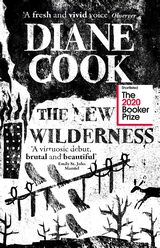
    The New Wilderness

    Ah, books about a dystopian future. Just what one needs during the year of 2020. But rest assured this is not about a disease that is killing hundreds of thousands of people nor is it about a massive economic collapse that has reduced people to begging for handouts from an all powerful government.  Instead it’s about environmentally depleted world. Yah.

    So the book starts with a child birth in a wilderness and an introduction to the character of Bea. Bea is mother to Agnes, the second major character in this narrative. Both lived in the City, a massive urban metropolis that covers all the land and is submerged in toxic fumes (picture perhaps the most polluted Asian cities of today merged together). However they are able to escape the City which is slowly killing Agnes by being part of a social experiment.

    The experiment is simple; as the land is covered by mass urbanisation the concept of nature and interacting with the natural environment has collapsed from living memory. However there is a certain area of the land in which nature has been left untouched (picture a more wooded version of Central Park but larger or even the make believe world found in The Hunger Games trilogy). No one has been allowed in this area but now the government has opened it up to a small group of volunteers to see how they cope both with nature and with each other.

    If you are reading this and getting a feeling that you have heard of similar plots you aren’t imagining it. Personally I got The Island vibe. If none of you have seen that it’s a show where presenter Bear Grylls drops a bunch of people onto a remote island to see if they can thrive (good show that one). However other readers may get their own vibes as survival shows and dystopian movies, shows and books are a dime a dozen these days.

    Now, whether the author intended it or not this book has a lot of political undertones. The first two are pretty simple; climate change and overpopulation. The future world that the narrative inhabits is one of dense pollution in which people are dying, pretty straight forward.  The second issue is connected to the first and involves mass urbanisation. Across the world mass urbanisation is causing problems as people move to the city in order to make a living. But there are less obvious political undertones in the book. Issues surrounding migration (the whole them and us mentality) and the issue of Old World’s vs. New World mentalities (Bea of the Old World City is struggling whereas the New Wilderness Agnes is thriving). You don’t need a degree in social or political sciences to see the real world parallels.

    Now having political undertones or social commentary in a fictional book is risky. In my experience they often comes in two ways; subtlety or like a bull in a china shop.  I will let the individual reader decide how strong the political undertones come across in The New Wilderness. There is also the question of whether readers want their narratives peppered with undertones and commentary. Once again I’ll leave that up to the individual reader.

    The book itself is not long at just under 400 pages and is broken up into parts. I found the narrative can be a bit confusing but then again I didn’t feel too bad about that because the characters themselves were often confused about the experiment they were in. What I found odd is that there are no chapters. The book is broken into parts and where there is a traditional chapter break there is nothing. I mean you know that it’s a traditional chapter break by the way it is formatted but that’s it.

    Overall, this book is interesting and if you like dystopian narratives, The New Wilderness should be given a shot.

    Shortlisted for the 2020 Booker prize


  • The Shining Wall

    The Shining Wall

    Dystopia or rather dystopian imagery was bought sharply into literature with the George Orwell’s satirical novel ‘Animal Farm’ in which the characters became dehumanised. The novel was in many ways before its time, but now, in todays world of automation, robotics and ever-increasing technology, the dystopian world could easily be the world of the future.

    Melissa Ferguson in her first novel The Shining Wall, has crafted an allegorical story set in the future when the world is a far different place to what it is now; a world where human life is of little or no value and robotic humanoids, cloned Neanderthals, rule Society.

    Based on the very real tenants of the wealthy ruling society, the rest living in shanty towns and worse, Ferguson has spun a truly horrifying tale of what may be yet to come, should science eventually be uncontrollable, where technology controls survival and survival is once again, of the fittest, most cunning and sometimes the most ruthless.

    Alida and her sister Graycie are orphans trying their best to survive in the world outside the city walls, the shining, gleaming walls of the ‘haves’, a world known as the Demi-Settlement. When in desperation and to try and get help for Graycie, who is suffering an illness, Alida finds she need to turn to crime, to enter the world behind the wall, a world of massive risk and separation, a world that may see them all die she is placing them and her friends into great and very real danger.

    Shuqba is a cloned Neandertal officer, banished to the Demi-Lands because she simply cannot find the ability to be able to conform to impossible standards expected of her species. Shuqba becomes one of the more interesting characters, amongst the many, as she somehow has the fledging emotions that can help her make a choice, that can help the girls to freedom and security.

    But as she has the element of choice, Shuqba could also become the very opposite and see their world disintegrate to finality. Will they be able work together to overcome inbuilt distrust on both sides to find a way towards a better future together?

    Prescient, maybe, gripping certainly and one story that will have you pondering the very real possibilities of a dystopian world for some considerable time to come.


  • The Song Rising

    The Song Rising

    As the long awaited third book in the ‘The Bone Season’ series, set in the Republic of Scion, England, fans will totally enjoy the continuing journey as they join Paige Mahoney as she once again battles the forces of evil, this time in her position of Underqueen, ruling over the underworld of London’s criminal classes, in order to protect the clairvoyants in the community.

    Brilliant and well written once again, Samantha Shannon takes us directly back into the world of the Fae as Paige tries to stabilise what has become a never ending challenge for peace and stability.

    Having turned her back on former lover Jaxon Hall after a particularly bloody battle, he once again reappears to her but she begins to realise there is more to him that even she understood; that he was a traitor and none too fussy about which side he was supporting. He was out for himself and none other and now she expects her to return to him once again.

    Political overtones, aligning with many of the modern world issues, run throughout the story, and as more and more things go wrong, things that should not, Paige begins to understand the people she most trusted, perhaps are not so solid.

    But it appears that something has gone seriously wrong with one of the new scanners which have a new technology called Sensheild which can identify the clairvoyants and destroy the world as they know it.

    The sensor is particularly small and can easily be attached to the guns of the military, making life very difficult and dangerous for the inhabitants in the realm of un-naturals. As time goes by and Paige settles into her position as Underqueen she realises the role is one that has hidden depths and is pushing her in a direction she would rather not take.

    It is when she makes the decision to morph into the body of a guard at the Edinburgh Prison in order to release a seriously dangerous inmate she really begins to understand she is becoming someone ugly and hateful. But it not until she is captured and tortured for her beliefs things begin to change.

    Bloody and bloodthirsty this instalment is one that readers of dystopian fantasy will absolutely enjoy. Reminiscent of an Orwellian fantasy, The Song Rising is set in 2058 and brings to the imagination everything that The Hunger Games and Twilight left out.