Tag: drink

  • Teatimes: A World Tour

    Teatimes: A World Tour

    Helen Saberi takes us on a world tour with a delightful difference in Tea Times, as she invites us into the genteel pastime associated with not just supping a delicate brew of tea in a fine china cup, but the more basic and down to earth desire to eat something warm and delicious on a cold winters day, a delicate pastry or two with friends and the many, many layers that have traditionally gone to create the enjoyable and pleasant pastime of, taking Tea.

    Every culture, every country has its own version of Tea Time which stretches back to the Chinese, a race who had long cultivated and enjoyed tea. It came to British shores in 1650 via Dutch trading companies, but due to the high cost was only enjoyed by the wealthy. Eventually the cost decreased but not before much political debate had ensued. John Wesley in 1748 argued that it gave rise to ‘numerous disorders, particularly those of a nervous kind’, whereas Dr Johnson of Dictionary of the English Language fame celebrated drinking tea, by doing so, 25 times per day. The Scots declared it a greater evil than Whisky!

    Tea came to Russia in 1689 when the Treaty of Nerchinsk was signed between Russia and China; the Tea Road, or Great Tea Route was established and from there the custom spread into Iran, the Middle East and Turkey, countries that had long been accustomed to drinking coffee.

    As the drinking of tea became more popular and affordable, so too did the range of traditions and rituals associated with the ‘taking of tea’, each particular to the country and the culture. China, with a long history of taking tea, traced back to the Tang Dynasty (AD618-906), developed the custom of Dim Sum or Yum Cha. Japan refined the art to an elaborate tea ceremony with the associated meal known as cha kaiseki. The Koreans and Taiwanese developed their own specific ceremonies, which in the modern world of fast food, has led to the quirky Bubble Tea trend!

    The British took their tea culture on the road as far afield as Australia and New Zealand and into such far flung regions as Patagonia, courtesy of group of persecuted Welsh people who were looking for a country where they could practice their religion and speak their language. They founded a colony in the Chubut Valley with now more than 50,000 people claiming Welsh decent.

    But let us not forget India, where green tea had been well known since the early 17th century for its medicinal properties, a country which was eventually to become established as a tea growing nation, in an attempt to break the Chinese monopoly and lower the high cost of this popular drink.

    For purist who enjoy serving Tea in style there are a collection of some of the traditional  recipes that were often served with the hosts choice of brews such as Tea a la Russe (Russian Style),Masala Chai ( Indian) or if you like Qymaq Chai served in Afghanistan for very special occasions. A selection of sandwiches, cakes and pastries with delicious names such as Petticoat tails, Fat rascals, Tea Kisses and such like which can be served with plain black tea, tea with milk and sugar, tea with a slice of lemon or simply green tea, as you desire.

    Helen Saberi has created a wonderful collection of facts and fancies, as well as a few fantasies, covering all aspects of Tea and tea drinking that will be treasured by, not just lovers of tea, but anyone who has an interest in history and all the quirky bits and pieces that somehow end up becoming a tradition.

    TeaTimes is jammed packed full of the most fascinating and enjoyable facts about the what is today considered as a ‘humble brew’, so readily available to all and available to be consumed by lovers of tea on a daily basis, which make this a most enjoyable book to savour while enjoying a ‘cuppa’.
     

  • This Could Get Messy

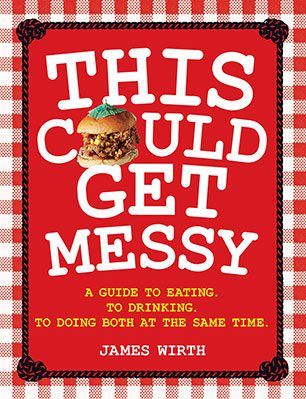
    This Could Get Messy

    This is more than just another recipe book; this is a book about food, about the world and about more food, and having fun while you are thinking up more outlandish ways of serving good food to good friends and other people!

    In James Wirth’s own words, ‘good food and drink is about having a good time with people you like; it shouldn’t be hard, but it should be tasty’.

    This formula, along with a lot of help from his friends, who come along and eat the food and drink the drink,  has seen three blokes, in some ways you could say chance met, or put in the right place at the right time, take over a number of run down, past their prime ‘pubs’ and turn them into trendy places to eat, drink and be seen, based on the simple motto, good food, good drink and good company make for a great vibe. Along the way they have created the successful Drink ‘n’ Dine movement in the Pub scene.

    James Wirth’s former life was that of a DJ travelling the world during the early 2000’s having a blast, playing his electronic music for all who would hire him, but  generally having a blast and living life to the fullest.

    Greg Magree, who apart from being a great ‘thrower of moves’ on the dance floor, has a knack for property development, particularly in relation to reviving old ‘pubs’.

    James Millar was running a club and looking to take on a new project since selling on his salad chain, ‘Sumo Salads’.

    And there you have it, three wise men, whom co-opted the talented services of Michael Delany to pull all the crazy ideas together, added to that Jamie Thomas, chef extraordinaire, which equalled a huge success story, possibly with a little dash of complete larrikinism added at all times.

    The abstract nature of the men behind the scenes is very obvious in the style of foods created and served at the various establishments throughout Sydney, but all have one thing in common, they are either world renowned dishes with a twist or are based on places and tastes experienced in their collective world travels.

    As to what you would call this style or taste selection, well, some may call it fusion but it is far more than that, it is specifically styled to be a bit ‘rough around the edges, has fantastic flavour, so therefore I guess you could call it ‘pub-fusion, if you must give it a name.

    Check out each of the quirky chapters which begin with a little footnote relating to the chapter. In the case of the second to last chapter, ‘’Drink all the drinks” the footnote states, ‘these drinks are to be drunk, not looked at,” which could be the footnote for the recipes, food is to be eaten not looked at, right.

    Enjoy the flair, pizazz and fun contained within the pages of this creative, enjoyable presentation of seriously great food and drink to compliment, as you entertain over the wonderful, long, lazy days of summer.


  • Apple Blossom Pie : Memories of an Australian Country Kitchen

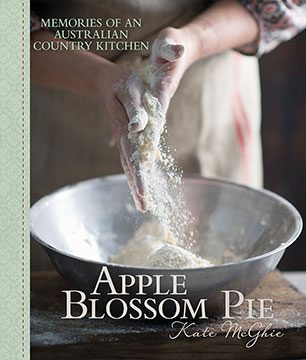
    Apple Blossom Pie : Memories of an Australian Country Kitchen

    You can smell the cinnamon, a roast cooking and the joy of preparing a feast or meal for the family as you turn the pages of this more than just a cookery book.

    The sub-title ‘Memories of an Australian Country Kitchen’ is understated as the undoubted store house full of scrumptious recipes would grace the tables of any seriously good restaurant anywhere, let alone the family dining table.

    Growing up in country Victoria Kate McGhie learned the art of preparing fresh food well from the soil to the table from her mother and grandmother. As the family depended on the ‘vegie garden’ for much of the fresh produce used, she grew up eating fresh fruit and vegetables from the garden, as everyone did and still does, if they have a ’vegie patch’. She also learning from the experts, her n mother and grandmother, the best way to prepare and cook what was in plentiful supply.

    Each of the chapters commences with memories of her childhood relative to the chapter, wonderful tips on how best to cook simple things like roast vegies to get the best flavour, colour and taste. There is a wonderful story about foraging for mushrooms, a story which holds much more than just gathering fungi for the table, which looks back at the simple everyday life of foraging and gathering nature’s bounty.

    Along with the memories are many, many tried and true traditional recipes covering just about any style of dish for all seasons. Beef and Stout Stew with Parsley Dumplings comes with a lovely introduction as to how the stews were served at the family table, along with an endnote in relation to stout verses beer and what happens if you decide to make the Dumplings.

    Nectarine and Smoked Trout Salad with Celery leaves, a seasonal dish if ever there was one, is also one that would grace any table anywhere and is both quick and easy to prepare and serve.  Perhaps something different for Christmas this year!

    There is wonderful tale about ‘Aprons’ which is a definite ‘must read’ and as the year rapidly draws to a close, an Inspiring section on Christmas for those already feeling over or underwhelmed by the festive season.

    The No-Bake Deluxe Fruit Cake can double as the Christmas cake; Clootie Pudding takes a little longer but will add that something special to the festivities and is also full of tradition.

    If you are stuck for a main course check out the Rolled Lamb with Mint and Pea Filling or the Festive Pickled Pork which is a cheap, traditional alternative to the Christmas ham and well loved by many of the older generation.

    Want a little bit more upmarket well take a look at the ‘Crayfish on Tomato Jelly’ designed to impress or simply wander back over the pages to select some of the many traditional Australian Country recipes which will do you and your guests proud.

    This is a book for giving and receiving and regardless of whether you are a cook, a person who would like to be a cook or someone who enjoys a wonderful book and look back over the years, there is something for everyone in this beautifully presented and photographed walk down memory lane.

    P.S. Do make sure you check out the bit about ‘cake tins’ as this is truly something special and applied to many families world-wide during the First World War.