Tag: DNA

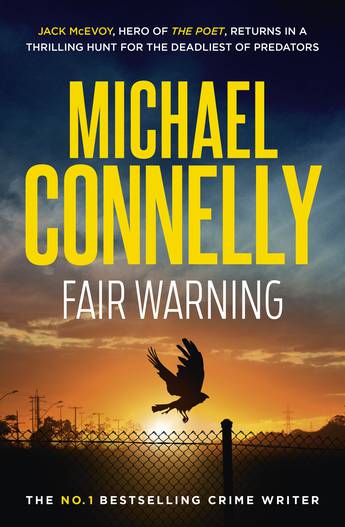
  • Fair Warning

    Fair Warning

    Jack McEvoy who first made his appearance in The Scarecrow in 1996 and then in The Poet in 2009, has returned in a chiller thriller Fair Warning, based around DNA and the all to conceivable abuse  of this science by those who inhabit the ‘dark web’ of the todays world.

    McEvoy has a one night stand with Christina ‘Tina’ Portrero who turns up very dead, about twelve months after their night out together. As his name has been associated with hers, the LAPD Robbery Homicide division come looking for him, full of questions.

    The fact that he is journalist who has covered the police beat for many years, before moving to his latest line of work, that of investigating and writing for the consumer watchdog website Fair Warning, has something  to do with hostility the LAPD hold with and for him.

    As the days then weeks pass, it looks more and more likely that he is being framed for not just Tina’s murder but that of several more victims that have been killed using the same, horrific style of murder; Atlanto-occipital dislocation or a snapped neck.

    Naturally the first thing McEvoy does is begin a classic style investigation into every scrap of information he can garner regarding the death of Tina Portrero , discovering there appears to be a series of other deaths, using the same style which points towards a serial killer on the loose.

    DNA evidence does not appear to be able to be used as the killer leaves no trace other than a dead woman, his particular calling card the style of death, and because of this the nickname is given to him of The Shrike.  Who is the killer and why is there no DNA left at the scene of the crime consumes not just McEvoy but the also the LAPD as they race to try and find out who he is before he kills again.

    McEvoy ends up working with former partner Rachael Waller and Fair Warning colleague Emily, but the further they delve into what is fast becoming something too terrible to contemplate, relationships are put to the test, friendships challenged, with the buying and selling of DNA on the dark web uncovered, which leads to lives, other than McEvoy’s,  being put at risk.

    As with all of Connolly’s thrillers there is a very vein of reality running through them all with Fair Warning no exception. The proof of this is the essence of the storyline, DNA selling, which could for all the everyday world knows, be a real and terrible truth which creates a storyline that will remain for a very, very long time.
  • Chase Darkness with Me: How One True-Crime Writer Started Solving Murders

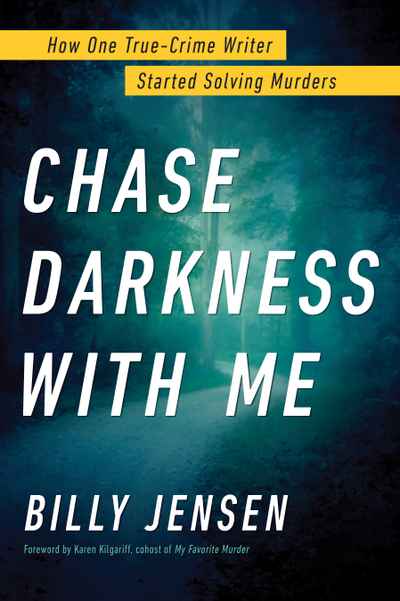
    Chase Darkness with Me: How One True-Crime Writer Started Solving Murders

    How the tools for cracking cold cases have changed over the last five years! Only ten years ago true crime readers could not have envisaged that social media and familial DNA, would become important weapons in the apprehension of the ‘monsters’ still walking the streets. Cases which have been dormant for decades are now being resolved and finally the victims’ families are obtaining some sort of ‘closure’.

    Billy Jensen in his book ‘Chase Darkness With Me’ explains his passion for solving some of the enormous backlog of cold cases, to achieve an element of justice for the victims. His book explores a wide spectrum of cases; some of which are solved and other yet to be solved.

    His unorthodox method of investigation relies heavily on social media (in particular Facebook) and his willingness to reach out to the victims’ families and friends. The author clearly explains how he uses Facebook to target his audience by using the victims/perpetrators’ personal and geographical details when constructing his page. He thus ensures the best value for money.

    This book is highly recommended to true crime enthusiasts, who are latent detectives. They will find Billy Jensen’s final chapter extremely useful in fulfilling their desire to follow in the author’s footsteps. In this chapter he clearly explains the steps necessary to solve a crime through crowdsourcing. However, his perseverance and dedication to his cause cannot be underestimated; they are the main ingredients, which allow him to have more than a modicum of success.

    His appetite for taking vicious criminals off the street is what has kept him focused.

  • Crimes That Changed the World

    Crimes That Changed the World

    Every hour of everyday a crime is committed somewhere in the world which impacts not only on the community in which it is perpetrated, but on the world at large. Some of these grave offenses have resulted in political, environmental or social change, while others have caused new laws to be enacted or old ones to be amended. But in all cases, life for the victims and their communities will never be the same!

    True crime writer of note, Alan Whiticker has selected 100 of these crimes which have been committed over the last 100 years to include in his latest book, ‘Crimes that Changed the World’; beginning with the assassination of Arch Duke Ferdinand in Sarajevo in 1914 and concluding with the Paris Attacks in 2015. This book explores a wide range of crimes in every region of the world; kidnappings, bombings, suicides, hijackings, massacres, conspiracy to defraud and murders. He has selected crimes, which have generally received worldwide recognition in News broadcasts, films (TV miniseries) or books; thus remembered today for their social and cultural impact. This work also tracks the development of crime detection and perpetrator identification with the development of computer and DNA technology along with improved policing methods.

    Almost all of the crimes included in this book have been dissected and explored in greater detail in other works; particularly on the internet’s YouTube. However, this book has the advantage that it is well structured in an easy to read chronological format.  Each of the crimes is illustrated by relevant photos related in three pages with a ‘Fact File’, ‘References’ and generally has a ‘Historical and Social Significance’ section, guiding the reader to the nub of the offence and its impact on others. By organizing the crimes sequentially, the reader is provided with a variety of offences rather than having a diet of one genre of crime before moving onto another. To aid the reader’s selection of crimes of interest rather than reading the book from cover to cover, the author has included an excellent chronological index at the front of this volume. 

    Avid true crime readers may question why certain crimes were included and others omitted; e.g. why several USA mass murderers were included but the Tiananmen Square Massacre and Boston Marathon Bombing were not. The author has justified his selection by explaining that ‘those selected should be remembered, so that we can, in some small way, understand and learn from them’. Each of the crimes selected certainly does this!

    This is a must read for all True Crime readers as it also provides a reference to many significant events of the last 100 years. It offers an easy guide for further investigation and understating as to ‘why’ they occurred. This excellent collection provides many hours of thought provoking reading.