
Tag: disability

  • The Beat I Drum

    The Beat I Drum

    For children with disabilities to begin to feel accepted in society, we need to acknowledge, discuss and include them. The author has come to write about these children as she feels, “To be not written about is like saying you’re not worth writing about.”

    The Beat I Drum focusses on a boy names Conor, who is facing the first day of High School. Daunting for most, but for this lad, who barks and has a tic it will be a challenge again. Connor has Tourette Syndrome and every day he faces mimicking, stares and questions.

    The teachers have discussed Connor’s condition with the classes before he arrived hoping the students will be empathetic and not need to ask questions or be surprised when he barks. This mostly works, but at lunch time he is befriended by a girl who has a large birthmark on her face.

     She suggests they join her group in the canteen, but Connor is aware that he can spit while eating. Eventually he does join the group for lunch, and they are supportive. The students on the bus are not so friendly and bullying behaviour begins to emerge.

    The music teacher asks Connor if he is interested in playing an instrument and he admitted that a friend had been teaching him guitar, but he wasn’t progressing. Mrs Chen offered to teach him drums. He was happy and comfortable. His friends mother played the organ in a café and Connor got to perform there.

    This story is a very positive one showing how friendship and support can change a person’s life. Dusti Bowling hopes that disabled children can be validated by seeing aspects of themselves represented.

  • The Unexpected Journey: Embracing the Beauty of Disability

    The Unexpected Journey: Embracing the Beauty of Disability

    I have seldom come across a book such as The Unexpected Journey which has the power to change lives and social conscience. It is clearly written, modelled with love and above all practical. Julie Fisher’s journey with her family speaks to all families and particularly to mothers.

    When Julie was 36, she felt a longing for a third child. She and husband Mick had two sons and a happy, busy life, but felt their family was incomplete. Pregnancy happened fairly quickly; when Julie was 10 weeks, she had her ultra sound and blood tests. It was then mentioned that having a baby with Down Syndrome was a possibility. Later, when this was confirmed, Julie and Mick were given options. WHAT OPTIONS? THIS IS OUR BABY, OUR FAMILY!

    What follows is a way of thinking, of loving, of supporting and reality. As it was explained to the family, it’s like going on an overseas trip to Italy and arriving in Holland. Nothing is what you expect. Julie shares her fears and how the many concerns she had, either didn’t eventuate or could be managed.

    As baby Darcy developed, each milestone he passed was celebrated. He was late in developing many skills and especially late to walk. A walker was procured which gave him a degree of independence, until the day came when he could leave it behind. Kindy was the next milestone for Darcy. Together with the Director and team, support was given to the little boy with his friends accepting his joy for life.

    There is a far greater awareness in our community today for people with disabilities. Julie’s book, attitude and love is inspirational and will help many people. She has added to knowledge and awareness, showing us that people with disabilities have such potential. For all the negative advice put to the family, nothing prepared them for the love and blessings they felt with Darcy.

    It was an honour to read The Unexpected Journey. Thank you for sharing your grace and the journey of your family, Julie.

  • Truly, Wildly, Deeply

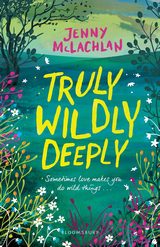
    Truly, Wildly, Deeply

    For young people a first romance is an area of great mystery. For Annie, this is compounded by the fact that she has a mild form of Cerebral Palsy. She walks with toes pointed in and legs turned in, and arms swinging to compensate for that. However, she has been blessed with a mother who is not only loving and sensitive, but also extremely practical. Annie’s strength and attitude have been guided by her Mum, and her resilience is her foundation.

    Annie is confident and proactive. When she begins at Cliffe College, a whole new world is opening up for her. She looks around at lunch break and decides she will go over and chat to some friendly looking fellows. So she has made her first contact. The English teacher gives the students a copy of “Wuthering Heights” to study, and as Annie is a confirmed “Book Sniffer,” she is very excited. It is at this time that a young man comes into the classroom, a young Polish man named Fab, and he sits next to Annie. He is very up front and chatty in the most innocent way.

    Subtle reminders of Annie’s disability are present all the time. When Fab opens a door for her, he says that he is sorry that she is an invalid. She hotly declares that she is not, and says that word also spells invalid, (as not being valid.) When Fab asks her if it is difficult having a disability, she replies that society makes her appear disabled. She has a physical impairment. When getting on a bus, the disabled space for a wheelchair was taken up by two prams. It was easier for the bus driver to ignore this than address the mothers, so Annie had to politely insist on a space and a seat.

    Because of the need to stand up for herself, and be aware, Annie has developed an independence that even keeps her mother a little at bay. When she meets a special person, her Mother points out that she may lose some control, which will be scary, but may also be fun. Her Mother again gives the best advice when she tells Annie,    “You will never lose yourself, you know who you are.” Great reinforcing ideas of her self-worth.

    This is such a fun and entertaining story. The humour in the character is so real that you feel you know them. Fab is unaware of many customs and is always on the lookout to help. He brings his own homemade rolls to school as the canteen ones are dry. He and Annie exchange texts about Heathcliffe and some of the character’s  more bizarre behaviour. “ME: OMG Heathcliffe’s just dug up Cathy’s body, Sick”.  Fab, “Surely romantic.”

    Lovely characters, positive actions, and enough self-doubt to make this a terrific story.


  • Raising the Perfectly Imperfect Child – Facing the challenges with strength, courage and hope

    Raising the Perfectly Imperfect Child – Facing the challenges with strength, courage and hope

    Looking at the photo on the front cover of this book is enough to break your heart. For there is the face of a blond haired boy who could have been my son or yours, but this boy has no arms and no legs. He is lying on a skate board and looks happy and at ease. This is the story of Nick’s life so far, as written by his father. It is full of faith and belief, and trust in God, although for a while, Boris and Dushka, his parents, felt they had been punished by God.

     The foreword in this book has been written by Nick. He tells the story that at age nineteen he told his parents he was going to South Africa on a speaking tour, and going to donate the money to the poor. They argued and tried to dissuade him from going, but Nick was determined, and succeeded in his quest. It would be difficult to raise a normal headstrong boy, but Nick was so much more than his body suggested.

     The first few chapters deal with the birth of Nick. He was a first child, greatly loved and wanted. For parents of children born with a disability, the honesty of the parents in the first weeks of Nick’s life would be helpful. Even though their faith was tremendous, they entertained the thought of placing Nick in a home for the rest of his life. The overwhelming issues of how to deal with a child with no limbs were too many to contemplate. However, once the decision was made to keep their son, each problem was dealt with in a practical manner. Comments were made about his mother not helping him to deal with things, but she understood that he needed to work out his own methods of movement and control.

     There is much advice given in this book. For example, a disadvantaged child may become a bit demanding and bossy, so other siblings need to be given priority time. This will help to maintain a good relationship between the children as they are growing up. Discipline needs to be fair and just with all the children and not adjusted for the disabled child. Following most chapters is a set of bullet point ideas stemming from that chapter; the chapter on “Give Yourself Permission to Grieve and Time to Recover” has nine points to consider, such as “Understand that those close to you are mourning too”.

     The positive note in this story is the deep love and commitment that has Nick found, together with his wife Kanae. The joy that Nick and his mother and father felt when Kanae gave birth to their first child, a beautiful healthy boy was amazing.

     Nick has made a name for himself as a speaker and great advocate of God’s love around the world. This is certainly an honest, uplifting story, to be brought to the attention of caring people everywhere.