Tag: different

  • My Especially Weird Week with Tess

    My Especially Weird Week with Tess

    Translated from the Dutch by David Colmer My Especially Weird Week With Tess from Anna Woltz, is an amazing journey into the world of young teens who are slightly different in their approach to life. There is so much to ponder and consider, especially where do you find a parent, a Dad to be exact!

    Sam, his brother and father, are staying at a holiday house. In fact, they have just arrived and gone down to the beach to play a game of footy. Sam suddenly hears his brother scream and runs towards him, as does his dad.  

    They see that Jasper has fallen down a hole. He is in pain and says that he heard a crack. Dad carries him on his back to the car, then to the doctor’s surgery where they are told they “Should have made an appointment.”

    Sam waits out the back and is hailed by a large girl who asks him if he can play the trumpet. Being unusual himself, Sam is not fazed by this question and in no time at all, the girl is showing him how to dance.

    From then on, many social issues arise and Sam has his head spinning. An old man comes by with his dead pet bird. Sam says he and the girl, Tess, will help him have a funeral for the bird. Then Tess and Sam discuss dying and if the last dinosaur would be sad if he knew they would be extinct.

    Sam asks about Tess’s father. She is annoyed and says that her mother decided to have her child by herself. “If I say I don’t know my father, people want to know how come…I don’t ask you how your parents made you, do I?”

    In just a few chapters, we are introduced to ideas which children often think about but don’t discuss. There is such an easy dialogue between these two characters that issues arising are examined and given thought.

    For Sam, his constant wondering and questioning is just annoying for his family. Tess is the same, so their friendship is one of delight and discovery. For the reader, there is much to delight in as well.

    My Especially Weird Week With Tess has been a made into an award winning film My Extraordinary Summer With Tess.
  • The Secret of Sapling Green

    The Secret of Sapling Green

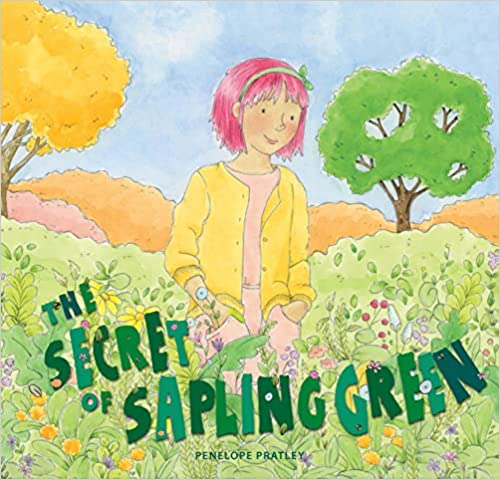
    From the first page of this delightful picture book, we realise that Sapling is no ordinary girl. For a start her thumbs are green, and her hair is pink. What is her secret?

    As we turn the pages of this charmingly illustrated book, we discover that Sapling is a schoolgirl who is rather lonely and has little contact with her fellow students. She looks on longingly as the other children manage the garden and climb the school tree. However, disaster strikes the tree and Sapling is the one who can come to the rescue of the climbers and the tree.

    The Secret of Sapling Green is an unusual book as it begins with a normal situation, but then flows into fantasy. Children will follow this switch in genre easily and happily accept the outcome. The storyline certainly involves the imagination and raises many questions for the avid reader. The idea that one can make a positive action to help make a friendship is a good one.

    The double page spreads with a white background, make the text easy to read, and the size of the text is suitable for beginning readers. The pastel illustrations are quite delightful and give a gentle and subtle feel to the story. This is a calm and soothing story with a comfortable ending.

  • Dare to be Different: Inspirational Words from People Who Changed the World

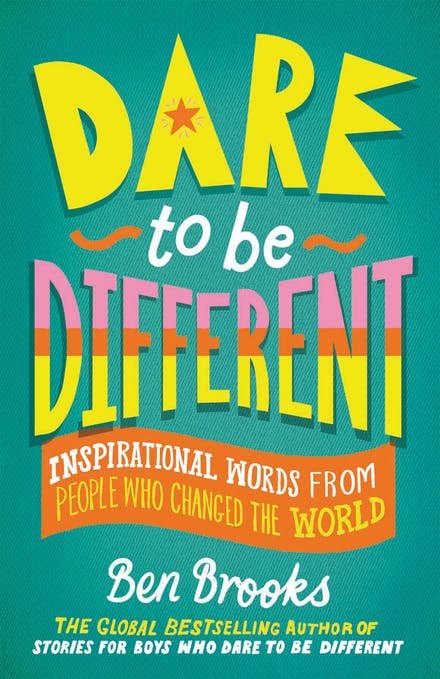
    Dare to be Different: Inspirational Words from People Who Changed the World

    Leaders, great artists and inspiring minds have something in common; they dare to be different. They realise that to make a positive impact on the world that they need to step out of the mold to make this unique creative contribution. However, this sometimes means they stand alone.

    ‘Dare to Be Different’ is the third in a series of ‘Dare to be Different’ compendiums by Ben Brooks.  His latest anthology of inspirational mini-biographies are of women and men of all ages, who have had a dream and gone on to achieve it, is arranged in alphabetical order by given name.

    The subjects range from Plautus (254BC-184BC) to Anurudh Ganesan (born 2000) who invented the VAXXWAGON; some are well known while others have quietly gone about their business and remain generally under the radar. Even though the individuals come from the past and the present, all corners of the globe, all walks of life, every social strata, they each have a meaningful message to inspire the reader to greater heights.

    The two-page biographies consist of one page of clearly written text accompanied by a vivid, full page illustration by Quinton Winter, which will maintain the child’s attention. This highly recommended, well rounded collection brings alive a wide range of amazing people. It will not only engage the reader but will pique the child’s interest to such an extent that she/he will undertake further research into the life of the subject.

     This inspiring book is for all children, as it teaches them that they can follow their dreams, to make a meaningful achievement in the area of their choice; adults too will enjoy the stories of people who have challenged the norms throughout history.

  • This Is My Dad

    This Is My Dad

    For many children the family unit does not consist of a Mother and Father. The definition of “Family” has changed dramatically in recent years, and society has accepted these changes and welcomed loving relationships.

    This is my Dad shows the dilemma experienced by Leo when asked by his teacher to do a Show and Tell about his Father.

    His subsequent questions and searchings for answers brings him no solution to this problem. His Mother is busy on her computer, and his neighbour says he is too old to be his Father. So, Leo provides his own ideas of what a Father should be and cleverly solves his problem.

    This very topical, hard back picture book has simple and attractive pastel illustrations which clearly reflect the feelings of Leo and the other characters. The text is clear, a good size, and placed on a pale background for easy reading.

    Dimity Powell intended this story to celebrate “families of every shape and size.”

  • The Incredibly Busy Mind of Bowen Bartholomew Crisp

    The Incredibly Busy Mind of Bowen Bartholomew Crisp

    The Incredibly Busy Mind of Bowen Bartholomew Crisp does a great job of recognising children who see the world differently. Bowen Crisp struggles to answer questions put to the class by his teacher from the earliest years. This is not because he doesn’t have answers to the questions, but because he sees so many possibilities. “What colour is the sea?” asks his teacher. Bowen thinks about the white tips of waves, the deep blue of the ocean, the turquoise waters of the shallow beach, but by then, the class has moved on.

    Bowen is inventive and wonders why tortoises haven’t gone into space. He designs and constructs a suit for his pet and only when Granny discovers his rocket attached to the tortoise, does his experiment come to a halt. Bowen’s class visits the Art Gallery, and the teacher sits them down before a particular painting and asks the children to write down what they see. Most of the children respond saying they see a man with a dog. Bowen, however, is amazed by the brush strokes of the painting and studies them so carefully that he is unable to complete his work.

    At night, when his mother comes to say goodnight, the two have a fun discussion about hypothetical issues. They ponder, “Is a firefly hot?” and so we see like minds. It is refreshing to look at different learning styles and attitudes and we are reminded not to judge a person too quickly.

  • Wrestle!

    Wrestle!

    The cover of Wrestle, ahis hardback Picture Book jumps out at the viewer. There is the face of a very fierce boy who is just waiting for a wrestle. In fact, the central theme of this story is celebrating different family groupings and how parenting is the same, whether there are two Mums or two Dads. This is an issue that would challenge any family.

    Gus just loves wrestling. He watches it on TV and knows all the names of the wrestlers. He also knows all the moves and holds. However, when he tries to show younger siblings they get hurt. His family are not sure how to handle this problem and explain to him that there are other ways to be strong other than having muscles.

    The family wish to march in the Mardi Gras and Gus is adamant. He wishes to dress as a wrestler. It takes a great deal of planning and thinking to satisfy everybody’s needs to have a happy march.

    It seems that this was based on a true story by one of the authors. It is an exposition of normal family issues within a family not comprised of the usual Mother and Father as head of the house. The illustrations by Tom Jellet are perfect for expressing the character’s feelings and bringing the story to life. They are detailed and colourful and add wonderfully to the text.

    Soon, reading books where two Mums or two Dads are the head of the house will become much more common and children will have access to a broad range of values and ideas.

  • Along Came a Different

    Along Came a Different

    For many young children, copying family members and parents is the way they learn the ways of the world. They want to be grown up like Mum or Dad or older siblings. Many of life’s rules and practices are learned by watching and mimicking. It is not surprising then, that they accept sameness as being the way things are, and when challenged, find comfort in being part of “The Group.” But for children who are different, it is much harder. It may be that they wear glasses or have a physical disability or come from another country. Without much thought, it is easier to ignore these people. This book is a fantastic way to suggest that children can behave otherwise.

    Tom McLaughlin has very cleverly created a story using abstract shapes. We begin with the “Reds.” They love being red, the same as all the others and love wearing the same colour clothes. Then one day along came some “Yellows.” They thought that yellow was “The best thing.”  The Reds and Yellows didn’t like each other and kept apart. Along came other colours and the boundaries had to be drawn, and rules made. It was a tense time. Suddenly along came a “Different”; different in shape and colour and very friendly. Then more Differents’ came along and there was fun and laughter and the rules didn’t seem to matter anymore.

    Tom has put a message across so cleverly. Maybe it doesn’t matter what colour we are, and maybe it doesn’t matter if our shape is different. Being kind, helping out and having fun with each other, is the way forward for a happy life.

    The structure and presentation of this book makes it eminently suitable for the youngest child and also older children. It provides a fantastic focal point for discussion with children about getting on with people and enjoying life.

    The strong colours used in the book make a great reference tool for teaching children colours, and also shapes. Each double page spread has a block of colour and a few small illustrations. The message is clear and simple. The text is large, and the colours are printed in bold letters. Through the simplest of drawings, the author conveys the feelings and emotions of the shapes.

    This is a Picture Book with many layers. The discussions and the concepts in here are excellent. This should be in every child’s library.

  • Grandad’s Secret Giant

    Grandad’s Secret Giant

    “He has hands the size of tables”, Grandpa said. Billy, his grandson, does not believe in the giant, who grandpa says, goes around the village doing good. In days gone by, everyone who had seen the giant ran away, and so he has learned to hide, embarrassed and ashamed.

     This beautifully illustrated Picture Book focuses on friendship and a loving relationship between Grandpa and Billy. The illustrations are detailed, and set the scene well, drawing one into the pictures. The colours used for the illustrations are muted, but quite dramatic, and enhance the text wonderfully. The pictures vary in size from double page spreads to small oval pictures, two to a page. David creates “his unique, atmospheric artwork using a variety of traditional techniques”.

     The text is well set out with small blocks of print on each page, allowing a child to read or follow along with a finger. The font size varies with the drama of the scene. The giant was “HUMUNGOUS and he was TERRIFYING.”

     Billy has an opportunity to meet the giant, but does as everyone before him has done and runs away. He regrets his behavior, and tells his Grandfather who sympathizes with his fears. However, Billy plans a strategy to reassure the giant, and to make amends. He realises that even a giant needs a friend, and being different is no barrier to a lasting friendship.

     This is an entertaining story with a simple, creative ending, and superb artwork. Friendship and trust are dealt with and fear is examined.  The front cover is beautiful, and an enticement to open the book and read.