Tag: diet

  • Food for Braces: Recipes, Food Ideas and Tips for EATING with Braces 

    Food for Braces: Recipes, Food Ideas and Tips for EATING with Braces 

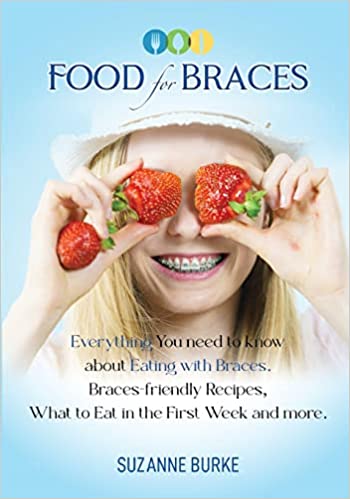
    Having to have Braces fitted is just the beginning of a period in time, when, as far as food is concerned, life becomes a minefield of can and cannot eat, especially in the first week and then month.

    Suzanne Burke has walked this pathway with her children and over of 12-18 months of braces, she created many recipes that where simple, safe and most importantly yummy.  In Food For Braces she offers her tried and many times enjoyed recipes, as well as helpful tips to get you started.

    Realising there was not a great deal of information available on Orthodontic pamphlets, she wanted to help other families facing the same food challenges she had, as well as people with oral or medical condition that requires a soft diet.

    She looks at the issues of food getting stuck in the braces, food that stains as well as food that is suitable for sensitive gums, which happen in the first week, as well as very sensitive teeth.

    Commencing with foods for the first week she looks at simple things like yoghurt, smoothies, custards as well as nourishing soups and offers many suggestions for lunches and dinners which will prove helpful.

    Moving on to the second week, she offers foods that are a bit more substantial with a section on what not to eat, now that braces are becoming more comfortable.

    The recipes that make up the balance of the book are easy to create, healthy, stay well away from things that should not be eaten and offer healthy options and variety, as well and some seriously yummy comfort foods. There is an excellent Simple Meal Plan included at the end of the book to help you through the first two weeks.

    Set out in an easy to read style with dot points for the important bit and pieces, Food For Braces is a must have for anyone, of any age, facing the challenge of Braces or an ongoing soft diet.
  • A Well Mind

    A Well Mind

    Mental health is under the spotlight more than ever in the world of COVID but what about the many people who have suffered for years the effects of mental health on their physical well-being, remaining undiagnosed and told to get over it or get on with life.

    How many have given in to despair, ill health and social isolation because they did not fit into the ‘norm’ of society; a society that has become very good a rejecting anyone who does not appear to fit in.

    Lisa Parkinson Roberts was one such person, eventually being diagnosed as bi-polar at the age of fifteen years. Being diagnosed and being helped was vastly different. It was not until she was considerably older, had suffered terribly with mental distress in many forms she began to see there was a correlation between the food she was eating and her episodes of serious ill health.

    She poses the very real question, what would happen if mental health issues were treated and considered as illness, just like every other form of illness, not set aside as something too hard to handle, requiring drug therapy or specialist intervention?

    The answer is relatively simple in that much of the shame and stigma of having mental health issues would not be evident. People suffering would be better able to heal and maintain a good life quality. Going on to study the effect of food on mental health issues, she achieved a doctorate in nutrition science, not too shabby for a lady who at one stage in her life, truly through she was ‘mad’!

    Her evidence based research has transformed her life and it is this journey she offers in A Well Mind as she looks at nutrition, gut health, a ‘hot topic’ in the world of medical science, sleep, exercise and much more, to understand the effects the modern world has on mental health.

    Change, especially with mental ill health, as she points out, does not happen overnight, it takes many months and sometimes many years, but it is possible when we recognize that what we eat, how we live our lives and being able to speak with Doctors to discuss alternatives to drug therapy, makes a positive difference to people who suffer mental illness.

    Perhaps there is still a long way to go, but in the past twenty years a considerable distance has been travelled with medical breakthroughs, a better understanding of depression, fatigue, psychosis, anxiety and what is referred to as mind – health.

     A Well Mind is far more than a self-help book, it is a pathway through what can be and often is a nightmare of health wellness to a place where simple alternatives will and can make a very big difference to overall health and well-being.

  • The Jane Austen Diet: Austen’s Secrets to Food, Health, and Incandescent Happiness

    The Jane Austen Diet: Austen’s Secrets to Food, Health, and Incandescent Happiness

    ‘Jane Austen was an English novelist known primarily for her six major novels, which interpret, critique and comment upon the British landed gentry at the end of the 18th century. Austen’s plots often explore the dependence of women on marriage in the pursuit of favourable social standing and economic security’. Wikipedia.

    Born in 1775 at Steventon, Hampshire Jane Austen was the second daughter and the seventh of eight children born to the Reverend George Austin, a scholarly man and his wife Cassandra. She rose to fame as a novelist whose works are now considered as classics, portraying the middle-class life of 19th century England, defining the manners of the time and the very ordinary people who made up the very essence of society.

    Imagine then the surprise of novelist Bryan Kozlowski, a lover of Austen’s works and a certified diet junkie, when reading Austen while facing a mid-life crisis and amassing a pile of the latest diet magazines, to discover that throughout all of Austen’s classic works, she was very cleverly setting down the rules for a healthy way of living, achieving a ‘bloom’, maintaining a healthy weight and exercise regime.

    So many of her characters were women who refused to be place in the societal mould created for them by men, women who were strong, vital, voiced their opinions often in a strong voice and even in a world which was vastly different to today, were concerned about health, society, marriage and the world around them.

    Kozlowski has woven seamlessly the secrets of the past into the madness of the diet culture now, as he combines the lessons and health tips touted throughout the pages of her books, referencing them to the modern-day practises of gym junkies and fad diets. He has walked his talk and discovered that yes, Austen’s way of viewing healthy living worked. She became his ‘health guru’ for the next two years.

    Having used the word ‘health’ more than 100 times, over her literary works, which is a massive total, along with of course the requisite walks around the park, to the shop, or simple outdoor outings with sisters of friends, Austen certainly appreciated the simple and healthy benefits of fresh air, fresh food and exercise; everything in moderation.

    Witty, and a refreshing change to read about health and fitness tips that are as relevant now as then, cost nothing other than the price of healthy food, and will almost secure that bloom of good health and a healthy body, which even in Austen’s day could come in many shapes and sizes.

    At times the work becomes somewhat fragmented, but perseverance wins the day, although some of the recipes listed may, in todays world take some achieving, but at the basis of both Austen’s works and Kozlowski’s ‘manifesto’ lie the secrets to good health and happiness, which despite modern marketing attempts to make us believe otherwise, are simple, extremely cost effective and guess what, really do work!


  • Overcoming Multiple Sclerosis Cookbook Delicious recipes for living well on a low saturated fat diet

    Overcoming Multiple Sclerosis Cookbook Delicious recipes for living well on a low saturated fat diet

    Ingrid Adelsberger was diagnosed with Multiple Sclerosis (MS) at the age of 30 years, which was a serious shock as until that time she had always thought MS was a condition that was specific to an older age range, not one that would become apparent in a much younger demographic.

    Once the shock wore off, she became determined that the condition would not get the better of her and began what was to become a passion for discovering everything she could about the condition, as well as the best way forward, to be able to ward of the worst of this debilitating condition for as long as possible.

    Diet was the key; one aspect of her life she felt she could do something about was her diet and life style, as the option of a drug regime was not one, she felt was an acceptable alternative. After much research, a massive dose of self-pity and depression she eventually came across Dr Swank’s, Overcoming Multiple Sclerosis (OMS) diet in an online forum.

    Professor Jelineks’s name was associated with this forum, appearing many times, so any times she decided to explore further, discovering a pathway, tried and proven, to a healthier lifestyle and regime, one that works exceptionally well of the many who have MS.

    After much trial and error, slipping off the pathway, eventually finding a new meaning towards health, lifestyle, emotion and eating, she has, in conjunction with professional chef Jack McNulty who has been creating and delighting the OMS community with his fantastic menus, and clinical nutritionist Sandra Perry, have created this amazing cook book especially designed for the OMS community.

    Not only is it filled with a range of mouth-watering recipes, it also has an excellent introduction as to How To…use the cookbook, a very informative section on MS and the reason the diet works so well, a list of ingredients that need to be in the pantry and a vast range of tips and tricks for cooking OMS Style.

    Well researched, constructed and informative, every recipe is suitable for just about any person with an eye to what goes into their cooking, is interested in healthy alternatives and enjoys experimenting with recipes that are tasty, healthy and able to be created with a relatively standard range of ingredients.

    A helpful tip is included with every recipe which helps when first experimenting with recipes that will become staples, regardless of whether you are on the OMS diet or simply wish to eat healthy.

    Bon appetite

  • The Nude Nutritionist

    The Nude Nutritionist

    Lyndi’s story is one that will be familiar to many young people today. As a girl she was tall and had a big frame. In a leotard at ballet, she realized that she was larger than the other girls and so from an early age her need to conform to size and shape was developed. The issue of being slim equals being liked, became a confused time for her and she began counting calories and exercising. Weigh ins became routine and despair followed when she gained weight.

    The next step was binge eating and starving which led to adopting a set of rules which were not easily conformed to. By this stage, Lyndi was an emotional mess and diagnosed with Clinical Anxiety. She knew she had to stop trying to control her eating and that years of dieting had just given her a disgust of herself and her body.

    Over the next four years the author lost more than 20 kilos. Her focus became fixed on feeling healthy, and at peace, and at all costs, avoiding a diet. It is suggested that dieting can contribute to slowing your metabolism, making you feel deprived, and increasing your cravings for forbidden foods. The next piece of advice is to become an intuitive eater. By listening to your body, it will make you aware of when you are hungry, and what sort of food you need.

    Food cravings are often an issue for people. They can be caused by hormonal changes, sleep deprivation, or habit. It is suggested that you wait an hour when you have a craving. If after an hour you still need something sweet, then have it and enjoy it mindfully. You are giving yourself permission to enjoy the treat. The more you practice the one-hour trick, the less your cravings will become. There is a page devoted to “Awesome, non-sucky, life-changing healthy habits you might want to sink your teeth into.” One of those suggests you meet with friends on a walk, rather than for coffee.

    The chapter on a healthy environment suggests not to waste food. Older vegetables can be made into soup, dips or stock and buying in bulk without plastic bags helps the environment to be healthy as well. Another suggestion is to teach children to tune into their hunger. A sense of fullness is the body’s way of saying we have had enough food to eat.

    There are many case studies in this book which are interesting to read. People ask questions about issues which affect them and also help us to realise what solutions there are to problems. The recipe section at the back has some wonderful and inspiring recipes which are easily cooked and look extremely inviting.


  • Weight Off Your Mind

    Weight Off Your Mind

    Much has been touted in the Press, on television, on medical programs and cooking shows about obesity, diet, what foods to eat, exercise to do or not to do, the latest hype diet fad and the effects of all the various ways and means of losing weight.

    Not a lot is discussed about how to keep it off once the goal of losing the weight is reached. Regardless of whether you have ever struggled with serious food related issues or not, the undeniable fact is that obesity in all its forms is far from good for general health and wellbeing, as well as the social issues, along with host of other issues that go with what could be termed as a medical condition; one which is seriously difficult to overcome and one that is in reality, only beginning to be understood for its levels of complexity.

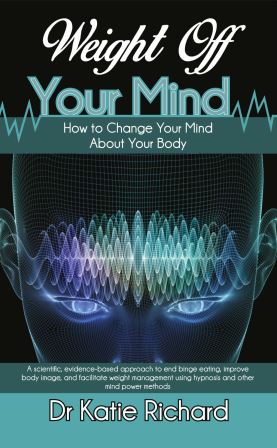
    In Weight Off Your Mind, Richard tackles the issue of weight loss on a permanent basis from a vastly different perspective, that of utilising the age old craft of Hypnosis to help unlock the blocks in order to prevent a reoccurrence of binge eating, food addiction and emotional eating.

    Based on personal experience, she realised early in her a career as a Clinical Psychologist working with people who had addictions, that there was far more to weight loss than simply losing weight and keeping it off. There had to be triggers, as there were with other forms of addiction.

    As a young woman she studied Hypnotherapy and Psychotherapy and as a practitioner was achieving excellent results in treating a wide range of conditions using only hypnotherapy. She realised some years later that dealing with issues of weight loss was more than just a medical or dietary issue, it was a lifestyle issue and had to be dealt with by combining medicine, diet and psychology to work as a team to achieve positive, long lasting results.

    Richard address all the many issues that need to be taken out into the light such as self-esteem, stress management, commitment, psychology, addiction, exercise, self-image, binge eating and how this system of hypnosis, based on Emotional Self-Management (ESM), or Eye Movement Desensitisation Reprocessing  (EMDR) can have a beneficial and positive effect for permanent weight loss.

    Designed as both a tutorial and workbook, the way forward is made considerably easier, with each of the chapters clarifying the issues, so that a far better understanding of this condition is presented.

    The strong message evident throughout this book is, leave off the fad diets, the stress of do it yourself eating control and take a serious look at an excellent lifestyle change, one which has thousands of clinical studies world-wide undertaken, is backed with solid scientific evidence, which verify the many case studies of people who have had continuing success using this program, or system.

    Set out as Step-by- Step guide to weight loss, there is absolutely nothing to lose other than unwanted kilos. By working your way through the pages, seeking the correct professional help and achieving a more positive outcome it can only be a win, win, finale!

  • How to Be Thin in a World of Chocolate

    How to Be Thin in a World of Chocolate

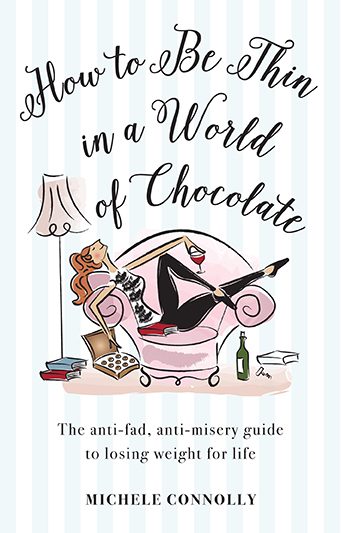
    This is a witty but clever way to address weight loss for those who are seriously tired of diets and fads. The author has addressed the issues of dieting and shows how, when you are eating less food, your metabolism slows down and the body needs fewer calories.  Therefore, when you stop dieting, you regain weight and extra weight, as your body has become more efficient. Add to this the misery of deprivation, and self-blame, and you have a recipe for failure. In this snappy little book, we are given short, one or two page strategies for losing weight and enjoying life.

    Along with very practical suggestions, there is an underlying psychological challenge. For example, we are told to “Be the adult, not the child.” Dieting is likened to an over-controlling parent, and when you binge, it is as though you are having a childish tantrum therefor being a pleasant and healthy adult, who cares for your appearance and health, will allow you to make choices based on reason; ergo, no failure, no guilt.

    There are several rules that must be adhered to, such as:

    1. “If you really love something and feel like it, then enjoy it.”
    2. “But if you could take it or leave it, always leave it.”

    Having a respect for your body is vital for this system to work. It is also necessary to understand strategies to help yourself. Waiting until you are ravenous is disastrous, while many of us say we are hungry, when it is just a thought and not a reality.

    Following the lead of French women is another helpful tip. So never eat while walking, in the car, or when rushed. Make time to enjoy your food. Making changes is good, but make them small ones. Don’t cut out all sugar, just cut back slowly on the amount in your coffee, or in your cooking. There are ten diet strategies to follow, all of which are simple and achievable. But being aware and mindful enough to stop eating when you are no longer hungry, is should be the focus.

    Next, we come to the suggestions for exercise. Again, being aware of your body and keeping it moving will help with the calorie burn, and also your fitness level. Intensive sessions at the gym are not recommended, (unless you love them), rather, being aware again of not sitting when you could help the hostess collect the plates. If you never have time for exercise, try fitting your life around it and change your routine.

    So many helpful, common-sense strategies have been shown to help people to regard eating and weight in a different light. The light-hearted way that Michele has delivered this message is enhanced by cartoon type drawings and witty observations. The serious message is there though, and will be sure to ring true to many.


  • The MIND Diet: A Scientific Approach to Enhancing Brain Function and Helping Prevent Alzheimer’s and Dementia

    The MIND Diet: A Scientific Approach to Enhancing Brain Function and Helping Prevent Alzheimer’s and Dementia

    This is a thoroughly researched and scientific look at diet, with a view to delaying dementia and Alzheimer's disease. There have been longitudinal studies done which confirm the role of nutrition in maintaining brain health. The book is well set out. It begins with an overview of the brain and what it needs to function at its best. That is followed by a description of Cognition, and Dementia, and Alzheimer’s disease. The information given is so well set out that this is easy to read and follow. There is also information given on how mental fitness is studied and measured.

     So now we have the background information we need, the next step moves on to the “Mind Diet.” This is made up of 15 components, with harmful food groups such as meat, butter, cheese and fried foods avoided. This concept has used an evidence- based approach to selecting antioxidant rich, and anti- inflammatory foods. As well as the Mind diet, we have the Dash diet, which is plant based and used to lower blood pressure, while limiting fats, sweets and salt. The study group was older adults, (mostly white) and it seemed that those who followed the diet for a longer time were more protected from Alzheimer’s.

     The next chapter begins to look at brain healthy food. Leafy greens are shown to be beneficial in retaining cognitive abilities for longer.  Evidence is given for this statement. The leafy greens are now individually identified for their benefits. For example, “Dandelion greens are packed with vitamins A, C, and K, fibre, calcium, manganese, iron and B vitamins.” Cooking methods are also suggested. Brain harming foods such as saturated fats and red meat are to be avoided, and some tips for those who can’t give up meat follow.

     Two charts show what to eat, firstly for 6 days a week, and then 5 days a week down to once a week (fish). The everyday list shows we may have 3 servings of whole grains, 1 serving of vegetables, 1 glass of wine, and olive oil. There follows a chart for scoring your food intake and adding up weekly totals. There are also blank worksheets provided so you may create your own meal plan.

     The final part of the book, after giving tips to stock your pantry, deals with recipes. One of the difficulties I found was some of the ingredients. Sriracha, Swiss chard, Arugula, and Collard greens are some unfamiliar terms. However, there are plenty of recipes in the book to excite an experimental cook, and also one who may wish to dabble in healthy diets and food.

     The arguments and scientific reasoning behind these ideas are hard to dispute.  It makes much sense to protect the brain from harm for as long as we can.

  • Eat Less, Live Long

    Eat Less, Live Long

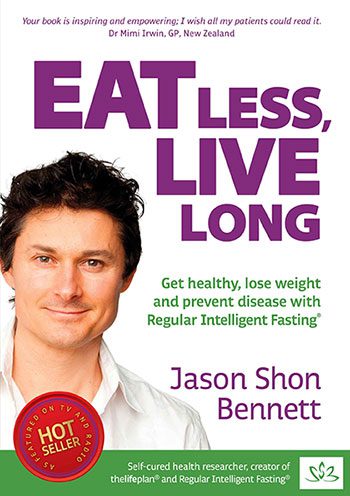
    This book begins with quite a few Testaments from people who have been ill, and have tried the author’s suggestions.  All of them found them to be a great help.  Jason starts by telling us how he was seriously ill, and how his life style was impaired as a child.  As an adult, he was desperate to feel well and lead a healthy life, and so he studied, and was able to heal his body, his health and his life.

    The book explains the philosophy behind fasting, and gives many examples of medical studies that support his theories.  All of the studies are referenced at the back of the book.  The author points out the insidious weight gains in society, showing that children are heavier now than ever before in history and most adults are overweight as well

    He says that we should leave the table without feeling full, but as though we could eat more.  We also need to restrict our calorie intake and eat all the recommended serves of vegetables and fruit per day.  Processed foods are not of any benefit to our body, and help to shorten our life span.

    The author discusses weight loss drugs and weight loss surgery, but his most adamant issue is the idea of fasting.  “Fasting is the inner doctor” (Hippocrates).  Fasting is supposed to be done regularly and is accompanied by drinking vegetable juices, sleeping regular hours, and managing stress levels.

    When you are not fasting, the author recommends a healthy, vegetarian, whole food diet.  The physiological effects on our body are discussed with fasting shown to be a natural process through history when times were lean.  Many cultures and religions promote fasting for the “freeing effect on the mind.”

    It is essential to be well before you begin fasting.  We could all eat healthier food, and use the information in this book to promote our own well-being.  There are juice recipes at the back of the book, and it is explained which systems of the body they help.  The juices are needed during fasting, but can also be used as healthy drinks.

    Jason is passionate and relentless in his pursuit of health and well-being, and also, in his desire to share this knowledge so that everyone may benefit.