Tag: destruction

  • Storm Child

    Storm Child

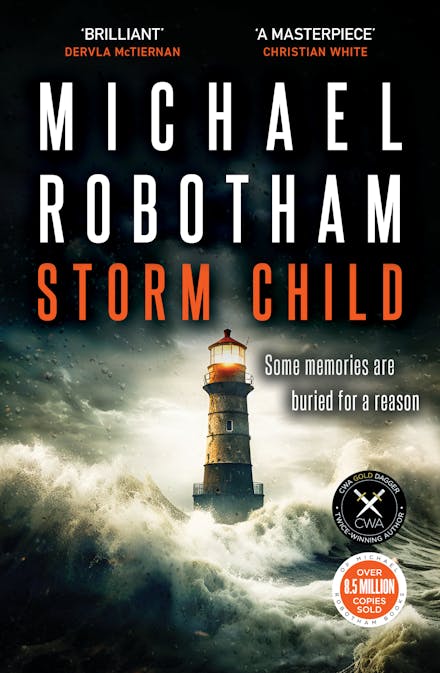
    In the fourth book of the Cyrus Haven and Evie Cormac series, Storm Child, author Michael Robotham graphically tackles the very current world issue of human trafficking and asylum seeking. 

    While forensic psychologist Cyrus and his ward Evie, a young woman with a very tragic past, are enjoying a break by the sea in Lincolnshire, bodies are washed ashore; seventeen dead with one survivor. However, it later appears that two women are missing. A boat with illegal immigrants had capsized as it made its way from France to England.  Cyrus, as a result of trying to save some of the victims, is engaged by the police in their investigations. Meanwhile although this event unlocks some of Evie’s repressed traumatic childhood memories, it also puts her in mortal danger. 

    As the investigation into the incident progresses, it becomes evident that the key to the operation is to find the mysterious and dangerous ‘Ferryman’, who is responsible for the illegal migration business.

    The narrative seamlessly progresses by using the alternating points of views from the central characters of Cyrus and Evie, while at the same time tackling relevant social issues such as forced labour, migration, modern slavery and human trafficking.

    I highly recommend this book not only to Michael Robotham fans, but also to those who have yet to discover this wonderful author. Even though, some readers may find this an uncomfortable read, they will get a better understanding of issues surrounding illegal migration.

    Storm Child can be read as a standalone, although readers who have read the previous three Cyrus/ Evie books will find this novel more enjoyable, as the earlier books provide valuable background information to the main characters.
  • Emergent

    Emergent

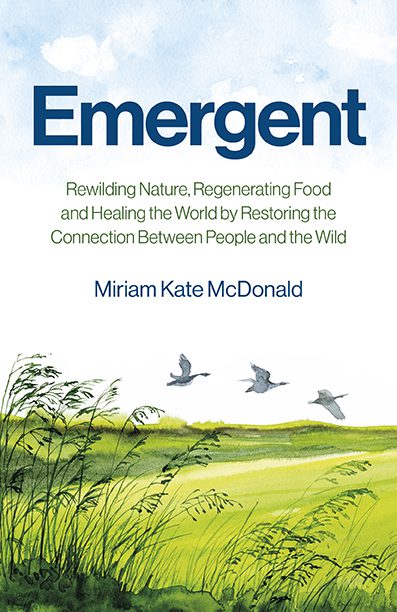
    Emergent is a refreshing perspective on the world we live in and the on-going consequences of human civilization. Miriam McDonald walks back through the many civilizations that have inhabited this planet, the effect they have had on natural vegetation and wildlife and the still ongoing damage and destruction that is occurring today.

    McDonald puts forward a very strong argument for re-generation of our ecology which while she does not demand instant action, because and let’s face it, thousands of years of changing habitat in all context simply cannot be mended in a few weeks, months or years, but will take generations, she does call for change.

    The central tenant of Emergent is the fact that we are nature, whether we care to admit it or not.  We are an Emergent society that has over the history of Homo Sapiens changed the environment in which we live.

    This change began in the very beginning when early man moved from hunters and gathers to farmers, not just changing the environment but also changing their physical structure, to adapt to this new, abundant lifestyle. This adaptation has continued on through the many anthropological changes, to modern man, the most intelligent of the species to date.

    Humankind is still changing the environment but for vastly differing reasons to past civilizations and it is now time to begin to consider where we as a race are in the broadest contact of ecology.

    Over the past 15 years Miriam McDonald has garnered great experience in ecology, conservation and agriculture, and has realised that we are a part of the great interdependence of the wild. We are integral to the earth. She also visits why we have taken steps to separate ourselves from the earth, the effect this has had on society in general and what we can do to begin to heal both humanity and the earth.

    Regeneration, rewilding, self-sufficiency and much more is discussed in this refreshing look at what next for Humanity, as we charge destructively across the planet. Will we listen, will we understand the need to change our perspective of whom we are as humans, to the understanding that we are part of the life cycle of the ‘animal kingdom’ and as the most intelligent, need to take responsibility for what we have created.

    Emergent: a brilliant reflective and heartening perspective on who we are and what we, with a whole lot of help and understanding, could become.

  • On the Savage Side

    On the Savage Side

    Writer of two successful novels, Tiffany McDaniel’s has dedicated her third book ‘On the Savage Side’ to the six violently murdered women who disappeared in the area around Chillicothe in 2014-15.  Like some of the victims of this crime, the six central protagonists of this dark novel turn to prostitution as a result of drug dependency.  

    Arcade (Arc) Doggs, and her twin sister Daffodil (Daffy) live with their heroin addict parents and aunt in the small declining town Chillicothe, Ohio. Mother and aunt are both sex workers. When they are six, their father dies of an overdose, which results in their home life becoming more unpredictable and it is only the loving attention provided by Mamaw Milkweed until she died, which provided some normality. 

    The twin sisters retreat into their fierce imagination, while growing up in the 1980’s but by the time they are in their teens, they too have succumbed to heroin addiction and turned to sex work to support their habit. They associate with and befriend other women in the street, who start to disappear and wash up dead on the shores of the river. As Arc and Daffy spiral ever downwards, and the killer gets closer and closer, the girls wonder if there is any escape from the savage side.

    Although this novel may at first appear to be a mystery or thriller, it could be better described as an exploration of addiction, powerlessness and grief. Narrator, Arc who struggles with flashbacks to a violent childhood, exposes the reader to poverty, neglect, abuse and pedophilia, but also to the fierce and unbreakable bond between the sisters.

    This disturbingly heavy read is not for the faint hearted, but readers who are looking for an emotional, hard hitting well written story, this is for you!    

  • Wildflowers

    Wildflowers

    Peggy Frew writes with such detail and structure that Wildflowers almost becomes a breath holding read. If anyone was not completely aware of the destruction to family life caused by drug addiction, they need to read this book. A “normal” family is slowly destroyed by the gradual decline of their beloved family member.

    Amber is the youngest member of the family. She has always been the wild passionate star and her sisters Meg and Nina adored her for it. Mum and Dad were bewildered by their enchanted child, so beautiful, so talented, so alive.

    Peggy Frew cleverly moves backwards and forward through time to give the reader an understanding of the family dynamics and just how life experiences have impacted on Amber. From being the drama queen of the stage, Amber suffers some setbacks which eventually lead to her drug habit.

    Her family is concerned but unsure of how to cope and what steps to take. They wilt as they see Amber slowly becoming a shell. It is Meg the oldest and “bossiest” and most caring sister who develops a plan which only she and Nina can carry out. The tension, and fear that result is gripping.

    In between the dramatic action, Frew uses language as a beautiful counterfoil. Staying near Mossman, Nina is entranced by the feel of the moist night air and the bird calls, which were “Gentler and more frequent, so the effect was of a rippling blanket of sound,” Wildflowers is a powerful story with reflections on all who become connected with addictions.

  • Wild Abandon

    Wild Abandon

    Wild Abandon is a novel of modern times reflecting on the damage of the past, and is certainly not one for the faint hearted. Almost mesmeric in style, the fascination with the torturous plot becomes almost addictive as we join with Will as he arrives in New York, heartbroken and in need of change in his life.

    Nothing in Australia is right; his family is pressuring him, he feels depressed after his relationship failed, he needs a change and has made the decision to say yes to anything that is offered him. He is a somewhat self-pitying young man and although feels he is able to take on life’s challenges, sadly he is ill prepared for the journey about to be undertaken.

    In his case it is a ‘be careful what you wish for’, as he meets up with Vietnam Vet Wayne Gage, an exotic animal collector and spirit guide, a man who is damaged, who is on a headlong pathway to destruction.

    So much of the story is relevant to the life of so many young people seeking alternatives through the world of drugs and alcohol, both of which are laced lavishly throughout the work, as is the ‘second’ part of the novel based on a real life event that occurred in Zanesville, Ohio on 19 October 2011.

    Bitto has combined both elements with a rare skill, that while the storyline is not at all complex, reflects the self-indulgent cruelty that is prevalent in today’s world, particularly so with the establishment of many ‘private’ zoos, a phenomena of the post-Vietnam era and the craving for some form of identity or recognition.

    Wild Abandon is a challenging read; confrontational and tragic as the life of two people play out in such a depressing and destructive manner. Perhaps a good summation is looking forward, looking back, two side of an equation both of which reflect how little we understand the psychology of who we a really are as a human race.

  • The Great Godden

    The Great Godden

    Summer love, precious, all-encompassing and often, come the end of summer, devastating. That’s what a happened one summer family holiday at the beach over the long, warm, endless days of a perfect summer, when Kit Godden and his brother Hugo came to holiday at the beach.

    Kit was charismatic, charming and ruthless, Hugo gruff, detached and surly at times, the air and ages of the family ripe for summer love. Told by the narrator who has time on her hands to sit, watch and sketch her family as they enjoy their lazy summer days at their summer house, she tells, almost in a detached manner, of the summer that was to change the family irrevocably as she too fell in love with Kit; she just knew the moment she saw him she was in love.

    Mattie also fell  helplessly in love,  as did Hope, as charismatic Kit sets out to charm, cajole and take all he desires, and  considers  fitting for the ‘golden boy,’  carving a destructive pathway wherever he goes.

    Rosoff captures beautifully the family of four children as they welcome into their lives a summer visitor, who as the weeks slide by is set to wreak havoc in the family, destroying everything they hold dear, as he simply takes what he wants from life and moves on, leaving devastation behind.

    Timeless and well told, it is reminiscent of a ‘summer’ everyone has known as they pass through life, learning along the way that all is not necessarily as it seems, people are not always what they portray and life, regardless of emotion, trundles ever onward.

    Although written as a novella, The Great Gooden is captivating while being read, but perhaps all to easily forgotten once the last page is turned, but in so saying, the story also offers a word of caution when falling in ‘summer love’ with a someone who appears all to good to be true; a coming of age with a depth of emotion that is only apparent upon reflection.

  • Providence

    Providence

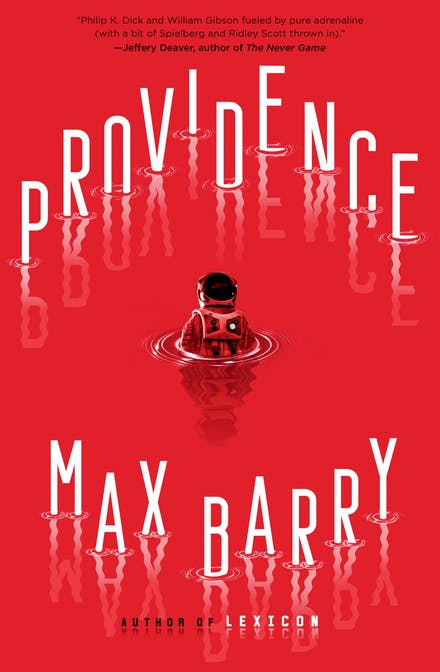
    Max Barry is an Australian author following up his smash hit, 2013 novel, Lexicon. Providence, his new release, takes a few left turns from what he has written before, and tells a story that will be familiar to those who are fond of Space Operas.

    Providence brings a few interesting and new elements to the table of this genre. A couple of portions of the story are written in second person with more than enough ideas and moments that make this book stand out from the pack. The book touches on many themes such as autonomous machines, boredom, comradery, and heavy morals. Providence tells a galactic war story with many different and exciting additions that even strong fans of the genre will not be expecting. These twists seem to be relevant to our current era and climate, with elements of social media prevalence slipping seamlessly into the storyline, ensuring it doesn’t become generic.

    A new spaceship called Providence is launched, and woe behold to any salamanders that may cross its path. The providence ship is the most technologically advanced and has a single mission of obliterating humanity’s alien counterpart, the salamanders. In fact, this ship is so advanced it can handle navigation, planning, and battle strategies all by itself and it does so very effectively.

    The four crewmen are more likely to be under threat of boredom and each other, compared to the war that is waged outside the bulkhead wars as there is very little circumstance, they will need to put their brains or skills to use. The extend of this concludes back home on Earth, where the progress of the war and battles must be divulged to the masses by the crew, propaganda style.

    Providence provides some very tense questions and situations, along with the characters, which will keep the reader guessing. Perfect for any science fiction fan, or someone who likes to experience something a little different from the rest, the differences in this book are refreshing and provides for a very enjoyable reading experience.

  • Hollow Earth

    Hollow Earth

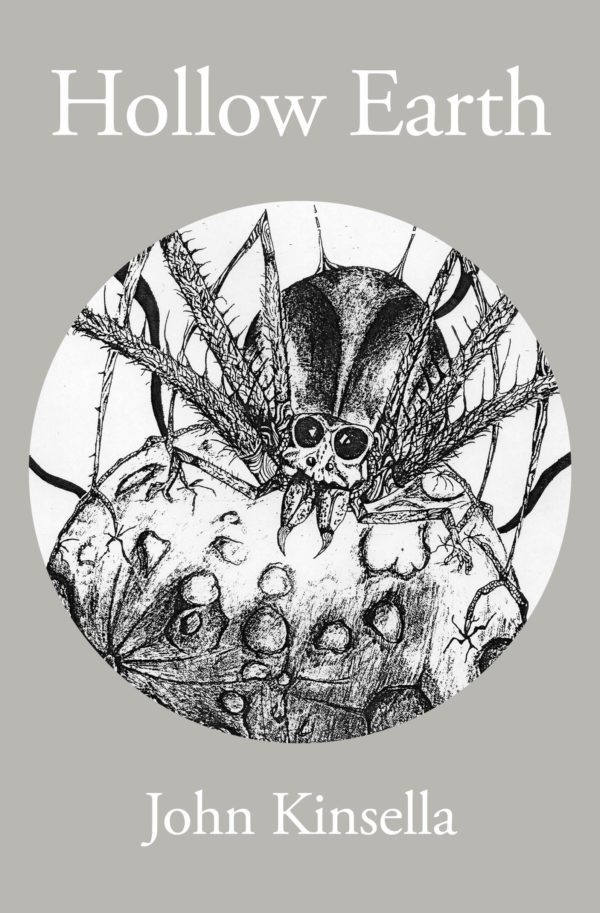
    If you are a fan of John Kinsella’s you will love this convoluted and yet somehow addictive tale of Hollow Earth, written as a protest to the destruction caused as we, the so called learned, high IQ race of peoples, go about destroying what was once a far more pristine and beautiful place called earth.

    From a very young age Manfred has been fascinated by what he considers is another world that can be accessed by tunnels or through a sophisticated cave system, somewhere on the earth. Set initially in Western Australia, the story moves about the world where as an adult, Manfred finally discovers a Neolithic copper mine in Schull, Ireland which holds the key, the entrance, to a place he refers to as Hollow Earth, an almost nirvana like place that he has always believed truly existed.

    Granted entry to this world he is amazed at the acceptance of religious and cultural differences, a civilization where they have no war, where they treasure the land, but while not a perfect civilisation, is tolerant and accepting, Manfred begins to see that what is in Hollow Earth is far better, richer than anything in the world in which he lives, the surface world.

    He eventually encourages Ari and Zest, two of the androgynous Hollow Earthers to return to the surface with him and is not long before they too fall deeply into the temptations offered. At times funny, sad, reflective and scary with tones of times long past, the pages are vivid in their portrayal of what, or who, we as a race of peoples have become!

    As the work evolves it is not possible to ignore the parable that is unfolding, based on the wanton destruction and greed of modern-day life, and a very real crisis that is unfolding environmentally on a daily basis.

    Perhaps better known as a poet, Kinsella has in parts used a stark brevity of language to illustrate a point as at 127, when he looks annihilation and what it means: ‘Annihilation. No equivalent of that word exists in the human or animal languages of Hollow Earth.’ A point with which it is particularly hard to disagree.

    Fascinating, and as with Kinsella works, a book which needs to be taken in small doses, considering the energetic shifting of places, times, events, emotions and the slow destruction of Ari and Zest, as they are seduced further into the tragedy of modern life, Hollow Earth needs to be supped slowly to better understand Kinsella’s platform.

    Hollow Earth is a work that while abstract in form is compelling, a work which, in a subtle manner contains a wild beauty, a furious cry of rage, drawing to attention to the wanton destruction of earth and the very real, transparent greed that underlies society as they demand more and more riches.

    Billed as a science fiction work, it is also a very inciteful look at who we are as a human race, a race of people who accept what is told without question, that have become intolerant, greedy and uncaring of the richness of the earth on which we all live.