Tag: depression

  • Dressed By Iris

    Dressed By Iris

    Mary–Anne O’Connor confirms that Dressed By Iris is an Historical-almost Fiction tale. The setting is Sydney and surrounds, beginning in the 1930’s. It is an accurate reflection of the times and a well-researched account of social attitudes. It is still quite shocking to read about the racial and religious animosity that existed then. The story of this Irish, Catholic family whose lives we follow, is loosely based on the lives of her grandparents and aunt.  

    The story of the Mitchell family begins in a very poor shanty town. The tiny house they inhabit has a dirt and straw floor, and hessian sacks as dividing walls. This is the time of the Great Depression and Bob Mitchell has lost his job. His wife Agnes is a tower of strength and positivity. Their five children have all been raised in a loving and happy environment despite their hardships. All are content to help each other and contribute to the family in any way they can.

    Iris, the daughter, is smitten by a handsome young man who happens to be a Protestant. This is a huge issue. The young couple will have to work out a way to appease their families. When John gives Iris a ribbon, she cleverly forms it into tiny roses with which she decorates her hat. Many people are impressed by her skills and ask for shawls and hats to be similarly treated. This begins a wonderful and creative future for Iris.

    As Bob begins to work on the Sydney Harbour Bridge, his income allows the family to move to Sydney. With the older children working, the family finances begin to improve. In following the lives of all the children in this vastly different era, we see their tenacity against hardships and poverty.

    Dressed by Iris is an excellent reflection of the times and politics that governed Australia then.

  • There Has To Be More: The Essential Guide to Personal Growth

    There Has To Be More: The Essential Guide to Personal Growth

    If you have ever felt that there is more to life, you are not alone. Thousands of smart, capable, and amazing people have has this exact same sensation. After experiencing burn out and deep depression, Rachel Service came to the conclusion that her life drastically needed to change. With the help of friends, family, councilors, and others she put her life back on track.  She is now CEO of her own company Happiness Concierge.

     Her book “There Has to Be More: The essential Guide to Personal Growth” is a handbook, which provides the readers with direction and a set of tools to bring a positive change their life; to experience more joy and success in their everyday interactions. 

    “There Has to be More” firstly explores how the reader may have come to the conclusion that change was imperative, by encouraging self-reflection. Once establishing this desire for change the author provides a step-by-step guide to the Growth Cycle. By sharing her own experiences and those of her clients to illustrate these steps, she emphasises the importance of prioritizing what is important and regularly recording success.

    As the transition to a new and better life does not come without its frustrations, Rachel Service has included a ‘survival guide’, which encourages the use of professional coaching, boundaries and confident communication to create a helpful defense mechanism. In addition, the ‘references and further reading’ section at the end of the book provides the reader with a comprehensive list of resources to further enhance life.

    If you are looking for change in your life and don’t know where to start, look no further than this easy to read, comprehensive, workbook book.

  • The Comfort Book

    The Comfort Book

    If nothing else, the past many, many months of the life and times of the Covid pandemic had taught us the real value and need for connectedness with family, friends and community. It has highlighted the terrible effect mental health is having on the wider community and the many troubling issues of an uncertain future many are grappling with, often for the first time in their lives.

    Matt Haig has collected a wonderful mix of poetry, stories, wise and wonderful sayings, along with excerpts from his personal journey with depression to create The Comfort Book, one giant, massive hug in paper form that offers hope, understanding and a sometimes wry look at life and all who sail in it! His collection of gorgeous words help sort through many things that often need a slightly different perspective on those deep, dark ‘down days’.

    Mantra’s from his personal journey rub shoulders with quotes from Marcus Aurelius’, along with many others, questions are considered such as ‘the power of why!’ He looks at why he writes and why, on his lowest darkest days he wrote down what he was feeling. Reflecting back, he realized it presented hope, a pathway that could be used by anyone suffering with a debilitating illness. A perfect place to investigate this concept is “delete the italics’ and when you have done this the words that are left at the conclusion of the exercise are cathartic; a new perspective, a fresh viewpoint of YOU.

    The Comfort Book is meant to be used little by little, dipped into and enjoyed as required. Open it at random and read what is there for you: words of understanding and comfort, many that have stood the test of time, many that are full of wisdom reach out with their age old wisdom and comfort.

    Consider The Comfort Book as best friend, there to offer wisdom, philosophical viewpoints, wry smiles, food for thought, along with a lovely warm hugs of comfort, not a word spoken, just thoughts on paper to help along the way on those days when a slightly different perspective, a gentle wry smile and a hug in book are just simply the perfect solution.

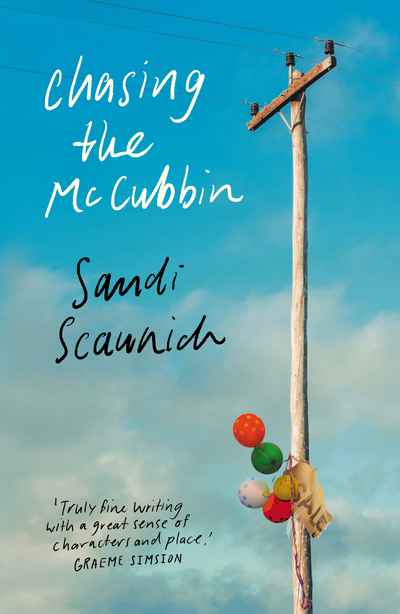
  • Chasing the McCubbin

    Chasing the McCubbin

    Rich in detail that perfectly captures the essence of life during the 1990’s in Australia, when hard times were felt by many in all walks of life, with the people hit hardest, the marginalised. Chasing the McCubbin delves into the world of second hand trading and the disparate characters that make the very abstract nature of world of recycled goods all clad in the never ending hope that one day they will find the real thing; perhaps even a McCubbin.

    Ron is growing older and without his beloved wife by his side he is finding he collecting of goods from garage sales, evictions and the like increasingly difficult. Finding his way about the streets is challenging and there are days when he wonders why he still goes out collecting. Is it the love of the craft, because that is what it is, or the hidden hope that one day, he may find a true gem at a give-away price?

    Joseph is a seriously trouble 19 year old, down on his luck, in deep trauma following serious family events based in family violence. His mother knows Ron slightly and asks him he if he can use a hand; Ron agrees reluctantly. Joseph is offered the opportunity to earn some much needed money and also reluctantly, teams up with Ron.

    Together they make an unlikely pair; an elderly gent with all the knowledge about the world of second hand goods, and a traumatised young man with dreams of his own, hopeless dreams he believes, but dreams of a very different future.

    As the pages turn the characters of these unlikely friends establishes itself beautifully with their sadness a reality, the angst factual, the respect that develops heart-warming and the tragedy of life all too real, portrayed with a gentle use of words.

    As a debut novel Chasing the McCubbin is an absolutely beautiful read, but one that needs to be read at absolutely the right time, to be able to totally absorb the true beauty of the work that unfolds. Authentic, unusual and interestingly, redolent of times in which we currently live.

  • Innate Independence: Repositioning through the Mind of Resilience

    Innate Independence: Repositioning through the Mind of Resilience

    Resilience is something that is an inbuilt component of each and every one, but in the madness that is today’s world it is something that has been ignored or overlooked in the rush to find a quick fix to just about every emotional disorder such as anxiety, depression, eating disorders, lack of self-confidence and self- esteem.

    As Peta Collett discovered after spending many, many years in the company of all of the above, her ability to use her natural resilience began her pathway to a full, healthy and happier life. A lightbulb moment saw her begin to reassess just what it was that she could do to makes some serious changes in her life.

    Beginning with very small steps she realised as time went on, she was beginning to feel physically better and eventually emotionally more stable, without realising she has done anything at all, other than carry out a regime of riding her bicycle, walking, enjoying music and learning to understand how her mind worked amongst other concepts.

    Many long conversations with herself opened up fresh new pathways to help manage change, challenges and coping with the simple everyday tasks in life. Self- healing was working on a holistic basis, whereas the more commercial aspects of medication, psychology and counselling, while helping on a temporary basis, failed long term. Eventually, becoming fascinated with how the mind and emotions work, she studied counselling, which helped her understand the she had been practicing self-sealing and building on the body and minds natural resilience, for more years that she realised.

    Now a confident woman in charge of her life and business, Peta Collett shares her pathway to practical healing and health in Innate Independence,  – repositioning through the mind of resilience, which is a must read for anyone seeking a new pathway towards to acceptance, resilience, being a calmer more in control person, letting go of old emotional ties and moving on to a fresh, new outlook and future.

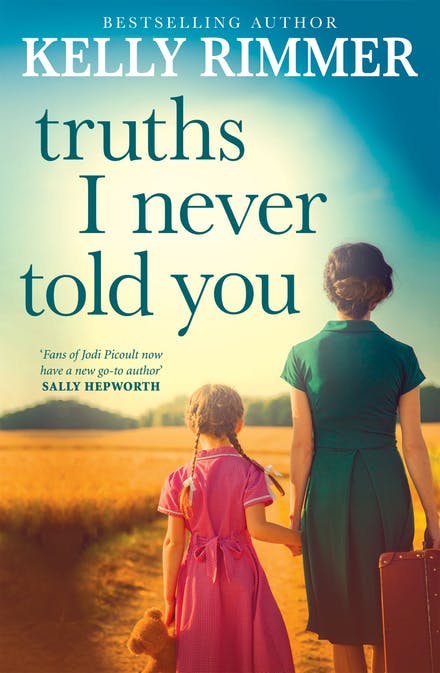
  • Truths I Never Told You

    Truths I Never Told You

    Family relationships are at the heart of Truths I Never Told You which is narrated by three women. Kelly Rimmer has cleverly crafted a story spanning three generations which will resonate with both women and men. We are shown political and social changes which have only been brought about by intense pressure and courage. Abortion and contraception are two topics which are elaborated in a family setting.

    Another topic dealt with is Post-Partum Depression. Although Beth, who narrates the story from 1996, is a psychologist, she is unable to see that her anxiety is much more intense than normal. After all, she has a new baby: a much- loved father who has dementia and has to be moved into Care. Of course, she is going to be anxious! It takes a great deal of love and support from her family to convince her that she is unwell.

    All of this begins to unravel as Beth starts to sort out her Father’s home. She finds notes from her Mother and her Mother’s Death Certificate showing when she died. Beth and her siblings remember their Mother fondly.

    Turn the clock back to Beth’s mother, Grace, who narrates the story from 1957. She has a similar condition, but has had no contraception and no family support. With four children under four years, a pregnancy now would destroy her. Grace married Patrick, who was a thoughtful man, but found it difficult to cope with the chaos at home and lack of money. It became easier for him to stay later at work and then go to the pub with his mates for a few drinks before coming home.

    While drawing attention to attitude changes over the generations, the Rimmer examines each topic enmeshed in the family story. She does this with thought and “What- ifs.” We read this with a sense of gratitude that times have changed, although many still are uncomfortable when addressing mental health crises within the family.

    This is a personal look into a caring family and shows how important it is to listen to each other and look after each other. It is saved from being a dark tale by the closeness and love of the family, and the mystery that needs solving.

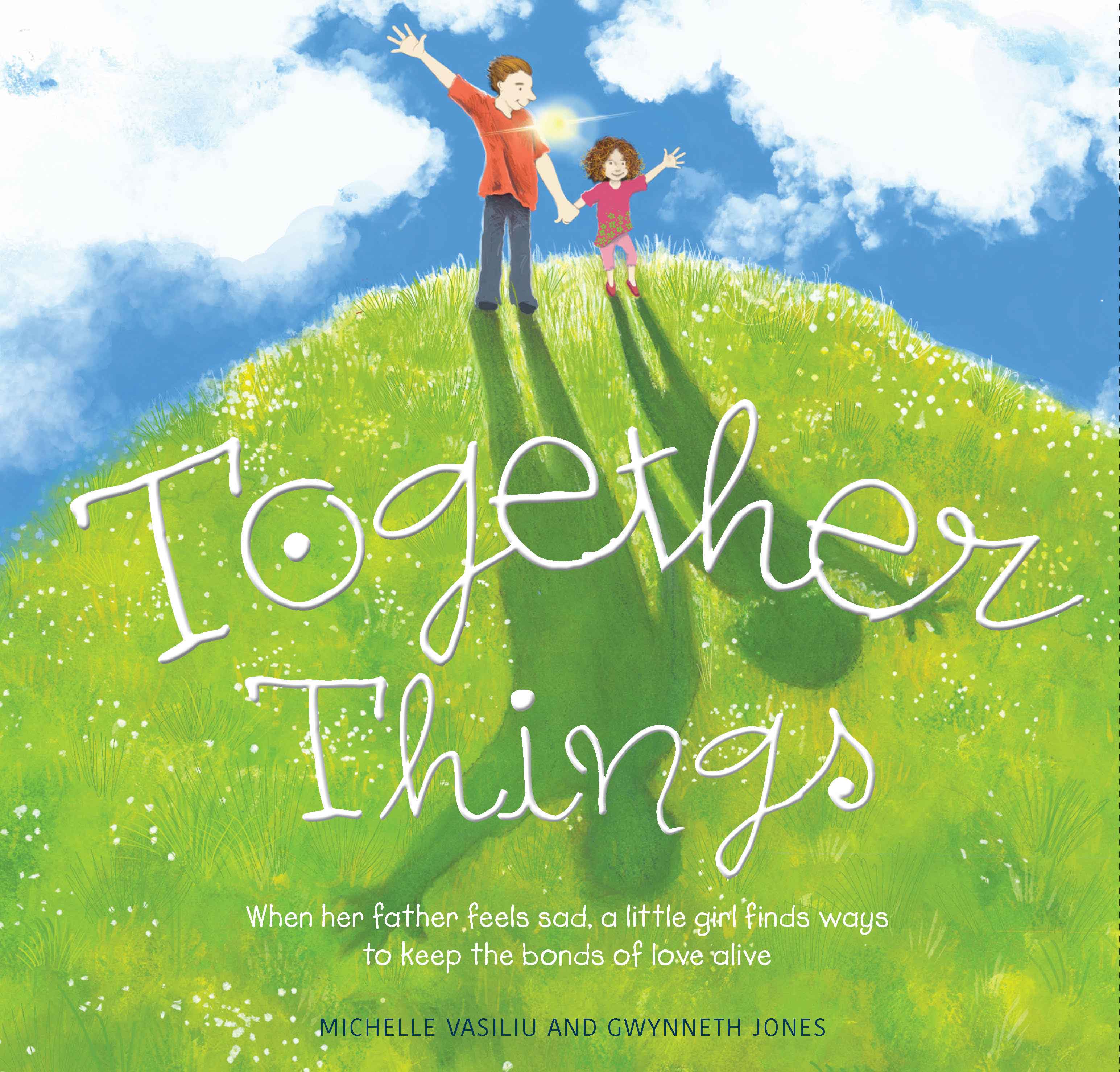
  • Together Things

    Together Things

    In today’s world of high stress and pressure, depression is something that sadly is all too common, but how do children learn to understand and live with the days when their beloved parent is suffering.

    Michelle Vasiliu and Gwynneth Jones in Together Things have crafted a lovely story especially for young children, as a little girl shows us how she copes when her dad can’t do things the way he used to and the new way they have found to show each other they still love each other, heaps.

    Her dad used to climb mountains with her, push her on the swings, sail stormy seas and tame wild animals, in the garden of course.

    But now her dad sometimes can’t do these things because his head hurts inside, he gets muddled in his head, and feels very sad. Perhaps the new Doctor may even say daddy needs to go to hospital for a while. So how can she still do together things with her dad, even though things have changed.

    Perhaps, thinks the little girl, I can cuddle under the blankets with dad, draw lovely pictures for him; maybe they can listen to music or watch TV together and while daddy is getting better, there are heaps of different things they can do together.

    Children struggling to accept change in their family caused by mental illness, will benefit from this warm hearted story helping them understand the reality of depression, suffered by one in five adults; that it is OK to feel, sad, upset and angry, and how to discover finding different things to do with their beloved parent, when there is a massive change in the family structure.


  • The Breeding Season

    The Breeding Season

    It is perhaps best if the background of the author, Amanda Niehaus is understood before beginning what could be considered as a dark and traumatic read with her debut novel The Breeding Season.

    Billed as a ‘breathtaking debut novel’ , Niehaus takes a subject which is often considered as taboo, far too emotionally difficult to discuss, that of the death of a much-awaited child before birth, or even directly at birth, paring back the raw, brutal and often destructive emotions that are present at such a time.

    Through the characters of Elise and Dan, she almost clinically explores the complexities of love and human emotion, which leaves a somewhat disturbing presence, even as the last page is read.

    Their son is stillborn; the day of his funeral the day the rain comes to Brisbane, the day the world and all it contained for this couple, struggling to come to terms with the tragedy their lives have become, since the death of their much-awaited child slowly begins to dissolve.

    Niehaus explores the destructive power of choice when it is taken too far, as Elise involves herself in her work, isolating herself as she returns to the fieldwork and world of science she so loves. Dan, a writer, struggling to cope not just with the death of his child but the pain of his wife, is driven to complete a work begun on his controversial artist uncle. Dan, is also facing unresolved issues from his family life, the death of his mother.

    In a subtle manner the emphasis of the storyline is on the feminine aspect of the grieving, which is easily understood, but in doing so the character of Dan seems to be dulled, diminished by the immensity of Elise’s pain.

    Once there was love where there now seems to be nothing but pain and the very real question many couples facing such tragedy must ask is, are they able to move beyond tragedy to rebuild on what was once love.

    The Breeding Season is a complex novel partially based on Niehaus’ own life as a scientist and mother, which provides an undoubted ring of truth to the emotion and background of the story.

    A work not recommended for the fait hearted, but one that if noir literature is your thing, will be one to be enjoyed.