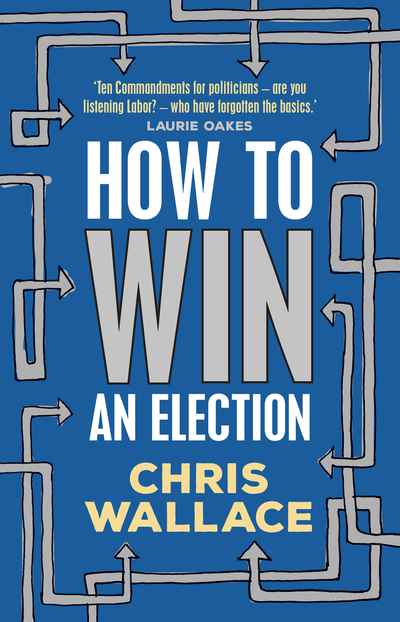
How to Win an Election in many ways could not be more timely, with the media filled to almost nauseous levels with the elections being held in the United States and State Elections in Australia. From daylight to dark the public are being bombarded with fact, fiction and theatre as politicians battle it out for the top job. But there always has to be a looser regardless of whether the best man or woman wins the day.
In this in-depth look at the political system called Democracy in its many shades of grey, Chris Wallace has drawn on her years of involvement in the political arena, beginning when she was a young girl of eight years old, delivering her first political analysis at a neighbours back yard barbeque, eventually moving across the gamut of politics before moving to her current position as Associate Professor at the University of Canberra working on modern political history and biography.
Using the 2019 landslide defeat of the Labor Party, which the pollsters considered to be a sure thing Labor would win comfortably, Wallace sets out the ten major points considered essential to win an election, and if followed should guarantee the best party wins. Looking through the lens of the defeated leader she grasps the emotional devastation, disbelief and then self-delusion as they come to terms with losing the election with such a landslide victory to the other side; what’s more a side whose policies did not stack up against the very real policies of the Labor party.
Engaging and enjoyable, if not refreshing, it is excellent to read a book on current politics that is easy to read, sets out clearly what went right and what went wrong, offers options and hard learned truths, but also creates a roadmap that if followed should see the best party, with the best policies win come the next Australian election.
Historic fact documents the corruption that does occur, how easily money can buy an election, even here in Australia, how Democracy has changed over the years and what it takes to be an effective leader of the opposition, an unenviable, but vitally important job. There is much that is also a little frightening in so far as manipulation of the public into believing whatever party line is being offered mainly thought the world of the tech oligopolies such as Facebook and the like and the requirements to be tech savvy when courting the public.
It is naïve to think that just ten elements will solve all the oppositions problems and give the incumbents a view of how to retain their position, as there is much, much more to modern day politics than perhaps ever before, but these very valid points certainly clarify many of the issues facing Democracy in Australia, let alone America and Britain and make a very good starting point to understanding the political craft that makes up good government of the people, for the people, by the people.
Wallace also raises the issue that Australia ‘can no longer afford ethically compromised and policy bankrupt government of the kind that have dominated national life for the past quarter century.’ So very, very true.
How to Win an Election is a must read for anyone who is interested in politics, enjoys a good read and wants to understand more about the skills that should and could be considered as the art of Politics and Politicians.
