Tag: dementia

  • Mirror Mirror

    Mirror Mirror

    “The true cost of anything is what we choose to pay for the alternative.”

    Written about the National Health System in Britain, much of what David Allott says in Mirror Mirror resonates worldwide with Government funded health systems. His story of the challenges of trying to get a fair deal for his wife, or rather what she is entitled to, could be considered in the truest of contexts a ‘call to arms’.

    Facing a terrible personal dilemma Allott and his family ran head first into confrontation with the National Health System (NHS) as his beloved wife Margaret, slowly moved from being slightly forgetful to Alzheimer’s Disease. He attempted to utilize what should have been financial help and support through the various sections of the NHS, set up for the purpose of aiding and assisting those who are unable to do so themselves.

    Never for one moment did he doubt the help needed was to be almost impossible to obtain, or that it would take him a number of years to do so, as well as coping with the sheer frustration of dealing with a system that most people working within its framework, such as Doctors, Social Workers and other professional practitioners really do not understand, or if they do, misconstruing the wording and the use of the criteria.

    Such was his level of frustration and disbelief he began to keep records, write notes, employed a Lawyer to help him with dealing with the NHS aspect of the care required, even going so far as to ‘demand’ a hearing with the various people who assess mental health patients suffering within the dementia framework.

    His frustration lead to the writing of Mirror Mirror in the hope that people from all walks of life may use it as a guidebook to finding their way through a massive, challenging and misleading system, in a far easier way then he did, and that whoever reads it will take issue with their own treatment and be prepared to take action through their local Members of Parliament.

    Should they be from within the NHS System, his hope is that they will further investigate what he has detailed very carefully and attempt to fully understand what it is they are assessing, which in his very careful, thorough research and sad personal experience opinion, they do not.

    Mirror Mirror is a deeply personal story of one woman’s decline into the tragedy of Alzheimer’s Disease and the sad reality of how it affects the family in every context. That the support had to be gained through shear persistence, hard work and frustrated distress, is appalling.

    The final chapters set out many ways to help take action; to begin to ask questions rather than just accept what is or is not told, and to obtain a Badge to wear, to support the call for change, transparency and honesty within the NHS. –  something which is a long time overdue according, to David Allott!
  • Mama’s Chickens

    Mama’s Chickens

    Statistics advise us that 28,000 Australians living with Dementia today, are mothers under the age of 50. As the author is one of those mothers, she wanted to find a way to reassure children that their world although different, was still filled with love.

    Mama’s Chickens is a special story.

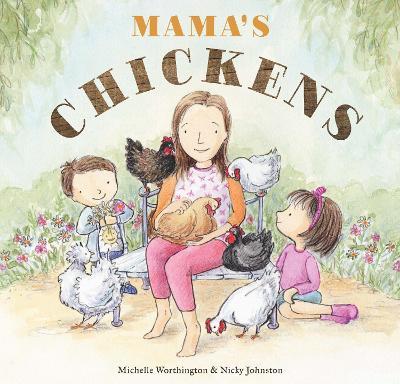
    Mama wasn’t interested in getting chickens. “They are noisy, and they poop everywhere.” When the chickens arrived at the house, she felt quite differently about them. She loved their feathers in the sunlight and their individual personalities. They followed her around the yard and became familiar companions. Each chicken was given a name and when it was time for them to be put away they pecked at the back door.

    Then Mama started to lose her memory. She loved sitting with the chickens and watching them scratch around in the yard. Mama still tucked up the chickens at night and her children. All were safe and warm. Chooky LaLa, her favourite, and the children got upset when Mama got cranky, neither understood what was happening. However, even when Mama could no longer speak, they knew they were loved.

    This is an extremely confronting story for adults but may help children who will experience this disease in adults. The simple drawings are gentle and warm. They show the children and the chicken together trying to make sense of the gradual changes they see.

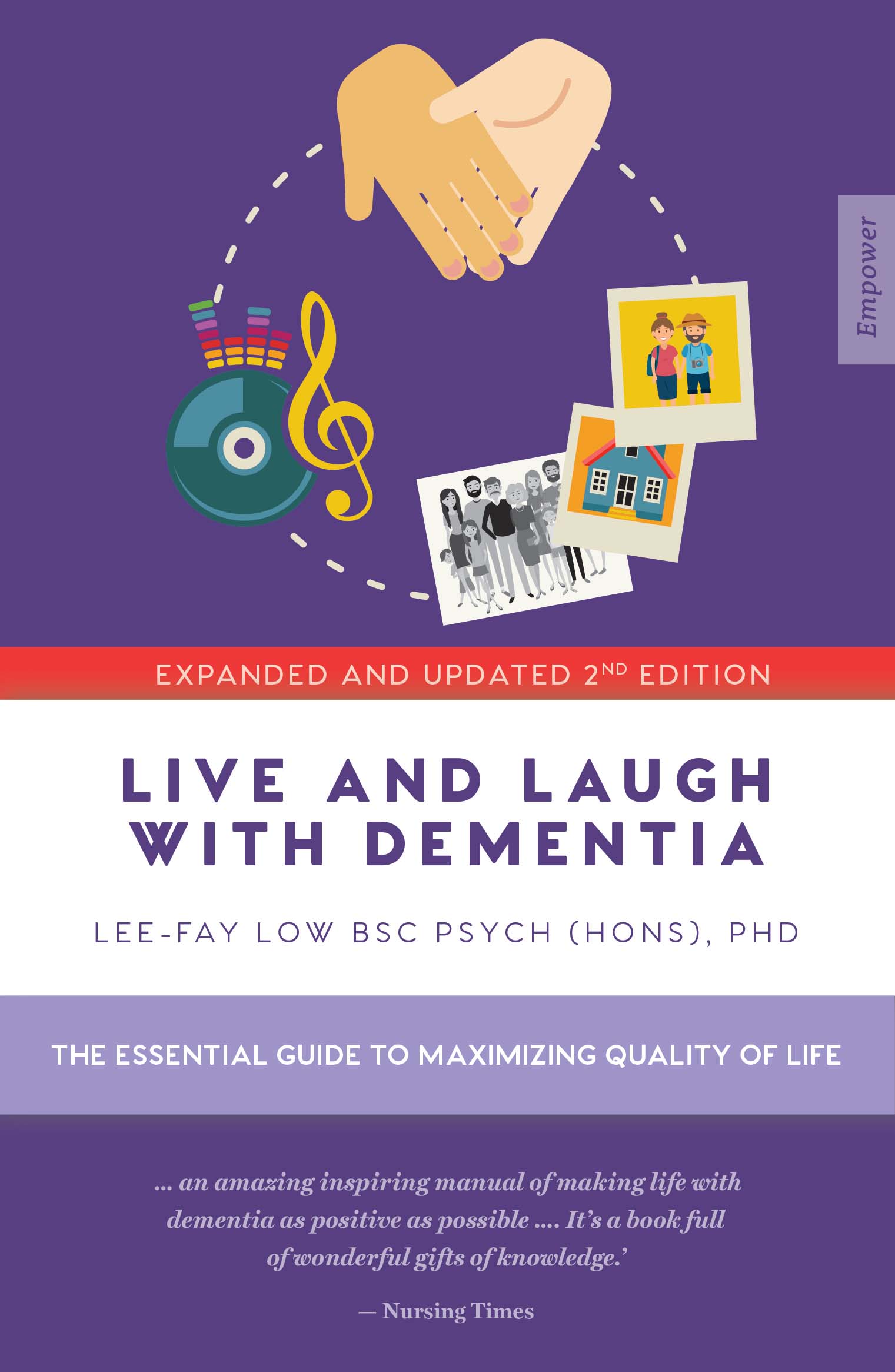
  • Live and Laugh with Dementia

    Live and Laugh with Dementia

    Dementia is a debilitating condition with no known cure that has a massive impact on families and careers once diagnosed. Much research has been undertaken in recent years in order understand what is happening to the mind,  as well as seeking a better way of maximising the health of the people with tis debilitating illness.

    In this second edition of Live and Laugh with Dementia, leading Australian Expert Lee-Fay Low expands further on the many ways that can be utilized to create a better lifestyle for everyone concerned.

    In this comprehensive work, Low has backed up the findings of so many with solid case studies, a massive range of tips to help people with mild dementia and considerable information to build a better understanding of what is physically occurring in the brain.

    Understanding of the effects of dementia on the sufferer is complex; particularly in the early stages as often the condition presents as a form of vagueness, an inability to remember the everydayness of life, the little things that make a difference and slowly progresses over a period of five to seven years.

    Through research as well as trial and error, one of the many elements that have proven to be effective in slowing the condition is engagement, which while in a word may seem simple, can be both challenging and complex, as once the mind begins to slow, the desire to engage and remain engaged with everyday life decreases.

    Socially there is a massive amount of change occurring, which is often negatively received by the family and the public. This is one aspect which can be improved in a more positive manner by understanding the everyday emotional and health needs of people with dementia, as well as seeking out ways of creating mental stimulation to help prevent issues such as boredom, depression and improving self-identity where possible.

    Low draws on the analogy of comparing the dementia sufferer to a small child in so far as the understanding of their needs is concerned, which are Physical Health, Stimulation and Company , being the three things all people need and require in their daily lives regardless of their age and physical well-being.

    Her work has been presented in a style that is informative, easy to understand, comprehensive and designed to encourage families to explore the options available to the fullest, which will encourage and allow support and enrichment for all people involved.


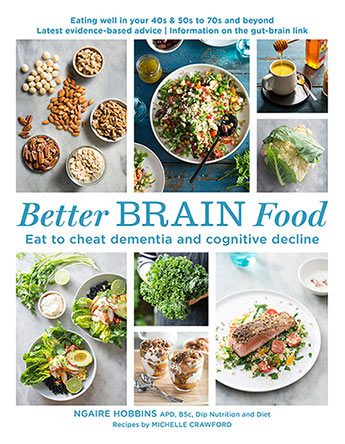
  • Better Brain Food Eat to cheat dementia and cognitive decline

    Better Brain Food Eat to cheat dementia and cognitive decline

    As more information becomes available about preventing dementia and slowing the ageing process, it is necessary for research to be current and pertinent to our lifestyle. These criteria have certainly been met in this book. Not only is it informative, and up to date with latest research, but it is also a pleasure to browse through sections at leisure.

     The Contents shows us that the beginning chapters deal with the Brain, Gut Health, Obesity and Diabetes and Diet plans. We see that brain health is dependent on a myriad “of factors including nutrition.” We know that getting enough sleep, being social, and being physically active are a few of the ways we can care for our brain, but this book deals with the nutrition aspect and so we have a chapter that explains how we can understand the brain, its function and its needs.

     The author explains that the more “connections brain cells make throughout life, the more you amass what is called Cognitive reserve.” The brain uses an enormous amount of our nutrition intake, and uses glucose to fuel its workings. Exercise helps to reduce inflammation in the body, and the muscles need protein to maintain their work load.  There are fascinating studies being undertaken now on brain and gut health, and information on both. Some natural anti-oxidants are listed.

     Part two of the book consists of recipes. The beginning of the chapter deals with pantry essentials and the author looks at spices such as cinnamon and turmeric, cumin and coriander, nuts and seeds and grains. Salt is mentioned, and those foods such as bread, breakfast cereals and prepackaged meals are shown to exceed a healthy limit of salt. The storage and preparation of these foods is shown to be helpful, and we begin to see the recipes such as “Spicy Mixed Seeds,” which make an ideal snack or nibbler.

     Salad dressings, mayonnaise, vegetable stock and pickles to make, are introduced next. This excellent book has something that many lack, and that is, “Cooking for One or Two.” It is easy to increase the amount, but so helpful to have recipes for one person. Next we come to the recipes. I wince when quantities of kale, quinoa and exotic ingredients are required, but no! The first recipes are for Sardines and tomatoes on toast, and Fried eggs; such satisfying, recognisable and easy recipes. There are also pizzas, pancakes, salads, lamb chops and stir fries.

     Not only are the recipes delicious, easy to prepare, and wide ranging to cover every taste, they only need a short preparation time.  The photography and presentation are excellent. The book is set out in such a way that the information is in a compact and easy to read style, while the recipes are spaced out with one recipe per page, and many colourful photographs. It is a beautiful book to browse, but more importantly, it is inspirational in its ideas and support.


  • The MIND Diet: A Scientific Approach to Enhancing Brain Function and Helping Prevent Alzheimer’s and Dementia

    The MIND Diet: A Scientific Approach to Enhancing Brain Function and Helping Prevent Alzheimer’s and Dementia

    This is a thoroughly researched and scientific look at diet, with a view to delaying dementia and Alzheimer's disease. There have been longitudinal studies done which confirm the role of nutrition in maintaining brain health. The book is well set out. It begins with an overview of the brain and what it needs to function at its best. That is followed by a description of Cognition, and Dementia, and Alzheimer’s disease. The information given is so well set out that this is easy to read and follow. There is also information given on how mental fitness is studied and measured.

     So now we have the background information we need, the next step moves on to the “Mind Diet.” This is made up of 15 components, with harmful food groups such as meat, butter, cheese and fried foods avoided. This concept has used an evidence- based approach to selecting antioxidant rich, and anti- inflammatory foods. As well as the Mind diet, we have the Dash diet, which is plant based and used to lower blood pressure, while limiting fats, sweets and salt. The study group was older adults, (mostly white) and it seemed that those who followed the diet for a longer time were more protected from Alzheimer’s.

     The next chapter begins to look at brain healthy food. Leafy greens are shown to be beneficial in retaining cognitive abilities for longer.  Evidence is given for this statement. The leafy greens are now individually identified for their benefits. For example, “Dandelion greens are packed with vitamins A, C, and K, fibre, calcium, manganese, iron and B vitamins.” Cooking methods are also suggested. Brain harming foods such as saturated fats and red meat are to be avoided, and some tips for those who can’t give up meat follow.

     Two charts show what to eat, firstly for 6 days a week, and then 5 days a week down to once a week (fish). The everyday list shows we may have 3 servings of whole grains, 1 serving of vegetables, 1 glass of wine, and olive oil. There follows a chart for scoring your food intake and adding up weekly totals. There are also blank worksheets provided so you may create your own meal plan.

     The final part of the book, after giving tips to stock your pantry, deals with recipes. One of the difficulties I found was some of the ingredients. Sriracha, Swiss chard, Arugula, and Collard greens are some unfamiliar terms. However, there are plenty of recipes in the book to excite an experimental cook, and also one who may wish to dabble in healthy diets and food.

     The arguments and scientific reasoning behind these ideas are hard to dispute.  It makes much sense to protect the brain from harm for as long as we can.