Tag: cults

  • The Word

    The Word

    Intriguing and introspective, William lane has used language to great effect in this somewhat quirky look at the human psyche in all its wonderous flamboyance. Kendric is a rather unusual advertising oddity in that he has ability to create advertising slogans that inspire people to buy the brands that he sells.

    His love of words becomes apparent when he is deconstructing his wife’s knitting pattern, looking at the words used as descriptive instruction, while they share the miniature of their day in a somewhat restrained manner.

    He talks about the restaurant where he goes for lunch, the waitress appears to be Spanish, she ponders on the disappointment that is her husband, wondering if she will ever understand him.

    Things begin to change in Kendric’s very limited world with the arrival of a new Manager for The Firm, a man on the up in the world of advertising, a man he knew as a junior, a man who is expecting results and fast!

    Kendric finds himself adrift in a newer more aggressive advertising world, a world where he is expected to deliver the right words quickly, not in his usual style of slow consideration. This new workday world sees him venturing into social diversions, something so foreign it is almost frightening, challenging all he thought he understood in his limited scope of lifestyle.

    A new secretary Maria proves to be the catalyst to change, encouraging Kendric to leave all that is familiar and move into a ‘commune’ style of living that focuses on the power of words, known to its members as The Word.

    But as with all things idyllic, trouble comes to The Word in the way of conflict, change, and once again, these influences force Kendric into reviewing the world he has ingeniously inhabited in his search for nirvana, for perfection.

    William Lane has devised a deliciously fascinating perspective, with a cast of idealistic introverts who somehow, by the end page, have all become firm personal friends, offering a wonderful perspective on life that suggests so many of the options presented in the wonderful world of words, connecting people in so many diverse and fascinating ways.

    The Word is not a conventional read but a read that does become addictive.
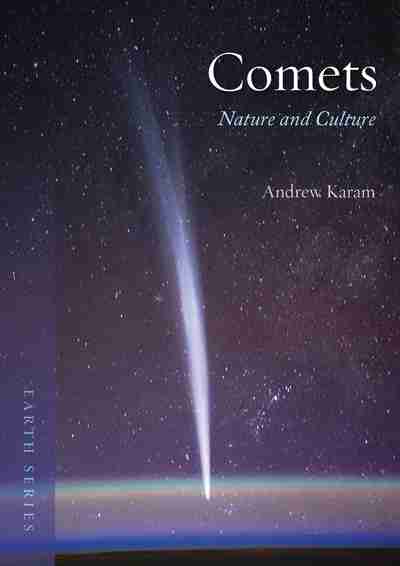
  • Comets: Nature and Culture

    Comets: Nature and Culture

    The skies are amazing and it does not matter how scientific we become they will always hold a majesty and mystique, which is particularly significant when it comes to comets and thrall they have long held over history, religion and culture.

    Comets have always, since people inhabited this earth, held a very definite place in history, as the ancients saw these phenomena as a sign from the Gods that something significant, good or bad, was to occur. Julius Caesar was declared a deity by the senate in Rome, but it was only accepted by the people after an appearance of a great comet (Caesars Comet – 44bce) in the skies, such was the power and significance of the Comet.

    Ancient Astronomers such as Hippocrates (460-370bce) and Aristotle (385-322bce), Seneca (4bce-65ce), Pliny The Elder (923-79ce) and Ptolemy (90-168ce) studied this naturally occurring phenomena, all coming to a range of conclusions, all of which are now given some measure of merit in today’s scientific community, particularly in the light of the fact their ability to see into the heavens and research as far and wide as the modern scientist, did not exist.

    Every now and again a particular comet will capture the imagination along with the spiritual influences to create a media focus. The Halley Comet was seen when author Mark Twain was born and also appeared when he died, but has links back into history as having been documented as observed as far back as 250 bce. Greek and Chinese astronomers alike, made note of a comet that appeared in approximately 467 bce, which could possibly have been Halley’s Comet.

    The scientific influence of comets is well documented and can even be considered as the reasons dinosaurs became extinct as the direct result of a major cosmic collision. Comets are also attributed to have been the reason there is so much water on the earth as they are primarily made of water, therefor the line of research shows that without comets the water, that is the basis of all life on earth, simply may not be here.

    Fact, fiction, folkloric, history, cults, religion, superstition and tragedy can all be placed firmly in the realm of the Comet, which in the scientific breakdown, is not a lot more than a ball of ice that has been hurtling about space long before man ever walked on the earth, but since then has come into its own, not just for their splendid trajectory around our earth, but also for the wonder and awe they did and do still hold.

    Andrew Karam has gathered these and many, many more interesting aspects of life in the solar system together, presenting them in such a way as to make the entire subject matter of Comets one of extreme fascination, delivering them straight to the armchair of the lay person, in a thoroughly enjoyable and entertaining manner.