Tag: Cuba

  • The One That Got Away: Travelling in the Time of Covid

    The One That Got Away: Travelling in the Time of Covid

    In 2019 Ken Halley, The One Who Got Away, had the next twelve months planned out, almost down to the last dollar and detail. That was before the world as he and everyone else knew it changed, with the advent to COVID -19.

    Undaunted, he took a long view of his plans and decided that as he was heading out to the small nations of the Caribbean Sea, via Cuba with a few small stops on the way through, the challenge of travelling in a what was then, a slightly changed world would be worth it. He headed out to see if his reading and expectation of these new frontiers lived up to speculation and anticipation.

    Leaving Australia on 21 February 2020, he intended to return exactly one year later, but fate, as it so often does was to intervene in so many ways, eventually bringing him home to Australia 10 months later, older, wiser and very pleased to place his feet, or at least his wheelchair wheels, firmly on Australian ground.

    Arriving in Canada as his first stop, he found conditions more or less as expected. He met with old friends before moving on to Cuba, the beginning of his adventures where he was to confront the reality and the very real challenges of travelling in a country that was ill equipped to deal with wheelchair travelers, let alone the Corona virus.

    A very experienced traveler of more than 30 years traveling with his wheelchair, Ken had learned to be able to adjust to situations as they arose, changing plans as necessity dictated and still being able to accomplish his desired objective.

    But what he had not been able to factor in was the effect COVID was to have on the small nations he would be visiting, the total disorganization that was to be found on Barbados and in several other nations. The fear of the locals being caught should they break curfew, and the constantly changing rules as to swab tests, quarantine and the general lack of accommodation, was constant and exhausting.

    Along his journey he met many wonderful people who, time after time helped him along the way, and the obstruction of the government officials to so many areas became an exercise in not getting involved in local politics. Well almost not getting involved in local politics! He also became very familiar with the frustration of booking onward flights only to have them cancelled time after time.

    Up until he was unable to rendezvous with his delivery of medical requirements, organized down to the last detail, things although not going smoothly, were still allowing him to see a little of the many places he had always wondered about. Until he could not, and things changed dramatically.

    A well-read journalist and author, Ken Halley’s travel memoir The One That Got Away makes fascinating reading in a time when for many, travel has become a thing of the past, any travel is still fraught with very real challenges, lock downs, swab testing and the possibility of quarantining, and that is simply to go from State to State in Australia, let alone the anywhere in the World, is ever present.

    Ironically now the world is opening up a little at the end of 2021, much of what Ken Halley experienced is still very much a reality; travel anywhere is fraught with instant change, Countries are now grappling with the still largely unknown effects of the new Omnicom strain and life, let alone life of the traveler, is still an ever changing kaleidoscope.

  • Hemingway’s Havana: A Reflection of the Writer’s Life in Cuba

    Hemingway’s Havana: A Reflection of the Writer’s Life in Cuba

    Cuba, a place beloved of Hemingway has come to life in this intimate and emotional tribute to the writer Ernest Hemingway, who for many years made Cuba his base, a place where he lived for the longest period of his life, a place where he wrote prolifically, much of which was published posthumously.

    Respected photographer and writer Robert Wheeler has followed Hemingway’s life from the heady days in Paris to the period of time in his life when he settled down, finding some kind of peace and acceptance in his troubled and colourful life.

    Hemingway’s Havana has been carefully segmented commencing with a wonderful and warm Forward by America Fuentes, granddaughter of Hemingway’s long-time friend, Gregorio Fuentes, captain of his fishing boat, Pilar and confidant which tells more than anything else of the love and respect held by Fuente and the Cubans for this ‘man of the sea’.

    More than 100 coloured photographs make up this intimate biography of a man who is considered as one of the most influential writers of the modern day with his genteel and fluid use of the English language used to paint an unforgettable picture in words.

    Spending much of his life as a war correspondent, Hemingway found his way to Havana in 1934 in his newly purchased fishing boat Pilar, a craft he spent many long and happy hours sailing, a craft which became the inspiration of Pulitzer Prize winning novel The Old man and the Sea. His love of the sea saw him kitting out his boat as he carefully patrolled the waters of the Caribbean during World War II, on the search for German submarines. It also earned him unsought recognition with from the FBI. His third wife, Martha Gellhorn joined him there.

    Through the medium of photography the halcyon days of Hemingway’s time have been captured once again, presenting to the world the wonderful allure and charm of a country which has been largely seal off from the world over the past 50 years and more.

    Hemingway’s favourite places have been captured with a warm intimacy, each photograph in the main body of the book having a page of script telling a story of times past and present, from the Malecon, a five mile stretch of sea wall that attracted both intrigue and beauty, to his connection with Fidel Castro and Che Guevera, to his final days in Cuba in 1959 and 1960.

    During those last two years he created A Moveable Feast a collection of stories based on notebooks he recovered from a long forgotten trunk stored at the Ritz. He also fine-tuned several other manuscripts released after his death in 1961.

    In Hemingway’s Havana, Wheeler has created a wonderful, colourful and warm tribute to a man who saw much, gave much and suffered much in his life: a man who lived life to the fullest, loved robustly and delivered a legacy to the literary world that is yet to be surpassed.

  • Azul

    Azul

    Wow, Wow, Wow! Linstead has simply done it again; bought together a great many musical influences and styles to create Azul, a fanatically Latino beat filled album which transports you to the nightlife of Cuba, the salsa beat, the flamboyant and vibrant lifestyle of the Latin American countries and many, many other places of warm balmy nights and lazy sun filled days.

    Cha Cha Chu is a tremendously upbeat piece filled with the vibrant addition of Cuban horns styles; let’s face it no Latin American album would be complete without the Cuban style horn section; It is simply a must have.

    A lovely vocal rendition of be My Girl showcases the immense talent of this musician, as although he is not noted for his vocals, his style is totally reminiscent of the earlier days of the Mersey sound, singing about love, the love of his life hopefully becoming his girl, of being young, in love, with the endless days of summer to simply enjoy living in the here and now.

    Lazy Sunday is a slightly slower more subtly reflective piece which takes me immediately to the islands of Greece where the lovely beat brings back memories of lazy days spent sipping local wine, enjoying the view looking out to the cerulean blue or Azul, waters far below. Music does tend to take the listener to any place they choose, touching the motions and transporting the spirit to times enjoyed and fondly remembered.

    A change of pace is introduced in Heaven Mets Earth which, while rich and full is somewhat different to the previous pieces. It could almost be considered as a dividing line where he shifts from Cuban beat to the more mystical, reverent aspect of his life, still encompassing that inspirational rhythm.

    Linstead sings in Spanish about a temptress ‘Hechicera’ which is absolutely perfect, as it also allows the introduction of the piano accordion to give a distinctly continental flavour. As far as singing about temptresses goes, Spanish is a wonderful language to use, as it creates the sultriness needed, and the coquettish nature of the tempter.

    Moon Child, shows Linstead’s undoubted skill as a world class guitarist; along with Dance of the Sharman almost appear to go together as they have been inspired firstly, by a ceremony held on a full moon night and then participation in an ayahuasca ceremony, where he played wooden flute, doing so once again in this song.

    Rounding out the album are three pieces, all different but interconnected, with the funky Starlight, featuring some incredible electric guitar interspersed with the sound of trumpet in a jazz style rhythm, perfect for beginning to dance the night way, some hand clapping adding to the ambience of the piece.

    Friday night revellers winding down from the week are hit with the salsa beat of Friday Night at Babaluu with a screaming trumpet rising over the guitar, the piano setting the pace, the bongo’s adding something special to the almost frenetic pace, as Friday night once again morphs into Saturday.

    The final piece is a lovely, mellow, instrumental version of Be My Girl, which draws to a conclusion an album which most definitely does, in Linstead’s words, ‘takes the listener away on a musical vacation to the sunny climes of the tropics’.

    Azul is a seriously ‘feel good’ album created once again in the flamboyant style of a world class guitarist who loves to have fun with his music!

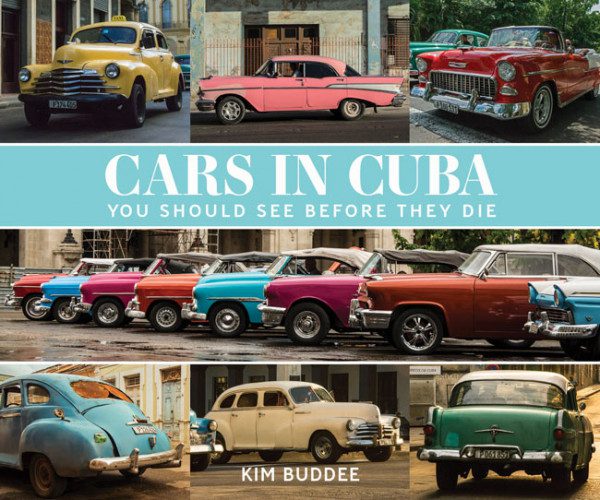
  • Cars in Cuba You Should See Before They Die

    Cars in Cuba You Should See Before They Die

    Whatever you may think about coffee table books, throw it out the window, as this incredible series of portraits, or this rather visual essay, devoted to the wonderful cars of Cuba, is a rare and colourful treat everyone from car buffs to photographers will appreciate.

    Additionally, due to the recent events in Cuba where Hurricane Irma, on her rampage through the Caribbean, did considerable damage to the country, some of these images may be the last recorded of this particular vehicle.

    Cuba has a colourful history in many respects, with many of the cars still in use today, imported into the country from the America before embargoes were placed on the government of Fidel Castro, and Castro a banned the import of vehicles from America.

    But these majestic vehicles have continued on to become perhaps one of the best known iconic elements this strangely unique, almost hypnotic Country.  Many of vehicles have managed to survive due to ingenuity and the remarkably good engineering of the manufacturers in Michigan during the 1950’s.

    Sadly though, many are beginning to slowly fall well below the possibility of repairs with the more shining examples having been restored and used primarily for the tourist trade. The hardworking models being used as community ‘taxi’s’ are well past their use by date.

    In this smorgasbord capturing the pride of American Car manufacturing Cuban style, Kim Buddee has done the vehicles, and Cuban ingenuity proud. He has carefully documented every aspect of the vehicles history, tying the many photographs together with the flamboyant, bloody history of the country, even down to the part these remarkable caddies, Pontiac’s, Oldsmobile’s, Mustangs and their Michigan relatives, contributed to the many attempts to overthrow the Government of the day.

    The final section wraps up with a look at transport within Cuba today, with some magnificent pictures of the real mix of daily transport, a shot of a street in the morning as the locals go about their business, to a man riding a horse, something he does every day, a tractor well past its prime but somehow still working, to an overcrowded bus and hitch hikers standing on the side of the road.

    What lies ahead for Cuba is yet to be discovered, but it would be safe to state, that once the devastation that has occurred in recent weeks is cleared, and life returns to something like normal, and you can safely travel to this amazing country if for no other reason than to step back in history, go before change slowly removes all trace of island life circa 1950’s, with that uniquely Cuban stamp.