Tag: contemporary

  • Syncretic String

    Syncretic String

    From the first note Syncretic Strings from Strunz and Farah is vibrant, intense and once the final note has been played there is a distinct desire to stand and loudly applaud. Released in March this year the duo has over the ten tracks, displayed a passion and brilliance in what could be considered as world-fusion which is breathtaking and captivating.

    Known for their flamboyant style in creating an eclectic fusion of music within the genre of contemporary guitar, their technical expertise and flamboyant delivery has made them a duo that has remained exceedingly popular since formation in 1979.

    First impressions are formed with Summerborn, a catchy song that moves around within the piece from a slow tempo to a faster pace, which more than holds the interest, with some complex riffs backed with some seriously stylish percussion.

    Rich and full of an irresistible dance beat Corriente Tropical creates the wonderful sultry evenings of the tropics, the hot summer nights when music is everywhere, the Latino beat evocative of fun, pleasure and enjoyment. A gorgeous piece.

    The signature piece Syncretic Strings is fast, technical and a brilliant display of Jazz Fusion, delivered by Masters of their art. It is indeed an awe inspiring piece, which would, in a live audience, hold you spellbound, immersed in the intricate nature of the fingers flying over the strings.

    Merry Chase is a catchy little piece that is light, charming and while immensely technical in delivery, appears to be a piece of fun for both players delivered with verve and pizazz. A piece that would have you rocking in your seat.

    Slightly slower the beautiful Figs and Pomegranates wafts in the essence of Greece and the Middle East, until a powerful fast rhythm takes over moving the song firmly into the area of a pulsating Latino beat.

    Horas Solitarias adds a touch of romance, featuring an added delicacy of percussion to create a depth of rich emotion, which is simply beautiful, that leads nicely into the final song Cybeles Jester, once again a piece that demonstrates the wide and brilliant range of tempo, style and innate feeling of Strunz and Farah for their music, their compositions and their highly technical, skilful delivery.

    Syncretic Strings demonstrates in fine style, perfection in contemporary guitar.

  • Thirst for Salt

    Thirst for Salt

    Madeleine Lucas has a beautiful style of descriptive writing which engages the reader throughout the story, Thirst for Salt. “To recall the past is to unravel the tendrils of a bluebottle jellyfish, map the welts left on my back and throat that summer.” The story begins here with the simile of jellyfish scars like the pain and scars of a past love. The author’s thoughtful and perceptive writing explains characters and their behaviours with a gradual exposing of their soul.

    The narrator whose name is not mentioned, tells her story with care. She has grown up with her mother and much later, a brother whom she loves dearly. She studied at University and after graduating goes on holiday with her mother to a place they visited many years before. It is while she is spending time at the beach, she meets Jude. He is forty-six and she twenty-eight. To retell the story does no justice to the depth of emotions laid bare, the love, the passion, and the fear of loss.

    Eventually the narrator moves into Jude’s shack and spends a very happy time there. “Love I still believe, exists outside of time. Or it is its own time. It makes its own measures-not in minutes or hours or calendar days but in something closer to seasons, or tidal movements.” As we hear the narrator’s voice, we recognise the doubts she has about lasting love, having a child, and a permanent home.

    Sadly, many of the doubts and concerns felt come to pass. Minor differences and jealousies gather to affect this relationship. The unwinding of this haunting story is as gritty as the sand and salt on their beach.

  • Permafrost

    Permafrost

    Short stories as a collection are always interesting; sometimes they just fit the bill perfectly when there is limited time to spend reading. Permafrost from SJ Norman is such a collection but with a somewhat dark twist.

    Each of the stories is slightly different but carry a similar theme, each set in various parts of the world, the characters somewhat lost in their world of youth and angst, each looking for a way forward but all the while refusing to accept what it is they are discovering.

    At times deeply disturbing, at others just plain well, yeah, the thread is always teetering on the edge of one step too far; thus saying the characters remain with you long after the story has come to a somewhat abrupt ending, leaving the thoughts of the reader to answer the unstated.

    Modern in context, dangerous in concept the work is darkly fascinating, drawing in the emotions, the imagination, the overall effect is somewhat surreal. The use of language is beautifully rich and textured.

    Considering SJ Norman is by day a Visual and performance artist, the artist has bought undoubted the performance skills to the written word, to create a somewhat darkly intriguing collection in-spite of the sometimes confrontational subject matter.

    Permafrost will appeal to anyone who loves alternate literature. But who is SJ Norman, one person or a troop, each creating a storyline on a similar theme! Intriguing!

  • Eirlandia

    Eirlandia

    In this beautiful and all to brief recording, Jeff Johnson and Brian Dunning have created something rather magical, otherworldly and immensely enjoyable.  Well known for their contemporary Celtic sound the duo have once again delivered, with Eirlandia, a delightful fantasy collection based on a novel from bestselling author Stephen R Lawhead, In the Region of Summer Stars – Book 1 of the Eirlandia series.

    This collaboration between author and musicians is not a new concept as the duo has previous worked with Lawhead to create musicscapes based on several of his other fantasy works of fiction.

    The introduction to the collection Eirlandia, immediately introduces the Celtic measure with gentle and yet deep drumming, synonymous with this this style of music, then piano, voice and flutes join together to begin building a sense of wonder.

    Tir na nOg is a reflective and gentle piece, touching gently on the slightly deeper essence of the formation of the storyline using a combination of flute, strings and piano. Mystique is added in A Wonder Voyage of which fans of Lawhead will easily relate, and lovers of music will totally enjoy.

    As the album unfolds the music draws you deeper into the world of fantasy, where there is black and white, mystery and mystique, good and bad; a world where dwarfs, pixies, faeries and their kin abound.

    Tara Hill may have been written with the inspiration of Hill Of Tara located near the River Boyne, an archaeological complex that runs between Navan and Dunshaughlin in County Meath, Ireland, in mind, as it captures the very essence of things gone before and perhaps still present in today’s world.

    The final track The Kingdom of All Tomorrows commences with a haunting introduction with the flute that collects the many threads of the story, weaving them into a conclusion, leaving behind the suggestion that more is yet to come.

    Music as it is often said is simply telling a story though a different medium, one which envelops the senses and allows the mind to create its own script. Although this collection of songs has been scripted to complement a novel, there is without doubt, for those who are not readers of fantasy, plenty of space to create their own magic.

    Celtic music in all its many forms always enchants and when created by the masters of contemporary Celtic music, Jeff Johnson and Brian Dunning, it holds something a little bit magical, something very special, and something a little extra, the ability to help heal the wounds of life.


  • Truly, Wildly, Deeply

    Truly, Wildly, Deeply

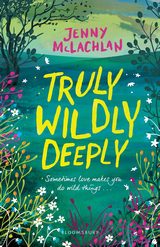
    For young people a first romance is an area of great mystery. For Annie, this is compounded by the fact that she has a mild form of Cerebral Palsy. She walks with toes pointed in and legs turned in, and arms swinging to compensate for that. However, she has been blessed with a mother who is not only loving and sensitive, but also extremely practical. Annie’s strength and attitude have been guided by her Mum, and her resilience is her foundation.

    Annie is confident and proactive. When she begins at Cliffe College, a whole new world is opening up for her. She looks around at lunch break and decides she will go over and chat to some friendly looking fellows. So she has made her first contact. The English teacher gives the students a copy of “Wuthering Heights” to study, and as Annie is a confirmed “Book Sniffer,” she is very excited. It is at this time that a young man comes into the classroom, a young Polish man named Fab, and he sits next to Annie. He is very up front and chatty in the most innocent way.

    Subtle reminders of Annie’s disability are present all the time. When Fab opens a door for her, he says that he is sorry that she is an invalid. She hotly declares that she is not, and says that word also spells invalid, (as not being valid.) When Fab asks her if it is difficult having a disability, she replies that society makes her appear disabled. She has a physical impairment. When getting on a bus, the disabled space for a wheelchair was taken up by two prams. It was easier for the bus driver to ignore this than address the mothers, so Annie had to politely insist on a space and a seat.

    Because of the need to stand up for herself, and be aware, Annie has developed an independence that even keeps her mother a little at bay. When she meets a special person, her Mother points out that she may lose some control, which will be scary, but may also be fun. Her Mother again gives the best advice when she tells Annie,    “You will never lose yourself, you know who you are.” Great reinforcing ideas of her self-worth.

    This is such a fun and entertaining story. The humour in the character is so real that you feel you know them. Fab is unaware of many customs and is always on the lookout to help. He brings his own homemade rolls to school as the canteen ones are dry. He and Annie exchange texts about Heathcliffe and some of the character’s  more bizarre behaviour. “ME: OMG Heathcliffe’s just dug up Cathy’s body, Sick”.  Fab, “Surely romantic.”

    Lovely characters, positive actions, and enough self-doubt to make this a terrific story.


  • Songs of Potential Embrace

    Songs of Potential Embrace

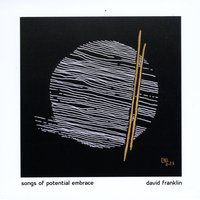
    In this seriously experimental album there are a range of sounds which could easily be considered as the collection of a complete eccentric, trying over and over again to find the perfect metre for expression, or the work of a genius wandering through the sound spectrum, tweaking here and refining there.

    But regardless of how you consider this collective of sound, you will by the end of the album have developed a definite opinion in regard to the work. Franklin is working with the concept that all sound is music in one form or another; the sound of the telephone demanding attention, the ceaseless drone of the vacuum cleaner as it moves slowly across the soundboard of life, the discordant note of an instrument played in reverse, are all music to his ears and to his composer’s soul.

    Introverted and extroverted the imagination is drawn to a man sitting in his studio, grabbing this and trying out that for a fit; a perfect match, a blend of the unique and everyday noises that go to make up our daily existence, all of which have been tuned out to form the accompanying drone of the world turning again and again.

    Underneath this experimental soundscape is that of a serious musician who has already created and released eight previous albums ranging from the avant-garde to the melodic new age.

    In the beginning we are introduced to this style with The Failed Experiment of Earth Consciousness where Franklin uses an altered acoustic baritone guitar with alternative tuning as a metaphor, a cry, to wake-up in regard to real environmental issues such as earth warming and climate change.

    Trending towards the more popular style of music in So far Below Franklin works with an altered baritone guitar with the addition of piano gently balancing the work, which was written in a cemetery, capturing the unique quietness, the gentle whispering of the soul and sense of great peace to be found as part of the final resting place of so many.

    RH Factor (re-mix) creates the birth of new life, the noise which must assault a newborns senses as they enter this world, followed by the very confrontational Quotes (re-mix) full of discordant guitar and synth overlayed with the vocal grief of discovering a loved one dead of their own hand.

    Changing the pace entirely is The Wildness, with Franklin reciting poetry accompanied by Tibetan singing bowls both struck and strummed, to remind us that we need to take care of our life and also of the earth we live upon.

    Confrontational, intriguing, distinctive and strangely enjoyable this music reaches into the psyche to encourage a connection with a segment, a primal component of who we all are, humans temporarily placed on this place called Earth!


  • Dancing on the Wind

    Dancing on the Wind

    Delicately a leaf blows across an open space, the soft morning mists lay on the ground before the day awakens, the gentle fall of a feather in the drifting breeze, are just some of the many images bought to the forefront of the emotions as you listen to the opening piece, When Leaves Dance, in this second solo album from the talented Shoshana Michel.

    Heather, Roses and Midnight moves into a deeper, richer use of the piano adding a dreamy, mellowness evocative of the heavy scent of roses after a hot day, the slowing down as the relaxation of evening is there to be enjoyed; savoured.

    Dancing on the Wind, the title track, is once again delicate and light, washing away the stresses and leaving in its place a sense of peacefulness; a sense of times past, of fresh new beginnings; of hope.

    In these first three tracks you immediately come to understand the power of solo piano played with a light touch, with an engaged sense of emotional creativity and the healing benefits which come from the absolute beauty of sound.

    As with most compositions much of the artists life experiences have combined to create each of the various melodies; some sad, some happy, many inspired by time and place, by the people met and the work undertaken. In Michel’s case, simply living life, following various pathways offered and finally, after more than 25 years away from composing material, sitting down at her piano allowing the ‘river of creativity’ flow.

    Shoshana Michel showed incredible talent as a young musician, who at the age of 17 years, began her professional career playing honky-tonk at a pizza parlour and then moving on to become the ragtime Pianist at the famous Knott’s Berry Farm; over the many years in between the pizza parlour and her first solo piano release, Soul Whispers, she has played all genres at a wide range of venues.

    She found composition a challenge as she felt she could not achieve what she required artistically and so sidelined this avenue, until she came across Chabad Nigunin (a collection of Jewish religious songs) which unlocked her incredible talent for composition and so this latest offering was born.

    Each of the track titles is evocative of the mood, each bringing to the listener a sense of place, a moment experienced, a personal though or feeling as special minute, when you simply listen to the beauty unfolding about you.

    This album has been created from original compositions, which shows a remarkable depth of understanding of the human psyche, which has entwined within each of the beautifully crafted and performed pieces.

    Simply beautiful.

  • Majestica: In The Midst of Stars

    Majestica: In The Midst of Stars

    This delicious, all-encompassing collaboration between award winning flautist Sherry Finzer and multi-instrumentalist Cass Anawaty has created something so very special that words really cannot describe, nor create, the sublime bliss felt, when listening to this work.

    From the opening track, In The Midst of Stars you are immediately wrapped in warmth that invites you in, invites you to listen, to feel, to enjoy the treat that is in store for you. This wonderful warmth continues as an unbroken thread throughout which creates a deep sensuousness rarely conveyed through the medium of music.

    That this album is something very special is soon made apparent as the further you relax into the tracks, you realise that majesty, the incredible talent, the blending of synthesizer with flute, piano, drums and guitar has tapped into something very, very close to divine.

    How best to describe this personal listening experience is difficult indeed, as to each listener the music will resonate in a different manner; bring with it the solace, the love the peace that is required.  Both the track and the complete album, In The Midst of Stars , has the ability to achieve so much in so many different arenas as the music is moody, emotive, uplifting, gentle and subtle,  having the ability to change tempo, almost at will, adding a further dimension to the music.

    Close of the Day, is a lovely piece with the repetitive notes of the piano overlaid with the almost deeply mournful notes of the flute which intrigue, and tantalize, allowing the mind to absorb, to admire the simple complexity that has created a piece that brings to mind birds on the wing soring majestically on the thermals, high above the earth, simply at one with their environment which demonstrates in its entirety, the alchemy created by Finzer and Anawaty throughout the various pieces.

    In no way should this music be billed only as ‘new age ‘or ‘spiritual’, as it far more than  a creative collection of notes evolving for meditation; it is an album that encompasses many differing moods and emotions taking the listener to so many places; misty mountain tops, the incredible deepness of the night sky, the fascinating world below the water’s surface, the deep rhythms to be found within the human body and spirit, culminating in the superbly drifting piece Aurora Australis, where you feel you are offered the right to simply drift, to observe, to become one with the earth, the sky, the stars.

    This is an album of sensual beauty, which regardless of the arena it is presented in, will be long remembered for the understated majesty and beauty created by two musicians who are not only Masters of their craft, but blend their skills together in an almost divine manner.


  • Rattling Spears: A History of Indigenous Australian Art

    Rattling Spears: A History of Indigenous Australian Art

    Although this is an comprehensive and fascinating presentation of Indigenous Art forms since 1770, when the first British person, in Captain James Cook came ashore at what is today known as Botany Bay, it is far, far more than that: it is also a history of the tragedy that came upon these highly skilled and organised peoples once white settlement came to their land, now also known as Australia.

    This history of Indigenous Art, created in a respectful manner by Ian McLean, details without prejudice, without judgement,  an intriguing look at how the Aboriginal Art form has gone a very long way to becoming the salvation of an ancient race.

    When the shamans gathered on the headland on that fateful day, they were probably trying to work out who these people were, where they fitted into the Dreaming and what were they going to do about the nature of them coming ashore. Eventfully, once Cook decided to come ashore, the men filed into formation rattling their spears, to show these people they were not all that welcome. Cook was having none of this, electing to stay, carrying out his plans to investigate what lay in the surrounding areas. Joseph Banks and his team set out on their collecting mission and whilst doing so, stumbled across the largest collection of Aboriginal art in the area.

    Much of what was collected during this time is now still housed in the British Museum; what followed on from this initial meeting is writ large in history or so you would think, but it is only in more recent times, when the likes of Albert Namatjira became an household word, a man renowned for his immense talent in recreating the land he loved, the land of his ancestors, in a manner that appealed to the European peoples, the artists, the recorders of Indigenous culture and spiritualism, began to become a little better known.

    Prior to this the mission’s and outstations were encouraging mainly the men of the desert regions to continue on with their painting on wood, canvas and cloth. So successful were some of these initiatives, that an excellent and fruitful trade was set up in tourist souvenir art works such as boomerangs and other early versions of ‘tourist tat’, until the quality of the works were questioned and this came to an end.

    There was a cultural price to be paid as many of the figures and hieroglyphics being painted where those of sacred figures associated with the Dream Time and Dream Time stories: this had to eventually be reconciled and with great resignation the Elders realised that they either had to move along with the ‘new way’ or watch their traditional art disappear altogether.

    Over the years both the women and men of desserts and cities of modern Australia of indigenous decent have created a formidable art form that is only growing stronger; showcasing the immense talent emerging into the modern contemporary art arena worldwide, in paint, sculpture, woven form, design and performance.

    Considered by some that indigenous art formed, or forms, the basis for the modern Contemporary Art movement in Australia, is to give to these ancient peoples the true accolades they and their art forms, their story telling and their ancestors deserve, perhaps going a little way towards making amends for the almost complete destruction of this race, this art form, created by white settlement.

    Much, much more than a book on Art this is a look at the early history of Australia presented through the medium of Art, in a manner that delivers in stark detail the traumatic and horrific facets of white settlement, the grab for land, the scant regard for human life and the salvation of the remainder of the indigenous population through their art, their sacred record keeping and eventually, their ability to create something special, unique and inspiring from destruction.

    Beautifully illustrated with a range of colour plates taken from early pieces such as Man and Rooster c.1900 – West Arnhem Land, Charlie Flannigan’s Richmond Homestead and Oscar, Police Boys Doing Duty (Lynch Law) 1895, to Michael Riley’s Untitled 2000/2005 from the series Cloud, allows you to enjoy the journey through the ages.

    There is much to be digested in this work, much to enjoy and much, which in many ways is unpalatable; the work makes for compulsive reading as the manner and style of Mclean’s method of storytelling, which is what he has achieved, draws you in and gives you more than just an a art history lesson, it delivers a lesson on life, making the most of opportunities presented, allowing them to morph into something majestic and wonderful.

    Perhaps all this was foretold in the Dreaming; perhaps not but whatever you believe, by the end of this comprehensive work you will be completely impressed.

  • Scattering Stars

    Scattering Stars

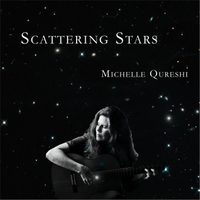
    Tripping delicately through the soundwaves, guitar mixed with synthesizer wraps around an ambient theme created in Beyond the Field, which reoccurs throughout the compositions as Qureshi focuses primarily on guitar to create an album that creates a wonderfully meditative resonance that will have a wide audience appeal.

    A self-taught guitarist in her teens, she eventually found her way to studying music, graduating with a Bachelors and Masters of Music, discovering a love of composition and creation, realising that this was her calling, her pathway, her spirituality: on this her seventh album this is apparent as the soft subtle tones of the guitar integrate with synthesizer, and occasionally strings, tabla, bells and keyboards to create a certain alchemy.

    Dreamy, spacey and flowing, the music takes you on a journey that is yours for the making with the influences of mystery and curiosity melding in with what is now referred as ambient tones or textures, but always a hint to something different just around the corner with the next note played sending you down yet another pathway.

    Each of the pieces is separate and yet a part of the whole, diverse and yet similar, as seen in Chasing the Wind which commences with Native American flutes calling in the synthesizer and didgeridoo, a slight hint of tapping sticks and drum immediately make you think of the timelessness of space, of solar winds, the deep ethereal nature of space and time and place.

    Although guitar is not played in this piece it is a tribute to the composition that it shifts the emphasis to another soundscape, another vibration, in order to prepare you for the absolutely meditative piece which follows in Given.

    Whether, in the composition phase of this album of shifting soundscapes, the choice to create this almost thematic fluidity was deliberate or not, it has certainly come together to allow the listener to drift effortlessly along with the music

    A creative collage, a blending of instruments, ancient, traditional and modern, a delicate touch and the underlying spirituality of the composer has created an album that only improves with the listening. Ethereal, spacy and totally enjoyable.