Tag: conflict

  • Too Many Acorns

    Too Many Acorns

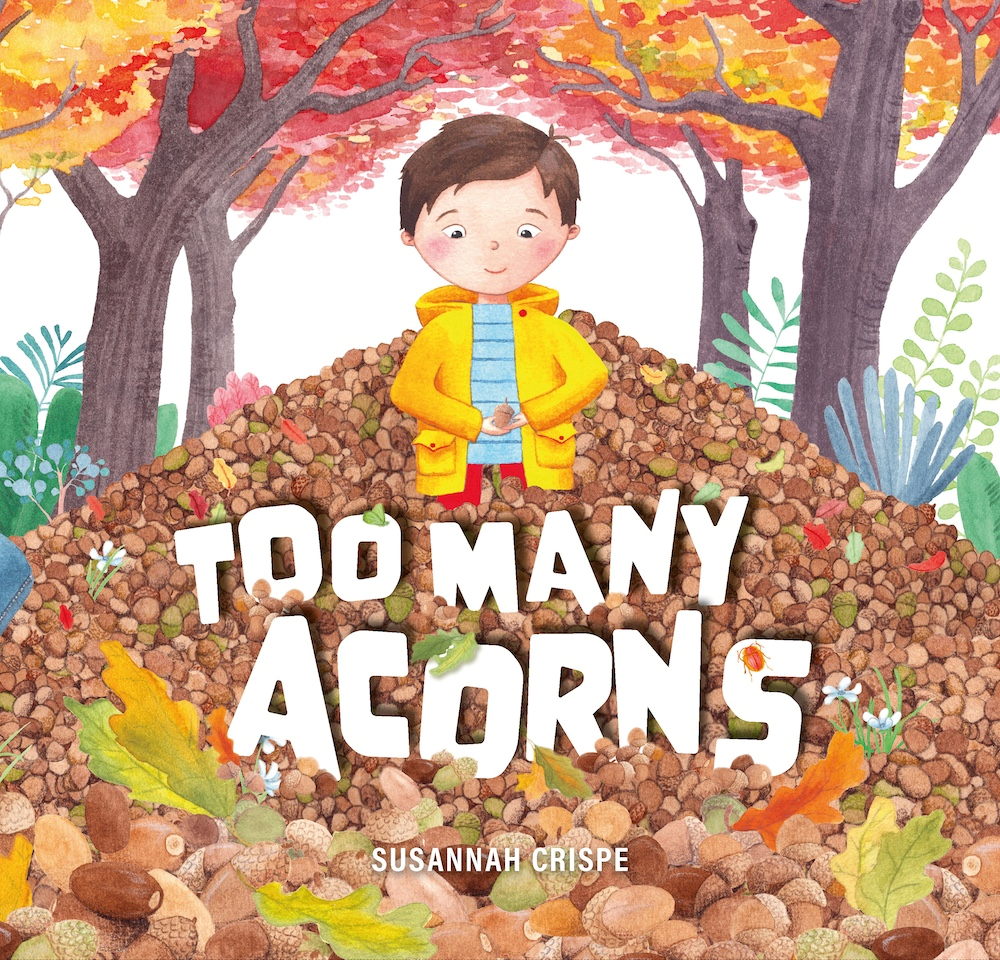
    There are times when children and adults can become obsessed with things. In this delightful story, Too many Acorns, we see that young Patrick is walking with his father one day when an acorn falls at his feet. He picks up the nut and feels the soft roundness and smooth exterior of the shell. The acorn was so small and alone that Patrick felt drawn to it.

    Bit by bit the young boy began to collect more and more acorns as they fell from the tree. At first, he stored them in his bedroom, then in the lounge room, and gradually the acorns were in every room of the house. This feeling for the acorns was a thing that “swept him up, gathering pace, and leaving room for nothing else.”

    When disaster strikes, Patrick realises that he “could no longer find the things that made his heart smile.” So many acorns! Suddenly Patrick’s father laughed, and the boy also saw the funny side of things. Once they had cleaned up the acorns a solution was found which involved an acorn, Patrick and his father.

    Large, simple illustrations enhance the story which has a serious undertone, as it tells how Patrick and his father both ascend from the gloom that has encapsulated them.
  • WALLS

    WALLS

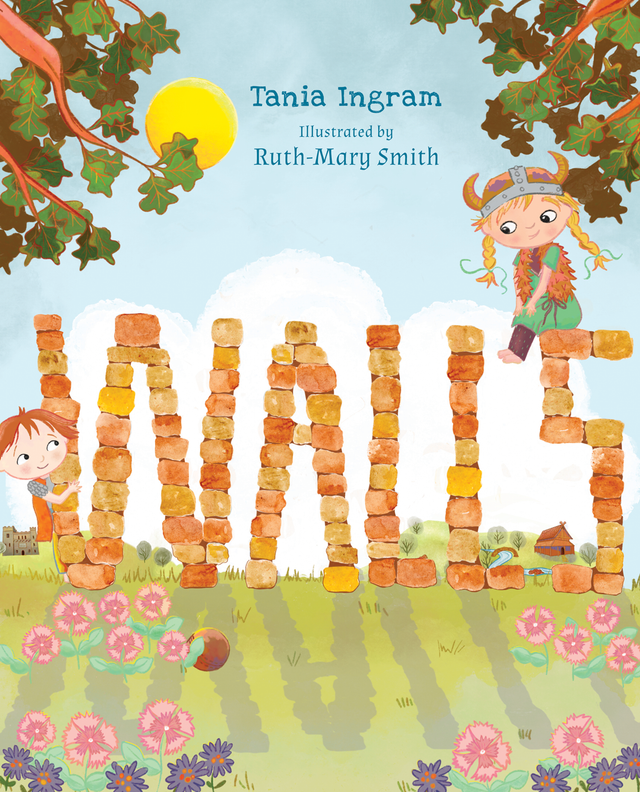
    With gentle, colourful illustrations, Walls cleverly shows how adults do not always get things right. Two men and two children live together but on different sides of the book. The children play happily together while the men begin by saying that their side of the book is the best. This leads them to feel that they can’t trust each other

    As the men gradually begin to suspect each other, the children play happily. Tensions rise and the men (one dresses as a knight and one as a Viking) decide to build a wall between them. Meanwhile the children have become quite inventive. The walls begin to grow until disaster strikes and the children lead the way.

    The illustrations convey meaning for a concise and clever text. The looks of dismay on the children’s faces as the walls grow is not noticed by the men. However, when all seems lost, it is the children who find a peaceful and satisfactory solution. Large text font and clever illustrations make this an easy and fun read.

  • WHAT DO YOU THINK?

    WHAT DO YOU THINK?

    In a world of social media and the internet, it is often difficult for a young child to determine what to believe, what is true or false and how to navigate a happy full filling life. In his third children’s book, award winning, best-selling author Matthew Syed helps children and young people by suggesting positive and practical ideas to find their voice and speak up with confidence in all social settings.

    In “What Do You Think”, the author provides the young readers with an empowering toolkit, which allows them to discover what influences their ideas, and how to debate their views with understanding and an appropriate response. It is filled with fun facts, statistics, personal insights, and amusing anecdotes.

    He uses a witty style to point out that debates and disagreements can often lead to new ideas, stronger friendships and even change the world; it will allow readers to confidently tell others what they think.

    This ‘how to’ book is both entertaining, engaging and very accessible for both adults and children as it provides strategies, hints and tips which help change their mindset, allowing both groups to achieve their potential. 

    The comic book style used by the Matthew Syed makes this book a very easy, enjoyable but informative read.

  • Children of Conflict

    Children of Conflict

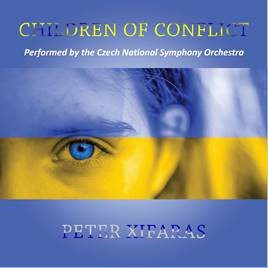
    Children of Conflict is a powerful, classical work of music over six movements which touches the very soul, as it brings home the senseless, destructive hopelessness of War, of conflict; the wider effect, the long term grief, despair and tragedy which eventually changes nothing

    Born into life by the Czech National Symphony Orchestra the suite, all be it a short suite, is coupled with images which are powerful, poignant and not easily forgotten. People, who before the destruction of Afghanistan, Russia, Ukraine began had very different lives, families, homes, tell the story all too well.

    The faces of the orchestra as they create each piece reflect the true emotion of the songs being performed. Very real emotion is written on them for all to see. For them, it is more than just music, it is hope, a voice, reaching out through music; through the medium they know best to tell all who would listen a story of hope and despair woven together.

    Prologue contains the the words Fear, Destruction, ‘it was clear nothing and no one would be spared’. Epilogue holds the spoken words Fate: Despair: for the present, are where the opportunities of the future, unwind’ . Hauntingly beautiful and immensely powerful words.

    To truly appreciate the powerful message contained within Children Of Conflict, it is vitally important to watch the captivatingly haunting video’s while the music unfolds.

    Peter Xifaras releases this work on August 5. Best viewed on a big screen or even a small screen the images create the picture, the music, full of sadness with hidden beauty, brings home the message.

  • Against the Loveless World

    Against the Loveless World

    The Middle East is arguably a man’s world. The current crop of regional leaders is male. The leaders that have been overthrown were all males. Unsurprisingly the biggest terrorist organisations in the region also were/are run by males. And by coincidence all the non regional states that initiated some sort of intervention in the 21st century were run by males at the time of intervention.

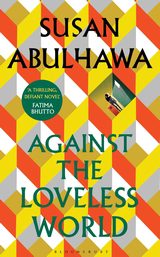
    Perhaps because of this author Susan Abulhawa decided to focus on the female voice with her character Nahr in her book Against the Loveless World. The book centres on perhaps the biggest Middle Eastern conflict of them all, the Israeli/Palestinian conflict.

    The start of the book finds Nahr in The Cube, an Israel prison for terrorists. She is locked in an isolation cell and occasionally brought out for either interrogation or interviews. The rest of the time it is back in the cell ruminating on how she got there. This ruminating is the basis of Abulhawa’s book as we the audience get to share in Nahr’s life journey as she moves from Kuwait, Jordan, Egypt and Israel/Palestine. Her story, it can be said, is the story of the Middle East as Nahr becomes a witness to many real life events such as the Gulf War and the Palestinian Uprising, the Intifada.  But it is also a personal story about a young woman trying to live her life in less than ideal circumstances. Next to well known events the book depicts Nahr’s attempts, among other things, to find love and to provide for her family.

    The book is written in first person and alternates from Nahr’s present day circumstances in The Cube to her past. Unlike other stories, be they on page or on screen, this is done well. Before the story begins several pages of the book is dedicated to translations of Arabic words into English. Though this is indeed helpful, I feel that there were too many translations and the book could have done with a more condensed list.

    As a character Nahr is complex. She isn’t an especially intelligent person, she remarks on this herself, but though not the brightest academically she is what some could describe as street smart.  Is Nahr a good person? That depends on which side you take. Imprisoned as a terrorist Nahr is no innocent petal (and to say so would be demeaning to the character). But she is also not a psychopath. It is clear that she loves and wants to be loved in return. Is Nahr’s character a sympathetic one? Some would say definitely yes; she is a victim of a great injustice. Others would say definitely no; that despite circumstances, Nahr had a choice and she must pay for her choices. What to make of Nahr is up to each individual reader.

    Writing a book about the Middle East and the Israeli/Palestinian conflict is difficult. It is a very emotive issue. Susan Abulhawa is Palestinian herself and from her character you get a very one sided perspective of the conflict, which is understandable for obvious reasons, though it must still be taken into account. The book is dark and no light read which in a way, is entirely fitting with modern Middle Eastern history. Is it worth reading? Nahr’s character is believable and as a fictional story that weaves around historical events it is interesting.


  • This Body’s Not Big Enough for Both of Us

    This Body’s Not Big Enough for Both of Us

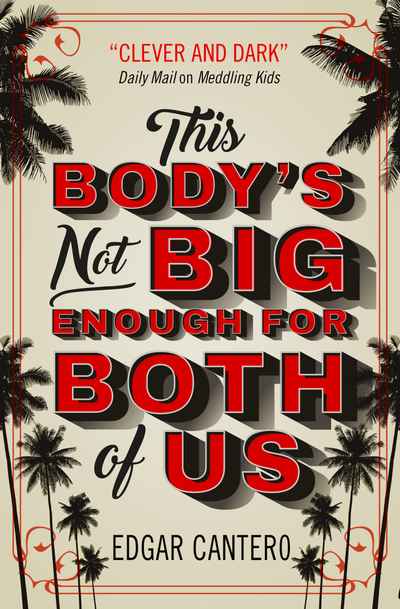
    Beyond bonkers but hopelessly seductive, this absolutely insane and dark ‘thriller’, will either win numerous awards or sink into the mire of ‘way too far in the wrong direction genre’, but it is suspected that it will rise and float, gaining fans and momentum as it is discovered. It could easily develop a cult style following.

    A. Z. Kimream is a detective agency or rather A Kimream and Z Kimrean are private eyes, in other words they love to get to the very bottom of crime, regardless of what it takes to get there and in spite of their vast, often hilarious and mind-blowing differences.

    As they are twins, with separate DNA but inhabiting the same body, things sometimes, like most of the time, get very difficult as they have vastly differing personalities, vastly different ways of thinking, and a serious dislike each other, since even before they were born, which really adds significant conflict to sibling rivalry.

    But when a serious case of what could be considered ‘mob rule going wrong’ arrives in the office involving California’s top crime cartel, it is time to try and put their differences to one side and focus on the case before more people are killed.

    The plot unfolds in a fast paced and racy style which is almost too much, as the speed results in confusion and what appears to be an almost a manic necessity from Cantero to get as many descriptors down on one page as is possible, which is perhaps not always a positive aspect of the complex and fascinating storyline.

    Reviewing the work several weeks after reading, it is indeed a wonderful if somewhat insane storyline based on ‘Chimera’s and the right brain/left brain or Open Hemispheric Brain Dominance cognition.

    Young Adult readers will love it, Pratchett fans will relate totally and anyone who loves a tale that is completely bonkers, but absolutely riveting, will devour it.